
Ylang-Ylang in Perfumery: The Tropical Flower That Refuses to Be Subtle
Ylang-ylang in perfumery is a fascinating subject, especially when you discover how this intensely floral ingredient can move from creamy, tropical sweetness to something surprisingly sensual and sophisticated.
A Flower With Absolutely No Interest in Being Discreet
Some flowers are perfectly happy to behave.
Rose can be elegant. Iris can be sophisticated. Lily of the valley is practically the definition of good manners.
And then there’s ylang-ylang.
A tropical flower that apparently received the invitation to be subtle and immediately threw it into the nearest volcano.
Rich, intoxicating, creamy, sometimes fruity and occasionally a little animalic, ylang-ylang is one of those ingredients that can transform an entire fragrance without necessarily demanding the spotlight.
Although, given the opportunity, it will absolutely take it.
For decades, it has been an essential ingredient in some of perfumery’s most celebrated floral compositions. Yet it continues to reinvent itself, appearing in everything from opulent white floral fragrances to sunny tropical creations, contemporary gourmands and sophisticated woody compositions.
And that’s precisely what makes it so interesting.
Because ylang-ylang isn’t simply another pretty flower in the olfactory pyramid.
It’s an entire tropical landscape compressed into a single ingredient.
And sometimes, that landscape comes with a rather questionable amount of sensuality.
What Exactly Is Ylang-Ylang?
Behind its wonderfully musical name lies Cananga odorata, a tropical tree belonging to the Annonaceae family.
Originally associated with Southeast Asia, particularly the Philippines and neighboring regions, the tree is now cultivated in several tropical areas.
Among the most important locations for perfume production are Madagascar, the Comoros and the island of Nosy Be, off Madagascar’s northwestern coast.
The tree produces distinctive, long-petalled flowers that develop from greenish tones into yellow as they mature.
They might not have the dramatic appearance of a rose or the immediate visual appeal of a peony, but their fragrance is another matter entirely.
The flowers possess an extraordinarily complex aromatic profile, which explains why perfumers have been fascinated by them for generations.
The name ylang-ylang is generally traced to Philippine languages, although its precise etymology is often simplified in popular descriptions.
One commonly repeated interpretation is flower of flowers.
A rather ambitious title.
But considering the material we’re discussing, perhaps not entirely undeserved.
What Does Ylang-Ylang Actually Smell Like?
This is where things become particularly interesting.
If you’ve never smelled ylang-ylang in isolation, imagining its aroma from the word floral alone is almost impossible.
Because there’s nothing particularly simple about it.
At its heart, ylang-ylang possesses a rich, sweet floral character. But surrounding that central impression are several distinctive facets that can emerge in different proportions.
It can smell creamy, almost buttery.
It can suggest ripe tropical fruit, particularly banana.
It can feel intensely floral, with similarities to jasmine and other white flowers.
And depending on the material and the composition, it can reveal spicy, slightly medicinal, powdery or even animalic nuances.
Yes, animalic.
Apparently, being a beautiful tropical flower wasn’t complicated enough.
The Creamy Side
One of ylang-ylang’s most appealing characteristics is its natural sense of richness.
Unlike certain transparent floral notes, which seem to float delicately above the skin, ylang-ylang often feels substantial.
There’s a softness to it, almost a buttery quality, which makes it particularly attractive alongside vanilla, sandalwood, coconut and other creamy materials.
This is one reason why it works so beautifully in modern solar fragrances.
The Fruity Side
The subtle banana-like character of ylang-ylang is especially fascinating.
It doesn’t necessarily smell like an actual banana.
Instead, it can evoke the sweetness and ripeness associated with tropical fruit, giving floral compositions a naturally exotic dimension.
Combined with mango, coconut or other fruity accords, this quality can become particularly expressive.
The Animalic Side
And then there’s the part that makes ylang-ylang rather more interesting than the average cheerful tropical flower.
Certain expressions of the material possess a dense, slightly indolic or animalic quality.
In perfumery, indolic describes a rich, sometimes heady facet associated with flowers such as jasmine and orange blossom.
In carefully balanced compositions, these darker nuances can create an impression of remarkable depth and sensuality.
In other words, ylang-ylang can smell like a tropical holiday.
But it can also smell like something considerably more scandalous happened during that holiday.
And that’s versatility.
Ylang-Ylang in Perfumery: From Tropical Flower to Fragrance Icon
The transformation of ylang-ylang flowers into a perfumery ingredient is almost as fascinating as the scent itself.
The flowers are collected and subjected to distillation, traditionally using water or steam.
But unlike certain other aromatic materials, ylang-ylang oil is often separated into different fractions during the distillation process.
These fractions are commonly classified as Extra, First, Second and Third, while a complete oil may represent the full distillation or a combination of fractions.
The distinction matters because the different stages of distillation yield materials with different aromatic characteristics.
The earliest fractions tend to contain more volatile components and are particularly valued for their expressive floral qualities.
Later fractions contain a greater proportion of heavier molecules, producing different aromatic profiles.
This means that two perfumes listing ylang-ylang in their compositions may use materials that differ considerably in character.
And even when the same type of extract is used, its effect depends on the surrounding ingredients.
A bright citrus composition may emphasize the flower’s freshness.
A combination with vanilla and sandalwood can bring out its creamy warmth.
And a dense white floral bouquet may amplify its sensual, almost narcotic character.
One flower. Several personalities. Absolutely no commitment to consistency.
From a technical perspective, this versatility is one of the reasons why ylang-ylang remains such an important material for perfumers.
The different qualities and applications of ylang-ylang oil are documented in botanical and extraction research, including studies of Cananga odorata and its distillation fractions.
Why Perfumers Love Ylang-Ylang
The answer isn’t simply that it smells beautiful.
Ylang-ylang is useful because it can perform several roles within a fragrance.
It can contribute richness to a floral heart, soften sharper notes, connect fruity accords with white flowers or introduce a sensual warmth that makes a composition feel more enveloping.
Historically, it has played an important role in classic floral and aldehydic compositions.
One of its most famous appearances is in Chanel N°5, where it contributes to the fragrance’s complex floral structure.
But modern perfumery has opened up additional possibilities.
Today, ylang-ylang can be found in tropical floral compositions, fruity fragrances, creamy sandalwood creations and fragrances that explore the increasingly blurred boundary between floral and gourmand perfumery.
And the following six perfumes offer an excellent illustration of just how differently this ingredient can be interpreted.
Six Fragrances That Showcase Ylang-Ylang
Rather than selecting six perfumes that smell almost identical, I’ve chosen six fragrances from my collection that approach this fascinating flower from different directions.
Some are contemporary releases.
Others have been around for considerably longer.
And one or two might require a little detective work when it comes to availability.
Because apparently, collecting perfume wasn’t sufficiently complicated without having to investigate whether certain bottles still exist.
Rabanne Million Gold for Her Parfum: Ylang-Ylang Dressed in Gold
There’s something wonderfully appropriate about pairing ylang-ylang with a fragrance called Million Gold.
After all, this isn’t exactly a flower known for modesty.

In Million Gold for Her Parfum, Rabanne places ylang-ylang within a composition that emphasizes warmth, luminosity and woody sensuality.
The official structure highlights three principal elements: solar ylang-ylang in the opening, luminous jasmine at the heart and creamy sandalwood in the base.
It’s a relatively focused presentation, but one that illustrates the potential of ylang-ylang particularly well.
The flower provides a golden, radiant quality, while jasmine reinforces the floral character.
Sandalwood, meanwhile, introduces the creamy dimension that can make ylang-ylang feel even more enveloping.
It’s an interesting example of how the ingredient can move beyond traditional tropical associations and participate in a more contemporary, polished composition.
There’s still a sense of sunshine, naturally.
But this is sunshine wearing expensive jewellery.
And probably charging everything to someone else’s credit card.
| The ylang-ylang connection: Solar floral richness combined with luminous jasmine and creamy sandalwood. |
Armani My Way Ylang: A Tropical Holiday in a Bottle
If Rabanne dresses ylang-ylang in gold, Armani would apparently prefer to take it on holiday.
And honestly, I understand the decision.
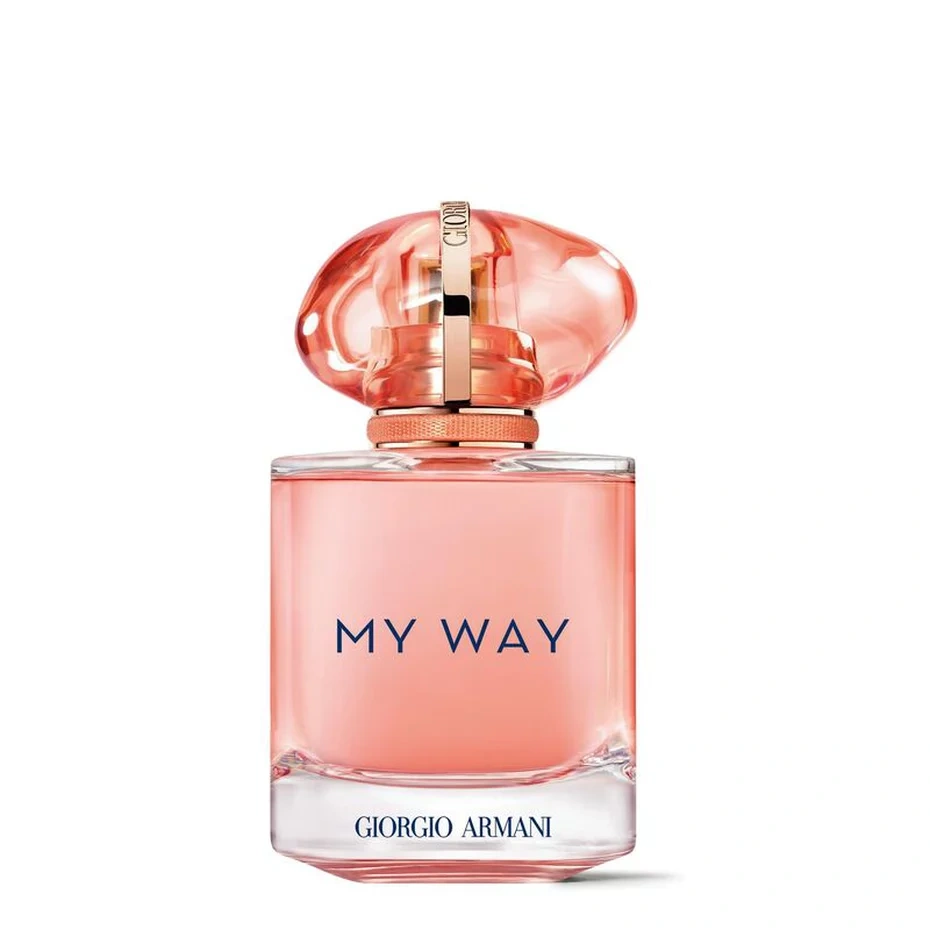
My Way Eau de Parfum Ylang explores a brighter, fruitier and more tropical interpretation of the flower.
The composition opens with a juicy mango accord, white flowers and bergamot.
At its heart, ylang-ylang essence meets coconut water and tuberose absolute, while Bourbon vanilla, white musk and woody elements contribute softness and warmth.
What makes this combination particularly interesting is the relationship between the different ingredients.
Mango emphasizes the fruity direction, while coconut water introduces a refreshing contrast to the richness of the floral heart.
Ylang-ylang acts as a natural bridge between these elements, offering both floral intensity and tropical warmth.
And tuberose?
Well, tuberose has never been particularly interested in being ignored either.
Putting these two flowers together is rather like inviting two dramatic personalities to the same dinner party.
Someone will eventually demand attention.
Yet the composition is designed around luminosity rather than overwhelming opulence, demonstrating how ylang-ylang can participate in modern fruity florals without necessarily dominating them.
Armani also provides an interesting detail about its ingredient sourcing: the ylang-ylang essence used for this fragrance comes from Madagascar.
| The ylang-ylang connection: Tropical floral radiance enhanced by mango, coconut water and tuberose. |
Kenzo L’Eau Ambrée: Ylang-Ylang Meets the Golden Hour
Now here’s a particularly interesting recent release.
Introduced in 2026, Kenzo L’Eau Ambrée explores a warmer interpretation of the L’Eau Kenzo universe.
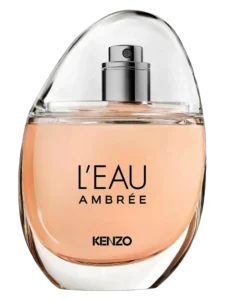
Instead of concentrating exclusively on aquatic freshness, the fragrance combines floral richness with creamy, amber-like warmth.
Ylang-ylang is central to its identity.
The composition brings together several expressions of the flower, alongside fig milk, sandalwood, immortelle, vanilla, benzoin and modern airy accords.
The contrast is intriguing.
Ylang-ylang provides the tropical floral character, while fig milk introduces a soft, lactonic dimension.
Sandalwood and vanilla reinforce the creamy warmth, while the more transparent elements prevent the composition from becoming entirely dense.
At least, that’s the balance suggested by its published structure.
What’s particularly noteworthy is Kenzo’s approach to the ingredient itself.
According to LVMH, L’Eau Ambrée uses ylang-ylang extract obtained through a water-based extraction process without solvents.
The fragrance also contains 90% ingredients of natural origin, according to the brand.
This makes L’Eau Ambrée interesting not only from an olfactory perspective, but also as an example of how contemporary perfume houses are exploring different extraction technologies.
And I have to admit, the idea of combining ylang-ylang, fig milk and vanilla sounds dangerously appealing.
It’s rather like the tropical flower has decided to abandon the beach and move into a very expensive spa.
| The ylang-ylang connection: A warm, creamy floral composition combining ylang-ylang with fig milk, sandalwood and vanilla. |
Perris Monte Carlo Ylang Ylang Nosy Be: The Flower Takes Centre Stage
Sometimes, the best way to understand an ingredient is to stop surrounding it with distractions.
And Ylang Ylang Nosy Be by Perris Monte Carlo seems particularly determined to make its protagonist impossible to ignore.
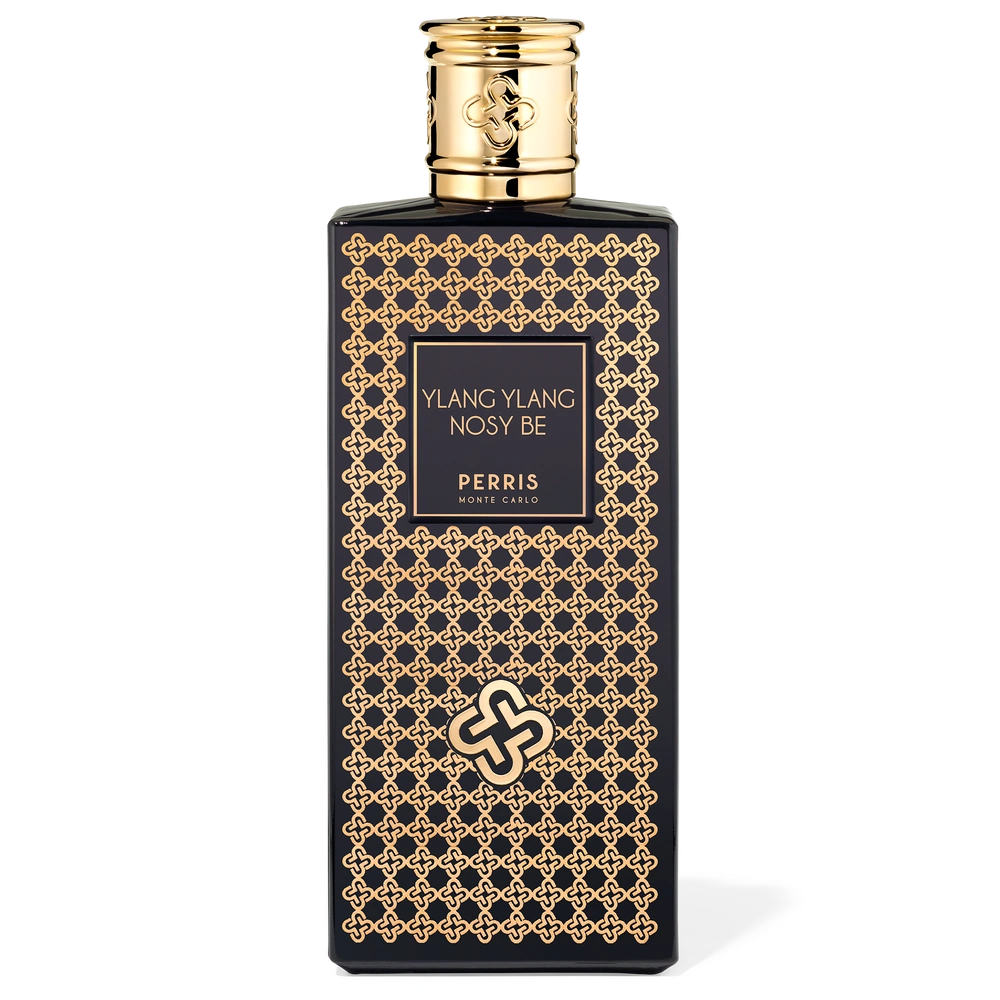
Part of the house’s exploration of distinctive raw materials, this fragrance celebrates the aromatic richness of ylang-ylang from Nosy Be, the island located off the northwestern coast of Madagascar.
The geographical connection is particularly significant.
Nosy Be has a long history associated with the cultivation and production of aromatic materials, including ylang-ylang, and its tropical environment has become closely connected with the flower’s identity in perfumery.
In this composition, ylang-ylang is surrounded by other expressive floral ingredients.
The official notes feature lemon and mint in the opening, followed by ylang-ylang, rose and jasmine sambac, with vanilla and musk in the base.
The fragrance’s description also emphasizes the more sensual and animalic aspects of the flower.
And that’s what makes it such a valuable example for this article.
Because while contemporary fragrances often emphasize the creamy, sunny or fruity dimensions of ylang-ylang, Perris Monte Carlo openly celebrates its more intense personality.
The combination of white florals and the softer base materials creates a setting in which the flower’s complexity can become particularly apparent.
This is a useful reminder that tropical doesn’t automatically mean light, fruity or carefree.
Sometimes, tropical means extraordinarily rich flowers, humid air and an atmosphere that feels almost overwhelmingly sensual.
| The ylang-ylang connection: An expressive exploration of the flower’s tropical, floral and potentially animalic facets. |
Serge Lutens La Dompteuse Encagée: A More Mysterious Interpretation
Leave it to Serge Lutens to take a beautiful tropical flower and give it a slightly unsettling personality.
While many perfume houses associate ylang-ylang with sunshine, beaches and uncomplicated happiness, La Dompteuse Encagée belongs to a very different creative universe.

The fragrance, introduced in 2021, revolves around an intriguing combination of frangipani, ylang-ylang and almond.
Three elements that create an interesting contrast between floral richness and a softer, almost powdery gourmand character.
Frangipani shares some of the tropical associations commonly linked with ylang-ylang, while almond introduces a completely different dimension.
Rather than presenting the flower exclusively through its sunny or fruity qualities, this combination offers a way to explore its more enveloping side.
The concept behind La Dompteuse Encagée also reflects Serge Lutens’ distinctive artistic language.
Its name, which translates approximately to The Caged Tamer, suggests tension, restraint and contradiction.
Not exactly the usual advertising vocabulary for a tropical floral perfume.
But that’s part of the fascination.
Serge Lutens has never seemed particularly interested in making fragrance concepts unnecessarily straightforward.
And I suspect that’s precisely why so many perfume enthusiasts find the house irresistible.
La Dompteuse Encagée is an excellent reminder that ylang-ylang doesn’t always need coconut, mango or a tropical beach to feel expressive.
Sometimes, a few carefully chosen ingredients and a slightly mysterious atmosphere are more than enough.
| The ylang-ylang connection: A tropical floral character placed alongside frangipani and almond, suggesting a softer, more introspective interpretation. |
Annick Goutal Songes: When Ylang-Ylang Becomes a Dream
And finally, we arrive at a fragrance that feels particularly appropriate for concluding this journey.
Songes by Annick Goutal.
A perfume whose very name means dreams.
Because apparently, after exploring every possible facet of ylang-ylang, we might as well finish with something beautifully poetic.

Created by Isabelle Doyen in collaboration with Camille Goutal and launched in 2005, Songes draws inspiration from the atmosphere of Mauritius, particularly the intoxicating scent of tropical flowers after sunset.
The composition brings together frangipani, tiaré, jasmine and ylang-ylang, supported by vanilla, benzoin, spices and other warm elements.
It’s a distinctly rich floral universe.
And the presence of ylang-ylang feels entirely appropriate.
The flower’s natural warmth and sensuality complement the other tropical ingredients, helping create the impression of a lush floral landscape.
But what’s especially interesting about Songes is its inspiration.
Rather than celebrating the bright, cheerful atmosphere of a tropical afternoon, the fragrance evokes something more intimate.
Flowers releasing their scent into warm evening air.
The lingering heat of the day.
A landscape gradually disappearing into darkness.
It’s a romantic interpretation of tropical perfumery, and one that demonstrates how ylang-ylang can contribute to fragrances built around atmosphere and emotion rather than simply freshness or sweetness.
The fragrance has undergone packaging changes over the years, and its availability has sometimes been difficult to follow.
However, Songes still appears in the catalogues of several Italian retailers, so describing it as officially discontinued would be premature.
| The ylang-ylang connection: An opulent tropical floral bouquet in which ylang-ylang contributes warmth, richness and sensuality alongside frangipani, jasmine and vanilla. |
A Little Piece of My Collection
I actually own Songes in one of its older Annick Goutal presentations, complete with the beautiful ribbed glass bottle, golden cap and decorative hanging label. It’s one of those designs that reminds me how charming perfume bottles could be before minimalism became everyone’s favourite obsession.

The photograph you see here comes from my personal collection, taken several years ago. And honestly, looking at that golden liquid catching the sunlight, I can’t think of a more appropriate way to illustrate the warm, intoxicating character of this fragrance.
Is Ylang-Ylang a Feminine Fragrance Note?
Here’s a question that inevitably appears whenever we discuss rich floral ingredients.
Is ylang-ylang feminine?
Historically, it has certainly appeared in numerous fragrances marketed towards women.
Its association with classic floral perfumes, particularly compositions featuring jasmine, rose and other richly scented flowers, has contributed to that perception.
But the ingredient itself doesn’t have a gender.
And neither does its smell.
Ylang-ylang can be incorporated into woody fragrances, aromatic compositions, ambers and more traditionally masculine structures just as effectively as it can appear in feminine florals.
Paired with sandalwood, vetiver or other woody materials, it can introduce softness and complexity.
Combined with spices and resins, its warmer characteristics can become particularly interesting.
And alongside citrus or aromatic ingredients, its floral sweetness can create a beautiful contrast.
The fact that an ingredient has been used extensively in women’s fragrances doesn’t mean it belongs exclusively to that category.
Perfume is considerably more interesting when we stop assigning flowers to one gender and woods to another.
Besides, imagine explaining to an actual ylang-ylang tree that its flowers have been assigned a target demographic.
I suspect it would be deeply unimpressed.
Ylang-Ylang vs Jasmine vs Tuberose: What’s the Difference?
Although these three ingredients frequently appear together, they have distinct olfactory personalities.
Jasmine is often characterized by a combination of rich floral sweetness, green nuances and, depending on the material, pronounced indolic facets.
Tuberose tends to be intensely floral, creamy and often extremely powerful, with green, waxy and sometimes medicinal characteristics.
Ylang-ylang, meanwhile, is particularly recognizable for its combination of sweet floral richness, fruity tropical nuances and a characteristic creamy warmth.
Of course, these are generalizations.
Natural materials vary according to their origin, extraction methods and composition, while the surrounding ingredients dramatically influence their effect in a finished perfume.
Still, understanding these differences can make exploring floral fragrances considerably more interesting.
It’s also useful when reading fragrance pyramids.
Seeing jasmine, tuberose and ylang-ylang listed together doesn’t necessarily mean three indistinguishable white flowers.
Each can contribute something different to the overall composition.
And when all three are allowed to express themselves fully, the result can be spectacularly extravagant.
Subtlety, once again, has been politely asked to leave.
Why Ylang-Ylang Deserves More Attention
Perhaps the most fascinating thing about ylang-ylang is that it’s simultaneously familiar and surprisingly difficult to define.
Many perfume enthusiasts have encountered it countless times without necessarily recognizing its contribution.
It can disappear into a complex floral bouquet.
It can soften a woody base.
It can introduce tropical warmth to a fruity composition.
Or it can step confidently into the spotlight and remind everyone that some flowers simply refuse to be supporting characters.
The six fragrances explored here demonstrate just how versatile this ingredient can be.
Rabanne emphasizes its golden, solar character.
Armani places it within a bright tropical composition.
Kenzo explores its creamy warmth through modern extraction techniques and contrasting accords.
Perris Monte Carlo celebrates its complexity and intensity.
Serge Lutens introduces a more mysterious, softly gourmand interpretation.
And Goutal transforms it into the atmosphere of a tropical evening.
Six different approaches.
One remarkable flower.
And an excellent excuse to spend considerably too much time exploring perfume.
As if I needed another one.
Final Thoughts: A Little Tropical Excess Never Hurt Anyone
Ylang-ylang might not have the immediate recognition of rose, the popularity of vanilla or the almost mythical reputation of oud.
But it possesses something equally fascinating.
Personality.
Lots of it.
From creamy tropical florals to intense, sensual compositions, this extraordinary ingredient continues to demonstrate why it has remained relevant in perfumery for generations.
And perhaps that’s what I appreciate most about exploring individual fragrance notes.
The more you learn about an ingredient, the more you realize how little a simple olfactory pyramid can tell you about the finished perfume.
Two fragrances can both list ylang-ylang and smell completely different.
And that’s precisely why reading about perfume will never replace actually smelling it.
Although, admittedly, reading about it does tend to result in more purchases.
A regrettable side effect of scientific curiosity.
So the next time you encounter ylang-ylang in a fragrance, pay attention.
There might be considerably more happening beneath those tropical flowers than you initially expected.
And if the result smells like sunshine, warm skin and an expensive holiday?
Well.
Some things are simply worth investigating.
| Curious about what makes your favourite fragrances smell the way they do? Explore the Perfume Notes section and discover the ingredients, stories and olfactory secrets behind the scents we love. |