The Story of Tuberose: A Flower With Many Personalities
I think I loved tuberose long before I knew I loved tuberose.
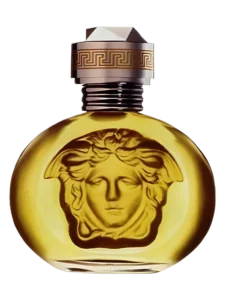
One of the fragrances I wore as a teenager was Versace Blonde, and I have always connected its extravagant white-floral character with tuberose. That memory matters to me because it came before I knew anything about note lists, raw materials or perfume vocabulary. I simply knew that there was something in that kind of floral excess that fascinated me.
Years later, this white flower is still one of the flowers I find most interesting in perfumery. Not because I think I can dissect every formula or identify every molecule on skin, but because its personality seems to change dramatically depending on how a perfumer treats it. It can be creamy, opulent and almost narcotic. It can turn green and sharp, as if the flower has not fully opened yet. And in more playful compositions, it can become sweet, fruity and almost bubble-gum-like.
That contradiction is exactly why this note deserves the first chapter of this series.
What exactly is tuberose?
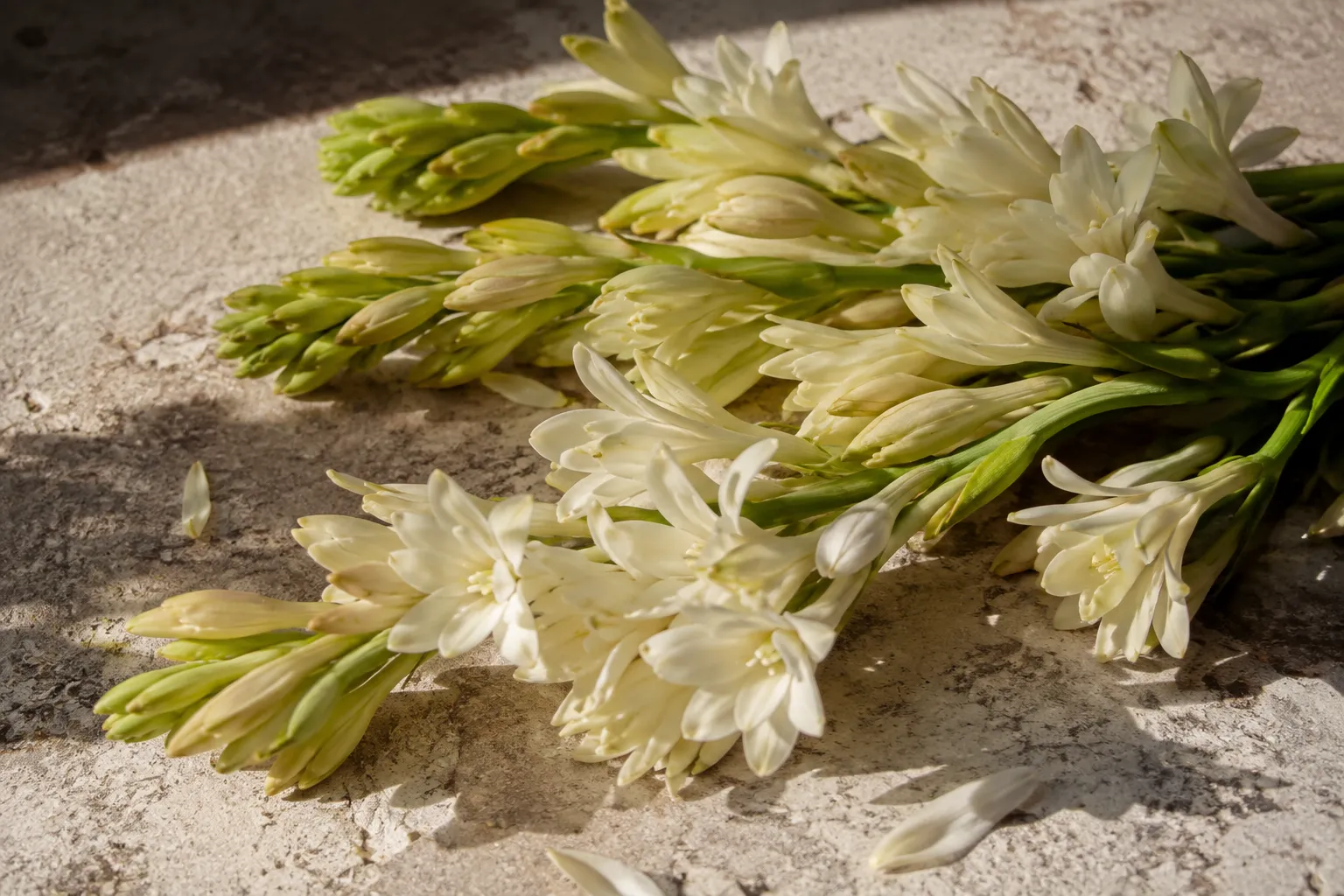
Despite the name, this flower is not a rose. The accepted botanical name listed by Kew Science is Polianthes tuberosa L., while Agave amica is recorded as a synonym. It belongs to the Asparagaceae family and is a tuberous geophyte native to Mexico, particularly southern Guanajuato and northern Michoacán.
For perfume lovers, however, taxonomy is only the beginning. Tuberose is famous for the intensity and complexity of its white flowers. Its scent can suggest creamy petals, green stems, sweetness, warmth and a heady floral richness all at once. This is one reason descriptions of tuberose often sound contradictory: the flower itself gives perfumers several directions to emphasize.
From Mexico to the perfume world
Tuberose travelled far beyond its Mexican origins and became an important cultivated flower in several parts of the world. In modern perfumery, Indian tuberose is particularly visible: Givenchy, for example, explicitly identifies tuberose absolute from India in the heart of L’Interdit Eau de Parfum.
Natural tuberose material is precious, and modern perfumes do not have to rely on a natural extract alone. As with many floral notes, perfumers can combine natural materials with aroma molecules and supporting accords to emphasize different aspects of the flower. That freedom is crucial to understanding why one ‘tuberose perfume’ can smell dramatically different from another.
So, what does tuberose smell like?
This is where the simple answer stops being useful. To my nose, the appeal of this flower is its duality. At its most opulent, it can feel creamy, sensual, almost excessive and narcotic. This is the tuberose that enters the room before you do. It has no interest in minimalism and, frankly, good for her.
But there is another side I love just as much: green tuberose. In some compositions, the flower feels less fully bloomed. I get something fresher, sharper and more vegetal, almost like smelling the stem and the unopened flower alongside the petals. It makes tuberose feel less plush and more alive.
Then there is the playful version: sweeter, fruitier, sometimes almost bubble-gum-like. I do not mean that the note simply smells like bubble gum by nature. Rather, a composition can amplify its sweet and fruity facets until the flower feels younger, brighter and much less grand-dame.
Why can tuberose smell so different?
A perfume note is not a fixed object. ‘Tuberose’ on a note pyramid tells us what the fragrance is trying to evoke, not that every tuberose perfume contains the same material in the same proportion. The surrounding ingredients can radically change our perception of it.
Pair it with ylang-ylang, warm woods, vanilla or musks and its creamy, solar side can expand. Put green, medicinal or camphoraceous effects around it and the flower can become almost unsettling. Add fruit and sweetness and its lushness can take on a playful, candied quality. This flexibility is precisely what makes the note so useful, and so difficult to reduce to a single definition.
Five perfumes, five faces of tuberose
Versace Blonde — the memory
Blonde is where this story starts for me. I wore it as a teenager, long before I had the vocabulary I use for perfume today. I have always associated that extravagant white-floral memory with tuberose, and the connection has stayed with me. Rather than treating it as a technical reference point, I see Blonde as proof that our relationship with a note can begin before we even know its name.
Fracas by Robert Piguet — the icon
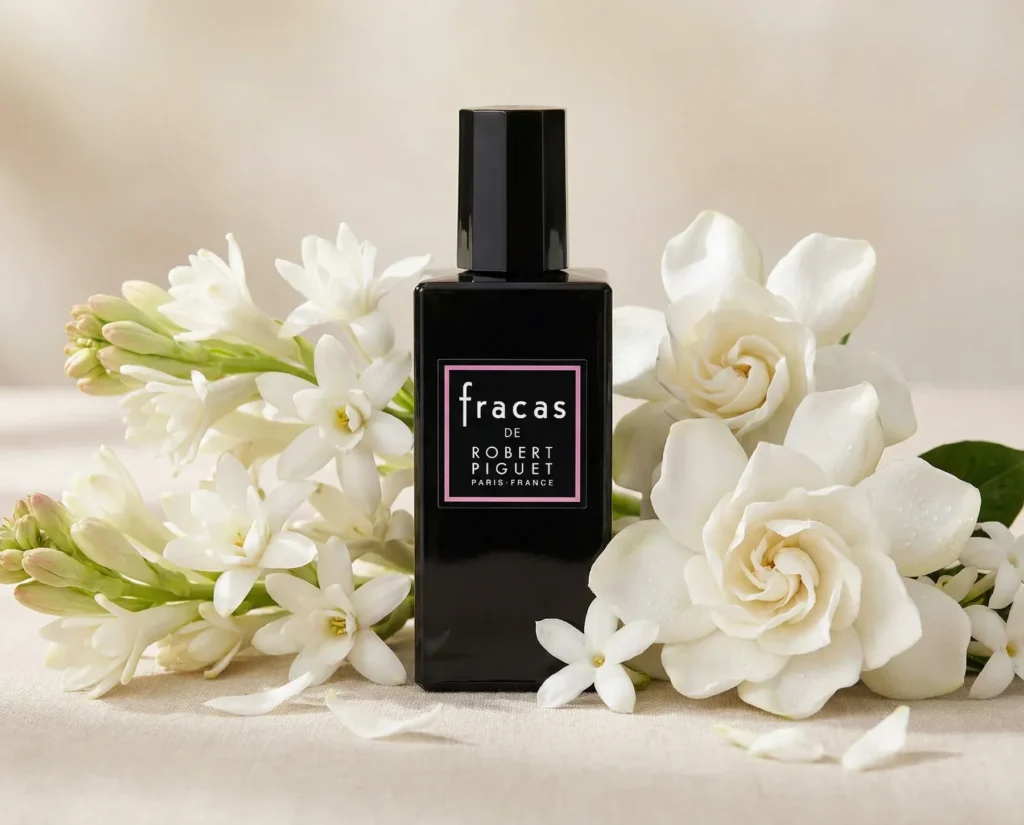
If there is a perfume that represents the grand, unapologetic idea of this white flower, Fracas is impossible to ignore. Created by Germaine Cellier in 1948, it became one of the defining tuberose fragrances in modern perfumery. This is the flower in full bloom: rich, creamy, sensual and gloriously uninterested in being discreet.
L’Interdit by Givenchy — the playful modern face
The current L’Interdit Eau de Parfum builds its white-floral heart around orange blossom, sambac jasmine and tuberose absolute, contrasted with patchouli and vetiver. What I enjoy in the L’Interdit family is how this note can feel more playful and contemporary: sweeter, brighter and, to my nose, sometimes almost bubble-gum-like. It shows that a dramatic white flower does not have to smell retro.
Tuberosa by Carthusia — fruity with a vintage wink
Carthusia describes the flower as the protagonist of its composition, paired with ylang-ylang and cinnamon before warmer vetiver, vanilla, ambroxan and musk emerge. What fascinates me personally is its fruity character and the slightly vintage atmosphere I get from it. It feels joyful and lush without losing the old-school glamour that makes tuberose so addictive to me.
If you’re curious about this one, you can read my review of Carthusia Tuberosa.
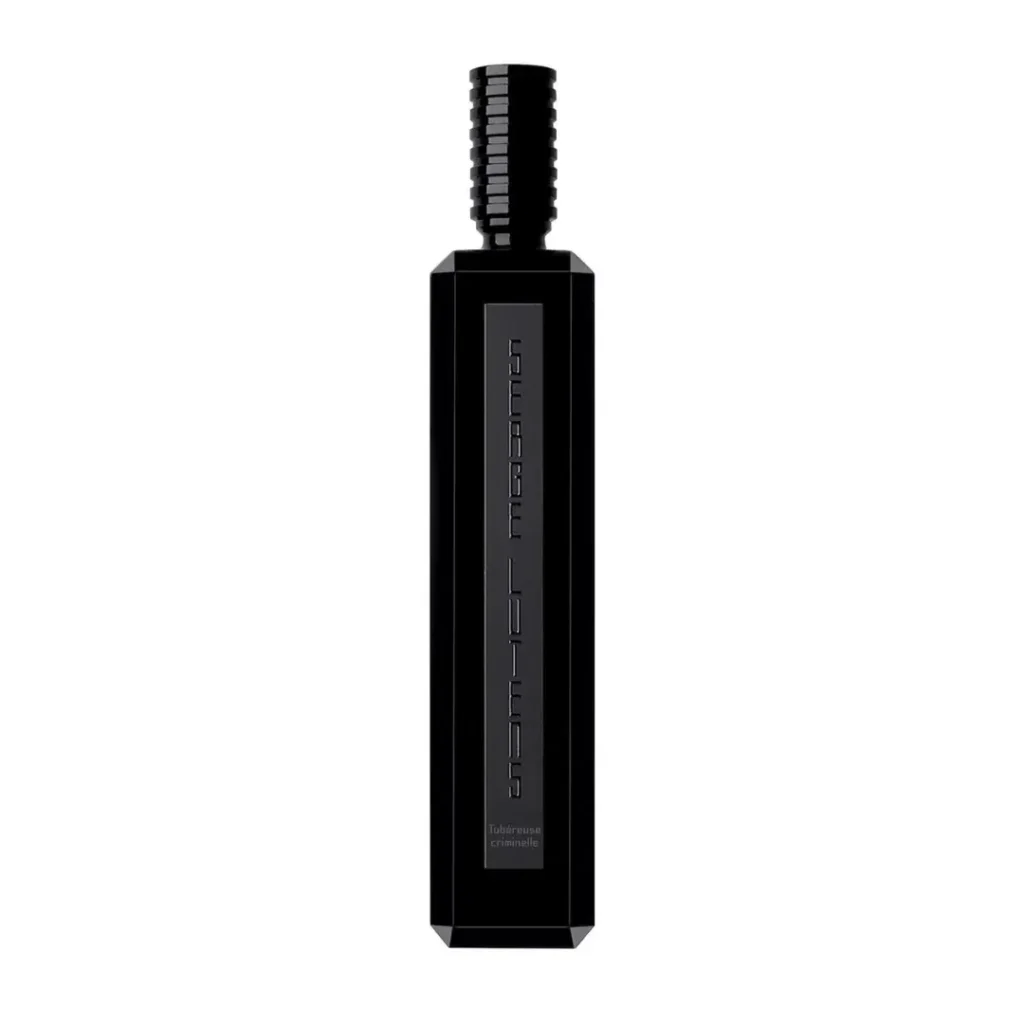
Tubéreuse Criminelle by Serge Lutens — the strange one
Tubéreuse Criminelle demonstrates why I never want this floral note to become too polite. It pushes the greener, colder and more disconcerting possibilities of the flower. This is the kind of tuberose that can make you think about stems, mentholated or camphoraceous impressions before the floral richness fully reveals itself. Beautiful, but not remotely interested in behaving.
The flower does not need one personality
Perhaps the mistake is asking what this flower smells like as though there should be one definitive answer. Perfume is interpretation. A perfumer can take the same floral idea toward sensual excess, green freshness, vintage glamour, fruity sweetness or something almost confrontational.
That is probably why I keep coming back to it. Tuberose can be sophisticated without becoming polite, sexy without needing to smell conventionally sweet, and nostalgic without being trapped in the past.
And for me, it still leads back to Blonde. I did not know I was learning to love tuberose when I wore that fragrance as a teenager. I just knew I loved the smell. Sometimes perfume knowledge comes later. The nose gets there first.