Tonka Bean in Perfumery: One Bean, Far Too Many Personalities
Vanilla, almond, hay, tobacco, powder, warmth. Tonka bean has an impressive habit of smelling like several things at once, which may explain why perfumers have spent more than a century refusing to leave it alone.
Tonka bean has a reputation problem.
Ask someone what it smells like and there is a very good chance that the word vanilla will appear within the first few seconds. That answer is not exactly wrong, but it is a little like describing perfume as “something that smells nice”. Technically defensible. Spectacularly incomplete.
Tonka can certainly be sweet and creamy, but it can also smell of bitter almond, dried hay, tobacco, warm wood and something softly powdery. Sometimes it feels almost edible; sometimes it is dry enough to pull a composition away from gourmand territory altogether. Put it next to almond and one personality emerges. Roast it and another appears. Add tobacco, leather or aromatic herbs and suddenly that supposedly cosy little bean starts behaving very differently.
Which is precisely why tonka bean in perfumery is much more interesting than its reputation suggests.
And instead of turning this into a chemistry lesson nobody requested, I thought it would make more sense to look at five fragrances that show just how many personalities tonka can have: Jean Paul Gaultier Scandal Pour Homme, Armani Code Elixir, Guerlain Tonka Impériale, Atelier Materi Tonka Kumaru and Elie Saab Essence No. 10 Amande Tonka.
Same raw material.
Very different ideas.
Tonka Bean in Perfumery: More Than Just Vanilla
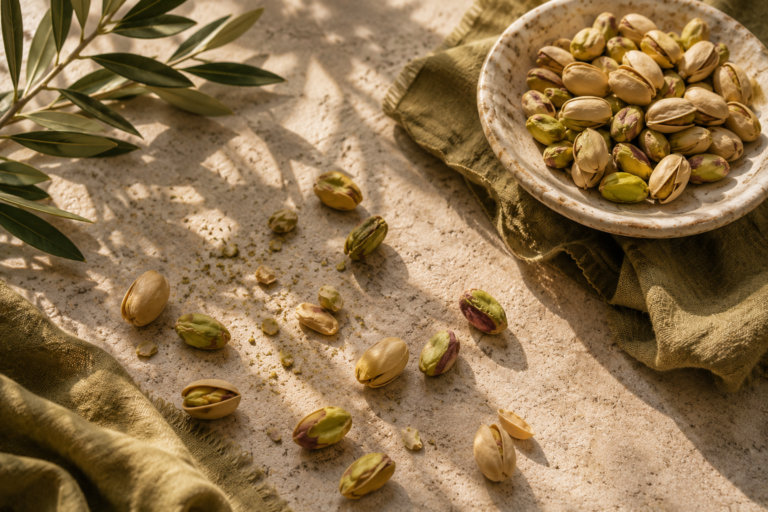
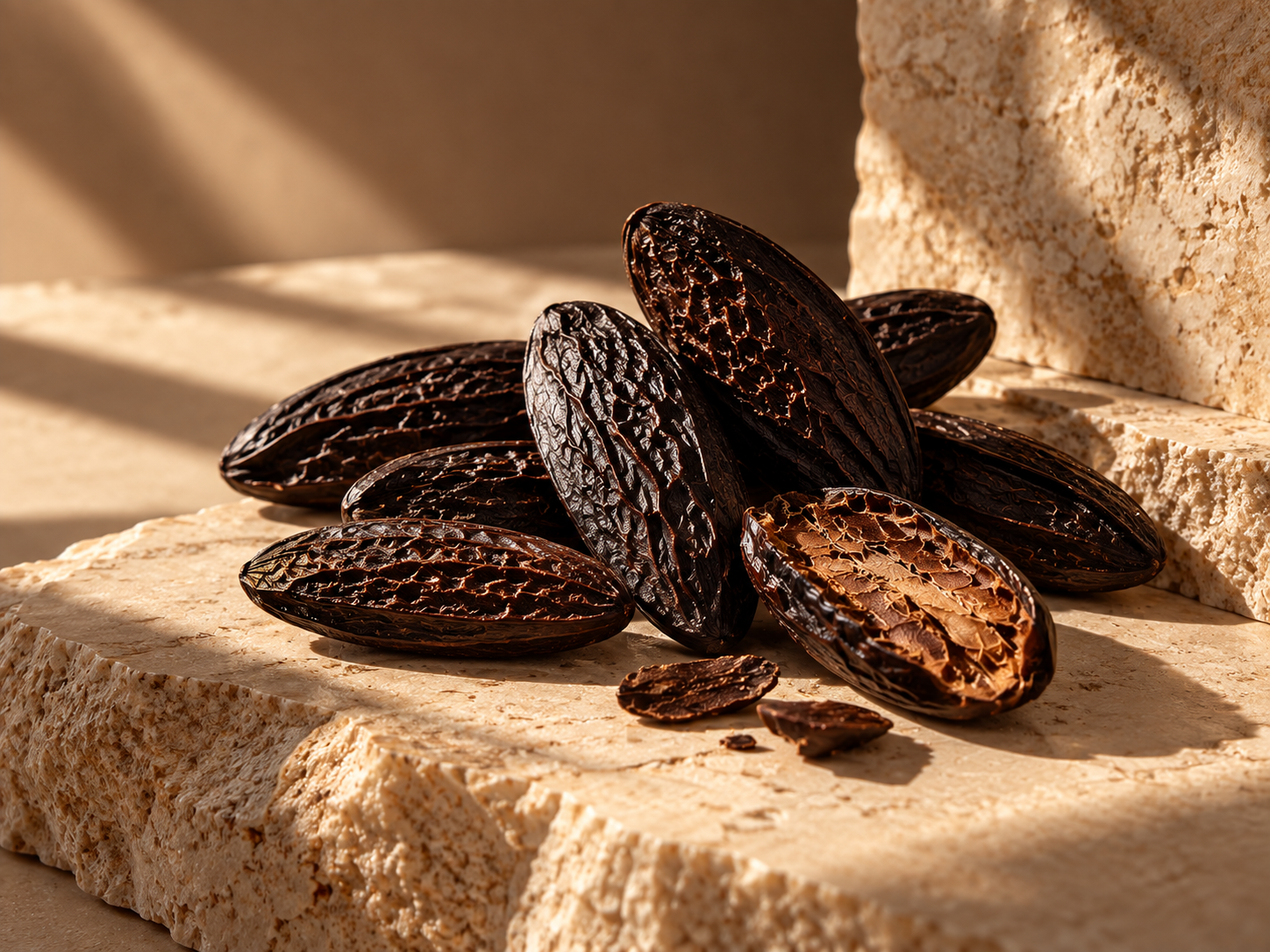
Tonka beans are the seeds of Dipteryx odorata, a tree native to South America. In perfumery, tonka bean absolute is known for a warm, powdery character combining sweet almond with facets of hay and tobacco, alongside creamy vanilla-praline nuances. One of the molecules strongly associated with this olfactory profile is coumarin.
That little molecule also has a rather impressive CV.
Synthetic coumarin became one of the milestones of modern perfumery when Paul Parquet placed it at the centre of Houbigant Fougère Royale in 1882, helping establish what would become the fougère family. Its warm hay-like character, combined with lavender and oakmoss, became enormously influential in fragrance construction.
So tonka did not suddenly appear when the perfume industry collectively discovered that people enjoy smelling vaguely edible.
It has been around doing important work for a very long time.
What makes it particularly interesting, however, is how easily its different facets can be pulled in opposite directions. Vanilla can exaggerate its creamy sweetness; almond makes the nutty side more obvious; hay exposes its dryness; tobacco and woods can turn that same warmth darker and more textured.
And once you start looking at perfumes through that lens, tonka becomes considerably more interesting than simply another sweet base note.
Jean Paul Gaultier Scandal Pour Homme: Tonka Has Entered the Building
We should probably begin somewhere understated.
Naturally, that means Jean Paul Gaultier.
The original Scandal Pour Homme, launched in 2021, is built around clary sage, tonka bean and vetiver. Jean Paul Gaultier itself describes its tonka as being pushed almost to excess, which is refreshingly accurate marketing considering restraint was clearly not invited to this particular meeting.
And that excess is precisely why Scandal Pour Homme works so well as an example here.
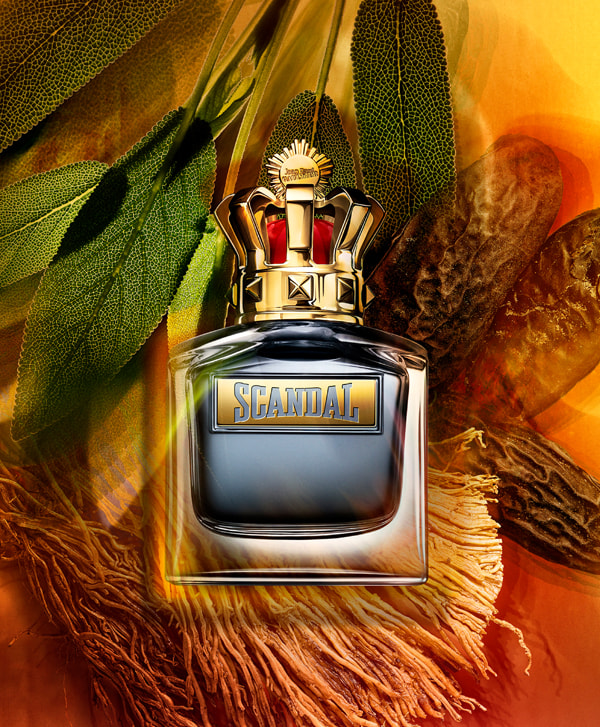
This is perhaps the tonka personality most immediately familiar in contemporary masculine perfumery: warm, rounded, sweet and very difficult to ignore. The freshness of clary sage gives the composition some lift, while vetiver provides a drier framework underneath, but tonka is unmistakably responsible for much of its plush, almost creamy character.
It is not lurking somewhere politely in the base waiting to be discovered.
It has arrived wearing a crown.
The bottle actually has one, so subtlety was never going to survive.
Scandal demonstrates how easily tonka can become voluptuous without simply turning into vanilla. Its sweetness has more warmth and nuttiness, with something slightly darker underneath that prevents the fragrance from feeling like straightforward dessert.
This is tonka with the volume turned up.
And sometimes that is exactly what you want.
Armani Code Elixir: Put the Tonka on the Grill
With Armani Code Elixir, things become considerably darker.
Armani constructs the fragrance around green mandarin in the opening, followed by a leather accord intertwined with a liquor-like effect, before reaching what the house specifically calls grilled tonka bean. Armani also describes tonka as one of the signatures of the Code line.
That word, grilled, changes the conversation.

Tonka already possesses naturally nutty, hay-like and tobacco facets, so emphasizing its roasted quality pushes the material away from fluffy sweetness and toward something toastier, deeper and more burnished.
The presence of smoky leather and liquor only encourages it.
Suddenly we have the same ingredient that felt creamy and exuberant in Scandal Pour Homme behaving in a much darker way. The warmth remains, but the edges become more charred. The sweetness feels less confectionery and more like the browned surface of something roasted.
It is still seductive, certainly.
But this time tonka appears to have changed clothes, dimmed the lights and poured itself something expensive.
One bean, two perfumes, already very little resemblance.
Guerlain Tonka Impériale: When Tonka Gets the Full Guerlain Treatment
Then there is Tonka Impériale, created by Thierry Wasser for Guerlain and originally launched in 2010.
Here, tonka is not simply an effect within the composition. It is essentially the entire reason we are here.
The fragrance opens with bitter almond, rosemary and bergamot, moves through tonka bean, tobacco and jasmine, and eventually settles into incense, cedar and pine.
Almost every element seems capable of talking to a different facet of tonka.
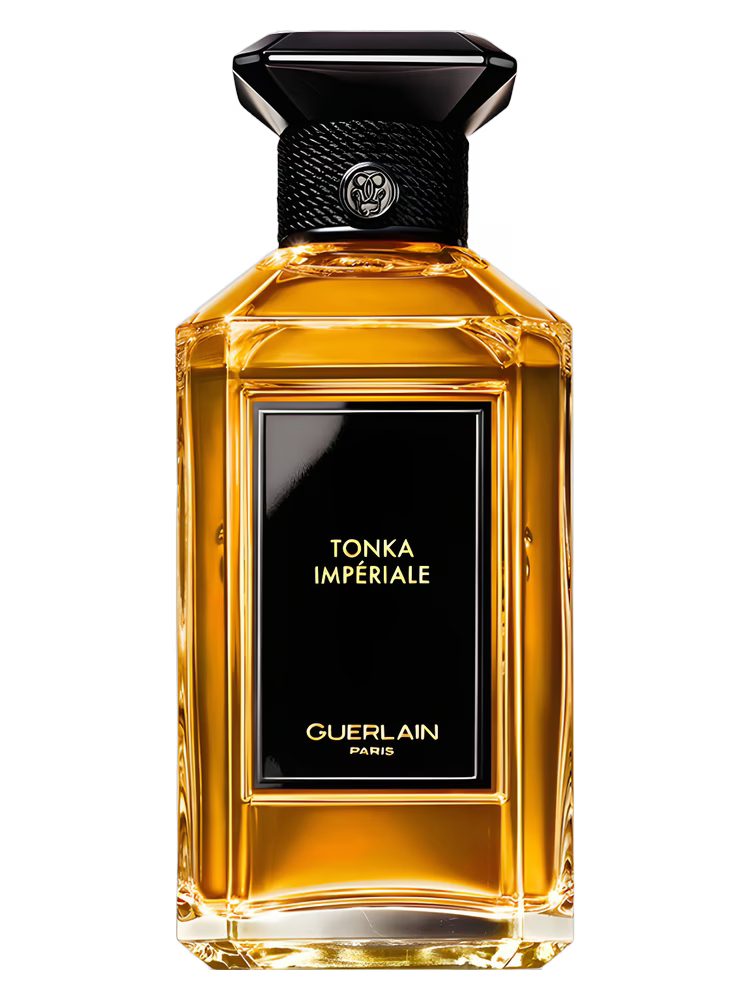
Bitter almond emphasizes the obvious nutty connection, while tobacco pulls towards its drier and darker character. Rosemary and bergamot introduce something aromatic and brighter, preventing the whole composition from sinking immediately into sweetness, while incense and woods provide a smoky framework underneath.
This is exactly where the idea that “tonka smells like vanilla” becomes hopelessly inadequate.
Yes, there is sweetness. There is warmth. There is something comforting about it.
But tonka can also feel herbal, smoky, resinous, nutty and slightly tobacco-like, sometimes within the same composition. Tonka Impériale allows several of those sides to exist together rather than choosing only the easy gourmand route.
It also feels particularly appropriate coming from Guerlain, a house that has never exactly struggled with the concept of making sweet, balsamic materials smell luxurious rather than merely edible.
Calling Tonka Impériale “a vanilla-like perfume” would therefore be technically possible.
It would also be a minor crime against descriptive language.
Atelier Materi Tonka Kumaru: Taking Tonka Apart to See What Is Inside
If Tonka Impériale celebrates the richness of the material, Atelier Materi Tonka Kumaru almost feels like somebody decided to dismantle tonka on a workbench and examine each component separately.
The composition opens with bergamot, bitter almond and cardamom. Roasted barley, hay absolute and cedar leaf make up the heart, before roasted tonka bean extract appears in the base alongside Madagascan vanilla, amber and musks. Atelier Materi explicitly describes the fragrance as an exploration of tonka in all its depth, using the surrounding materials to reveal and amplify different facets of the bean.
The construction makes almost suspiciously perfect sense.
Bitter almond highlights tonka’s nutty character. Hay connects with its naturally dry coumarinic facet. Roasted barley pulls forward the toasted side, while vanilla and musks amplify everything soft, creamy and comforting.
Tonka itself never disappears beneath those materials because they are effectively pointing back towards it.
There is also a much more personal story behind the fragrance. Atelier Materi founder Véronique Le Bihan has explained that the almond-like character of tonka reminded her of Cléopâtre glue, the almond-scented school glue familiar to generations of French children. That memory eventually became part of the brief developed with perfumer Céline Bourdoncle Perdriel.
Apparently childhood nostalgia can lead to many things.
Sometimes therapy.
Sometimes a €240 niche perfume.
| Read more about Atelier Materi Tonka Kumaru and its unusual almond-scented inspiration. |
Elie Saab Essence No. 10 Amande Tonka: Follow the Almond
With Essence No. 10 Amande Tonka, released by Elie Saab in 2017, one particular side of tonka receives almost all the attention.
The composition brings together tonka bean, bitter almond, sandalwood and amyris. And the title tells you exactly where we are going.
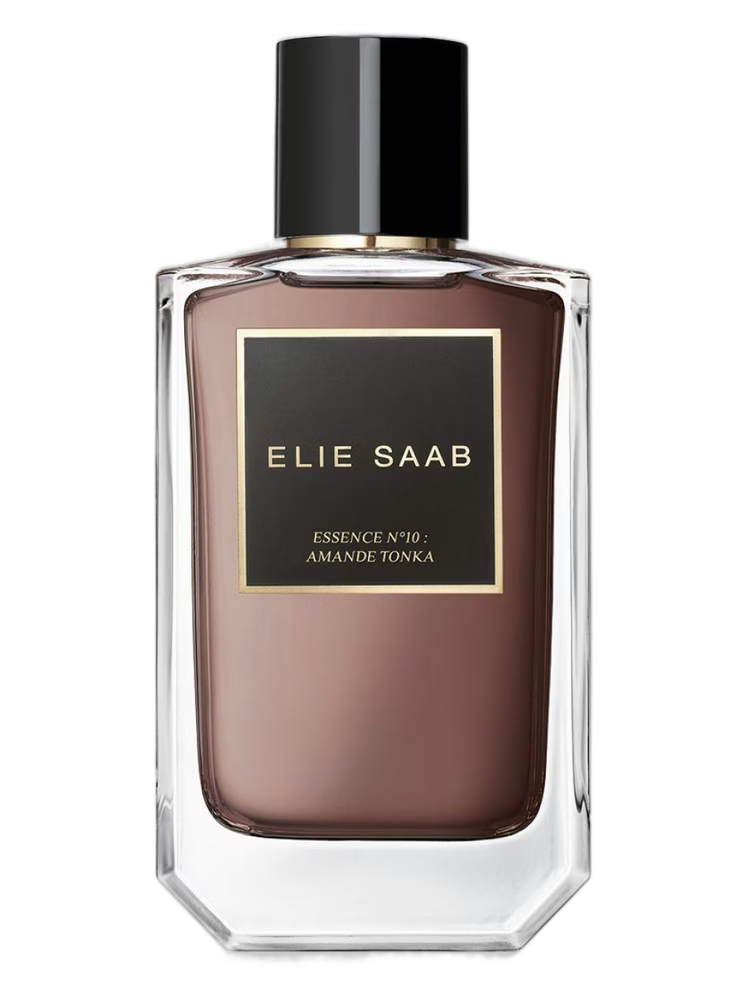
Almond and tonka naturally share enough olfactory territory that putting them together feels almost inevitable. Tonka’s almond-like facet suddenly becomes much more obvious, while the bitterness and marzipan-like associations of almond bring sharper definition to all that creamy warmth.
Sandalwood then makes an equally logical companion. Its smooth woody quality extends the soft texture without simply piling more vanilla-like sweetness on top.
This is what makes Amande Tonka useful in this little tour through the ingredient.
Where Scandal exaggerates warmth and sweetness, Armani darkens and toasts it, Guerlain expands it, and Atelier Materi dissects it, Elie Saab essentially chooses one particular thread and keeps pulling.
What if we followed tonka’s almond facet all the way?
Apparently, quite a lot can happen.
One Bean, Far Too Many Personalities
Put these five perfumes beside one another and tonka starts to look less like a single perfume note and more like an entire vocabulary.
In Scandal Pour Homme, it is loud, creamy and unapologetically sweet. In Armani Code Elixir, roasting, leather and liquor expose something darker. Tonka Impériale lets almond, tobacco, aromatics, woods and incense orbit around it until almost every facet of the material gets a moment. Tonka Kumaru practically takes it apart and reconstructs it through almond, hay, roasted barley, vanilla and musk. And Amande Tonka follows the nutty side with admirable commitment.
None of them requires tonka to smell exactly the same.
That is the interesting part.
Tonka can make a fragrance gourmand without necessarily making it edible. It can soften woods, deepen tobacco, warm leather or introduce a dry hay-like effect into something that might otherwise feel too polished. And because its history stretches back through coumarin and the birth of the fougère structure, it is just as comfortable in classical perfume architecture as it is in the gourmand-heavy landscape of contemporary perfumery.
Maybe that is why it never really goes away.
Perfume trends change. Gourmands become fashionable, then apparently even more fashionable. Bottles multiply in our houses despite repeated promises that we are absolutely not buying anything this month.
Tonka just keeps doing its job.
And the next time somebody says that tonka bean simply smells like vanilla, there is no need to subject them to an unsolicited lecture about coumarin, Fougère Royale and nineteenth-century perfumery.
Nobody deserves that while trying to enjoy dinner.
But you are absolutely allowed to think:
Well, yes. And also very much no.