
Perfume Notes Are Not Ingredients: How to Read a Fragrance Pyramid
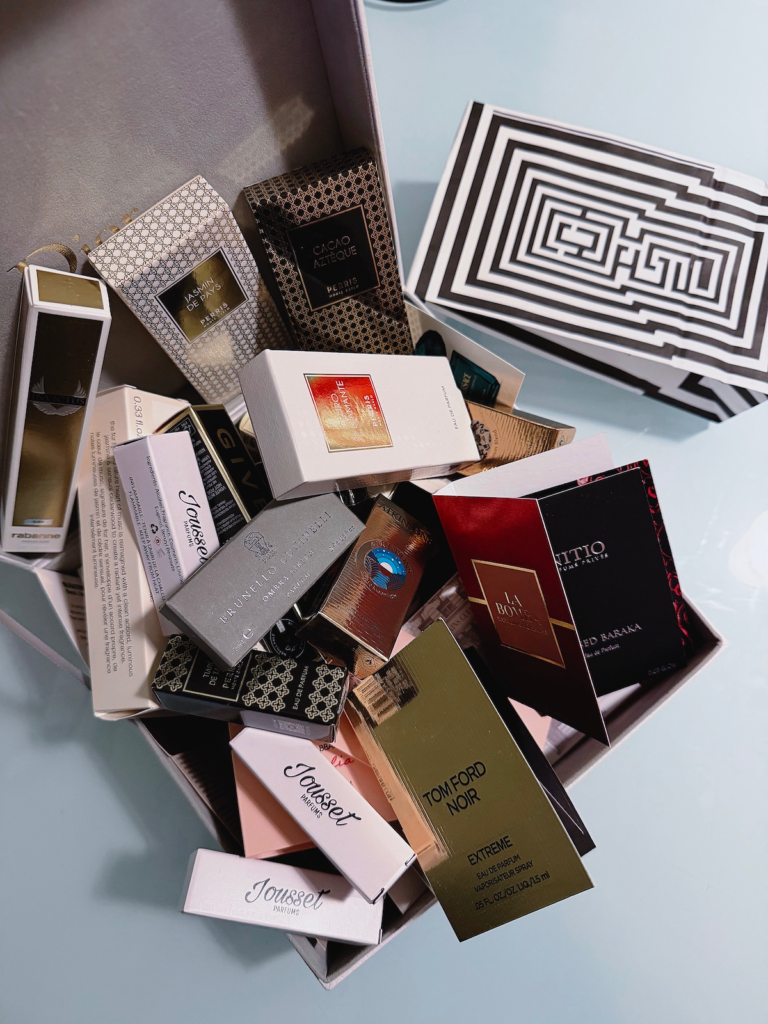
Jousset Donut Crave Frosted Vanilla lists white icing, warm milk foam and powdered sugar at the top; fried dough, vanilla caviar cream and frosting in the heart; then vanilla absolute, tonka bean and caramelized sugar in the base. Its published product information, meanwhile, names alcohol, fragrance and a group of declarable fragrance substances. There is no doughnut hiding in the bottle. This is where one of perfumery’s most persistent misunderstandings begins: perfume notes are not necessarily ingredients.
A note list is a map of impressions. It tells us what a fragrance is intended to suggest, which effects the brand considers important and, often, how it would like us to imagine the development. It is not the formula, an inventory of every raw material or a shopping list for reconstructing the perfume at home. Frankly, the industry has enough problems without all of us attempting vanilla frosting accords in the kitchen.
That does not make fragrance pyramids useless or automatically deceptive. It simply means we need to read them for what they are: a language shared, with varying degrees of precision, by perfumers, brands, retailers and the people wearing the finished perfume.
Perfume Notes Describe What We Are Invited to Smell
In everyday conversation, a perfume note is an identifiable olfactory impression. It may name something that exists as a perfumery material, such as bergamot oil or patchouli oil. It may describe an effect assembled from several materials, such as amber, leather or sea salt. It may also be openly figurative: clean skin, warm sand, moonlight, velvet or the smell of a library after an emotionally complicated rainstorm.
The job of the word is to give the nose an accessible reference. Most people have never smelled individual aroma chemicals, and even experienced fragrance lovers cannot identify every material inside a complex composition. We do, however, understand the idea of ripe peach, cold metal or toasted sugar. Notes translate an invisible mixture into recognisable images.

That translation is not neutral. Once a brand tells us that a perfume contains cherry, smoke or suede, expectation begins working before the first spray. We may recognise the suggested effect immediately, interpret an ambiguous facet through it or wonder why everyone else seems to be finding a fruit that has apparently avoided us. None of those responses proves that the note list is correct or false. Smell is perception, and the pyramid is partly a guide to that perception.
Note, Raw Material, Molecule and Accord Are Not Synonyms
Several related terms are routinely flattened into the word “note”, which is how the confusion grows.
A note is the smell or idea communicated to the wearer: rose, passion fruit, smoke, rice powder.
A raw material is something the perfumer can use in a formula. It may be natural, such as an essential oil, absolute or extract, or manufactured through chemical processes.
An aroma molecule is an individual odorant with its own properties and olfactory character. It may occur in nature, be reproduced synthetically or be a material invented by chemists.
An accord is a combination of materials that creates a recognisable effect or a new olfactory whole.
These categories overlap, but they are not interchangeable. A published bergamot note may correspond partly to genuine bergamot oil, to selected molecules that reproduce or modify its facets, or to a combination of both. An amber note, by contrast, usually describes a constructed warm, resinous effect rather than a single substance extracted from the golden material used in jewellery. As explored in our guide to amber in perfumery, labdanum, benzoin, vanilla and modern woody-amber materials can all help build very different versions of that idea.
Nor does “synthetic” mean cheap, crude or inferior. Modern perfumery depends on natural materials and aroma molecules working together. Manufactured odorants can provide effects that do not exist as practical natural extracts, improve consistency, expand the perfumer’s palette and reduce pressure on scarce or problematic sources. Natural materials, meanwhile, are themselves chemically complex mixtures rather than little bottles containing one pure smell.
How Do You Put a Doughnut Into Perfume?
You do not. You identify the sensory cues that make a doughnut smell like a doughnut and construct an illusion from suitable materials.
The smell of a food is rarely one simple signal. It includes sweetness, browning, fat, heat, fermentation, spice, texture and associations learned through experience. A perfumer working on a fried-dough accord might need to suggest toasted warmth and oiliness while preventing the result from becoming rancid or unpleasant. Powdered sugar asks for a drier, airy sweetness; frosting suggests something denser, smoother and more opaque. None of those textures can literally be touched inside a perfume, yet a composition can make the mind supply them.
Jousset’s official description of Donut Crave Frosted Vanilla is unusually helpful because it separates the fantasy into layers: icing and milk foam, fried dough and cream, then vanilla, tonka and caramelised sugar. Those are the advertised impressions, not a disclosed recipe. The perfumer, Jimmy Bodin, may use numerous materials to support each effect, while the public pyramid reduces that technical complexity to a doughnut we can almost picture.
The same applies to fruit. Passion fruit does not need to appear as a literal extract for a perfume to produce a tart, juicy, tropical impression. A perfumer can combine fruity, green, sulphurous, acidic, floral and creamy facets until the mixture triggers the intended association. The finished effect may feel realistic, stylised or barely related to the fruit on your plate. The note name tells us the destination, not every road taken to reach it.
The strawberry note offers another clear example: because the fruit does not yield a conventional essential oil for perfumery, its familiar smell must be constructed. Yet one strawberry accord can feel like fresh fruit, another like jam and another like pink confectionery. The label stays the same while the materials, proportions and artistic intention change.
Why Similar Note Lists Can Smell Completely Different
Two perfumes may both advertise bergamot, jasmine, vanilla and musk and still have almost nothing in common on skin. The note list hides most of the decisions that create the final smell.
Proportion matters. A trace material can alter an accord without being identifiable on its own, while a dominant material can reshape everything around it. Quality, origin and processing can change the character of naturals. Different aroma molecules can emphasise creaminess, dryness, diffusion, warmth or transparency. Solvents, fixatives and less glamorous supporting materials affect how the composition behaves. Above all, materials interact: a mixture may be perceived as a new olfactory object rather than as a tidy collection of separate parts.
Research into odour-mixture perception describes this distinction as elemental versus configural perception. Sometimes we can pick out components; sometimes the blend becomes a whole with a character of its own. This is close to the logic of an accord. We recognise “leather” or “popcorn” even if we cannot name the individual signals creating it.
The fragrance pyramid conceals those interactions. It also conceals concentration. Listing vanilla tells us nothing about how much vanilla-related material is present, how sweet the result will be or whether the effect lasts five minutes or several hours. A short pyramid can sit above a complicated formula; a long pyramid can describe a fragrance that feels remarkably linear. More words do not necessarily mean more perfume.
The Fragrance Pyramid Is a Story About Time
Top, heart and base notes are often presented as three orderly shifts: the opening disappears, the middle arrives, then the base takes over. Real evaporation is less theatrical.
Materials have different volatilities and tenacities, so the balance we perceive changes over time. But a perfume does not usually operate like three separate liquids waiting for their cue. Elements overlap, some effects remain perceptible from beginning to end, and our own attention changes as we become accustomed to the composition.

The pyramid is therefore a useful diagram rather than a timetable. It can suggest movement from bright to dark, transparent to dense or tart to creamy. It cannot promise that every wearer will detect each named stage, in order, for an agreed number of minutes. Skin, application, weather and individual sensitivity have not signed the marketing plan.
Who Decides Which Notes We See?
There is no single universal process. The creative work begins with the formula and the intentions behind it, but the public note list may be shaped through collaboration between the perfumer, fragrance house, brand team and communications or marketing departments. The final wording has to make a technically complex product intelligible – and desirable – to people who cannot smell it through a screen.
That is why some lists are compact and functional while others contain unusually specific desserts, fabrics, places or emotions. The language reflects positioning as well as composition. A brand selling an ultra-gourmand perfume may foreground warm milk foam and melted butter; another might translate related effects into vanilla, lactonic notes and soft woods. Neither vocabulary gives us the complete formula.
Retailers and fragrance databases add another layer. They may shorten official descriptions, translate them, reorganise them into a house style or repeat information supplied at a different stage of the launch. When two pyramids disagree, it does not necessarily mean the perfume changed. It may mean the information travelled.
For editorial work, the safest starting point is the brand’s current official material, followed by clearly identified secondary sources when needed. Even then, published notes should be reported as published notes – not upgraded into laboratory facts.
Captive Molecules and the Formula We Cannot See
Large fragrance houses develop proprietary aroma materials, and some are initially kept for exclusive internal use. These are often called captives. They can give a perfumer access to an effect competitors cannot use in exactly the same way and help a fragrance house create a recognisable technical signature.
Captives are one more reason a public pyramid cannot function as a formula. Even if a consumer correctly identifies a rose, mineral or musky effect, the precise material behind it may not be publicly available. The same is true of proportions and the many supporting ingredients too unromantic to earn a position between “sunset” and “cashmere” on a product page.
Confidentiality does not mean that fragrance ingredients exist outside safety rules. The IFRA Transparency List provides an industry-wide overview of materials used in fragrance mixtures, while the IFRA Standards restrict, prohibit or set specifications for certain materials according to scientific safety assessments. In the European Union, cosmetic labelling rules allow aromatic compositions to appear under terms such as parfum or aroma, while specified fragrance allergens must be declared separately when relevant thresholds are exceeded. An ingredient label is therefore not a secret formula in miniature, and a note pyramid is not an ingredient label in nicer typography.
Marketing Language Is Not Automatically a Lie
It is tempting to expose every poetic note as evidence that marketing has finally escaped supervision. Sometimes the scepticism is deserved. A note can be highlighted because it is fashionable, visually convenient or more seductive than the material doing the technical work. A dramatic pyramid can encourage expectations the perfume never fulfils.
But imaginative language is not inherently dishonest. Perfume is experienced through association, memory and metaphor; purely chemical vocabulary would often communicate less, not more. “Warm milk foam” tells a general reader something about softness, temperature and texture that a string of material names may fail to convey.
The useful question is not “Is milk foam really in there?” It is “Does this description help me understand the effect the perfume is trying to create?” Marketing becomes misleading when suggestion is presented as proof, when performance language replaces evidence or when a note list is treated as a guarantee of what everyone will smell. Used honestly, it is interpretation.
How to Read Perfume Notes Without Being Tricked by Them
A pyramid works best as a set of clues.
Use it to identify the intended direction: floral, woody, tart, creamy, smoky, edible or clean. Look for contrasts rather than counting notes. Bergamot against incense tells us more than a list of twelve citrus fruits; salt beside caramel suggests tension; iris with suede points towards texture. Notice what the brand repeats in its description, imagery and structure, because that is probably the effect it wants to own.

Then preserve some uncertainty. Notes cannot reliably predict sweetness, quality, originality, projection, longevity or whether the perfume will suit you. They cannot tell you how a composition will interact with your skin or which material your nose may be less sensitive to. They certainly cannot replace a sample, however persuasive the bottle looks while you are making questionable financial decisions.
Published notes are most useful before testing as a reason to become curious, and after testing as vocabulary for examining what happened. They are much less useful as evidence that your perception must be wrong. If the pyramid says frangipani and you smell only tart fruit and vanilla, your nose has not failed an exam.
Perfume Notes Are Invitations, Not Evidence
A fragrance pyramid turns chemistry, craft and perception into a story short enough to fit beside an Add to Cart button. That compression is both its strength and its limitation.
The list may point towards real natural materials, individual aroma molecules, constructed accords or entirely imaginative effects. It can describe the intended character and help us decide what deserves a smell. It cannot reveal the full formula, force our noses to agree or tell us whether the experience will live up to the copy.
Read the notes. Enjoy the fantasy. Question the precision. Then smell the perfume.
The bottle contains a composition; the pyramid contains an invitation. Only your nose gets to decide whether the two have actually met.
Apparently we have reached the snack counter. Power of You turns passion fruit and vanilla into tropical pleasure, while Sticky Popcorn smells as though the cinema followed you home. Read the Emporio Armani Power of You review or investigate the Jousset Sticky Popcorn review.
| Want fewer rules and better questions? Explore more practical explanations in the Guides archive. |