Iris in Perfumery: Powder, Lipstick and Quiet Drama
It may look delicate, but iris has roots, patience and considerably more personality than a polite purple flower has any right to possess.
Iris in perfumery is often reduced to one easy word: powdery. That description is not wrong, but it is painfully incomplete. Iris can feel buttery, earthy, woody, cool, waxy, velvety or reminiscent of an expensive lipstick discovered in the handbag of a woman who has never once checked a price tag. It can be severe or comforting, cosmetic or almost mineral. Sometimes it barely whispers. Sometimes it quietly takes control of the entire composition.
Perhaps that is why I love it. Iris rarely needs to shout, perform or fill the room to prove that it has arrived. It simply sits there looking composed while everyone else becomes increasingly aware that it is the most elegant person at the table.
The first surprise: the scent does not come from the flower
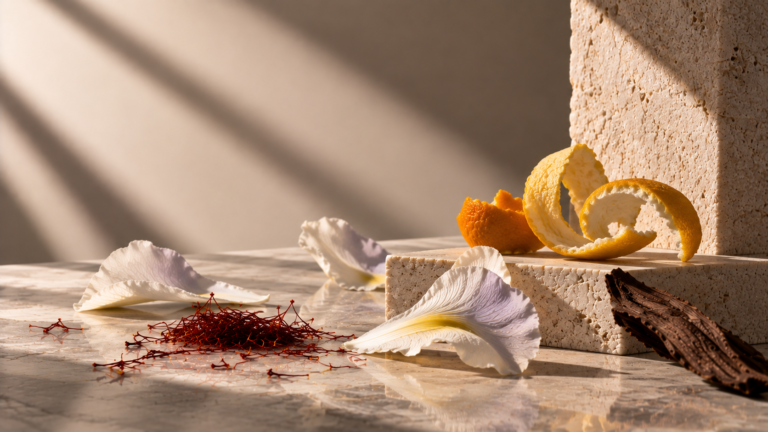
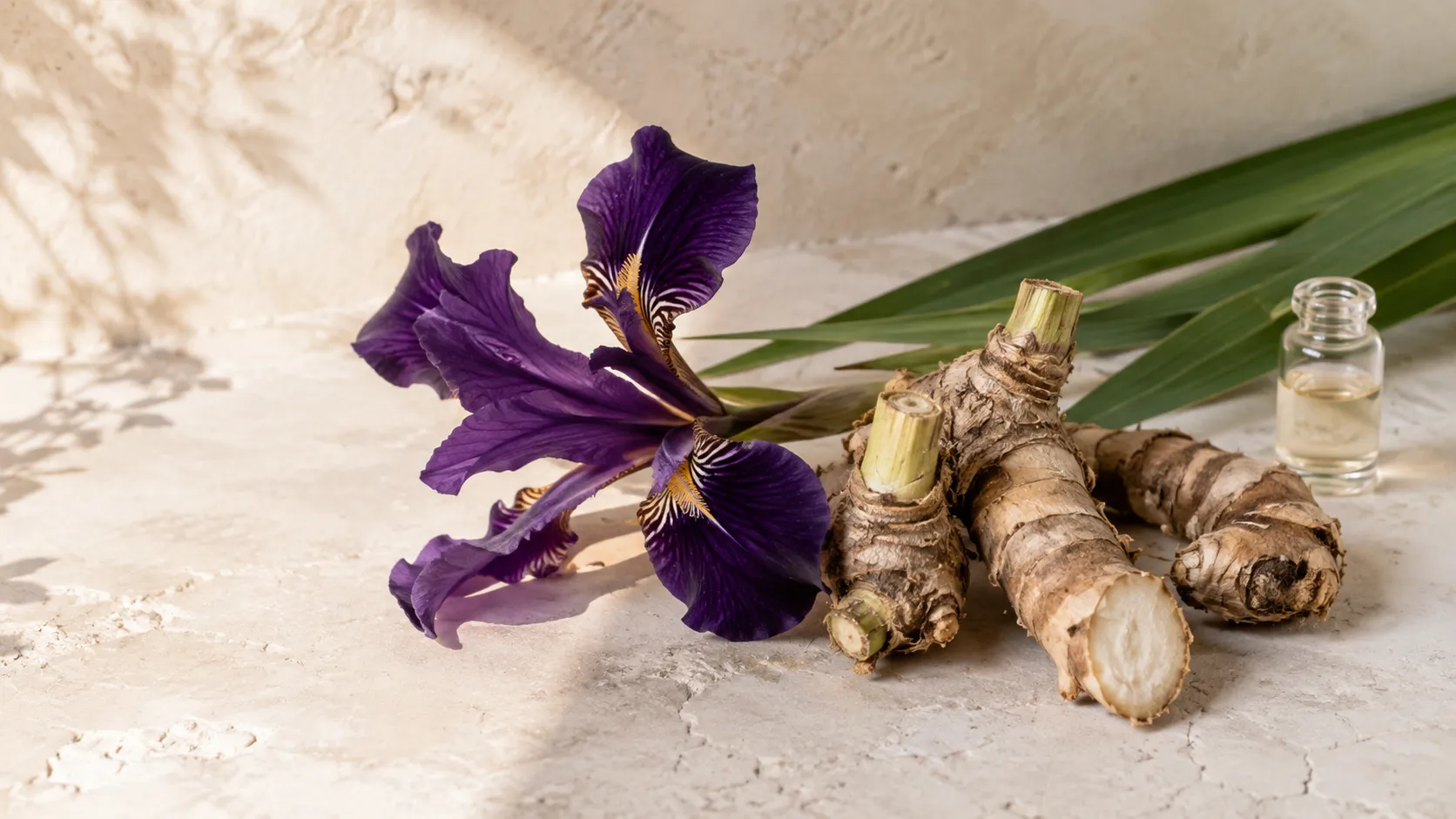
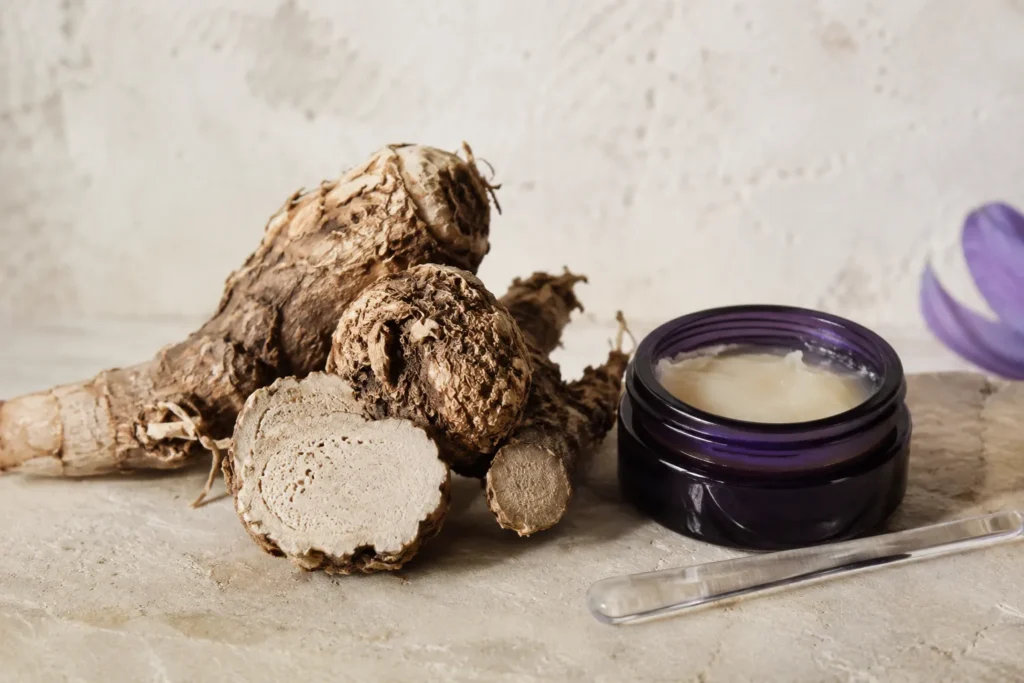
Despite the floral name, the prized natural material used in perfumery comes from the iris rhizome, the underground stem of the plant, rather than its petals. Iris pallida and Iris germanica are among the species used for this purpose. The rhizomes are harvested, cleaned and dried before being processed, and that waiting period is part of what makes the material so precious.
Dior describes the Tuscan iris material used in Dior Homme Intense as requiring at least three years of drying. Givaudan likewise explains that harvested rhizomes are washed and dried before steam distillation. This is not an ingredient for anyone demanding immediate gratification. Iris has boundaries, a schedule and apparently better long-term planning than I do.
The distilled material is commonly called orris butter because of its waxy, semi-solid texture. It contains aromatic molecules known as irones, which contribute to the characteristic violet-like, powdery and woody smell. Genuine orris is extremely concentrated and expensive. IFF notes that one kilogram of its Italian orris absolute requires roughly 2,000 kilograms of plant material. Suddenly, the price of a beautiful iris perfume starts to feel less like daylight robbery and more like daylight robbery with agricultural context.
What does iris smell like?
There is no single answer, because iris changes dramatically according to its quality, dosage and surrounding ingredients. These are some of its most recognizable personalities:
- Powdery: soft face powder, talc or a cosmetic cloud, especially when paired with musks and violet effects.
- Lipstick-like: waxy, creamy and slightly sweet, recalling vintage lipstick rather than a bouquet of fresh flowers.
- Buttery and velvety: rich, smooth and almost tactile, the facet that makes the term orris butter feel entirely logical.
- Earthy and root-like: cool soil, dried roots and a faint vegetal bitterness that can make iris feel austere or mysterious.
- Woody and green: dry, elegant and quietly structured, particularly beautiful beside cedar, vetiver, leather or galbanum.
- Warm and unexpectedly comforting: some iris materials can suggest bread, wax or skin, a softness far removed from the idea of cold cosmetic powder.
None of these facets is compulsory. A perfume can use iris to create texture without smelling obviously powdery. Another can amplify the lipstick effect until the entire composition feels ready to reapply its makeup before delivering bad news.
Iris, orris and violet: related, but not identical
The terminology is confusing. In everyday fragrance language, brands and reviewers often say iris when referring to an iris or orris effect. More technically, orris describes the fragrant material obtained from the rhizome. Violet is a different flower and a different olfactory idea, even though the two can smell related.
That resemblance comes partly from ionones and related materials, an important family of aroma molecules associated with violet and iris effects. Modern perfumery can build powdery, woody or violet-like iris impressions with natural orris, synthetic materials or a combination of both. Seeing iris in a note list therefore does not prove that a large quantity of natural orris butter is present. Note pyramids are storytelling tools, not laboratory inventories wearing evening dress.
Why iris is so expensive
The answer is time, labour and yield. The plant must grow before the rhizomes can be harvested. Those rhizomes then require cleaning, drying and processing, while the aromatic transformation continues during maturation. The resulting yield is tiny compared with the amount of plant matter required.
This explains why natural orris is treated as one of the perfumer’s most precious materials and why a fragrance may use it with extraordinary restraint. A small amount can soften edges, connect floral and woody notes or add volume without announcing itself. Luxury, occasionally, knows how to whisper.
Six iris perfumes I have loved
These are not six fragrances selected to make an authoritative greatest-hits list. They are bottles I own or have owned, and each one explains a different reason why iris keeps finding its way back into my collection. This is a personal map, not an iris examination board.
Acqua di Parma Iris Nobile: luminous elegance
Discontinued, because apparently peace was never an option. Iris Nobile showed me the graceful, radiant side of the note. It felt floral and polished, with the effortless elegance I expect from Acqua di Parma. I had it, I loved it and I remain entirely capable of holding a grudge over its disappearance.
Prada Infusion d’Iris: clean and transparent
Prada presents Iris pallida with neroli, mandarin and benzoin, creating a lighter floral-woody interpretation. It is polished and clean without becoming sterile, refined without dressing for a period drama. This is iris with immaculate tailoring and absolutely no visible effort.
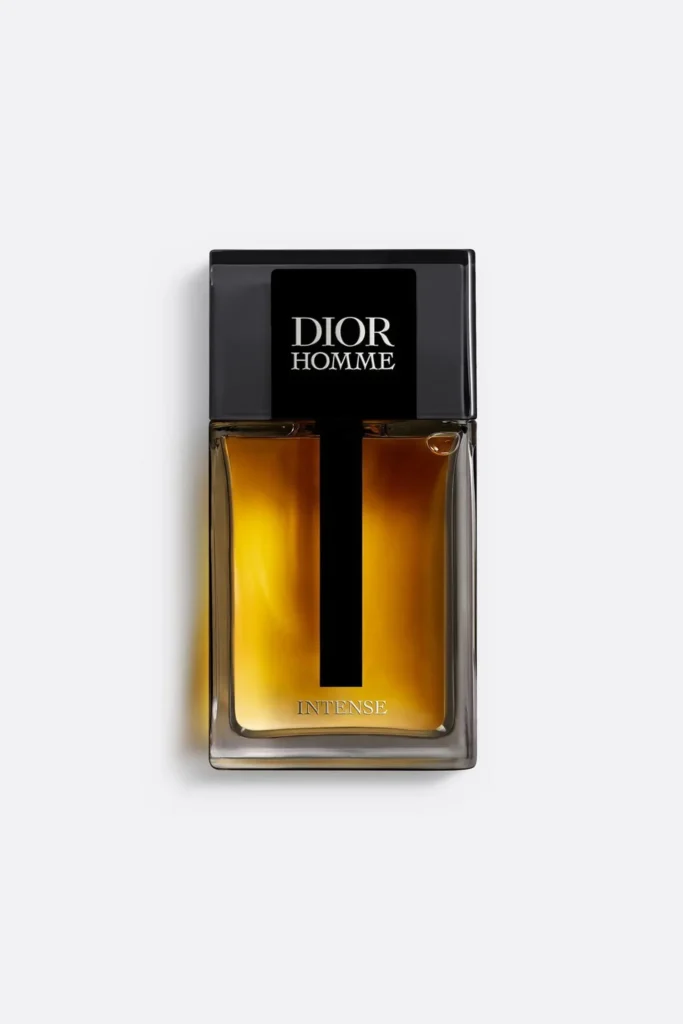
Dior Homme and Dior Homme Intense: cosmetic sensuality
The original iris-centred Dior Homme and the richer Intense interpretation made the note feel warm, tactile and unapologetically sensual. Their powdery, cosmetic character never prevented them from reading as masculine. Quite the opposite. They helped prove that iris does not need to choose between lipstick and confidence.
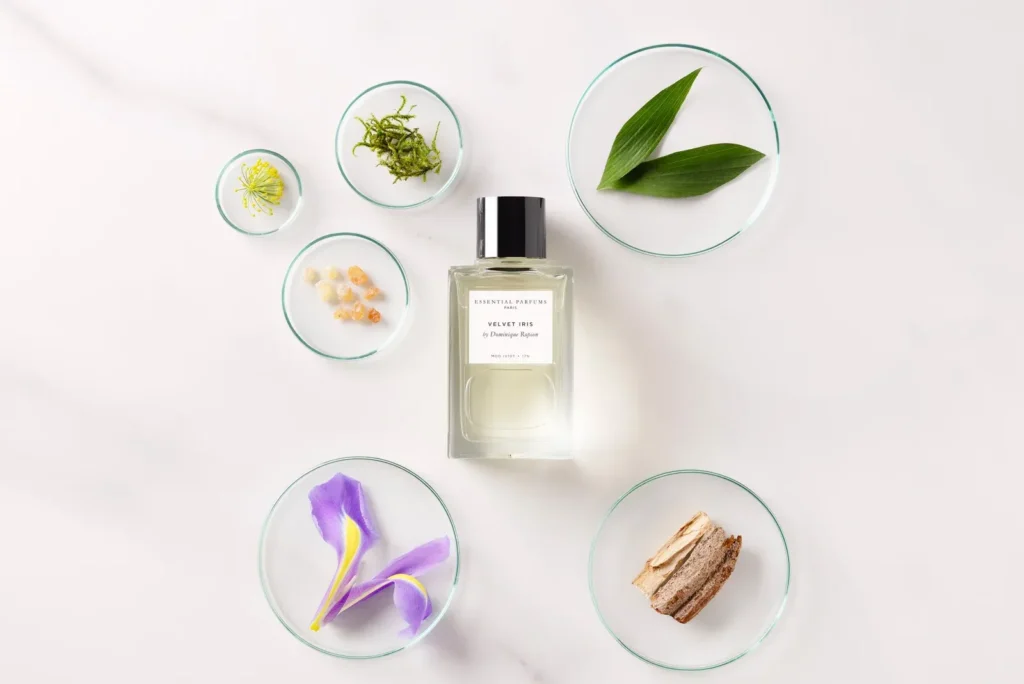
Velvet Iris by Essential Parfums: the greener side
Velvet Iris draws out the greener personality of iris, the part that can be overshadowed when everyone becomes distracted by powder and lipstick. It feels fresher, more vegetal and less predictable, while retaining the soft texture that makes the material so compelling.
Lancôme La Vie Est Belle Iris Absolu: iris meets gourmand
This is where iris stops pretending it has no interest in dessert. Iris Absolu combines its powdery elegance with sweeter gourmand facets, creating something plush, generous and decidedly less austere. It is proof that iris can wear couture and still order pudding.
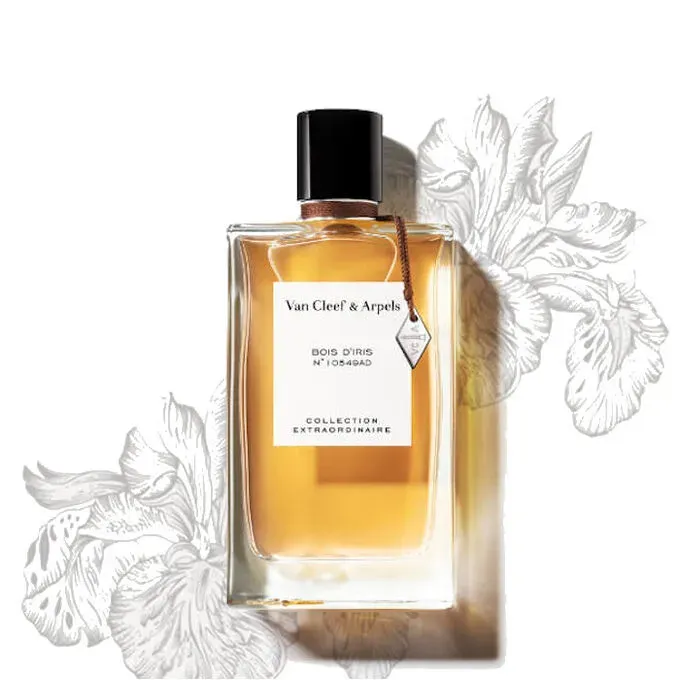
Bois d’Iris by Van Cleef & Arpels: quiet luxury
I already have a weakness for Van Cleef & Arpels fragrances, and Bois d’Iris provides excellent evidence that this weakness is entirely justified. Here iris feels woody, smooth and beautifully composed. It has the quiet, polished presence I love, with no need to scream across the room for validation.
Together, these perfumes show why reducing iris to a single powdery stereotype makes no sense. It can be luminous, transparent, sensual, green, gourmand or woody. Some versions behave impeccably. Others smell like a haunted lipstick with access to a very good wardrobe. Naturally, I mean that as praise.
For a newer interpretation that places iris butter between galbanum, aldehydes, orange blossom and vanilla effects, read my Byredo Future Memories article.
Is iris old-fashioned?
Only if every powdered texture is automatically old-fashioned, which would be a rather limited way to smell perfume. Iris can certainly create vintage associations, especially when it leans toward makeup, violet and wax. Yet contemporary compositions often use it to add abstraction, softness or contrast rather than nostalgia.
The difference lies in context. Pair iris with galbanum and it may feel green and severe. Add vanilla and amber and it becomes plush. Place it beside clean musks and citrus and it can seem almost transparent. Give it leather and woods and suddenly the quiet flower has acquired a private driver and several unresolved secrets.
Why I keep returning to it
Iris gives me what I want from perfume: beauty with a little tension. I enjoy its softness, but also the cool, earthy or woody undertones that stop it from becoming merely pretty. It can feel nostalgic without smelling dusty, sophisticated without becoming joyless and comforting without turning into dessert.
Most of all, iris proves that presence does not require volume. It can remain close, composed and unmistakable. In a fragrance world increasingly determined to be louder, sweeter and more addictive than everything released five minutes earlier, quiet drama feels almost radical.
Quick questions
Does iris perfume come from the flower?
Usually, the prized natural material comes from iris rhizomes rather than the petals. The processed fragrant material is commonly called orris.
What does iris smell like in perfume?
It can smell powdery, waxy, buttery, earthy, woody, green, violet-like or reminiscent of lipstick, depending on the material and composition.
Are iris and violet the same perfume note?
No. They are different botanical and olfactory ideas, although ionones and related aroma materials can give both violet-like and iris-like facets.
Why is orris butter expensive?
Producing it requires cultivated rhizomes, lengthy drying and processing, and a very low yield of fragrant material.
Is iris only used in women’s perfume?
No. Iris is widely used across feminine, masculine and genderless perfumery, from Chanel N°19 to Dior Homme Intense.
Explore more perfume ingredient stories and guides here.