The Strawberry Note: A Fruit Perfumery Had to Invent
Creating the strawberry note in perfume offers none of the obvious shortcuts provided by bergamot peel or lavender flowers. There is no conventional strawberry essential oil waiting to be pressed or distilled. And yet the fruit appears everywhere in fragrance: glossy, jammy, green, musky, creamy, sometimes so bright it feels almost fluorescent.
That contradiction is what makes the note interesting. What we recognize as strawberry in a perfume is usually an accord: a carefully balanced construction assembled from several aromatic materials rather than a literal distillation of the fruit. Natural strawberry-derived extracts and isolates can exist, but they are not the same thing as a traditional essential oil, and brands rarely tell us enough to understand precisely what sits behind the word on a notes list.
In other words, strawberry in perfumery is less a copied photograph of the fruit than a portrait. The perfumer decides which version we meet: freshly cut, green and tart; warm and almost caramelized; dusted with sugar; or dressed up with flowers and woods until it is ready for dinner.
Why There Is No Conventional Strawberry Essential Oil
Citrus peel contains abundant aromatic oil that can be mechanically expressed. Many aromatic plants can be steam-distilled. Strawberry flesh, by contrast, is mostly water, and the volatile compounds responsible for its smell are present in small, fragile amounts. Trying to distil the fruit is neither a practical nor an efficient route to the aroma we expect from a ripe strawberry.
Strawberry seed oil does exist, but it is a carrier oil used mainly in skincare. It does not reproduce the recognizable smell of the fruit. So when a perfume lists strawberry, the word normally describes an olfactory effect, not a conventional essential oil poured directly into the formula.
That distinction matters, but it should not become another perfume myth. Saying that strawberry has no traditional essential oil does not mean that every strawberry material must be wholly synthetic. Natural isolates and extracts derived from the fruit are possible. What remains true is that a convincing strawberry note almost always requires composition: nature supplies hundreds of volatile compounds, while perfumery selects, amplifies and rearranges the parts we recognize most quickly.
How a Strawberry Accord Is Built
A real strawberry does not smell of one molecule. Researchers have identified hundreds of volatile compounds across different cultivars, including esters, furanones, terpenes, aldehydes and lactones. Their proportions change with variety, ripeness and storage, which is one reason why a wild strawberry, a supermarket strawberry and strawberry jam do not tell exactly the same aromatic story.
Strawberry aldehyde: famous, useful and badly named
Ethyl methylphenylglycidate—commonly called Strawberry Aldehyde or Aldehyde C-16—is one of perfumery’s best-known strawberry materials. Despite the nickname, it is not chemically an aldehyde and it has not been identified as a natural constituent of the fruit. Its profile is intensely fruity, sweet, floral and slightly honeyed. Used alone it can feel broad and unmistakably artificial; blended carefully, it gives an accord immediate strawberry recognition and volume.
Furaneol and the smell of ripeness
Furaneol genuinely occurs in strawberries and is one of the compounds associated with their characteristic aroma. Its sweet, caramel-like and cooked-fruit facets help create the impression of ripeness or jam. It is important, but it is not a complete strawberry by itself. Without brighter esters, greener nuances and floral or creamy support, the accord can drift towards caramel rather than fresh fruit.
The supporting cast
Perfumers can use fruity esters for lift, green materials for the sensation of leaves and unripe flesh, and lactones for creamy or peach-like roundness. Maltol or ethyl maltol may increase the sugary effect; musks can make it soft and skin-like; tart materials such as rhubarb can sharpen the edges. There is no single mandatory recipe. The balance determines whether the result suggests a punnet of fruit, strawberry sweets or jam spreading slowly over warm toast.
From Lip Gloss to Fine Fragrance
Strawberry has an image problem. Fig gets architecture. Iris gets melancholy. Blackcurrant gets to be sharp and intellectual. Strawberry is usually handed a pink lip gloss and told not to make a scene.
Its reputation comes partly from familiarity. The same instantly recognizable materials used in fine fragrance also appear in shower gels, sweets and inexpensive body sprays. Used loudly, the accord can become cartoonish within seconds. That does not make the note intrinsically juvenile; it simply makes poor balance very difficult to hide.
Rose and jasmine can turn strawberry towards polished floral territory. Vanilla, caramel and musk emphasize comfort and gourmand warmth. Moss, vetiver, violet or woods can take away some of the obvious sweetness. A green or acidic contrast makes the fruit feel less like syrup and more like something still attached to a plant.
The interesting question is therefore not whether strawberry is sophisticated. Notes do not possess social status. The question is what the perfumer asks it to do—and whether the rest of the formula gives it enough space, tension and contrast to do it well.
Five Ways to Wear Strawberry
| EDITORIAL NOTE : The fragrances below have not been personally tested for this article. They are included as documented examples of different treatments of the note, not as mini-reviews. |
Salum Strawberry Pool
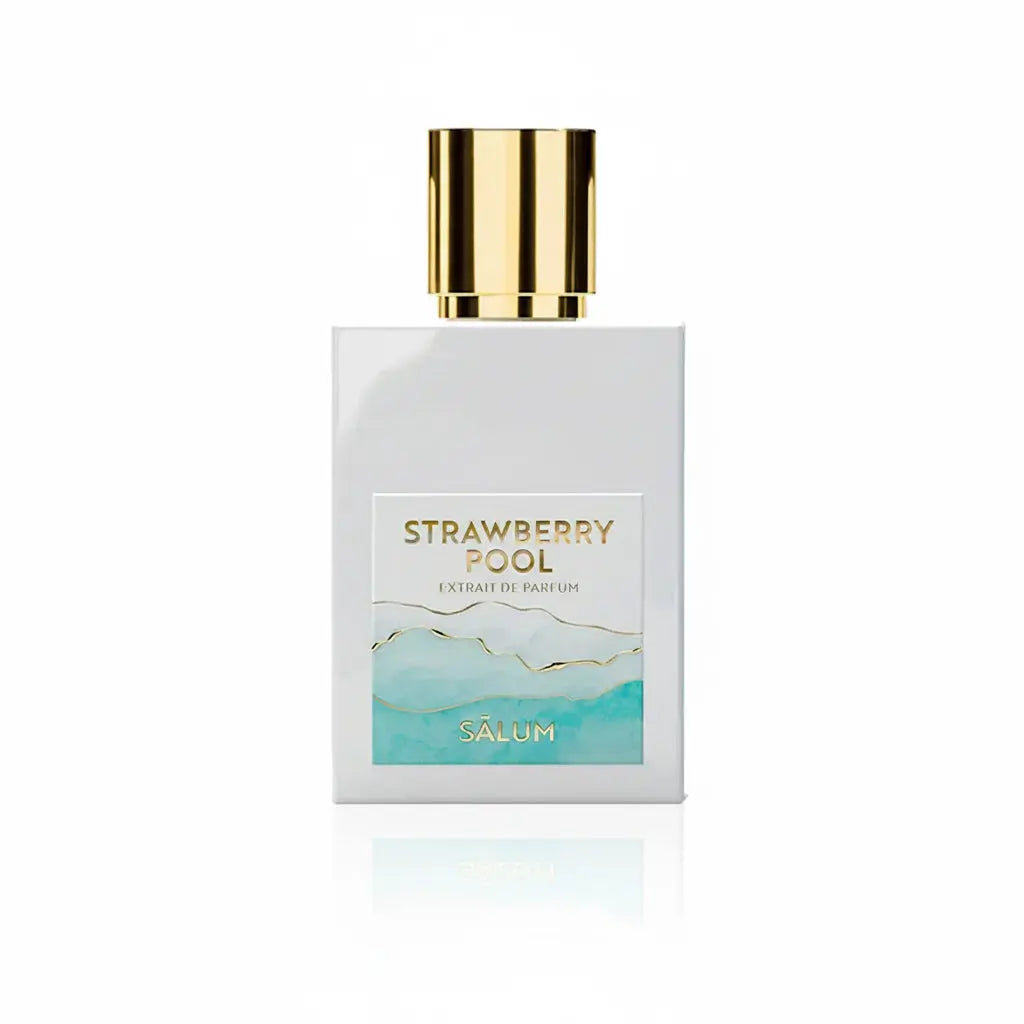
Salum Strawberry Pool places strawberry and wild strawberry beside ginger, pink pepper, water, chlorine, sunscreen and ambrette. On paper, it does not chase botanical realism. It turns the fruit into a poolside memory: skin, water, heat and the faintly synthetic atmosphere of summer products. It may be the most openly constructed example here and that honesty is part of its appeal.
Marc Jacobs Just Perfect
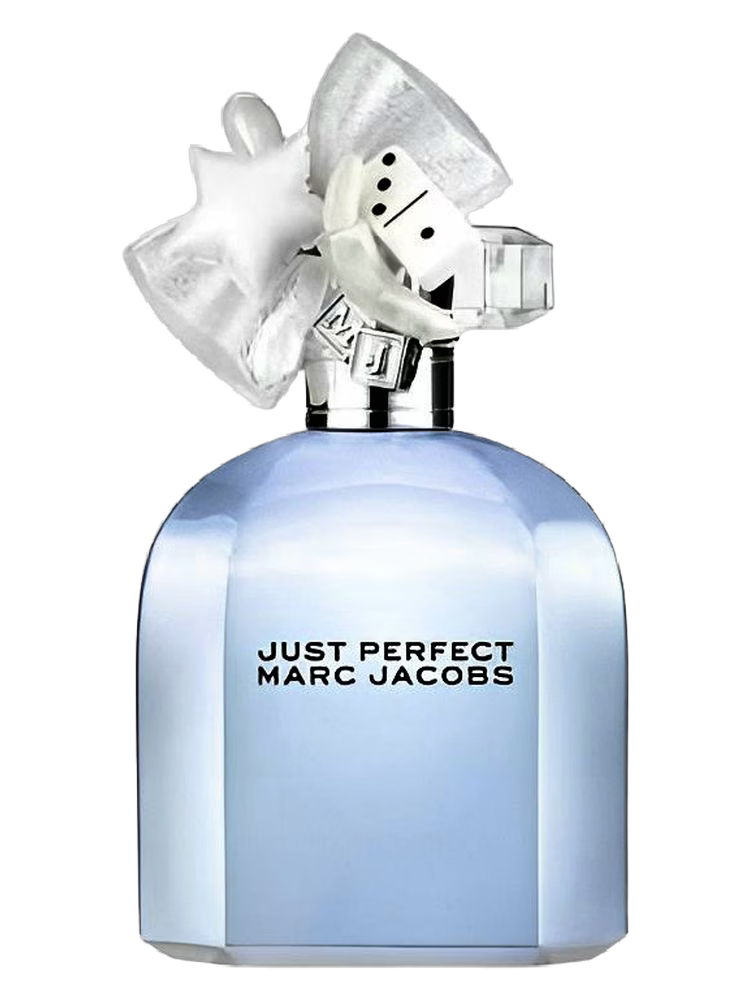
Just Perfect by Marc Jacobs follows a more familiar gourmand route, combining strawberry and fruity notes with jasmine, vanilla and a sticky caramel accord. It shows how easily strawberry can move from juicy to dessert-like when floral brightness is placed over a dense, sweet base. Familiar territory, certainly, but familiar combinations usually survive because they work.
YSL Black Opium Pink Glaze
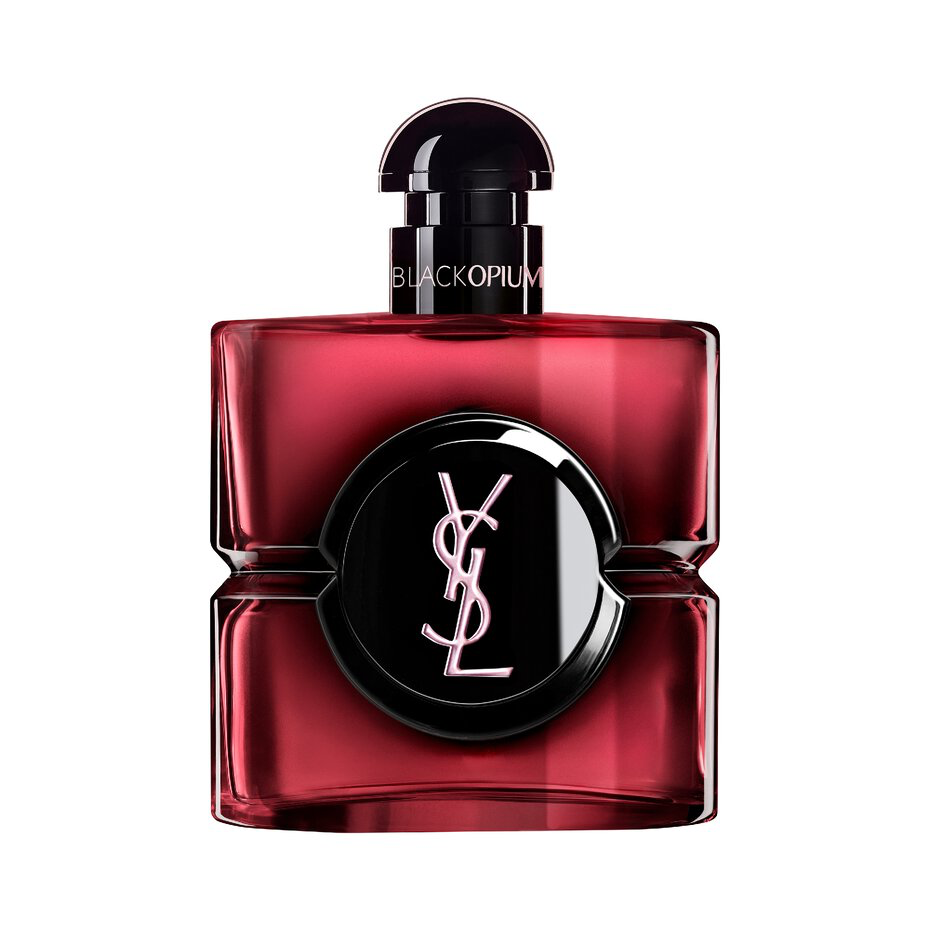
As covered in our Black Opium Pink Glaze article, YSL describes the strawberry in Black Opium Pink Glaze as “100% naturally extracted”. The claim is noteworthy precisely because conventional strawberry essential oil is not a standard perfumery material. The brand does not publicly explain the extraction method or identify the resulting ingredient in greater technical detail, so the accurate response is curiosity rather than either blind acceptance or automatic dismissal. In the composition, strawberry meets citrus, white flowers, coffee, vanilla, benzoin, woods and patchouli: a brighter fruit glaze over the familiar Black Opium architecture.
Miu Miu Miutine
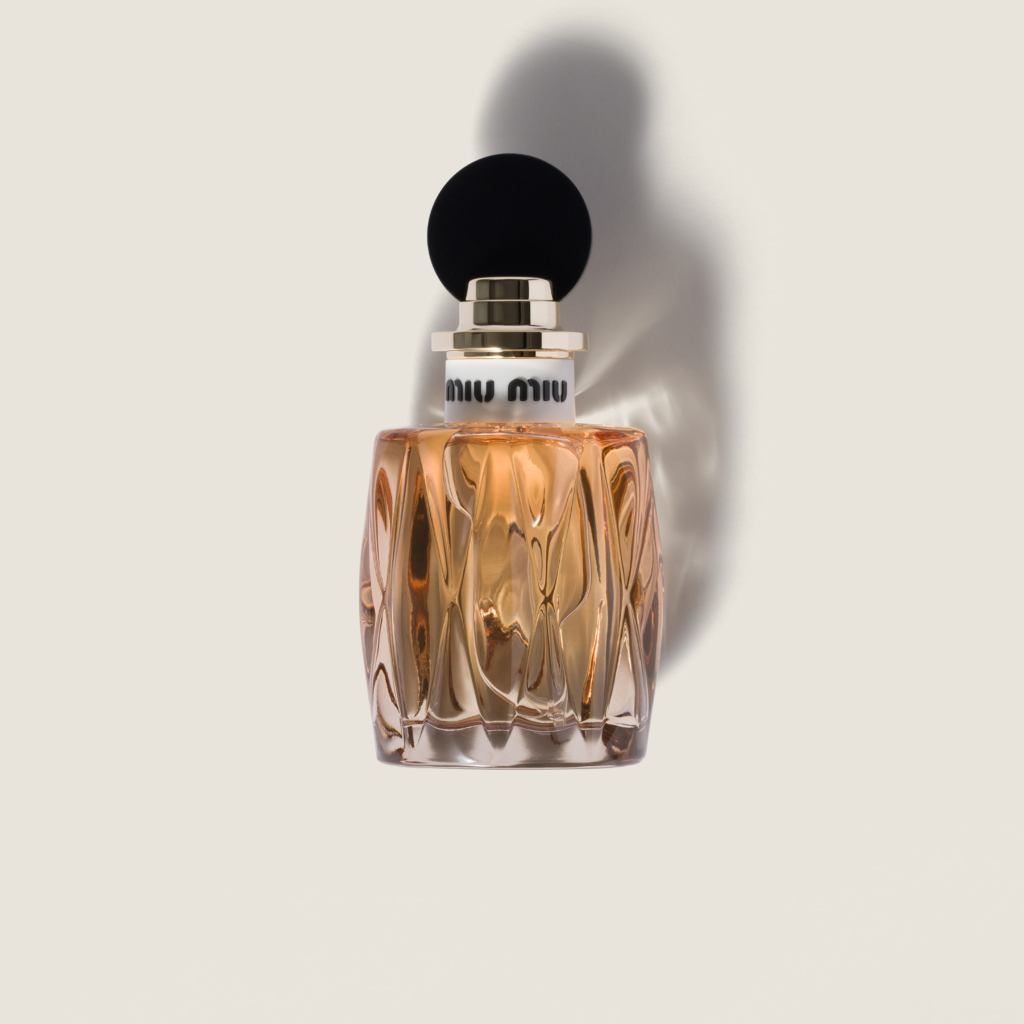
Created by Dominique Ropion, Miutine pairs wild Mara des Bois strawberry with gardenia, jasmine, rose, brown sugar, vanilla, moss, amber and patchouli. Gardenia gives the fruit a creamy, retro floral frame, while moss and patchouli suggest a darker chypre-like structure beneath the sweetness. On paper, it is less interested in a realistic strawberry than in what happens when the note is made mischievous, polished and slightly strange.
For a darker variation on the idea, the upcoming Miutine Intense replaces strawberry with blackberry, giving the line a more nocturnal and concentrated character.
Creed Fragaria
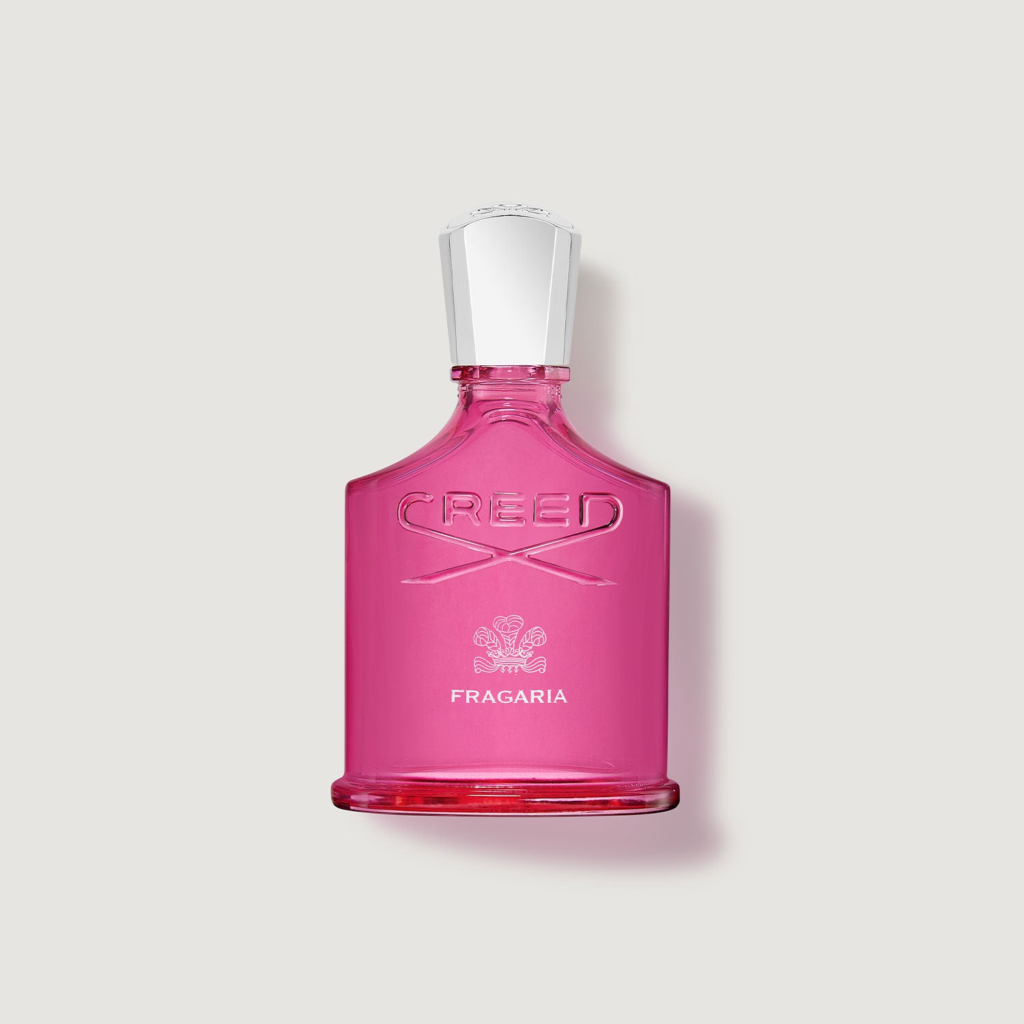
Fragaria places strawberry in the heart beside violet, after pink pepper and citrus, then grounds it with cedarwood and vetiver. The structure avoids the most obvious vanilla-and-caramel route and gives the fruit a drier, more tailored setting. Creed describes it as a limited-edition Millésime that has now sold out—not proof that strawberry has suddenly become solemn, but evidence that it can work outside the usual gourmand wardrobe.
Strawberry Is Not the Problem
A strawberry accord can smell cheap, nostalgic, sensual, surreal or exceptionally elegant. So can rose. So can vanilla. The difference lies in dosage, quality, context and the perfumer’s intention—not in an imaginary hierarchy that grants some notes a university degree and sends others to the confectionery aisle.
Perhaps that is why strawberry deserves another look. It is a note built on reconstruction, but perfumery itself has always been partly about reconstruction: taking an impression, exaggerating one detail and editing another until the result feels more vivid than memory. Strawberry simply makes the illusion easier to see.
And if it occasionally smells like lip gloss? Fine. Lip gloss has never pretended to be vetiver.
| Some notes behave beautifully. Others need supervision. → Explore Perfume Notes. |