
Jasmine in Perfumery: The White Flower That Refuses to Behave
It can smell green, luminous, creamy, animalic, vintage or almost indecent. Calling jasmine simply “floral” is doing most of the story a disservice.
Jasmine in perfumery is surely one of my favorite notes, which will surprise absolutely nobody familiar with my weakness for white flowers. But loving jasmine does not mean looking for the same perfume repeatedly. Quite the opposite: few materials can move so convincingly from freshly cut stems to warm skin, from immaculate petals to something darker and more dangerous.
That range is why jasmine matters. It can brighten a composition, give a floral heart volume, create sensuality or introduce the faintly dirty edge that keeps a perfume from becoming polite background decoration. Sometimes it is the protagonist. Sometimes it is the lighting department, quietly making every other flower look more alive.
This Notes in Perfumery guide explores what jasmine smells like, the difference between the principal varieties used in fragrance, how its scent is captured and why a jasmine perfume may feel radiant in one bottle and almost feral in another. Then we will get to the important evidence: five fragrances that explain why I love the note.
What does jasmine smell like?
The honest answer is that jasmine does not smell like one thing. Its profile can include floral sweetness, green leaves, ripe fruit, honey, cream, warm skin and an animalic or indolic undertone. The proportions change according to the botanical variety, origin, extraction, quality of the material and everything the perfumer places around it.
The green side can recall crushed stems or the cool air of a florist’s shop. The richer side may feel creamy, narcotic and almost tropical. Its indolic facets can suggest overripe fruit, mothballs or warm skin, depending on concentration and context. That last part is not a defect to be corrected. Used intelligently, a trace of dirtiness gives the flower dimension and makes its beauty feel alive rather than sanitized.
This is also why two perfumes that both list jasmine can have almost nothing in common. One may emphasize brightness with citrus and leafy notes; another may push the flower toward incense, leather, amber or musk. The note name is a starting point, not a complete description.
Grandiflorum and sambac are not interchangeable
Hundreds of jasmine species exist, but two names appear most often in perfumery: Jasminum grandiflorum and Jasminum sambac.
Jasminum grandiflorum
Often associated with Grasse, Egypt and India, grandiflorum tends to be described as luminous, floral, softly fruity and green, with warm and animalic nuances beneath its polished surface. It can feel expansive without necessarily becoming tropical. When a fragrance presents jasmine as elegant, petal-like and slightly stemmy, grandiflorum is often part of the reference vocabulary.
Origin matters. Soil, climate, cultivation and processing can alter the expression of a natural material, so “grandiflorum” is not one perfectly standardized smell. Perfumers work with specific extracts, qualities and suppliers rather than an abstract flower floating outside geography.
| Discover Dior’s Jasmine des Anges Esprit de Parfum, built around jasmine grandiflorum. |
Jasminum sambac
Sambac is often fuller, fruitier and more voluptuous. It can carry orange blossom-like, tea-like or banana-like facets alongside its floral body, and its indolic character can feel more immediately apparent. It is frequently used when a perfumer wants jasmine to be lush, sensual and unmistakably present.
These are tendencies, not laws. A transparent sambac and a dark grandiflorum are entirely possible once extraction and composition enter the picture. Botanical names help us ask better questions; they do not let us predict a finished perfume from a label.
How jasmine becomes a perfume material
Jasmine flowers are delicate, and conventional steam distillation can damage or distort their aroma. Historically, enfleurage captured the scent by allowing fresh blossoms to release their fragrant molecules into fat. It is a beautiful and labor-intensive method, but it is no longer the standard source of jasmine used in mainstream modern perfumery.
Solvent extraction is far more common. The flowers are processed to create a waxy concrete, which is then washed with alcohol and refined into an absolute. Jasmine absolute is intensely aromatic and complex, but it is only one tool available to a perfumer.
Modern jasmine effects also use aroma molecules, either alongside the natural extract or without it. Materials such as benzyl acetate, hedione and indolic molecules can emphasize different aspects of the flower: fruity brightness, airy diffusion, petal transparency or sensual depth. A perfume containing “jasmine” is therefore not necessarily a bottle filled with a large dose of jasmine absolute, nor is a reconstructed jasmine automatically inferior.
Natural materials offer beautiful complexity, but they vary and can be costly, powerful or difficult to use. Synthetics allow precision, stability, diffusion and effects that the flower alone cannot provide. Perfumery is composition, not a morality contest between a field and a laboratory.
Why does jasmine sometimes smell dirty?
The word most often used here is indolic. Indole is an aromatic molecule found naturally in several white flowers, including jasmine and orange blossom. In very small amounts it can make a floral accord feel warm, narcotic and realistic. At higher levels, it can suggest mothballs, decay, breath or other bodily associations.
That sounds alarming until you remember that beauty in nature is rarely sterile. A jasmine flower at night does not smell like floral laundry detergent. Its sweetness contains shadow, and perfumers can turn that contrast up or down.
An indolic jasmine is not automatically stronger, more natural or better. It is simply one possible treatment. Clean musks, citrus, watery notes and green materials can make jasmine feel sheer; civet effects, leather, incense, amber and dense woods can pull it toward the animalic and nocturnal.
Is jasmine always feminine?
No. Marketing has spent decades assigning flowers to women and woods to men, but the material itself has no gender. Jasmine appears throughout fragrances marketed in every direction, sometimes openly and sometimes hidden inside a composition to provide lift and volume.
Its cultural associations may affect how a perfume is presented, but olfactory structure is more useful than the label on the counter. Jasmine can be austere with incense, sharp with greenery, radiant with citrus, creamy with sandalwood or challenging with animalic notes. None of those effects requires permission from a gender category.
Five jasmine fragrances that explain why I love the note
This is not a ranking and it is not intended as a definitive list of the best jasmine perfumes ever made. These are five fragrances from my own collection and olfactory memory that demonstrate how dramatically the note can change character.
Acqua di Parma Gelsomino Nobile
Gelsomino Nobile showed me the green side of jasmine at its most elegant. What I loved was the impression of petals still attached to their stems: polished and luminous, but not stripped of their botanical character. It had refinement without becoming anonymous.
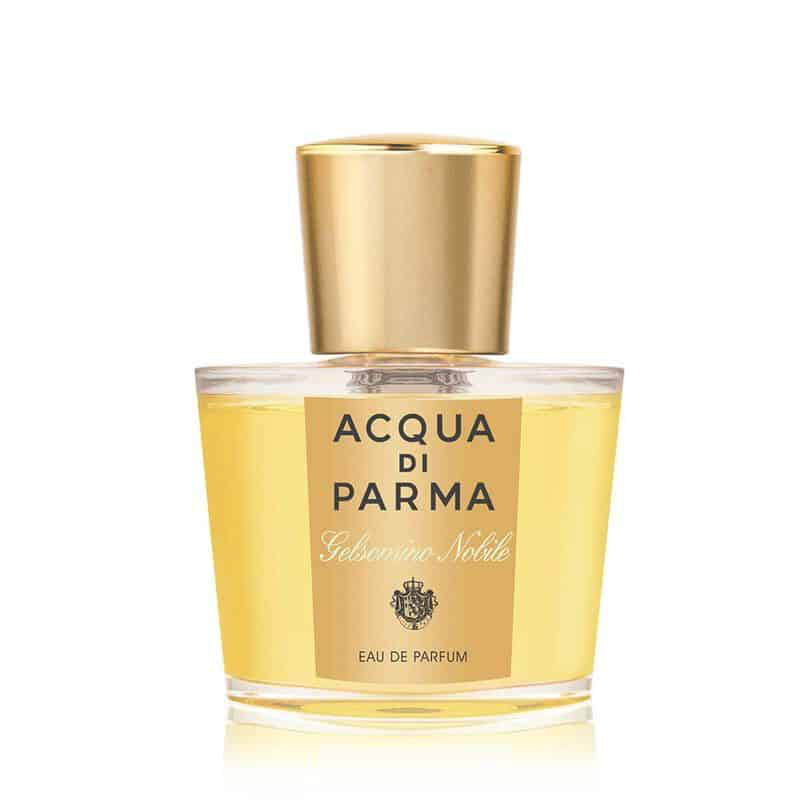
Acqua di Parma has discontinued it, an act I continue to regard as a crime against humanity. That may not meet the legal threshold in most jurisdictions, but emotionally the case is airtight. Its absence also proves why discontinued perfumes matter: when a distinctive interpretation disappears, replacing the note pyramid does not necessarily replace the experience.
Bvlgari Jasmin Noir
If Gelsomino Nobile opened the garden gates, the original Bvlgari Jasmin Noir turned off the lights. Dark, opulent and sexy, it used jasmine in a far more dramatic register, surrounded by green facets, gardenia, almond, woods and a warm ambery base.

It also projected with the subtlety of an emergency broadcast. I am reasonably sure the formula contained a small amount of radioactive material, because many fragrances currently advertised as “beast mode” would quietly excuse themselves in its presence. The power was part of the experience, but so was the contrast: a white flower made shadowy, textured and unapologetically glamorous.
Serge Lutens La Religieuse
What can you really say to Serge Lutens when he decides to place jasmine beside incense, musk and an animalic suggestion? La Religieuse feels austere and sensual at the same time, with a slightly vintage tone that I find completely captivating.

I adore this house, so neutrality was never a realistic objective. Still, La Religieuse earns its place here because it shows how jasmine can feel pale rather than sunny, spiritual rather than cheerful and quietly unsettling without relying on brute force. It is a white flower viewed through black fabric.
Perris Monte Carlo Jasmin de Pays
Composed by Jean-Claude Ellena, Jasmin de Pays is one of the most beautiful and realistic jasmines that has ever reached my nose. Its achievement is not photorealism in a simplistic sense; it is the impression of a living flower, complete with freshness, delicacy and the subtle irregularities that make nature convincing.

Ellena’s restrained style is especially suited to this subject. Nothing needs to shout for the jasmine to be unmistakable. The fragrance gives the material space, and that apparent simplicity requires far more control than piling on decorative notes.
Carthusia Gelsomini di Capri
Gelsomini di Capri, in its interpretation signed by Luca Maffei, takes jasmine toward light. Citrus, orange blossom, ylang-ylang and warm base notes surround it, but the overall impression remains radiant and joyful rather than dense.
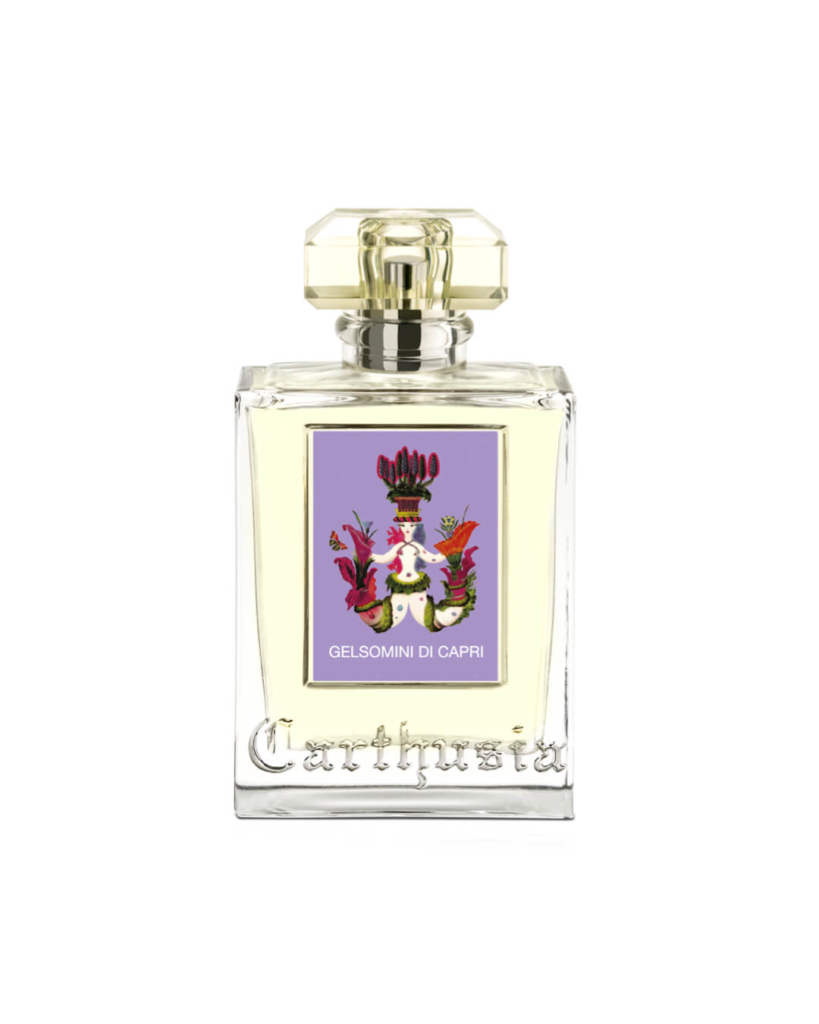
I met Maffei at Pitti Fragranze and thanked him personally for the fragrances he has composed. This one clearly needed additional proof of devotion: I loved it enough to buy the matching body products. Twice. At that point we are no longer discussing casual appreciation; we are reviewing documentary evidence.
How to find the right jasmine fragrance
Start by deciding which aspect of the flower attracts you. If you want brightness, look for citrus, green notes, tea, neroli or orange blossom around the jasmine. For something creamy and enveloping, sandalwood, ylang-ylang, vanilla or soft musks may move it in that direction. Incense, leather, amber, patchouli and animalic accords can create a darker interpretation.
Then ignore the note pyramid long enough to smell the perfume on skin. Jasmine compositions can shift considerably as they warm up, and an indolic or musky facet that is invisible on paper may become central during wear. Conversely, a frighteningly dramatic list of notes may result in something surprisingly transparent.
Sampling matters even more when the perfume is discontinued or expensive. Scarcity has a remarkable ability to make every bottle look essential, but rarity is not an olfactory quality. Test the fragrance, decide whether you love the scent rather than the chase and leave the vintage-market forensic work for afterward.
Final thoughts
Jasmine refuses to stay inside a single description. It can be green in Gelsomino Nobile, radioactive and nocturnal in Jasmin Noir, austere in La Religieuse, startlingly alive in Jasmin de Pays and sunlit in Gelsomini di Capri. That versatility is precisely why I never tire of it.
The next time a perfume lists jasmine, do not ask only whether you like the note. Ask which jasmine you are being shown: petal or stem, daylight or darkness, clean skin or something less innocent. The answer may tell you far more than the word floral ever could.
For more investigations into the materials causing problems for my shelves and my bank account, visit the Notes in Perfumery archive. If you prefer the evidence worn directly on skin, the Fragrance Reviews section is waiting with considerably fewer botanical Latin names.
| Method and disclosure: The personal descriptions in this article are based on my own experience with the five named fragrances. Botanical, extraction and material information was checked against educational and brand sources listed below. Perfume formulas are proprietary; a listed jasmine note does not reveal the precise natural or synthetic materials used unless the brand explicitly discloses them. |
[mailerlite_form form_id=1]