Incense in Perfumery: From Lemon Peel to the Last Trace of Smoke
Incense in perfumery can take you from the brightness of lemon peel to the last trace of smoke. Two recent releases put it in rather different places. In Serge Lutens La nuit tombée, it sits with cedar and patchouli as the last of the light goes out. In L’Artisan Parfumeur Abyssae L’Extrait, it turns up somewhere underwater, alongside eucalyptus resin and ambergris. One setting feels immediately plausible. The other raises questions about the fire regulations.
I’m working from the published notes for both releases. Even on paper, though, they make an interesting pair. If the word incense sends you straight to a church pew, what should you expect when a perfumer puts it next to eucalyptus? Part of the answer lies in the difference between a resin and the smell we associate with burning it.
The bright side of incense in perfumery
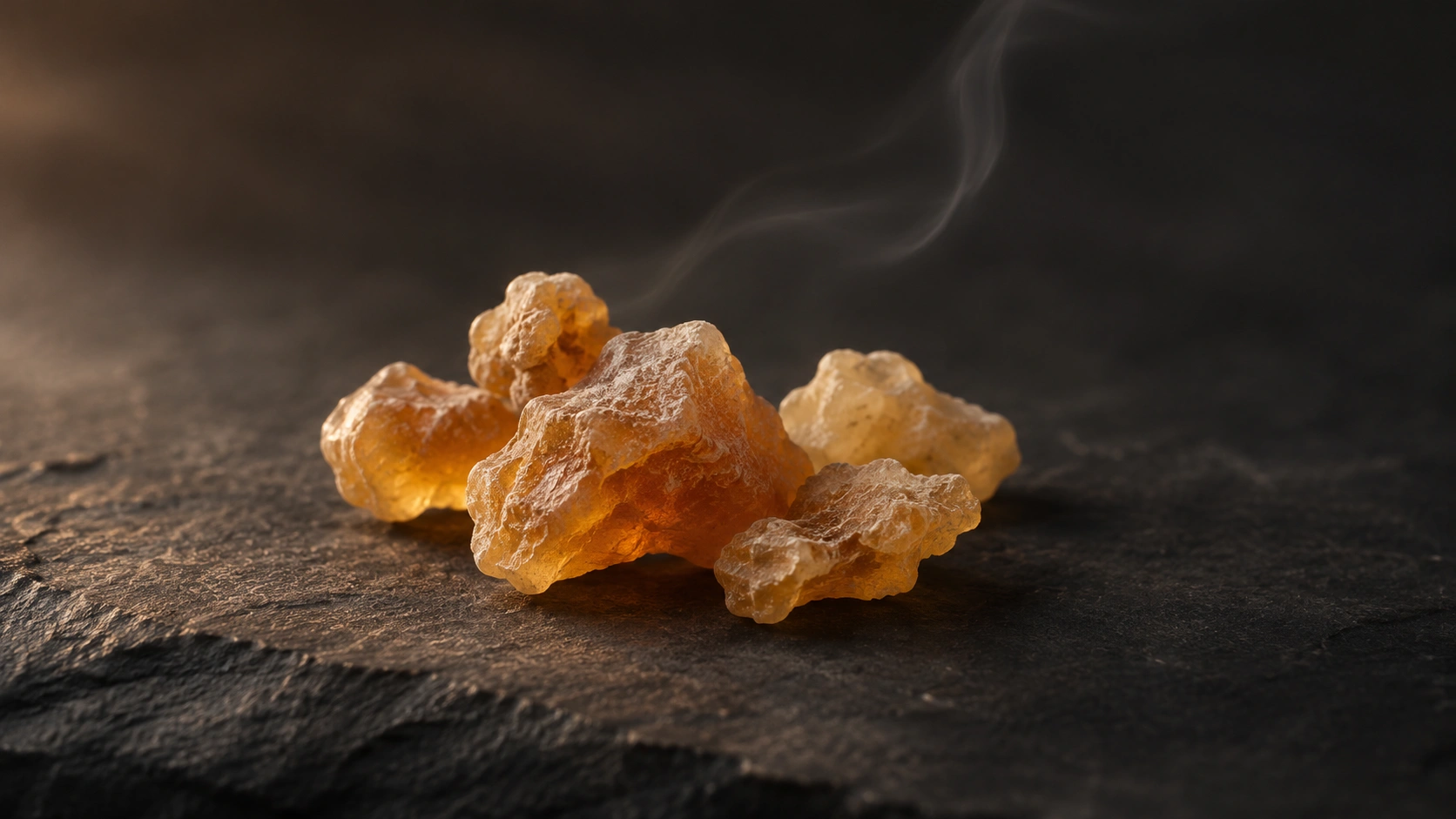
Frankincense, also called olibanum, is a resin obtained from trees of the genus Boswellia. Frankincense in perfumery can take several forms, and those materials can smell quite different. Robertet describes its steam-distilled olibanum oil as peppery and lemony, among other things. Its heat-treated olibanum absolute has a more resinous, burnt character in the supplier’s description.
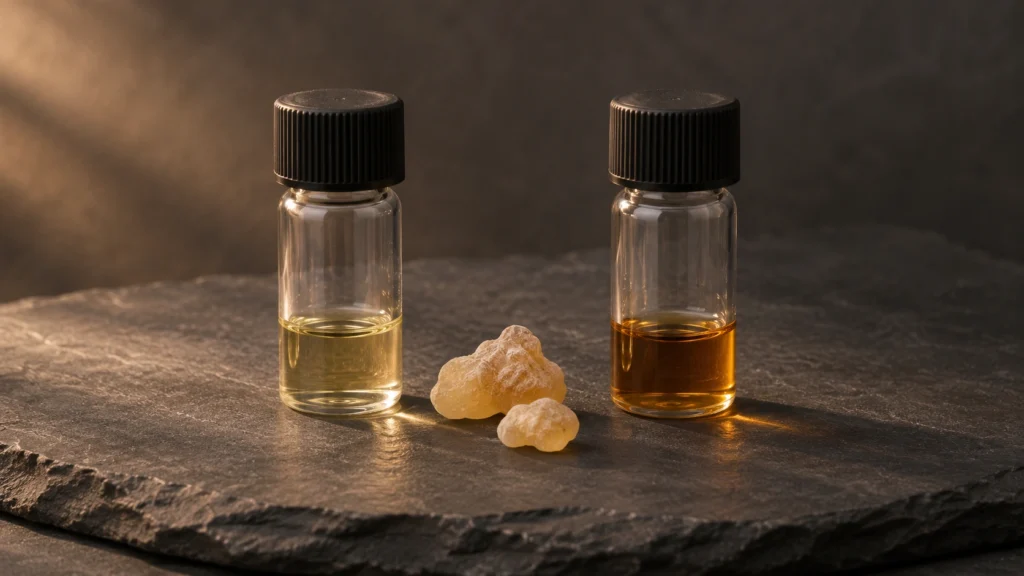
That range is worth keeping in mind if you expect a frankincense perfume to open with smoke. The sharpness that makes you think of lemon peel can be part of the material’s character. Beside cedar, that edge might make the wood feel drier and more distinct. Beside eucalyptus, it might be the first thing you notice.
What does the incense note in perfume tell you?
A note list describes an impression. When it says incense, that might mean the perfumer is drawing on olibanum, building an accord that suggests burning resin, or using the word to describe a smoky effect within the composition. The list alone gives you little basis for telling those possibilities apart. The guide to reading a perfume pyramid goes into that distinction in more detail.
The accompanying notes can give you a better question to take to the counter. With La nuit tombée, I’d pay attention to the point where incense meets the cedar. Does the wood feel as dry as pencil shavings, or does the patchouli give it the weight of damp earth? With Abyssae L’Extrait, I’d start with the eucalyptus. I’m curious whether its aromatic chill keeps the incense feeling airy, or whether the resin takes over once the opening fades.
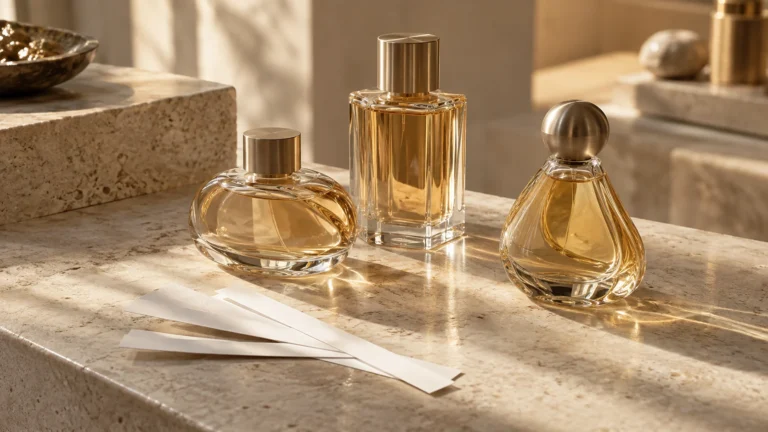
To get a feel for incense in perfumery, try two fragrances that place it in different company. Start with one that lists dry woods and one that puts incense alongside a bright aromatic note. Give each its own blotter and label them. Once the openings have settled, smell them separately and write down the first texture that comes to mind. Is it dusty, sticky, sharp or airy?
Then come back later and see if your description still fits. The woody perfume may leave the fainter trace, while the one that opened bright may turn out to have the richer resinous base. That change is often the most interesting part of the comparison.
Follow it into the drydown
The next time you try an incense fragrance, come back to it once the opening has settled. Notice whether the brighter part has gone and what texture is left behind. There might be a dusty edge to the wood, something sticky and balsamic, or a faint trace of smoke that only becomes obvious once everything else has quietened down.
That last effect is the one I’d most like to find in La nuit tombée. I like the idea of walking back into a room after the smoke has cleared and catching what’s still there. Abyssae has set itself a stranger task. I’d like to know whether it can leave the same impression in a place where nothing ought to have caught fire in the first place.
| From the earthy side of vetiver to the powdery softness of iris, a single note can take a perfume in surprisingly different directions. Explore Perfume Notes |