Hellenist Parfums: Greek Myths and Blind-Buy Courage
Hellenist Parfums has been appearing in my Instagram feed for months, quietly placing its beautiful bottles in front of me until curiosity became a financial plan. I have not smelled the collection yet, and I have not found a stockist near me. Apparently this means blind buying. Am I frightened? Absolutely not. Should I be? Probably.
The responsible plot twist is that Hellenist sells a 5 × 2 ml discovery kit. That would be the adult solution. Unfortunately, adulthood has never been the strongest narrative device in a perfume story.
Hellenist Parfums, a temple of memories
Founded in 2024 by Jean-David Jacoby, Hellenist is a Parisian fragrance house inspired by Greece and made in France. The name describes someone Greek in language, outlook or way of life rather than ancestry, which gives the brand a useful starting point: Greece is not treated as a postcard, but as a living cultural language.
Its stated ambition is to connect past and present through scent, reviving legends, heroes and landscapes without turning the collection into a museum gift shop. The result is a kind of quiet Mediterranean luxury built from paper, wood, glass and ceramic, with an emphasis on considered materials and recyclable or upcycled components.
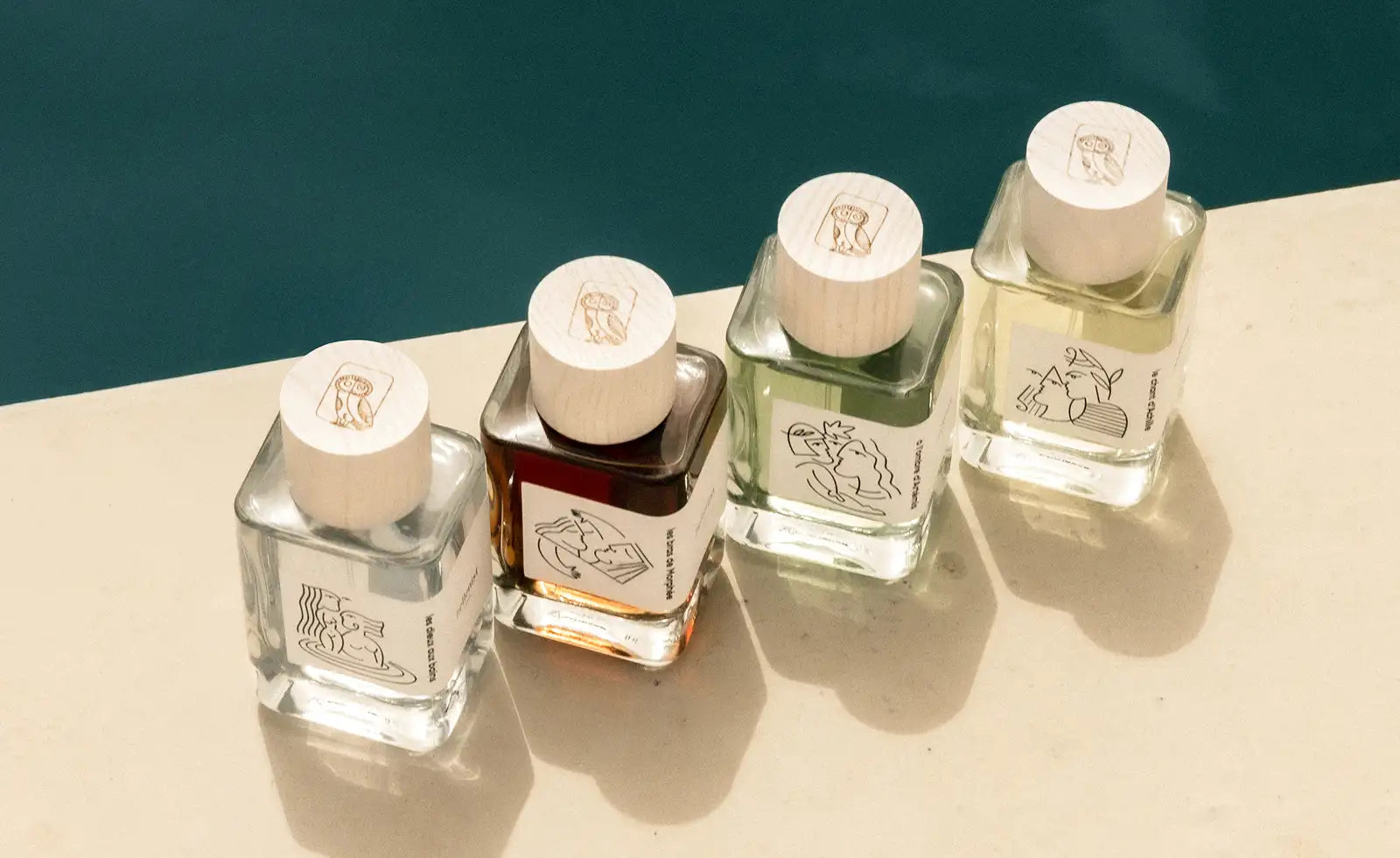
Visually, the bottles do a large part of the seduction. Artist Carlo Amen created the neo-cubist illustrations on the labels, giving every myth a face without making the packaging feel costume-heavy. They are simple, tactile and immediately recognizable. Instagram knew exactly what it was doing to me.
Five myths, five possible financial decisions
The Mythology Collection currently contains five eaux de parfum, available in 100 ml and 15 ml formats. Each one translates a Greek figure or story into a contemporary composition, with a perfumer chosen for that particular chapter.
Les Dieux aux Bains
Pierre-Constantin Guéros builds the collection’s fresh, aromatic entrance with juniper berries, lemon and eucalyptus, followed by water flowers, rosemary, patchouli, vetiver and Ambroxan. The image is a waterfall hidden in the Mediterranean garrigue. In theory, this is the sensible, clean choice. I distrust how reasonable that sounds.
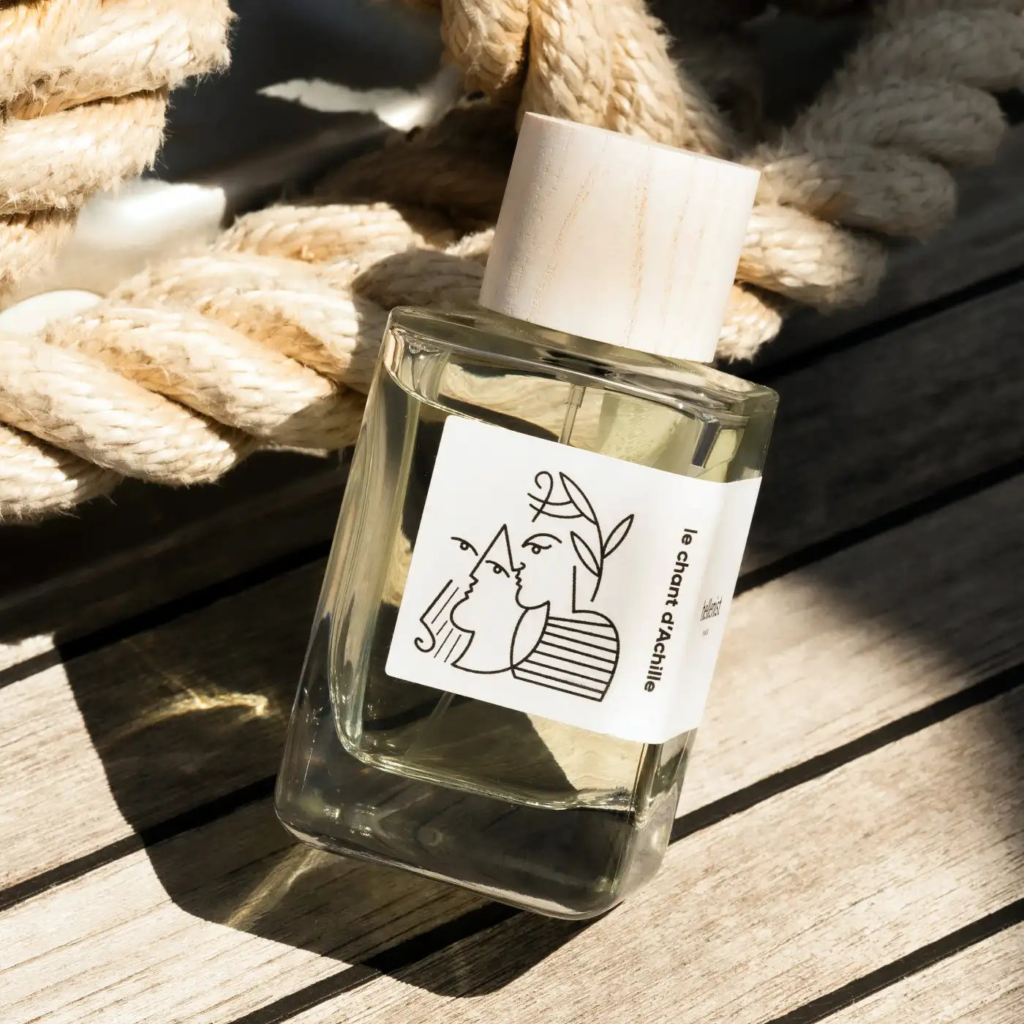
Le Chant d’Achille
Alexandra Carlin gives Achilles a chameleonic orange blossom framed by neroli, lemon and black pepper, then warms it with geranium, ylang-ylang, immortelle, vetiver and white musk. Orange blossom, neroli and ylang-ylang in the same bottle feels less like a suggestion and more like a targeted advertising campaign.
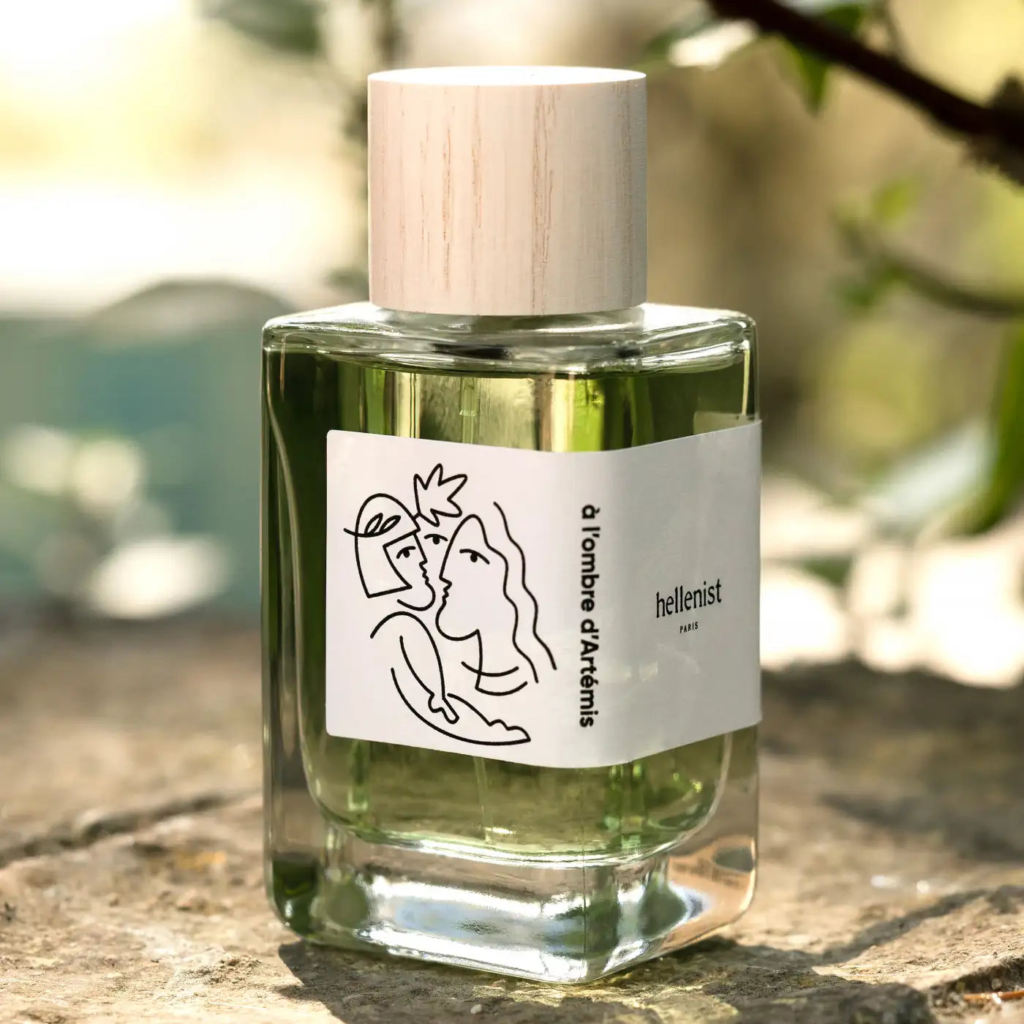
À l’Ombre d’Artémis
Suzy Le Helley imagines Artemis in a sacred forest, pairing blackcurrant and bergamot with fig, rose, ambrette, oakmoss, sandalwood and vetiver. Fig and sandalwood already have my attention. The rose can either behave itself or provide the necessary dramatic complication.
Les Bras de Morphée
Also composed by Suzy Le Helley, this is the one that arrived with my bank details practically filled in. Violet leaf, peach and heliotrope lead to iris, violet and hazelnut, before settling into vanilla, tonka and cashmeran. Powdery, comforting and built around iris: Morphée is not inviting me to sleep, he is encouraging poor financial decisions in a very soft voice.
La Nuit des 300
Maurice Roucel turns the legend of the Sacred Band into a sensual collision of metal and skin. Mugwort, bergamot and layers of musk meet tonka, lavender, patchouli and sandalwood. It sounds darker, more physical and considerably less interested in good behaviour.
The perfumers behind the mythology
The collection brings together Alexandra Carlin, Suzy Le Helley, Pierre-Constantin Guéros and Maurice Roucel. That range matters. Rather than forcing one house signature across every myth, Hellenist lets each story find its own texture, from watery aromatics and luminous florals to powdery iris and musky darkness.
For anyone who enjoys following the people behind the formulas, the names also make this collection particularly easy to approach through a perfumer-led reading. Mythology may provide the plot, but the noses decide how much danger reaches the skin.
Pitti, or the end of the blind-buy excuse
Hellenist is among the exhibitors at Pitti Fragranze 2026, so there is a strong chance that I can smell the collection in Florence before committing any heroic act with my credit card. This is excellent news for accuracy and terrible news for the blind-buy narrative.
It also makes the house one of the brands I am most curious to meet at the fair. A young label, a coherent visual identity, four established perfumers and five fragrances that read like distinct chapters rather than variations on a marketing theme: this is exactly what a discovery event should be for.
Why Hellenist keeps pulling me back
There are many brands using mythology as decoration. Hellenist interests me because the concept appears to reach beyond the names. The materials, illustrations, perfumers and note structures all work toward the same Mediterranean world, while the bottles remain modern enough to avoid looking like props from a very expensive toga party.
I still need to smell everything, and the eventual reviews will have to begin on skin rather than on Instagram. For now, Le Chant d’Achille, Les Bras de Morphée and À l’Ombre d’Artémis are leading my entirely theoretical ranking. “Theoretical” is a useful word. It sounds much more responsible than “shopping list”.
Hellenist may be selling a temple of memories. At this rate, I am preparing to contribute a small shrine made entirely of receipts.
| Small brands, complicated ideas and more perfumes threatening the budget. Explore more independent houses in Brand Focus. |