La Serra Profumi: Where Fragrance Meets Psychology
La Serra Profumi is one of the Italian independent brands I am most curious to discover at Pitti Fragranze 2026. Its collection currently contains only four fragrances, yet the concept behind them is more developed than the mythology some houses manage to spread across twenty-seven bottles and three suspiciously similar oud collections.
Founded by clinical psychologist and creative director Alberto Anselmi, La Serra uses perfume to open conversations about mental health. Each fragrance translates one aspect of a psychological condition into an olfactory structure, without suggesting that perfume can diagnose, treat or cure anything. That distinction matters. Mental health is not being presented as an aesthetic accessory here, but as a subject that deserves accurate information and fewer lazy assumptions.
The brand will be present at Pitti Fragranze 2026, where it has rapidly become one of the stands I most want to visit. Apparently my original plan to approach the fair with moderation has already been cancelled.
A greenhouse for people, not only plants
The name La Serra comes from a parallel between people and plants. A greenhouse creates a protected microclimate in which a plant can live and develop even when the external environment is less accommodating. The right fragrance can create something emotionally similar for the person wearing it: not therapy, but a private atmosphere capable of offering recognition, comfort or expression.
The idea is unusually coherent across the project. The bottles are refillable and recyclable, while the labels use symmetrical illustrations inspired by Rorschach inkblots. Their meaning is deliberately open: different people can look at the same image and see entirely different things. Perception, projection and individual experience therefore shape both the visual identity and the fragrances themselves.
This could easily have become a concept that overwhelms the perfume. La Serra avoids part of that danger by working with two perfumers whose technical authority does not need an elaborate introduction: Fabrice Pellegrin and Olivier Cresp. The psychology provides the brief, but the compositions still have to work as perfumes. Revolutionary, I know.

Four fragrances, four states of mind
Binge Eating Vanilla
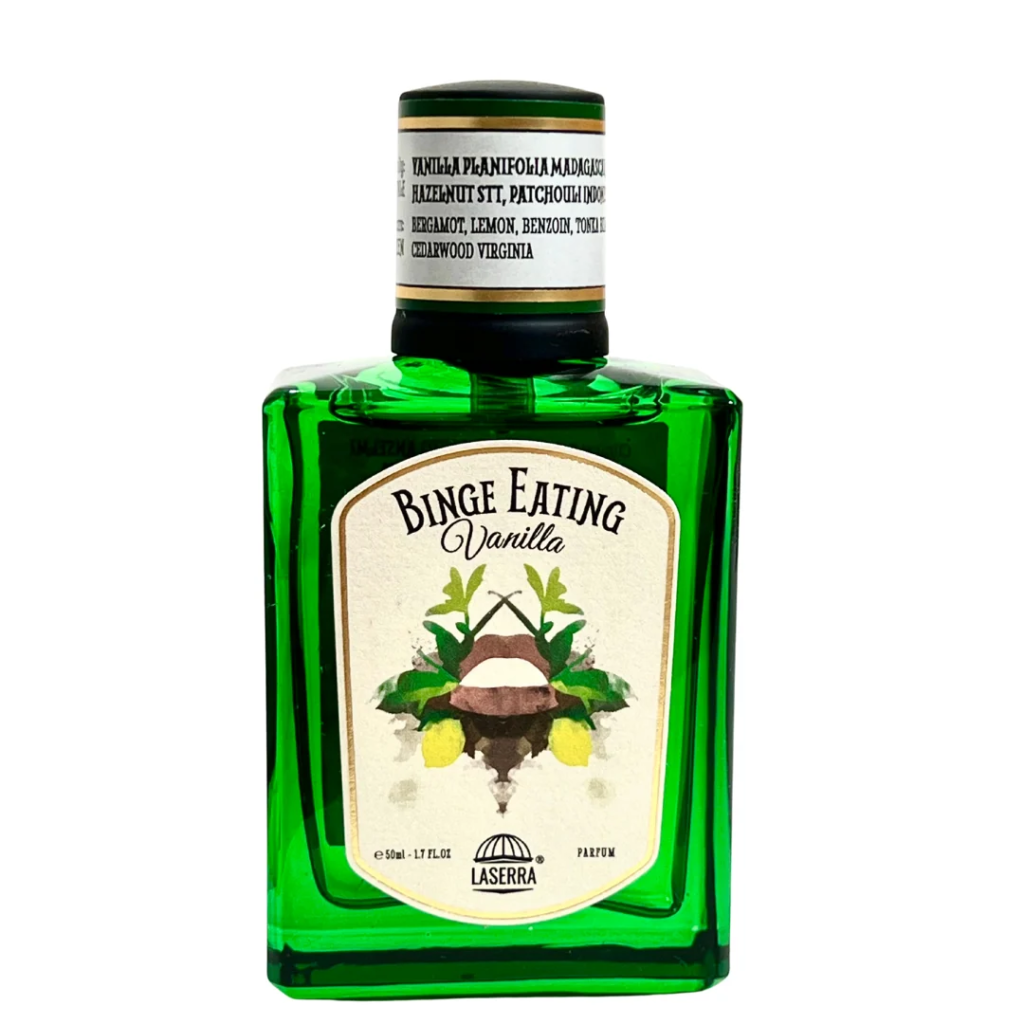
Created by Fabrice Pellegrin, Binge Eating Vanilla explores the sensation of impossible satisfaction connected to a food-like stimulus and the loss of control experienced during a binge-eating episode. Madagascar vanilla forms the foundation, joined by a realistic hazelnut STT accord, Indonesian patchouli, benzoin, tonka bean, lemon, bergamot and Virginia cedarwood.
The hazelnut material is designed to bridge smell and taste, giving the fragrance the character of a sweet spread that invites repeated smelling. On paper, it sounds rich and addictive, but the green facet and the presence of patchouli suggest something less obedient than a conventional vanilla dessert. Naturally, it is also the bottle most likely to make financial restraint disappear beneath a layer of hazelnut cream.
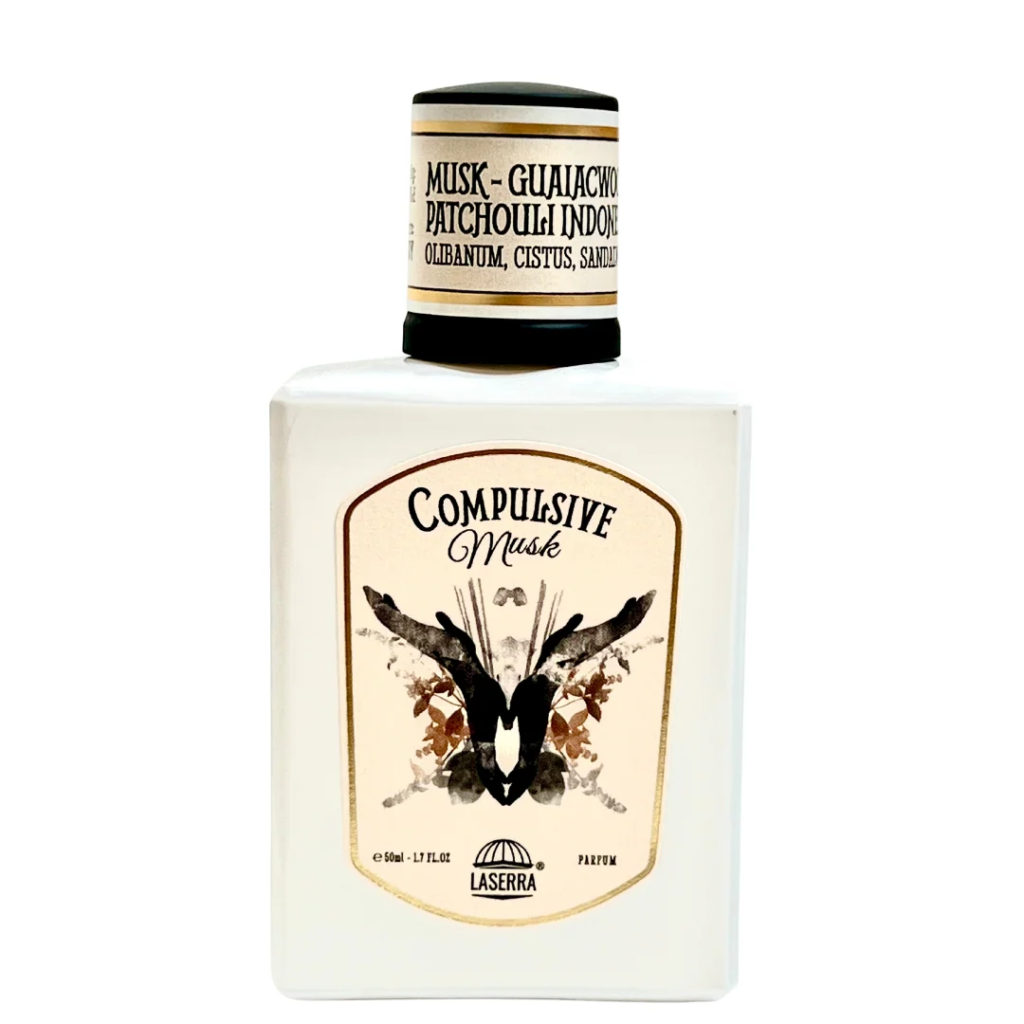
Compulsive Musk
Also composed by Fabrice Pellegrin, Compulsive Musk takes inspiration from the reassuring sensation created by repeating an action. Its structure combines a clear cruelty-free musk supplied by Firmenich with guaiac wood, Indonesian patchouli, sandalwood, olibanum and cistus.
The contrast between warm guaiac wood and the fresher woody character of patchouli is intended to create a scent that feels ordered, clean and comforting. The concept is quieter than the names of the other fragrances, but perhaps that is precisely why it may be one of the most interesting to test properly on skin.
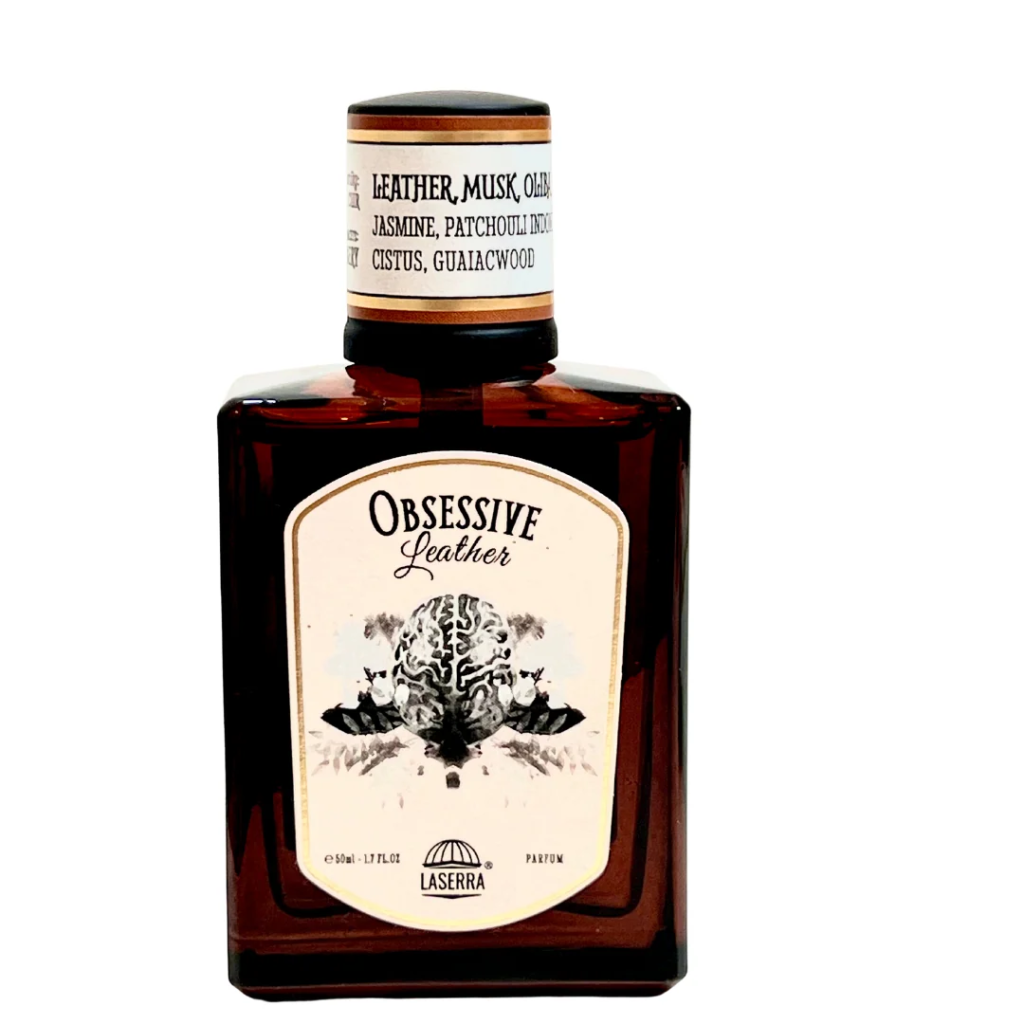
Obsessive Leather
Obsessive Leather represents a subtle, enveloping and persistent thought. Pellegrin builds the composition around soft leather, sharpened by natural olibanum resin treated through a pyrogenic process and fixed with musk. Jasmine, Indonesian patchouli, guaiac wood and cistus complete the formula.
The idea is not an aggressive leather entering the room before its wearer. It is something softer and more insistent: a presence that remains, returns and becomes difficult to ignore. Leather and incense can easily become theatrical, but this description suggests tension through persistence rather than volume.
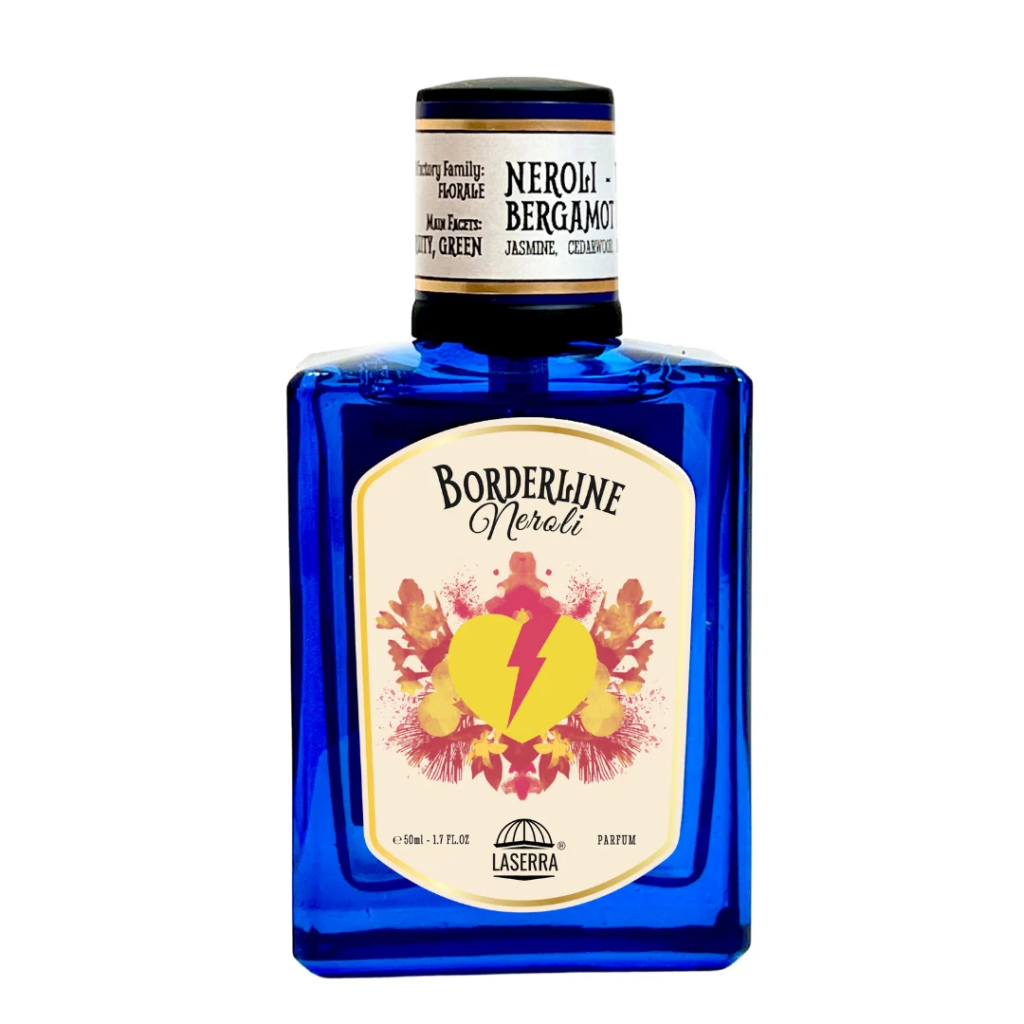
Borderline Neroli
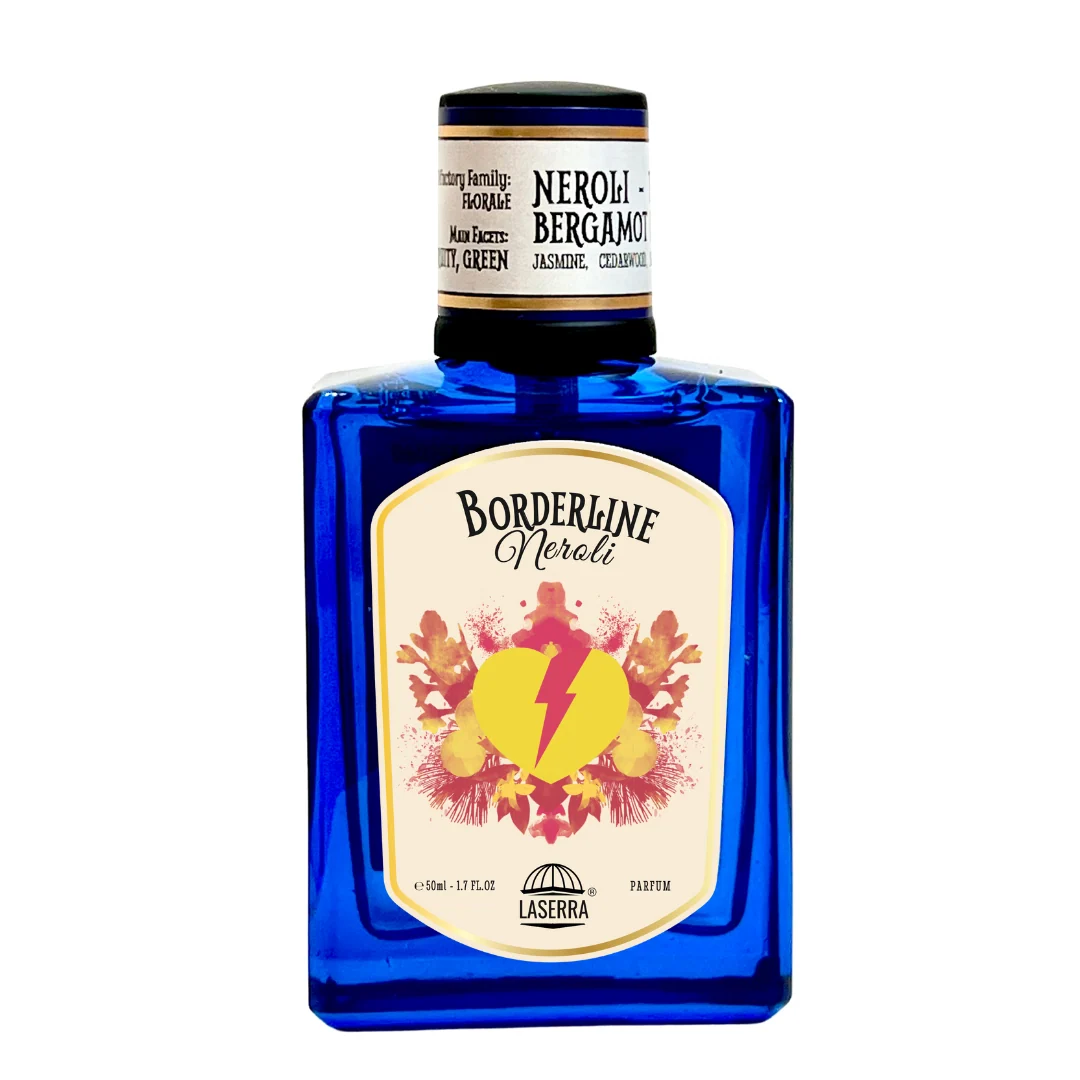
Borderline Neroli joined the collection in 2024 and was created by Olivier Cresp. It translates the struggle to balance self-image and sense of self through two opposing white flowers: the clean, reassuring brightness of neroli and the more intense, emotionally charged character of tuberose.
Calabrian bergamot reinforces the clean, soapy side, while fig introduces a greener and fruitier disruption. Jasmine, sandalwood, vanilla and cedarwood complete the composition. Neroli, tuberose, jasmine and fig in a cobalt-blue bottle was, frankly, an unnecessarily accurate attack on my personal taste.
If its central floral tension sounds intriguing, my guide to tuberose in perfumery explores why the flower can smell creamy, green, narcotic or unexpectedly fresh depending on how it is treated.
The perfumers behind La Serra
Fabrice Pellegrin created the original trio: Binge Eating Vanilla, Compulsive Musk and Obsessive Leather. His ability to build clear, tactile structures makes sense for a collection in which every perfume must communicate a specific mental sensation without becoming a literal illustration.
Olivier Cresp created Borderline Neroli. A master perfumer with deep roots in Grasse, Cresp has shaped some of modern perfumery’s most recognizable compositions and has a particular talent for making gourmand and floral ideas feel immediate without stripping them of character.
Their involvement is one of the main reasons La Serra deserves attention beyond its concept. A strong story may earn the first spray; skilled perfumery determines whether anyone returns for the second.
Why La Serra is on my Pitti list
I have not yet tested these fragrances, so this is not a review disguised as enthusiasm. It is a brand preview based on official information and on the reason La Serra has moved so quickly towards the top of my Pitti itinerary.
The collection is focused, the visual identity is coherent and the perfumers involved immediately raise expectations. More importantly, the brand attempts to discuss psychological conditions without claiming that scent is medicine or reducing complex experiences to decorative eccentricity. That balance is ambitious, and it deserves to be examined through the perfumes themselves.
Binge Eating Vanilla sounds like the most immediately addictive. Compulsive Musk may prove to be the quiet surprise. Obsessive Leather offers the darkest proposition. Borderline Neroli, meanwhile, appears to have read my fragrance preferences, highlighted every vulnerable point and sent the results directly to Olivier Cresp.
Will I buy all four? That remains an allegation until Pitti. Complete devotion to the collection would still require four full bottles, and even I believe skin should be consulted before the bank becomes involved. Still, La Serra is precisely the kind of independent Italian house I want this site to explore: distinctive, thoughtful and small enough for every release to matter.
Quick reference
| Brand | La Serra Profumi |
| Country | Italy |
| Founder / creative director | Alberto Anselmi |
| Concept | Psychological states and mental-health awareness translated through fragrance |
| Current collection | Binge Eating Vanilla; Compulsive Musk; Obsessive Leather; Borderline Neroli |
| Perfumers | Fabrice Pellegrin; Olivier Cresp |
| Format | 50 ml Parfum |
| Pitti Fragranze 2026 | Exhibitor; Florence, 11–13 September 2026 |
| Testing status | Preview based on official information; not yet tested on skin |
Images courtesy of La Serra Profumi.