L’Entropiste: Bertrand Duchaufour and the Beauty of Disorder
A Parisian perfume house where imbalance, tension and unexpected materials are not problems to solve, but the point.
| EDITORIAL NOTE: This Brand Focus is based on L’Entropiste’s official materials, current product pages and a retailer newsletter. It is not a fragrance review: the scent descriptions below summarize the brand’s positioning and published note profiles, not personal wear tests. For now… |
Perfumery likes order. Even when it pretends not to. A fragrance usually arrives with a concept, a structure and a reassuring explanation of why every material is exactly where it should be. Then a retailer newsletter landed in my inbox describing L’Entropiste as a house of perfumes that, at least on paper, “make no sense”. Naturally, that got my attention.
The phrase is provocative, but it points to something more interesting than simple weirdness for weirdness’ sake. L’Entropiste is a Parisian house built around the creative vision of Bertrand Duchaufour, a perfumer with roughly four decades of work behind him and a long-standing reputation for compositions shaped by contrast, texture and incense. Here, that tendency is not just part of his style. It becomes the entire philosophy of the brand.
The name comes from entropy: the movement from order toward disorder. L’Entropiste does not treat that disorder as a failure of composition. It treats it as a creative engine. The house describes each fragrance as something that emerges from chaos and eventually finds its own harmony. In other words, the imbalance is deliberate. The tension is deliberate. The apparently wrong ingredient may be the reason the composition works at all.
The Master of Disorder
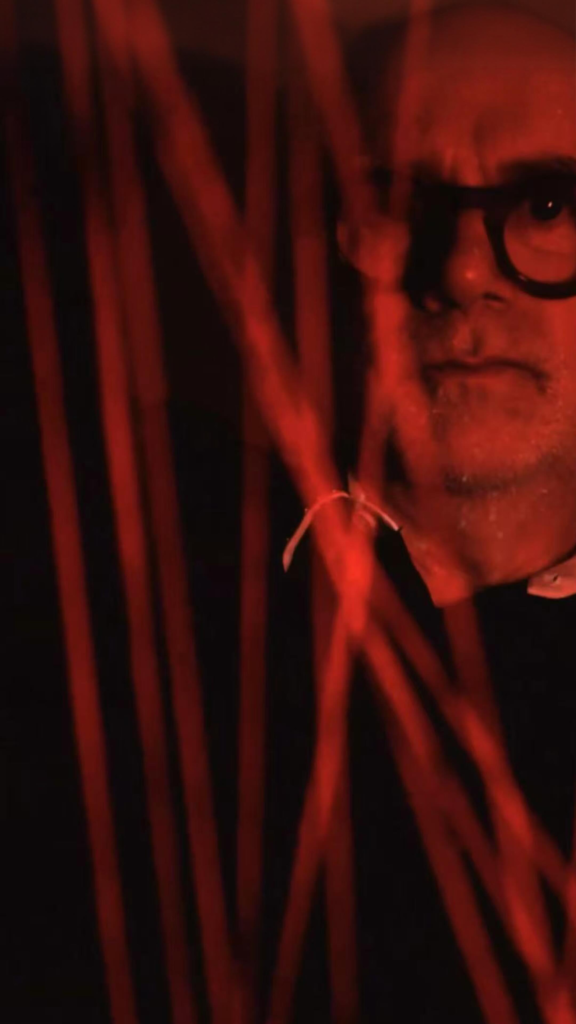
L’Entropiste calls Bertrand Duchaufour its “Master of Disorder”. It is a useful title because it explains the house more effectively than a conventional creative-director biography ever could. On the brand’s own page, Duchaufour describes entropy as the principle behind his creations: he introduces imbalance to create movement, allowing harmony to emerge from unexpected contrasts and tension between materials.
That is a particularly convincing framework for a perfumer often associated with incense and with fragrances that do not always reveal themselves in a straight line. Rather than presenting balance as something static, L’Entropiste treats a perfume as a system that can move through different states: order, disruption, transformation and, eventually, a new equilibrium.
There is also something refreshingly specific about that position. The niche market is now crowded with brands promising emotion, freedom and artistic expression, words so overused that they can mean almost anything. L’Entropiste at least gives itself a rule to break: make the friction visible. Let the composition feel alive enough to wobble before it settles.
A House Built Around Contradiction
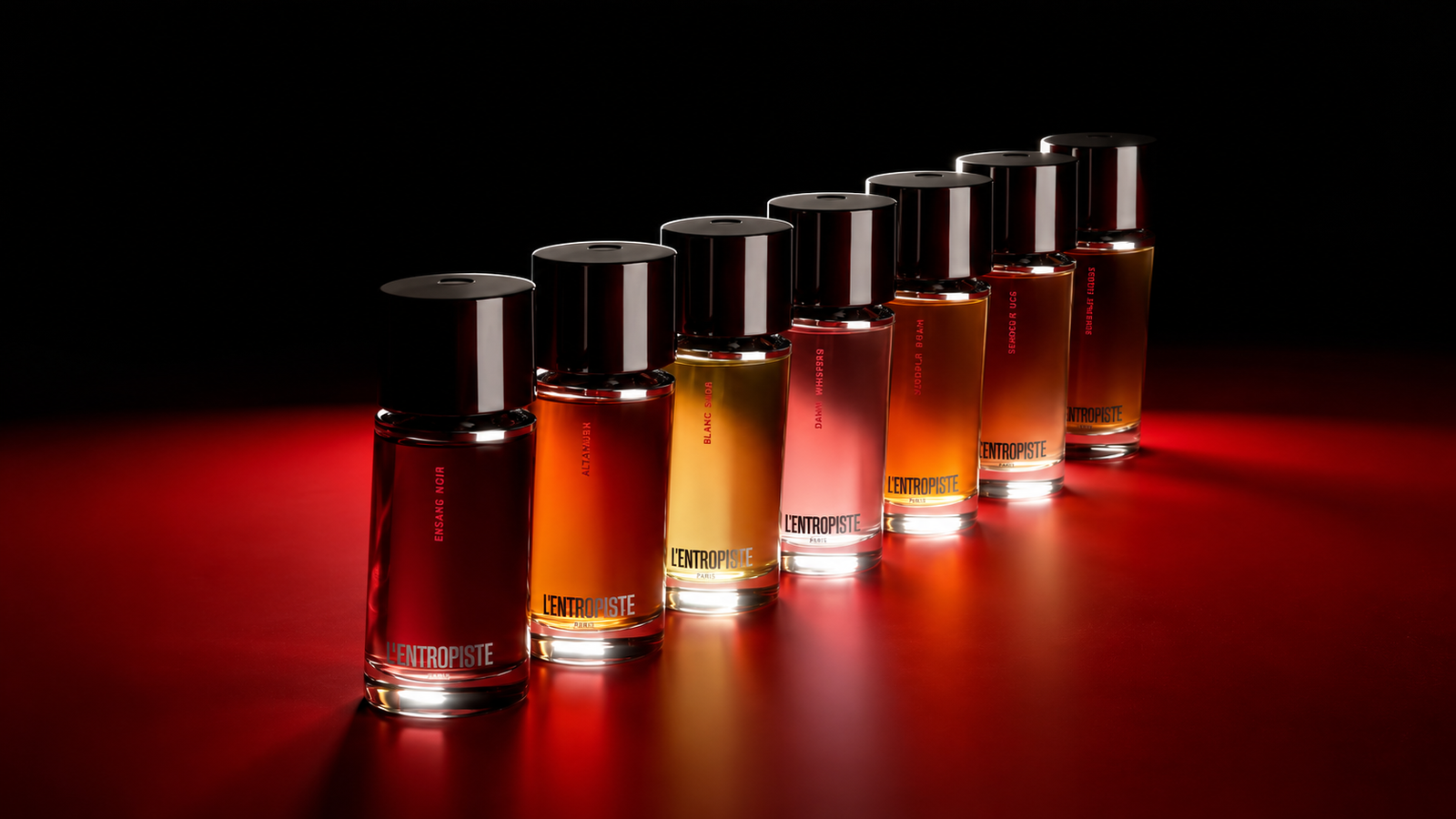
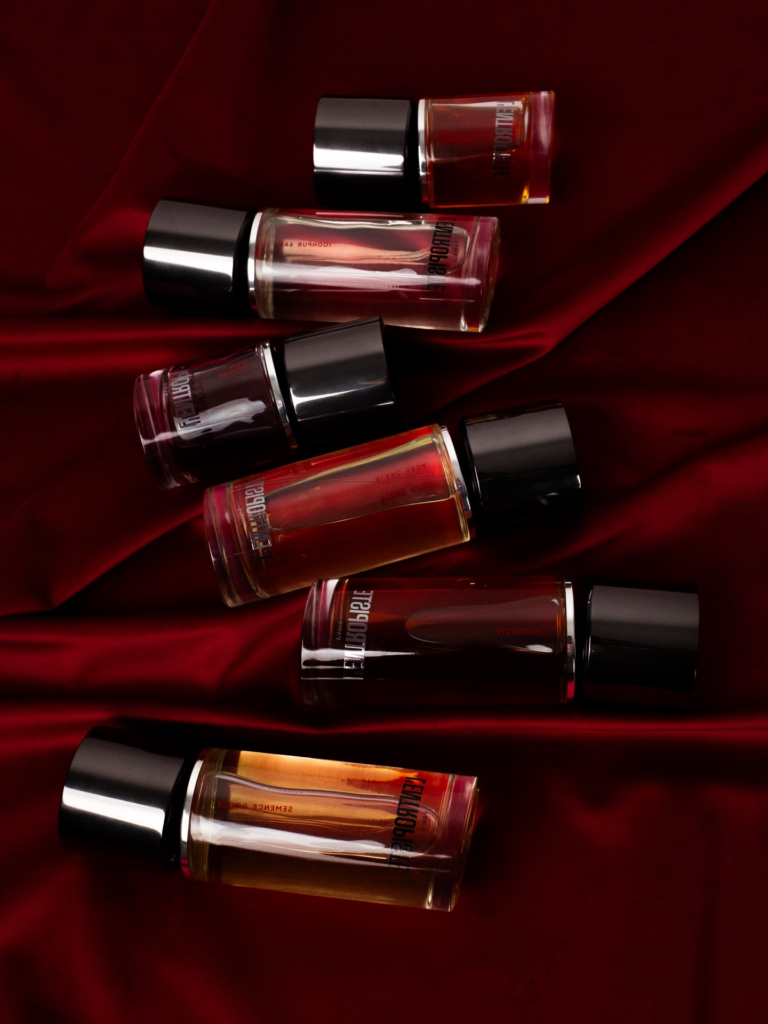
The perfume collection is now expanding from eight to nine genderless fragrances with Festin, available for preorder ahead of shipping on 13 October 2026. Across the range, the materials move from smoky rose and black ink to rice powder, almond milk, whisky, metallic notes, star fruit and, now, an imperial collision of blackberry, caviar, truffle, leather and oud. On a list, some of these combinations can look less like a classical perfume brief and more like somebody emptied the wrong drawers onto the same table. That is, very obviously, part of the attraction.
The house also leans into materiality. According to its FAQ, the eaux de parfum are highly concentrated at around 20 to 25 percent, with an emphasis on natural raw materials. L’Entropiste also states that it uses refillable bottles, recycled paper and eco-conscious secondary packaging. Even the changing color of the juice is framed as evidence of ingredients continuing to evolve rather than something that should be visually standardised into submission.
The Current Collection
Festin is the house’s ninth fragrance and perhaps its most openly decadent expression of disorder so far. Bertrand Duchaufour imagines Nero’s palace while Rome burns outside: smoke and glowing embers meeting the excess of a banquet that refuses to stop. Blackberry opens the composition with dark fruit, disturbed by truffle and the saline suggestion of caviar. Shagreen leather stretches through the heart before oud and ambergris take over the base.
It is an almost suspiciously perfect L’Entropiste premise. Luxury is pushed until it becomes grotesque, appetite continues while civilization collapses, and ingredients that sound wrong together are asked to find their own harmony. Rome is burning, but apparently nobody is cancelling dinner. Festin deserves a separate article of its own; here, it matters as evidence that the brand’s theory of beautiful imbalance is still expanding rather than settling into a formula.
| Fragrance | Family / direction | Key materials |
| White Blood | Fruity floral | Black pepper, bergamot, star fruit, tiare, pink lotus, vetiver, musk, grey amber |
| Ensang Noir | Smoky floral amber | Smoky rose, metallic aldehydes, incense, black ink, opoponax, smoked woods |
| Altamura | Amber citrus | Sweet orange, Cointreau effect, incense, amber |
| Blanc Sada | Powdery white floral | Rice powder, iris, lychee/lipstick nuance, straw, tatami |
| Dawn Whispers | Musky amber | Musk, metallic note, warm milk, rare woods |
| Dorian’s Spleen | Smoky gourmand | Whisky, caramel, coffee, dark chocolate, ash, smoke |
| Jodhpur 6am | Spicy fruity floral | Chai, tuberose, apricot |
| Semence Douce | Green floral | Almond milk, saffron, tulip, sap |
| Festin | Imperial leather oud | Blackberry, caviar, truffle, shagreen leather, oud, ambergris |
Three Fragrances That Explain the Idea
Ensang Noir: rose, metal, incense and ink
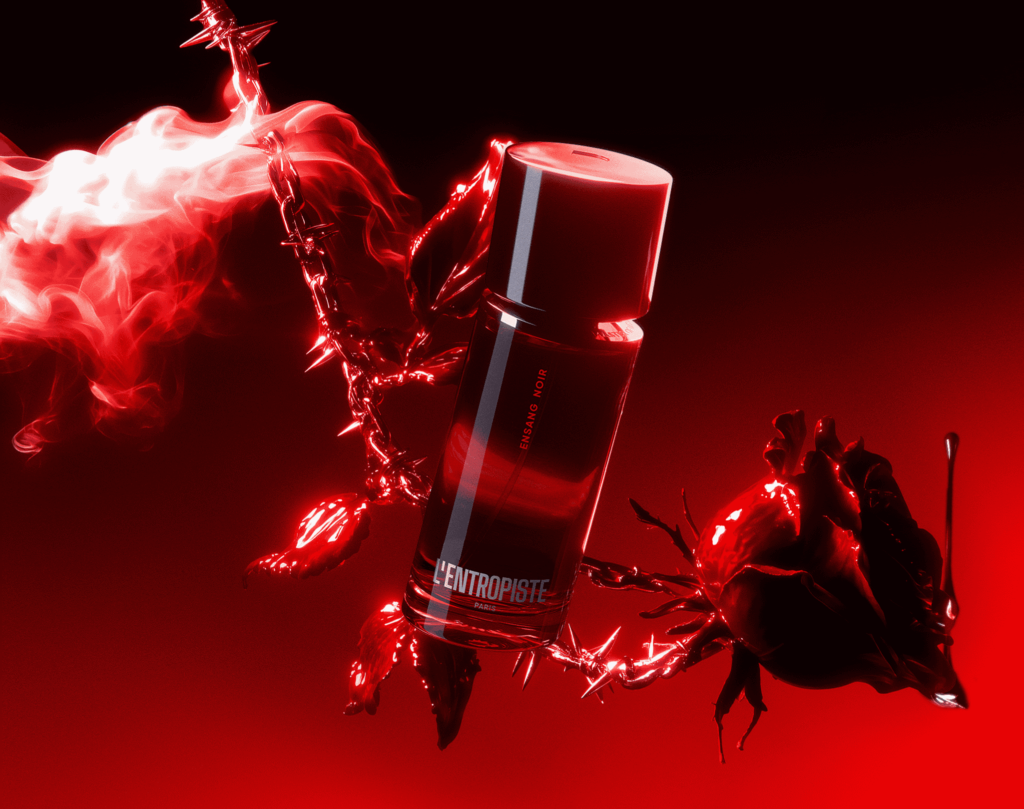
Ensang Noir is probably the easiest way to understand what the brand means by tension. The official structure brings together smoky rose and metallic aldehydes at the opening, followed by black rose, magnolia and warm incense, before opoponax, smoked woods, patchouli and a black-ink accord pull the composition further into darkness.
The interesting part is not that the materials are individually unusual. Rose, incense, patchouli and woods have shared plenty of bottles before. It is the language of collision around them: metal against petal, ink against flower, something romantic turned deliberately dramatic and slightly hostile. A rose, yes. Just not one arriving with a handwritten love letter and good intentions.
Dorian’s Spleen: gourmand, then someone turns off the lights
Dorian’s Spleen begins in more obviously indulgent territory. The brand talks about whisky, caramel, coffee and dark chocolate, all the things that could easily turn into a plush, sweet gourmand. Then the structure changes direction. Ash and smoke begin to take over, cutting through the comfort and leaving something darker behind.
A retailer newsletter from LOK described the effect neatly: a gourmand for people who do not want their gourmand to stay sweet. That reversal is very L’Entropiste. Pleasure is introduced, destabilized and then rebuilt as something less comfortable.
Altamura: citrus pushed into outer space
Altamura takes another route. Sweet orange and a strong alcoholic effect evoke the warm amber transparency of Cointreau before the fragrance moves toward incense. The brand’s own imagery becomes almost cosmic, describing the incense as a nebula expanding into space.
It sounds gloriously excessive, but the basic idea is clear: a familiar citrus opening does not stay bright and polite. It expands, warms, becomes abstract and eventually lands somewhere between liqueur, resin and cold air. That constant movement is more important to the house than fitting neatly into a single adjective.
White Blood: disorder does not have to be dark
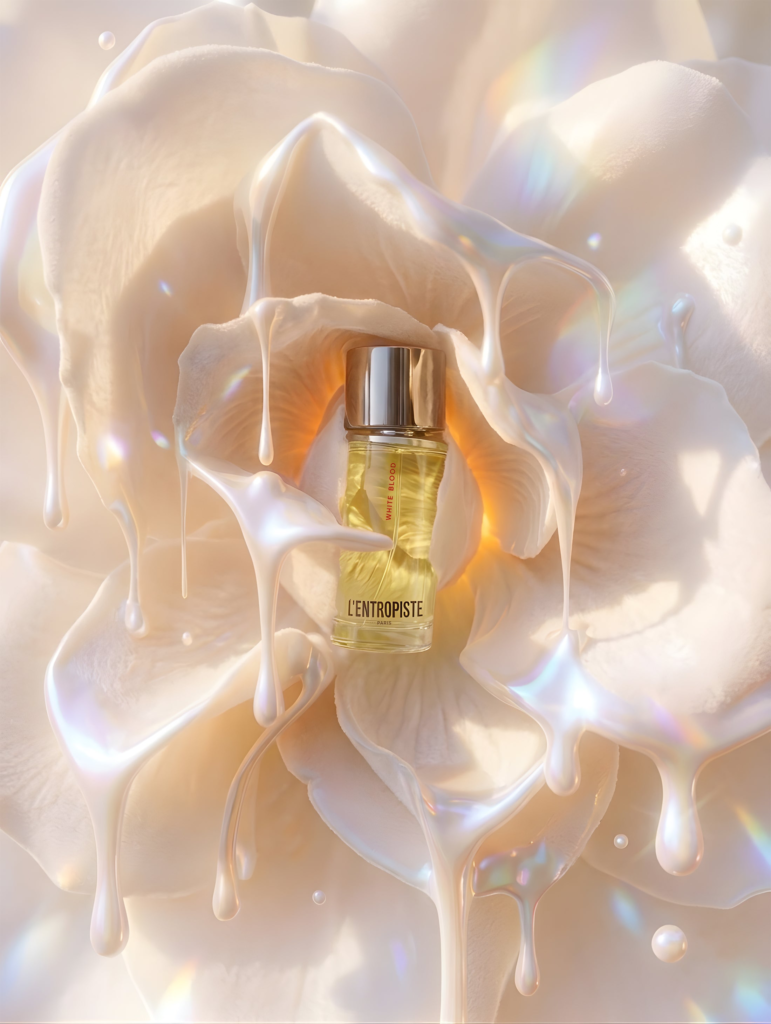
White Blood is useful because it stops the entire philosophy from becoming a synonym for dark, smoky perfume. The house imagines an opalescent flower whose pale sap becomes a kind of “white blood”. The official note structure includes black pepper and bergamot, star fruit, tiare and pink lotus, then vetiver, musk and grey amber.
Conceptually, it is almost the photographic negative of Ensang Noir. Instead of blood, ink and smoke, White Blood talks about translucency, sap, petals and iridescence. Yet the same obsession with changing states remains: petal becomes liquid, liquid becomes petal, solid and fluid refuse to stay in their assigned boxes. Even when L’Entropiste goes white, apparently it cannot behave itself. Good.
Blanc Sada: powder, skin and something less innocent
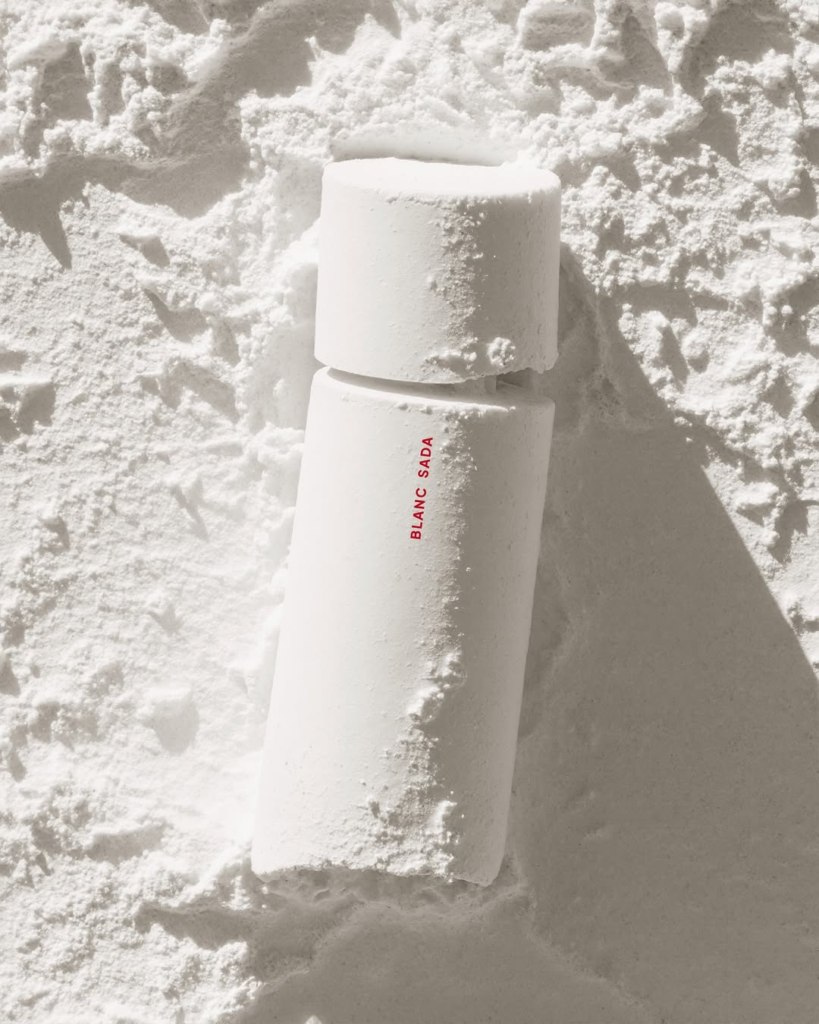
Blanc Sada is quieter visually, but not necessarily more conventional. The house builds it around milky rice powder and iris, with an acidic lychee/lipstick suggestion and a green accord of straw and tatami. Powdered white is interrupted by red, softness by something more unsettling.
It is another example of the brand using contrast as narrative rather than decoration. The perfume is not simply “powdery” or “green”; those two sensations are made to coexist and rub against each other. That friction is the point.
More Than Perfume Bottles
L’Entropiste also extends the concept beyond fragrance. Its Paris boutique sits at 59 rue des Francs-Bourgeois in the Marais, and the house has used the space for artistic projects and exhibitions. That matters because the brand repeatedly presents itself not simply as a perfume label but as a living manifesto around transformation, contradiction and disorder.
There are candles, discovery formats and travel sizes too, but the full fragrance collection remains the clearest expression of the idea. At the time of writing, most 100 ml fragrances on the official site are listed at EUR295, while Ensang Noir sits higher at EUR415. The house also offers discovery sets, although Festin is currently listed separately as a preorder. Sampling first is probably the sensible way to approach a collection whose entire philosophy is built around things not behaving exactly as expected.
Why L’Entropiste Is Worth Watching
The strongest thing about L’Entropiste is not that every perfume sounds strange. Some do; some really do not. It is that the brand has a recognisable way of thinking before you even get to the individual note lists. Disorder is not a visual gimmick pasted onto conventional compositions. At least in the way the house presents itself, it is the method.
That gives the collection a coherent identity without requiring every fragrance to smell alike. Ensang Noir can be blood-red and smoky, White Blood can be pale and iridescent, Dorian’s Spleen can flirt with gourmand comfort, Altamura can disappear into an incense nebula and Festin can serve caviar and truffle while Rome burns. The common ground is movement: each idea starts somewhere familiar, introduces a destabilizing element and asks whether a different kind of harmony can appear on the other side.
I have not tested the collection yet, so this is exactly where a Brand Focus should stop pretending to know more than it does. On paper, though, L’Entropiste has managed the difficult part: it has made me curious about the perfumes because of the idea behind them, not instead of the perfumes. Now the bottles have to prove that the disorder works on skin too.
| Like the perfume? Meet the people behind the bottle. Our Brand Focus section has the gossip. |