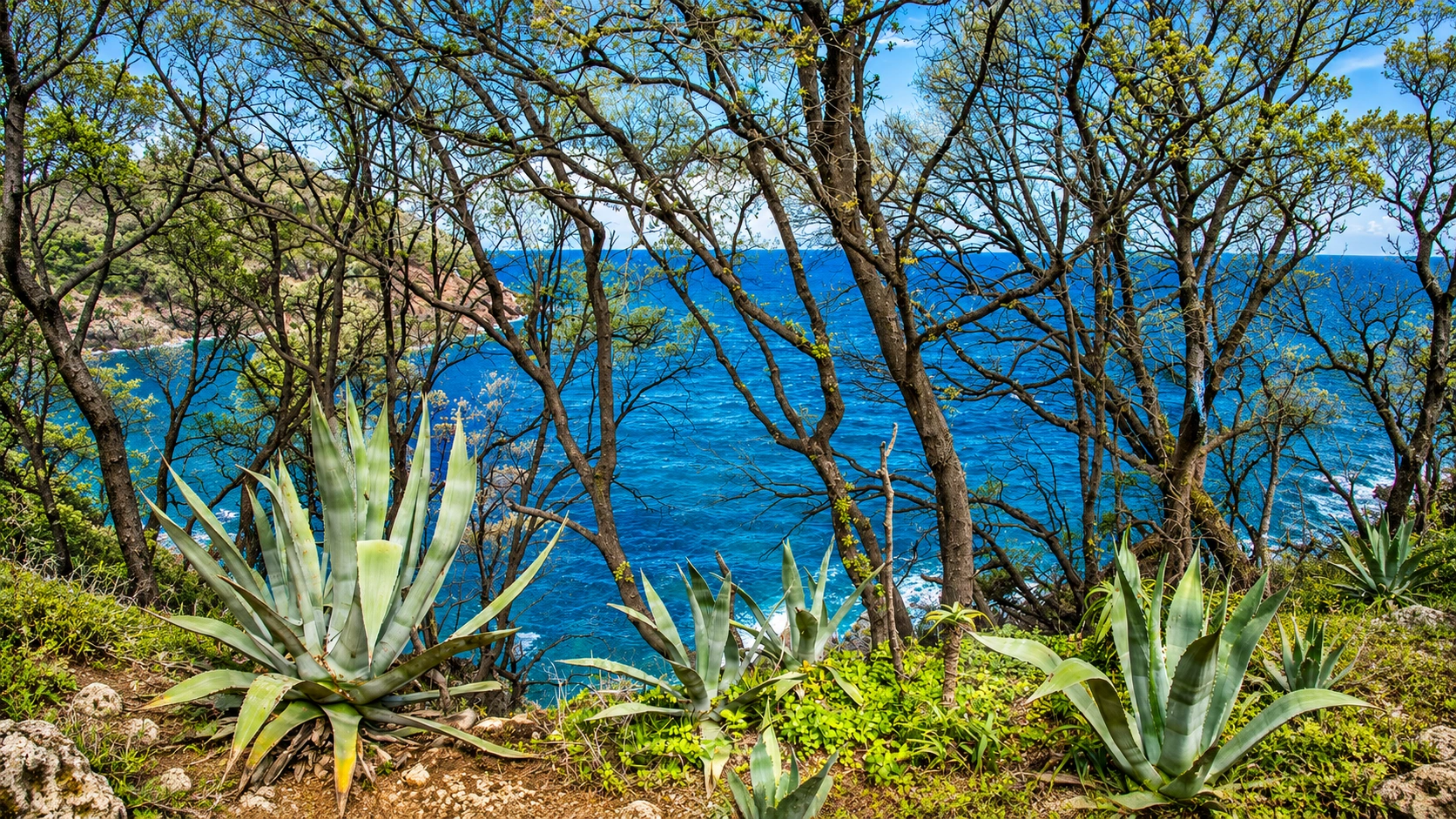
Acqua dell’Elba: What Does an Island Smell Like?
Look closely at a bottle of Acqua dell’Elba and you’ll see a small sailing ship on the label. Its story begins in the Gulf of Procchio, where a Roman wreck yielded a carving that may once have sealed a perfume vessel. It’s an unusually specific place to start for a house devoted to the smell of the sea.
A perfume stopper in a Roman shipwreck
In 1967, according to Acqua dell’Elba’s account, a storm exposed the remains of a Roman ship in the Gulf of Procchio, off the north coast of the island. Among the objects recovered was a small figure carved in ivory and decorated with thin sheets of gold. It depicts Pan and Dionysus. The Civic Archaeological Museum of Marciana identifies it as the probable stopper of a vessel that once held perfume. The little object is now in the museum’s collection. Museo Civico Archeologico di Marciana.
The museum’s interpretation puts the object in the late second century AD. Pan and Dionysus are still visible, as is some of the gold that decorated the ivory. The scent itself is lost. That makes the connection to a modern perfume house all the more interesting: Acqua dell’Elba took its emblem from the ship that carried the object. The little sail on the label is a reference to a particular wreck, in a bay on the island where the perfumes are made.
How Acqua dell’Elba began in Marciana Marina
Fabio, Marco and Chiara founded Acqua dell’Elba in Marciana Marina, where all three were born. In their account of the company’s beginnings, they describe coming ashore after a boat trip and walking among rocks, myrtle and rosemary. Their idea for a fragrance came from that sequence of sensations: first the water, then the scented vegetation along the path. The Roman find gave them an older story about the same coast and its connection to perfume. Acqua dell’Elba’s founding story.
The first workshop and shop opened near the waterfront in Marciana Marina in late 2000. There’s a practical detail in that origin story that I like: the founders put the place where they made the perfumes next to the place where people could discover them. The house grew beyond Elba and, according to its own account, kept production on the island. That makes Marciana Marina part of the company’s working life as well as its history.
The green on the labels is another piece of that story. The founders describe arriving at it by looking at the water alongside the pale pebbles, sandy stretches and vegetation around it. I can see why they settled on a colour somewhere between blue and green. It gives the water and the plants a place on the same bottle. The three fragrances here use a similar idea in scent, with different parts of the shoreline coming into focus.
Classica Uomo and Classica Donna at the water’s edge
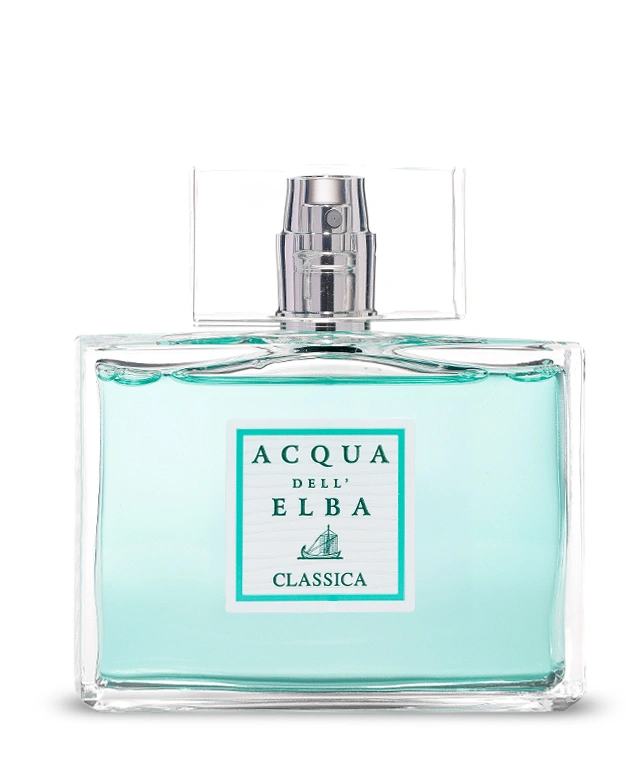
Classica Uomo Eau de Parfum is the more explicitly marine of the two fragrances. The house describes citrus, rosemary and the Mediterranean scrub around a marine accord with a seaweed note. Of those details, the seaweed is the one I’d pay attention to first. Citrus gives the composition an obvious route to freshness. Seaweed suggests a more particular place: the edge of the water, where something green and damp has washed up against the rocks. Classica Uomo Eau de Parfum.
Classica Donna belongs next to it because the house presents the fragrance as its first creation. Orange blossom, myrtle, gardenia and jasmine open the composition, with coastal cistus at the heart and Mediterranean scrub in the base. The flowers occupy the part of the composition where Classica Uomo puts its citrus and rosemary. Myrtle and cistus are the details that give the floral version a specific setting. Classica Donna Eau de Parfum · The Classica collection.
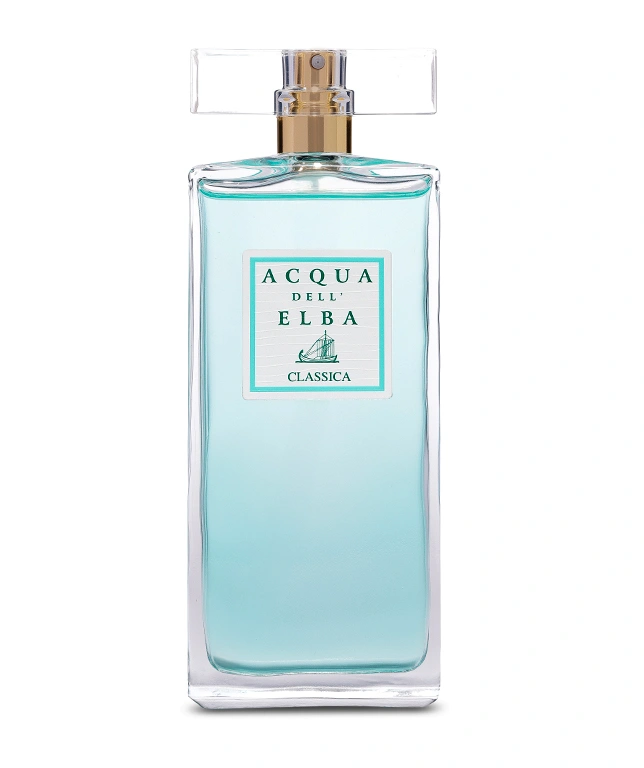
Seen side by side, the broad Uomo bottle and the tall Donna bottle share the same ship, pale colour and transparent cap. The note lists make the pairing more interesting than the packaging alone suggests. Seaweed gives Classica Uomo a point of reference right at the waterline. With Classica Donna, I picture the flowering plants at the edge of a path close enough to the coast to catch the sea air. I’d start with these two to see how much of the same place can come through with the emphasis shifted from algae and citrus to flowers and shrubs.
Arcipelago Uomo, a few steps inland
Arcipelago Uomo Eau de Parfum starts with sage, black pepper and rosemary, then moves into jasmine and lily of the valley. Cedar, cypress and woods associated with Mediterranean scrub form the base. On paper, the sequence takes the idea of a coastal path further inland. I’m particularly curious about the transition between the aromatic opening and the flowers, because that’s the point at which a simple impression of herbs and dry ground could change quite sharply. Arcipelago Uomo Eau de Parfum.
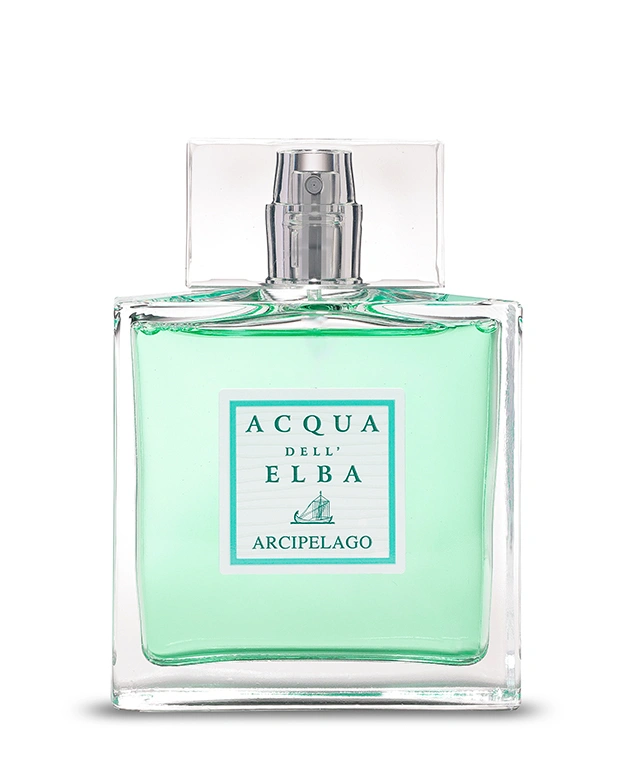
Rosemary gives me one thing to follow across Classica Uomo and Arcipelago Uomo. In Classica it has citrus and a marine accord around it. In Arcipelago it sits with pepper and sage, with cypress further down the note list. Jasmine gives me another point of comparison, this time with Classica Donna. There it’s part of the opening bouquet. In Arcipelago it appears in the heart alongside lily of the valley. That’s how I’d approach the three on skin, looking for what changes when a familiar note moves into different company.
Mare and the scent of a room
The same coastline also turns up in Mare, the house’s first home fragrance. Its official description brings together lemon, rosemary and sea lily with seaweed, cistus and Mediterranean woods. Some of those details now feel familiar. What’s different is the way you encounter them. A perfume can take you from its opening to its base over an afternoon. A room fragrance becomes part of the place you walk back into. I can see why the sea ended up in both formats for a house that began with the wish to make the feeling of a walk on Elba last a little longer. Acqua dell’Elba on Mare.
I’d begin with the two Classica fragrances together, then come back to Arcipelago once I had a sense of how each Classica approaches the shore. The bit I most want to smell for myself is what happens to the rosemary along the way. It’s one of the plants the founders remember from that first walk, and one of the few notes you can follow from the water’s edge towards the trees.
| Explore more perfume houses and the stories behind their fragrances in Brand Focus. |