Discothèque at Pitti Fragranze 2026: Nightlife, Bottled
A perfume brand built around legendary nightclubs arriving in Florence already feels like temptation. Add mirrored bottles and a Madonna-adjacent Confessions on a Dance Floor fantasy, and apparently my professional composure is expected to survive the night.
Discothèque at Pitti Fragranze 2026 feels almost suspiciously well cast. A perfume house built around legendary clubs, beautiful strangers, poor decisions and the belief that one night can define an era is heading to Florence. If Stazione Leopolda already has its own particular energy during Fragranze, adding a mirrored disco ball to the guest list seems less like exhibition planning and more like temptation with a floor plan.
I have not tried the fragrances yet, so this is not a review. It is a first look at a brand I intend to seek out at Pitti, based on its official material and the story told around its launch. That distinction matters, especially when the imagery is this good at doing half the seduction before a blotter has even appeared.
Discothèque at Pitti Fragranze 2026
Pitti’s exhibitor page places Discothèque in the Fragranze section at Stazione Leopolda, stand A/27, for the edition running from 11 to 13 September 2026. The brand therefore joins the increasingly long list of reasons why my supposedly sensible visit to Florence may require a detailed route, comfortable shoes and the emotional resilience to smell far more perfumes than any responsible person needs in three days.
If you are planning the fair too, my broader preview, Pitti Fragranze 2026: What to Expect, is the useful place to start. Discothèque, however, deserves its own stop because it arrives with a concept that is unusually easy to understand and unusually difficult to ignore.
Born between Los Angeles and London
The current official biography credits Jessie Willner, Hanover Booth and Whitney Moulton as co-founders. Discothèque describes itself as a luxury fragrance brand born between Los Angeles and London, with its design, formulation and production shaped by the dialogue between those two cities. Earlier launch coverage focused on Willner and Booth and described the project as an attempt to translate the mythology of famous nightclubs, their cities and their patrons into scent.
Its central idea is stronger than a simple retro theme. For the founders, the discothèque is a social equalizer: a place where outsiders and elites, icons and wallflowers can occupy the same dance floor. The brand calls this “inclusive exclusivity,” which sounds like the sort of contradiction the perfume industry usually charges extra to explain. Here, at least, it makes intuitive sense. The velvet rope exists, but the fantasy begins after everyone has passed it.
Seven nights, seven cities, and a guest list that grew
Discothèque launched its perfume collection in 2024 with seven fragrances connected to seven cities, seven nightclubs and seven moments in time. The original line appeared exclusively at Selfridges and was developed with perfumers Elodie Durande, Christian Provenzano, Nathalie Rouquet, Jean-Charles Mignon and Julie Pluchet.
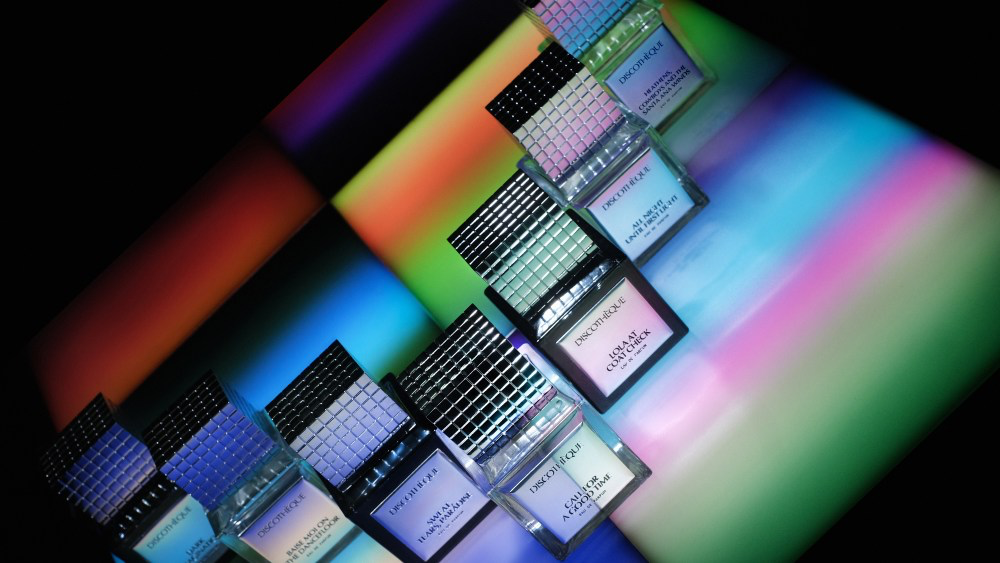
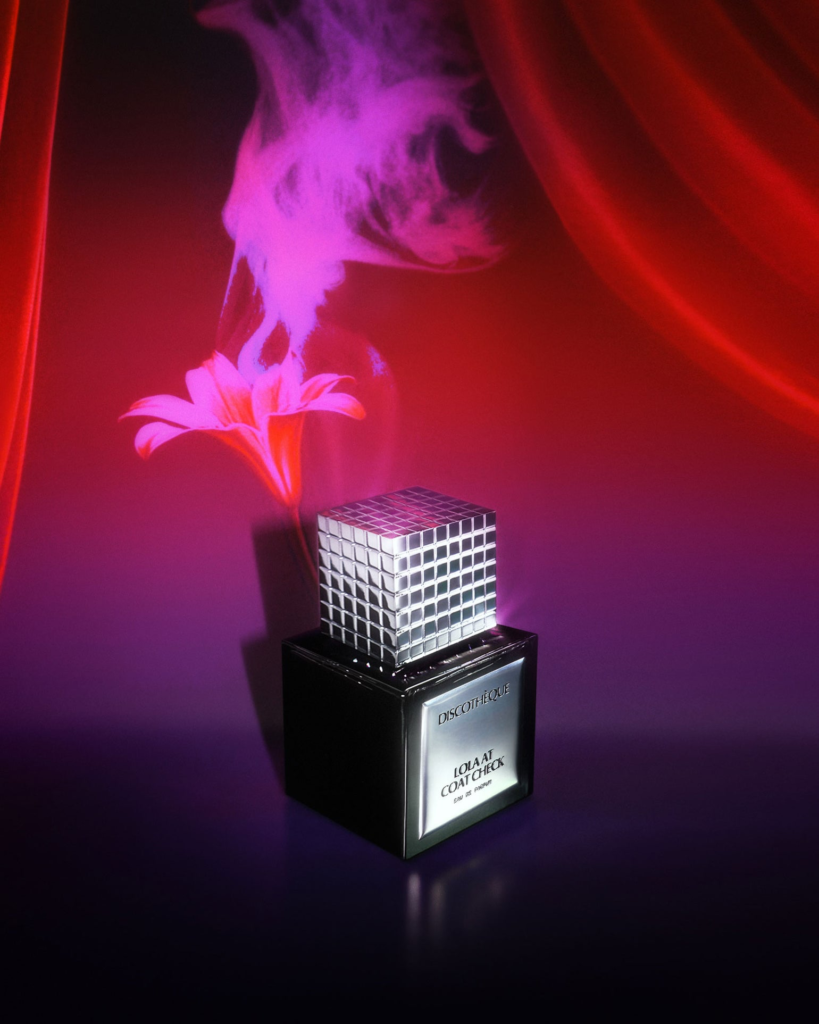
The names do a considerable amount of world-building. Baise Moi on the Dancefloor looks toward Paris in 1979; Heathens, Cowboys and the Santa Ana Winds evokes Los Angeles in 1986; All Night Until First Light heads to Ibiza in 1989; Lola at Coat Check belongs to New York in 1992; Sweat, Tears, Paradise lands in Mykonos in 1995; Call for a Good Time moves to Tokyo in 2000; and Dark Imagination reaches Marrakesh in 2003.
The official manifesto still speaks in sevens, but the live shop now presents later additions such as Body Heat, Eye Contact and Next to Me or Nothing. In other words, the original guest list was not fixed forever. A nightclub-inspired brand expanding after opening night may be the least surprising plot twist available.
The fragrances I want to meet first
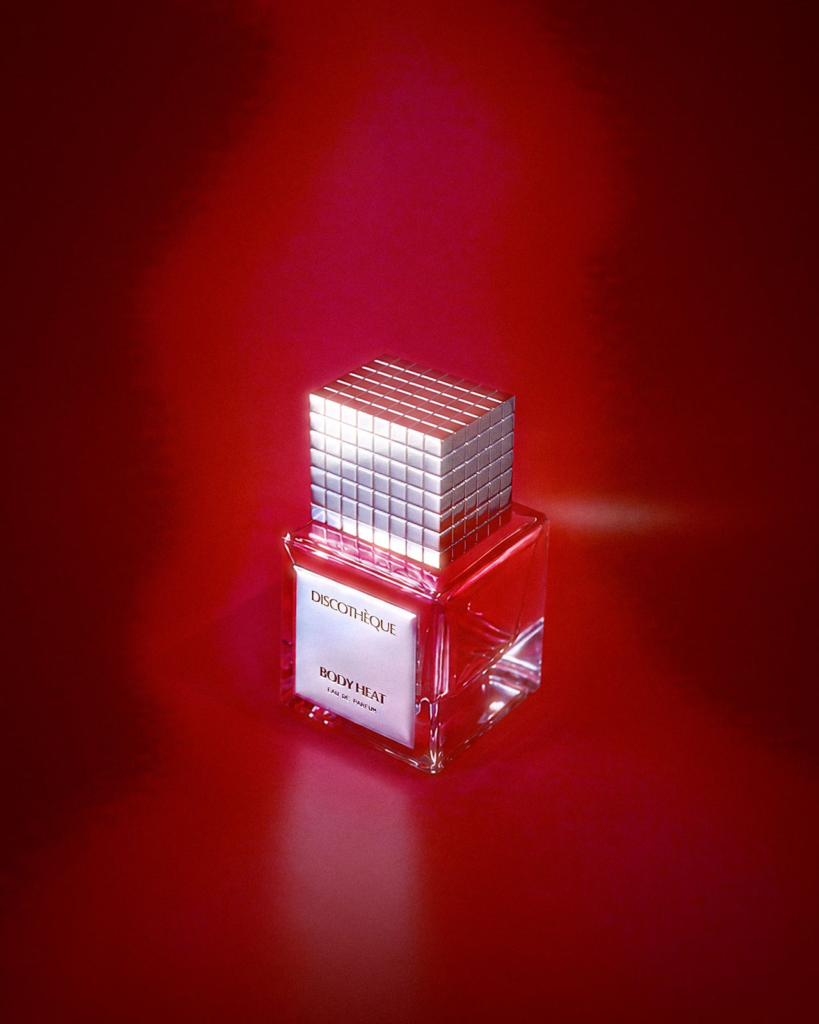
Body Heat is the obvious first stop, if only because its official vocabulary includes espresso, dark chocolate, sweat and suede fringe. That could be delicious, bodily, slightly dangerous or all three. It could also be the perfume equivalent of standing too close to the speaker, which I mean as a possibility rather than a criticism.
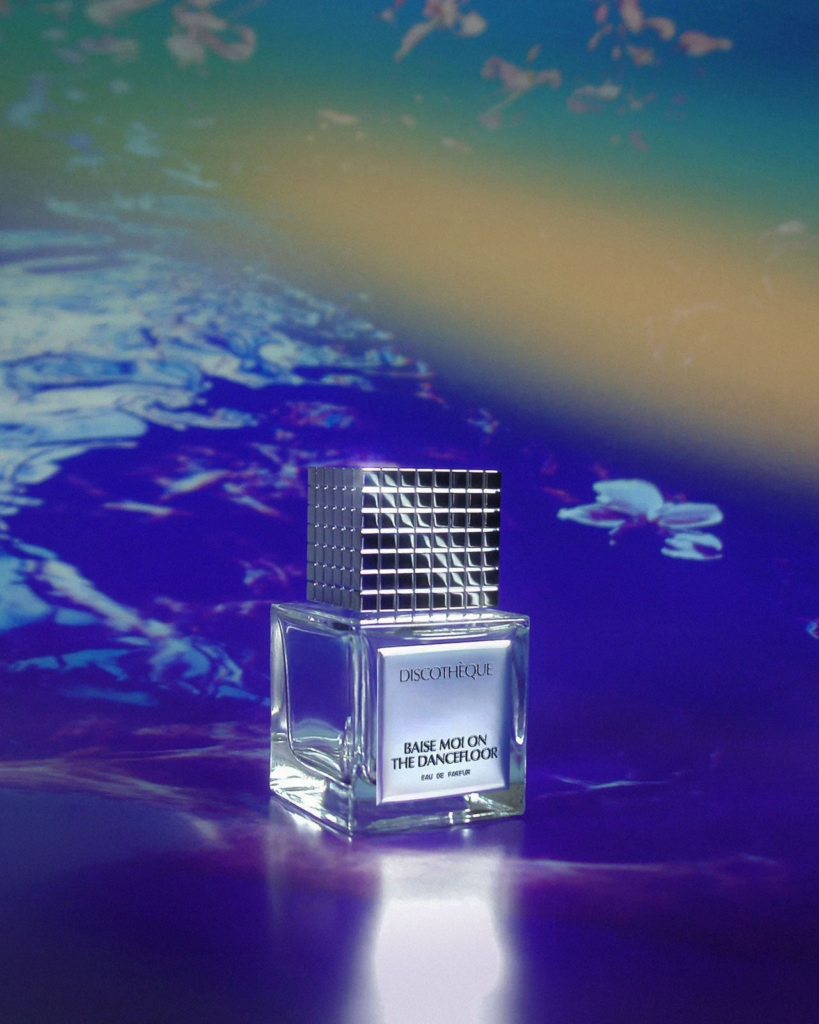
Baise Moi on the Dancefloor is tied to Paris and the mythology of Les Bains Douches, with iris, jasmine, violet and powder suggesting a softer, more cosmetic interpretation of the dance floor. Launch coverage connects that club world with names such as Madonna, Karl Lagerfeld, Kate Moss and Jean Paul Gaultier. The reference is glamorous, but what interests me is whether the fragrance smells like an atmosphere rather than a celebrity mood board.
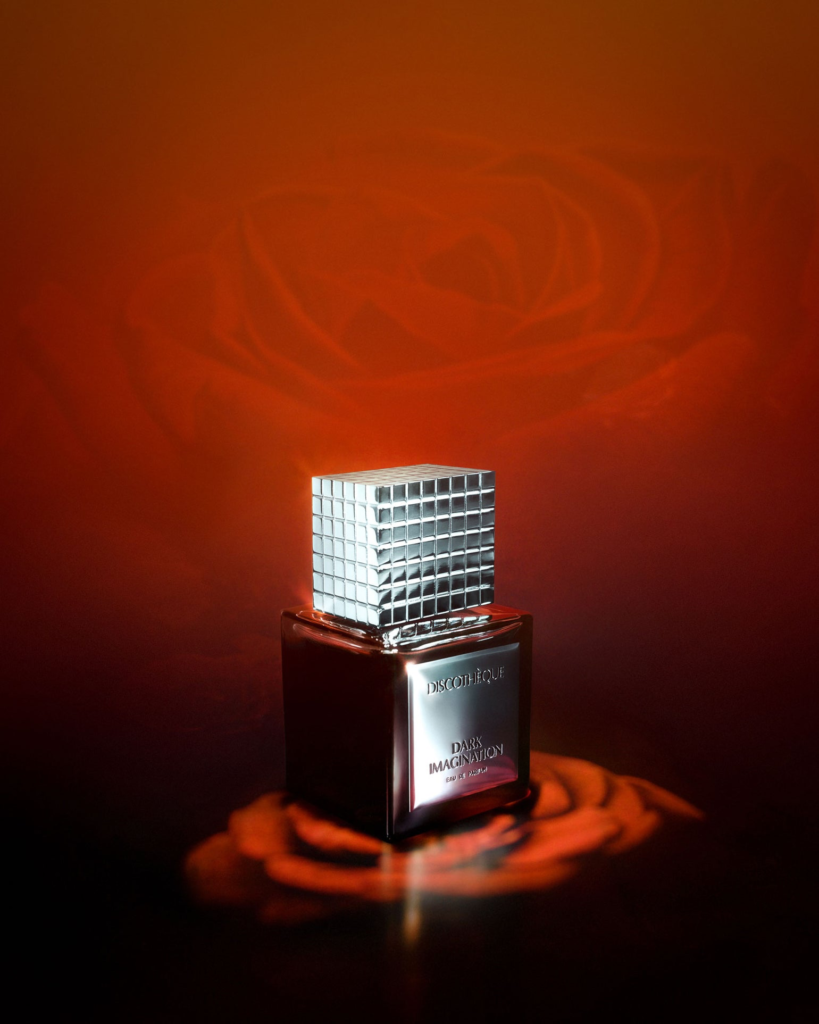
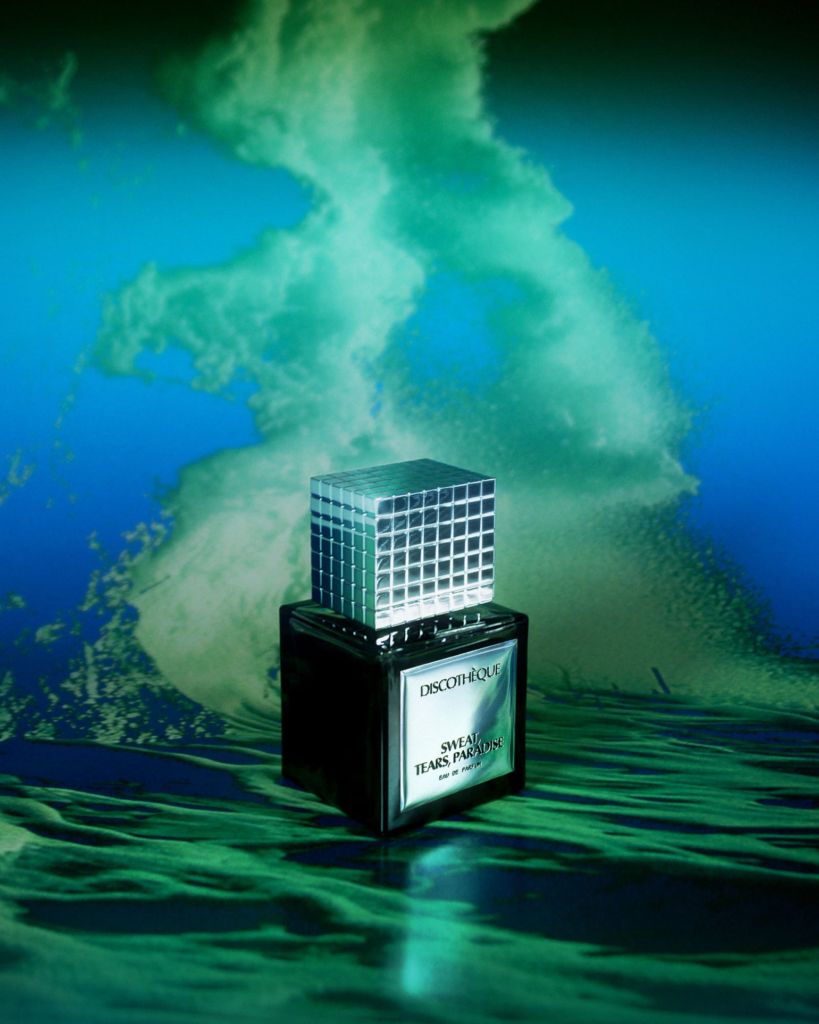
Dark Imagination, attached to Marrakesh in 2003, is perhaps the image that most immediately sells the project to me. The bottle sits in an orange haze that feels halfway between club lighting and a fever dream. Sweat, Tears, Paradise, meanwhile, takes the opposite route visually: blue-green light, satin and a cloud of color around a black bottle. I know photographs do not have notes. Unfortunately, mine appear to have purchasing influence.
The bottle understands the assignment
Discothèque describes its flacon as a disco ball with sharp edges: colored glass, a chrome plaque and a mirrored square cap. It is literal, certainly, but literal does not automatically mean lazy. The proportions are clean enough to stop the object becoming novelty merchandise, while the cap gives it the precise amount of excess the concept requires.
This is also one of those rare cases in which a coherent line looks stronger together than any bottle might look alone. The different colors read like changing lights across the same room. My weakness for bottle design is well documented, so naturally this brand has chosen to attack the least defended part of my judgement.
Clean formulas, UK production and one useful caveat
The brand says its fragrances are made in a UK atelier using vegan, luxury-grade ingredients and without phthalates or parabens. Those are the company’s own formulation claims, not independent tests, so they are best presented exactly as such. The eau de parfums are sold in 50 ml bottles, and the UK site currently lists individual fragrances at £130.
There is also a discovery set listed at £39 for eight 2 ml samples. I am not usually the chairman of the discovery-set fan club, but sixteen millilitres in total makes this considerably less offensive than brands charging something close to bottle-service prices for two millilitres and a cardboard sleeve.
What I want to discover in Florence
The question is whether the perfumes can carry the weight of such a complete visual and cultural concept. Nightlife is an extraordinarily rich subject, but it is also easy to reduce it to smoke, leather, booze and a bass line printed in the press release. I want to find out whether these fragrances produce specific places and emotional temperatures, or whether the story remains more vivid than the smell.
I am especially curious about the contrast between Body Heat’s gourmand and corporeal cues, the powdery Parisian language of Baise Moi on the Dancefloor and the darker promise of Dark Imagination. I also want to understand how clearly the collection changes from city to city while preserving a recognizable Discothèque signature.
For now, Discothèque looks like one of the Pitti stands most capable of turning a professional visit into an after-hours problem. I will approach it with an open mind, a fresh blotter and absolutely no confidence that the mirrored caps will respect my budget.
| And remember: the dance floor is not just a place. It’s a threshold. → Step into Brand Focus. |