
What Is a Blue Fragrance? Beyond the Bottle Color
Blue fragrance is one of those expressions perfume people use with complete confidence—right up until someone asks them to define it.
What is a blue fragrance? The short answer is that it is not an official fragrance family, a regulated classification or a recipe with mandatory ingredients. It is an informal term for a recognizable modern style: fresh, aromatic, clean, woody and designed to radiate with very little effort.
The longer answer is more interesting because “blue” sits somewhere between smell, marketing and cultural association. A blue bottle may support the message, but it cannot determine the scent. Otherwise, every fragrance poured into cobalt glass would receive automatic membership, and perfume classification would become a job for the paint department.
Blue Fragrances at a Glance
| Question | Short answer |
|---|---|
| Is blue an official fragrance family? | No. It is an informal style label. |
| Does the bottle have to be blue? | No. Color is a visual cue, not olfactory evidence. |
| Are all blue fragrances aquatic? | No. Some are aquatic; many are primarily aromatic and woody. |
| Is ambroxan required? | No, although diffusive ambery materials are common in the modern style. |
| Are blue fragrances only for men? | No. The category has been marketed heavily toward men, but scent has no dress code. |
| What usually links them? | Freshness, aromatic lift, clean woods, diffusion and easy versatility. |
What Is a Blue Fragrance? A Style, Not a Formal Family
Established fragrance classification systems divide perfumes into families such as citrus, water, green, woods, amber and aromatic fougère. Michael Edwards’ widely used Fragrance Wheel, for example, includes fourteen families—but “blue” is not one of them.
That does not make the term meaningless. It simply means we should use it as we use words such as clean, dark or transparent: as a description of an overall impression rather than a technical box with fixed borders.
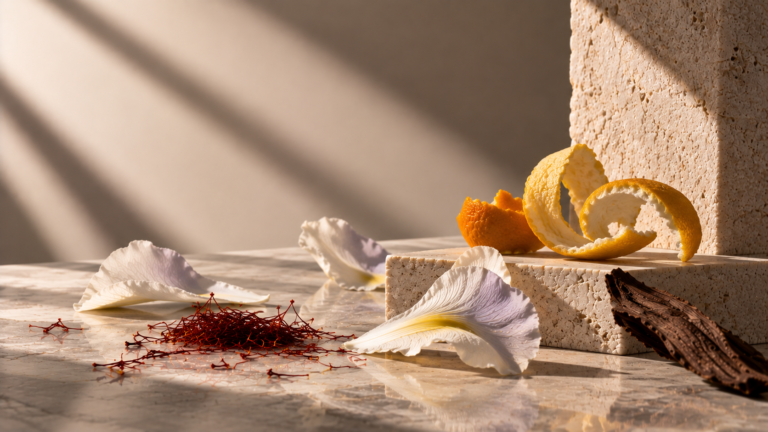
A blue fragrance often combines elements borrowed from several recognized families. It may open with citrus, move through aromatic herbs, suggest water or cool air, then settle into woods, musk and ambery materials. No single element earns it the label. The effect comes from the architecture.
What Does a Blue Fragrance Usually Smell Like?
There is no compulsory note pyramid, but the modern blue style frequently rests on five connected effects.
A Bright Opening
Bergamot, lemon, grapefruit and other citrus notes often provide the initial flash. The goal is not necessarily to smell like freshly squeezed juice. Citrus brings speed, brightness and immediate cleanliness, allowing the fragrance to announce itself without feeling heavy from the first spray.
Spices such as pepper, ginger or cardamom may sharpen that opening. Used this way, they add movement rather than the dense warmth associated with a traditional spicy amber fragrance.
An Aromatic Core
Lavender, sage, rosemary, geranium and related aromatic notes are central to many fragrances described as blue. They connect the style to the long history of aromatic fougères while giving it a crisp, groomed character.
This is one reason blue fragrances can feel familiar even when the formula is modern. They borrow a recognizable masculine-perfumery vocabulary, then polish it until the rough edges disappear. Historically masculine marketing is part of the category’s identity; it is not a rule about who may wear it.
Water, Air or Mineral Freshness
Some blue fragrances use marine, ozonic or watery effects to suggest sea air, rainfall or open space. Others create the same sense of freshness without smelling overtly aquatic.
That distinction matters. An aquatic fragrance focuses on water or marine imagery. A blue fragrance may contain that effect, but it can also be dry, spicy, woody or ambery. Aquatic and blue overlap; they are not synonyms.
Clean Woods and Ambery Diffusion
The base often trades dense, earthy woods for a smoother and more abstract woody impression. Cedar-like notes, vetiver, modern woody materials, musk and ambery molecules can make the composition feel polished and expansive.
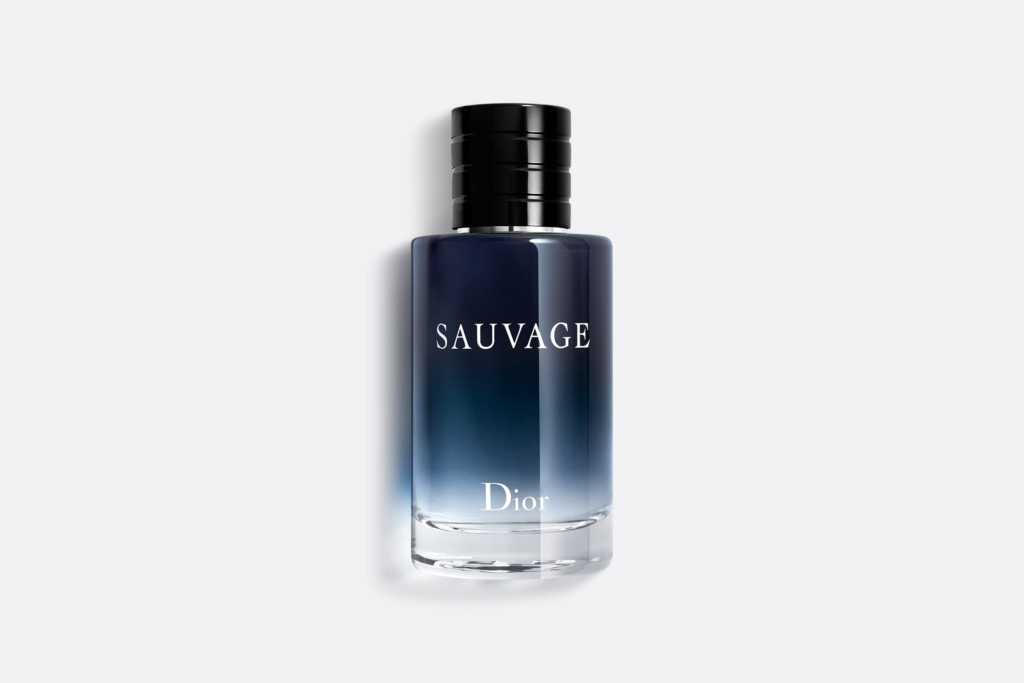
Ambroxan is frequently mentioned in conversations about blue perfumery because of its ambery, woody and musky profile and its strong diffusion. Dior’s official description of Sauvage Eau de Toilette, for example, places citrus against ambroxan, elemi and woods. But ambroxan is neither a blue-fragrance membership card nor a guarantee of quality. It appears in many perfumes that nobody would reasonably call blue, while a blue composition can be built without making it the star.
Deliberate Versatility
Perhaps the most important feature is not a note at all. Blue fragrances are usually engineered to feel easy to wear: clean enough for daytime, substantial enough for evening, familiar enough to be approachable and diffusive enough to remain noticeable.
This explains both their commercial success and the suspicion they sometimes attract. Versatility can look boring on paper, especially in a culture that often confuses eccentricity with artistic value. But making a fragrance broadly wearable without turning it into scented wallpaper is a genuine compositional challenge.
The Road from Aquatic Freshness to Modern Blue
The blue style did not appear from nowhere. Earlier aromatic aquatics—Davidoff Cool Water is the unavoidable reference—helped establish the appeal of cool herbs, marine freshness and clean woods. They created an olfactory image of open water, movement and freshly showered masculinity long before “blue fragrance” became everyday perfume vocabulary.

Bleu de Chanel later provided the modern category with its most persuasive blueprint: aromatic freshness supported by cedar and sandalwood, presented with enough polish and depth to work far beyond a purely sporty context. Chanel officially classifies the Eau de Parfum as an aromatic-woody fragrance, which is useful evidence of the gap between a formal family and the informal label consumers use.
Dior Sauvage pushed the idea in a brighter, sharper and more diffusive direction. Y Eau de Parfum offers another familiar variation, combining sage and geranium with woods. These fragrances do not smell identical, but they share a strategy: recognizable freshness, an aromatic center, a smooth woody-ambery foundation and a strong promise of versatility.
That strategy—not blue liquid or blue glass—is the real family resemblance.
Blue, Aquatic, Fresh or Fougère?
The categories become clearer when we stop treating them as interchangeable.
| Term | What it describes | Where it overlaps with blue |
|---|---|---|
| Blue fragrance | An informal modern style combining freshness, aromatics, clean woods and diffusion | The broad concept |
| Aquatic fragrance | A scent centered on marine, watery or ozonic impressions | Can supply the cool, spacious side of blue |
| Fresh fragrance | A broad sensory description covering citrus, green, aromatic and watery effects | Freshness is usually present, but “fresh” alone is too broad |
| Aromatic fougère | A recognized family built around lavender or aromatic herbs with citrus and woods | Provides much of blue perfumery’s historical vocabulary |
| Woody aromatic | A family or style pairing aromatic freshness with a woody base | Often the closest formal description for a modern blue scent |
In other words, a fragrance can be aquatic without being blue, fresh without being blue and fougère without looking remotely modern. “Blue” usually emerges where several of these ideas meet.
What a Blue Bottle Can—and Cannot—Tell You
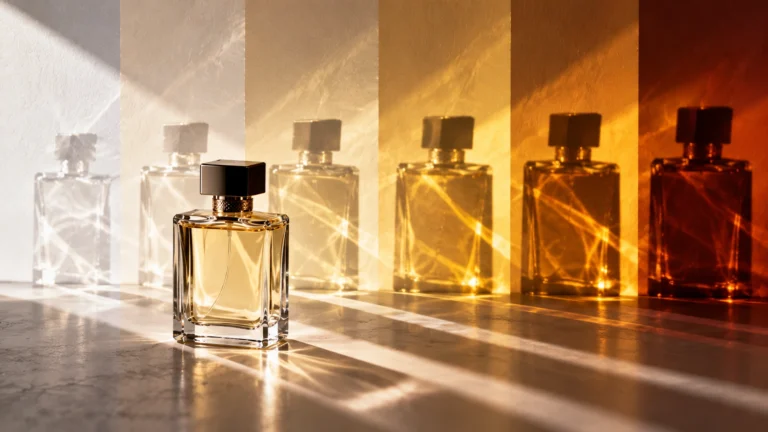
Color matters because smell has no visible form. Packaging gives consumers a story before the first spray, and blue is culturally associated with water, sky, coolness, cleanliness and open space. Brands use those associations because they work.
But packaging remains a clue, not proof.
A blue bottle can contain a warm, spicy or dense fragrance. A clear, black or silver bottle can contain something that fits the modern blue template perfectly. Judging the category from the glass alone is like deciding a perfume is gourmand because the box happens to be brown. Sometimes the guess works; that does not make it a method.
Is Montblanc Explorer Infinite a Blue Fragrance?
Montblanc Explorer Infinite is the fragrance that made me revisit this question. Its blue bottle invites the label immediately, but the scent is less obedient.

I found a vigorous citrus opening, followed by a warmer, more imposing and distinctly masculine heart. The drydown seemed to spread that power into a slightly airier, more diffuse cloud, yet the fragrance retained a density and warmth that placed it at some distance from the most predictable shower-clean blue template.
That makes it blue-adjacent rather than an unquestionable textbook blue, at least to my nose. It shares the brightness, projection, polish and everyday positioning of the style, but its warmer and almost vintage-leaning facets complicate the classification. You can read the complete skin-test impressions in my [Montblanc Explorer Infinite review].
The bottle starts the conversation. The fragrance gets the final vote.
Why “Generic Blue” Is Not a Useful Review
Calling a fragrance “generic blue” can be shorthand, but it often replaces analysis rather than providing it. Which part feels generic? The citrus opening? The aromatic heart? The ambery diffusion? The smooth woods? The familiar progression from fresh to warm?
Those questions matter because two fragrances can follow the same general template and still differ significantly in texture, balance, sweetness, volume and development. One may feel mineral and transparent; another creamy and dense. One may remain crisp for hours; another may turn warm almost immediately.
The useful question is not simply whether a fragrance is blue. It is what the fragrance does inside that vocabulary.
Are Blue Fragrances Boring?
Some are. So are some gourmands, roses, ouds and every other style that becomes commercially successful enough to attract imitation.
The problem is not accessibility. The problem is a lack of character. A blue fragrance can be beautifully proportioned, technically impressive and genuinely pleasurable. It can also smell like a focus group wearing a very clean shirt. Both outcomes are possible.

I understand the fatigue. When a formula becomes successful, the market repeats its easiest features until “versatile” starts to mean “I have smelled this in six airport duty-free shops.” Still, dismissing the entire category would be as lazy as praising every niche fragrance merely because it has a dramatic name and limited distribution.
Familiarity is not automatically mediocrity, and strangeness is not automatically art.
How to Recognize a Blue Fragrance on Skin
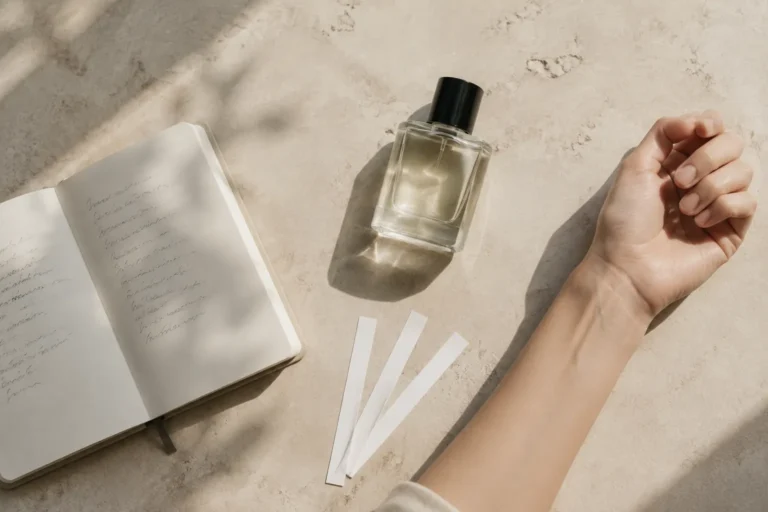
So, what is a blue fragrance when we stop looking at the bottle and start paying attention to its development on skin?
Ignore the bottle for a moment and ask:
Does the opening emphasize citrus, aromatic or airy freshness?
Does the heart feel clean, herbal, spicy or abstract rather than richly floral or edible?
Does the base use smooth woods, musk or an ambery effect to create diffusion?
Does the composition prioritize versatility and immediate legibility?
Does it remain polished even as it becomes warmer or darker?
A fragrance does not need five “yes” answers. This is not an entrance examination. The questions simply help identify the structure instead of relying on packaging or a single fashionable molecule.
Final Thoughts
So, what is a blue fragrance? It is an informal but useful name for a modern olfactory style built around freshness, aromatic energy, clean woods, diffusion and broad wearability. It often borrows from aquatic, aromatic fougère and woody-aromatic structures without being identical to any one of them.
The term becomes misleading only when we pretend it is more precise than it really is. There is no official blue formula, no mandatory ambroxan quota and—tragically for anyone hoping to classify a collection in five minutes—no chromatic shortcut.
A blue bottle may make the introduction. Your nose still has to conduct the interview.
If one blue bottle has not exhausted your chromatic curiosity, Gucci Guilty Eau de Toilette Intense offers a very different interpretation of contemporary masculine perfumery.
You can also explore more terminology and olfactory structures in our Guides section.
| Method and disclosure: This article is an educational interpretation of an informal fragrance term, supported by established fragrance-family references and official brand descriptions. It is not a review of every fragrance mentioned. Personal impressions are identified as such, including the section on Montblanc Explorer Infinite. |
[mailerlite_form form_id=1]