Gucci Ambrosia del Deserto: A Dragon Joins The Alchemist’s Garden
Blood orange, candied date, rose and patchouli meet one very confident dragon in Gucci’s latest addition to The Alchemist’s Garden.
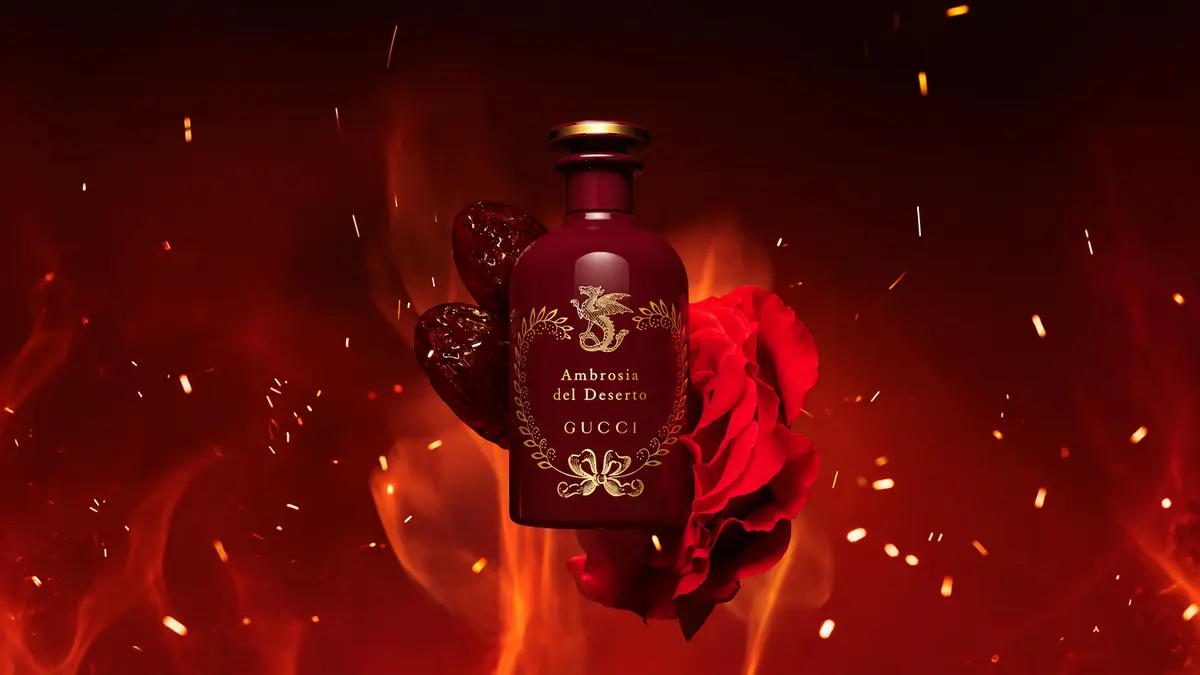
Gucci Ambrosia del Deserto is joining The Alchemist’s Garden in 2026, and subtlety does not appear to be part of the launch strategy. The new Eau de Parfum arrives in deep red glass decorated with a gold dragon, while its published note structure brings together blood orange, candied date, rose and patchouli.
That combination immediately raises a few questions. Will the blood orange keep the date from becoming too syrupy? Will rose bring shape and lift to the center? And will patchouli pull the composition toward the drier, darker character suggested by its fruity chypre classification?
I have not smelled Ambrosia del Deserto yet, so those questions remain open. This is a preview based on the published information, not a review disguised by an enthusiastic bottle description. Skin still gets the final vote.
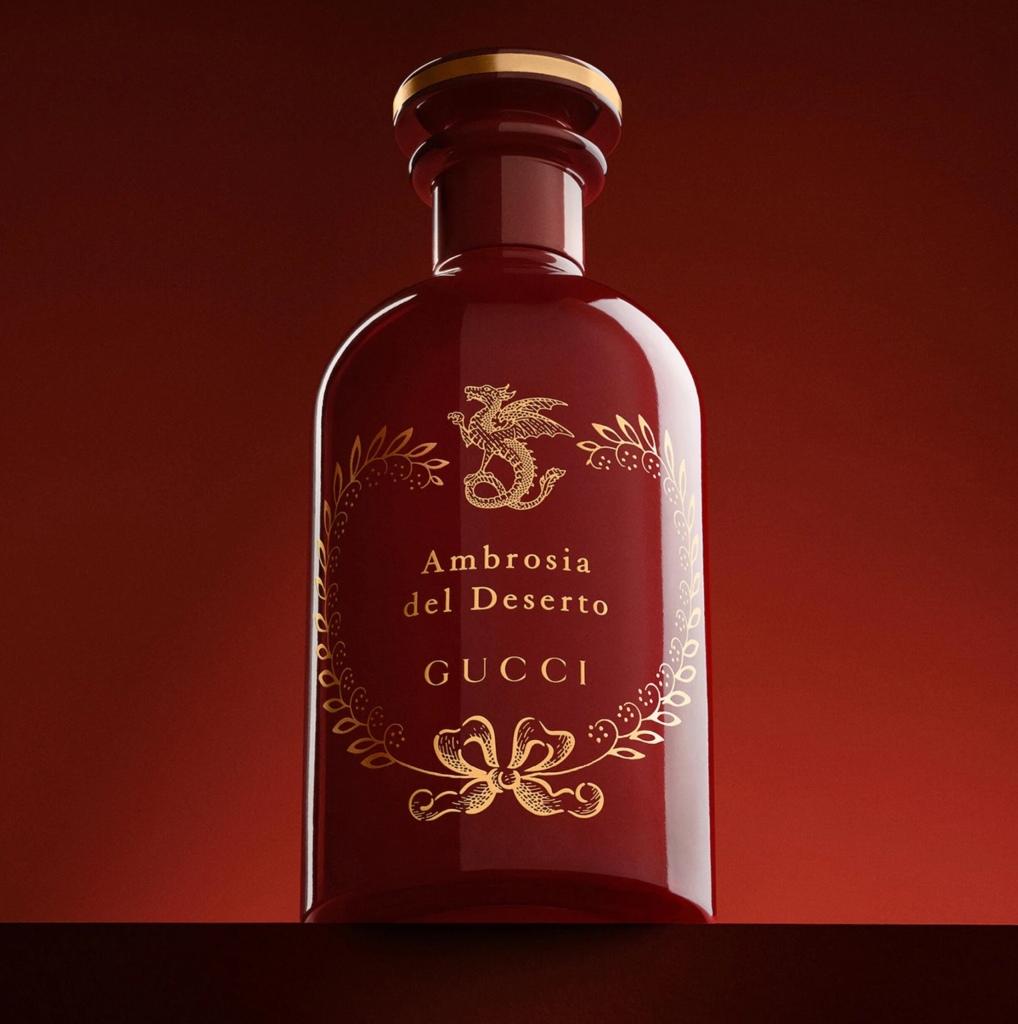
Gucci Ambrosia del Deserto at a Glance
| Brand | Gucci |
| Fragrance | Ambrosia del Deserto |
| Collection | The Alchemist’s Garden |
| Launch year | 2026 |
| Concentration | Eau de Parfum |
| Fragrance family | Fruity chypre |
| Published notes | Blood orange, candied date, rose, patchouli heart |
| Available sizes | 50 ml and 100 ml |
| Perfumer | Not officially disclosed |
| Testing status | Not personally tested |
A New Arrival in The Alchemist’s Garden
The Alchemist’s Garden is Gucci’s high-end fragrance collection, built around elaborate storytelling, decorative bottles and compositions that place individual olfactory themes at the center of each release. Ambrosia del Deserto continues that visual language while turning the drama up several degrees.
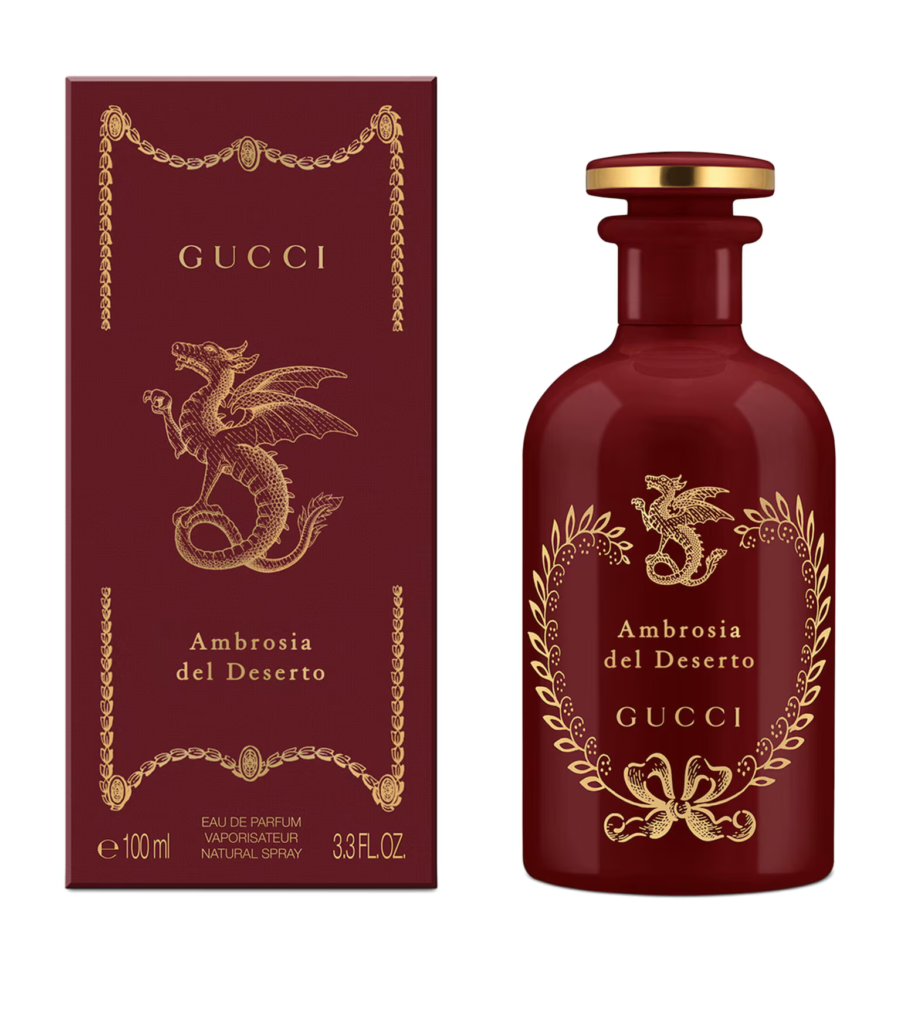
Its Italian name can be translated as “Ambrosia of the Desert,” which fits the published combination of citrus, dense fruit, rose and patchouli. On paper, the structure suggests warmth and abundance rather than anything particularly green or airy. That remains an interpretation of the note list, however, not a description of how the fragrance actually smells.
The published pyramid is unusually concise, but that does not mean the formula contains only four materials or that the finished perfume will smell simple. Fragrance notes are a way of describing a composition, not a complete ingredient list. In this case, their brevity simply makes Gucci’s chosen narrative very clear.
Blood Orange and Candied Date
Blood orange opens the published structure. It can suggest brightness, tartness and a slightly bitter edge, qualities that could provide useful contrast against the candied date in the heart.
Date is the detail that makes this launch especially tempting. Gucci describes it as candied rather than fresh, pointing toward a denser and more confectionery effect. Paired with citrus, it could create a tension between sharpness and syrupy sweetness. Whether that contrast feels balanced, indulgent or overwhelming cannot be judged from the pyramid alone, but it gives the fragrance a stronger identity on paper than another anonymous red-fruit accord would have done.
This is also where the fragrance could begin to flirt with gourmand territory. The presence of an edible note does not automatically make a perfume gourmand, though, and the rest of the structure suggests that Gucci may be aiming for something more controlled.
Rose and Patchouli Shape the Structure
Rose sits beside candied date in the heart. It may act as a bridge between the brightness of blood orange, the dense sweetness of the fruit and the darker patchouli base. It could also introduce a more perfumed, floral texture that keeps the composition from reading as a literal dessert.
Patchouli heart provides the base of the published pyramid. Its earthy and woody associations may help explain the fruity chypre classification given by retailers, but patchouli alone does not automatically make a fragrance a chypre. The real balance between fruit, floral notes and the darker foundation will only become clear after testing.
For now, the most interesting possibility is that Ambrosia del Deserto may combine gourmand cues with a more structured and shadowed finish. That would make it more compelling to me than straightforward sweetness, but this is still anticipation rather than a verdict.
The Dragon Gets the Bottle
Then there is the bottle, because Gucci clearly did not spend all this time summoning a dragon for us to ignore it.
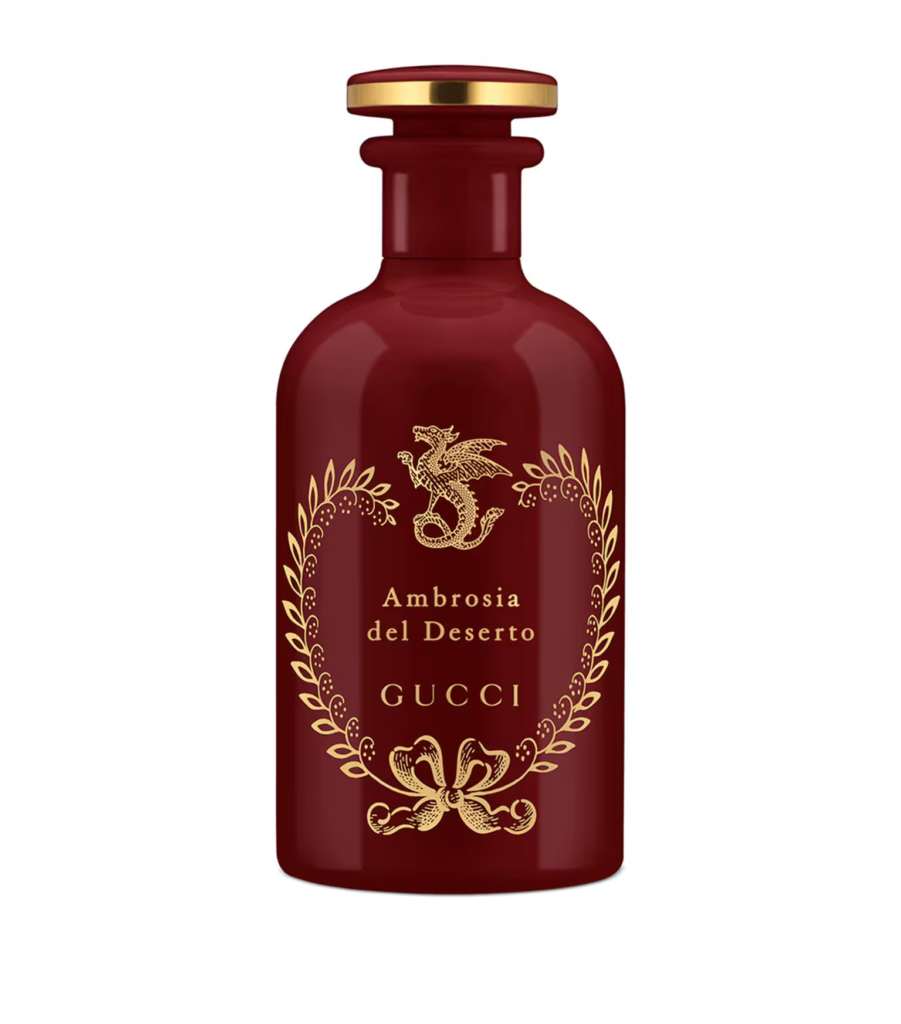
Ambrosia del Deserto comes in deep red glass with an ornate gold dragon winding across the surface. Harrods describes the dragon as a symbol of the fragrance’s “fierce power.” Whatever the perfume ultimately smells like, the presentation gives it an immediate visual identity within an already decorative collection.
The red and gold palette also complements the story told by the notes: blood orange, candied fruit, rose and patchouli all point toward warmth, richness and depth. This is marketing imagery rather than olfactory evidence, but it is unusually coherent marketing imagery. The bottle may end up doing terrible things to people who collect The Alchemist’s Garden mainly for display. I offer them my thoughts, certainly not my financial assistance.
Why This Launch Is Worth Watching
Gucci Ambrosia del Deserto is interesting because its short published pyramid creates clear contrasts without pretending to reveal the entire formula. Bright citrus meets candied fruit, rose sits between sweetness and earthiness, and patchouli promises a darker foundation.
It also arrives at a moment when date has become an increasingly visible note in contemporary perfumery. Gucci’s decision to pair it with blood orange rather than another creamy or overtly dessert-like accord could give the composition a sharper profile. The fruity chypre label adds another reason to remain curious, provided the structure feels convincing on skin rather than simply sounding good in a product description.
The bottle guarantees attention. The fragrance still has to earn it.
Availability
At the time of writing, Gucci Ambrosia del Deserto is listed by Harrods in 50 ml and 100 ml Eau de Parfum formats. Availability and pricing vary by country and retailer, so local listings should be checked before publication or purchase. No reliable source reviewed for this preview identifies the fragrance as a limited edition or Harrods exclusive.
| Testing disclosure: This article is a preview based on published product information and retailer descriptions. I have not tested Gucci Ambrosia del Deserto on skin. Any discussion of its possible sweetness, structure or development is an editorial interpretation of the announced notes, not a claim about personal experience, performance, longevity or projection. |
Final Thoughts
Gucci Ambrosia del Deserto has enough on paper to make me curious: a tart citrus opening, an unusual candied date heart, rose for structure and patchouli waiting underneath. Add the dramatic red bottle and its gold dragon, and the launch certainly knows how to introduce itself.
What I will not do is pretend that four published notes can tell us exactly how the finished fragrance behaves. Ambrosia del Deserto could become a dark, polished fruity chypre, a sweeter date-centered composition or something that sits between the two. Until I smell it, the dragon can guard its secrets.
| Apparently, the perfume calendar has no respect for our bank accounts. Discover more temptations in the New Releases archive. |
[mailerlite_form form_id=1]