
Bois 1920 Musk1920: Can Tropical Fruit Become a Second Skin?
Bois 1920 presents Musk1920 as the fragrance equivalent of a good cashmere sweater: close to the body, unbothered by attention and quietly correct. Then you read the top notes and find plum, pineapple, mango, blackcurrant, peach and marine notes all queued up in the opening. That is not exactly the guest list one expects for a party devoted to restraint.
That contrast between positioning and pyramid is the reason Bois 1920 Musk1920 is worth discussing before it has been worn. A published note list tells us how a fragrance is presented, not necessarily which materials it contains or how those materials will smell together. It cannot tell us whether the pineapple will appear as a brief flash of brightness or arrive carrying an entire fruit salad.
| Testing note: I have not yet tested Musk1920. This article examines the official concept and published olfactory pyramid; it is a preview, not a review of how the fragrance smells, develops or performs. |
Bois 1920 Musk1920 and the Art of Quiet Presence
According to Bois 1920, Musk1920 embodies understated elegance: sophisticated and enveloping, yet built around a quiet, recognizable presence rather than a fragrance that announces itself. The brand describes it as more of a second skin than a conventional trail, seeking closeness instead of attention. It also says the composition remains relatively constant rather than changing simply to produce surprise.
It is a coherent and appealing proposition. Skin-oriented musks offer an alternative to the louder side of contemporary fragrance culture: no sillage competition, no account of a perfume entering the room several minutes before its owner, just something personal that rewards proximity.
It is equally important to identify this language for what it is: the brand’s positioning, not independent evidence of how Musk1920 behaves. Whether it creates a genuinely intimate presence, and what “constant” means over several hours, can only be judged through a proper wear test.

A Fruity Opening That Does Not Look Particularly Quiet
This is where the contrast becomes most visible on paper. The official top notes are plum, pineapple, mango, blackcurrant, peach and marine notes: an unusually populated introduction for a fragrance presented as discreet.
That does not mean the opening will necessarily smell tropical, sweet or loud. Notes can function as accents, textures and impressions rather than photorealistic pieces of fruit. What the pyramid provides is a set of possibilities worth investigating.
Plum and blackcurrant may contribute tartness or a darker fruit effect, potentially keeping the opening away from a purely candied direction. Pineapple and mango could bring juiciness, but they might also act primarily as brightness and lift. Peach could move toward softness or suggest a more saturated fruit character depending on how the accord is constructed. The marine notes are perhaps the most intriguing variable: they could introduce transparency around the fruit rather than behaving as a distinct aquatic statement.
The honest version of this section must remain a question. Does the fruit form a luminous veil over the composition, or does it dominate the opening? The pyramid creates the tension; only the skin test can resolve it.
| For another contemporary fragrance that balances tart tropical fruit with a softer vanilla base, my Emporio Armani Power of You review explores a very different composition. The connection is thematic rather than a suggestion that the two perfumes smell alike. |
Lavender Iris and Lily of the Valley Change the Direction
The heart pairs lavender, iris and lily of the valley. On paper, these notes offer a plausible bridge between the colorful opening and the intimate effect promised by Bois 1920.
Lavender can introduce aromatic clarity and a clean facet capable of counterbalancing fruit. Iris may contribute powder, softness or a more abstract texture, while lily of the valley is commonly used to suggest transparent floral freshness. Together, they could move the composition away from a straightforward fruit fragrance and toward something smoother and more diffused.
None of this guarantees that Musk1920 will smell powdery, soapy or clean. These are possible functions suggested by the official structure, not impressions of the finished fragrance. Iris may emerge as a clearly recognizable note, operate mainly as texture or remain almost invisible within the larger accord. That is one of the first details I will be looking for when a sample reaches my skin.
The Musk Is Waiting in the Base
Tonka bean, vanilla, sandalwood, ambergris and musk form the base. Given the name on the bottle, this is where the second-skin idea will ultimately need to prove itself.
Tonka and vanilla make softness and sweetness possible, but their presence does not automatically make a fragrance gourmand. Sandalwood can reinforce creaminess while adding a woody framework, and musk can create effects ranging from freshly laundered fabric to warm, abstract skin. “Ambergris” in a modern published pyramid may also indicate an ambered, mineral or diffusive effect rather than confirm the use of natural ambergris.
The interesting question is one of balance. Will Musk1920 become a soft vanilla-tonka composition supported by musk, or a musky and woody base carrying only a memory of sweetness? The note list cannot answer that, but the distinction will determine whether the promised intimacy feels convincing.
A Fragrance That Refuses the Traditional Plot Twist
Bois 1920’s statement that Musk1920 remains constant over time is arguably more unusual than its fruit-heavy opening. Fragrance descriptions often promise a succession of dramatic stages; here, continuity is presented as part of the appeal.
That does not have to mean a flat or uneventful composition. A perfume can preserve a recognizable central accord while its proportions, textures and emphasis change gradually. Musk1920 might maintain a continuous fruity-musky thread instead of dividing itself into three conspicuous acts.
Still, the wording gives us something specific to test. Does the fragrance genuinely feel cohesive from beginning to end, or does it settle quickly and reveal limited development? Continuity is valuable when the central effect remains satisfying. For now, both interpretations remain possible.
The Official Musk1920 Layering Proposal
Musk1920 was created by perfumer Arturetto Landi. The official launch material also introduces an Arturetto Landi Layering Kit, with Musk1920 proposed as the starting point and either Decisamente Rosa or Art1920 added to create a more personal olfactory signature.
The layering proposal feels like a natural extension of Landi’s composition rather than a separate marketing exercise. It positions Musk1920 as a flexible foundation that can remain intimate by itself or become part of a more elaborate combination.
Naturally, trying one perfume was apparently considered insufficient temptation, so the brand has provided two additional routes into the collection. Very thoughtful of them.
What I Want to Understand on Skin
This is where preview must stop pretending to be review. When I test Musk1920 properly, these are the questions I want the fragrance to answer:
Does the fruit feel juicy, transparent, tart or distinctly sweet?
How prominent is the marine accord, and does it behave as atmosphere or as a recognizable aquatic note?
Does iris emerge as a smell of its own or work primarily as powder and texture?
Do vanilla and tonka move the drydown toward gourmand territory?
Does the composition remain coherent and recognizable throughout the wear?
Does “quiet presence” accurately describe its projection?
How does it behave on skin compared with clothing?
Those final questions are not a demand for nuclear projection. As discussed in Why Perfume Performance Is Not a Personality Trait, longevity and projection are only part of the experience. They depend on the fragrance as well as application, skin, clothing and wearing conditions. Here, they are especially relevant because intimacy is part of the official creative proposition.
Price Formats and Availability
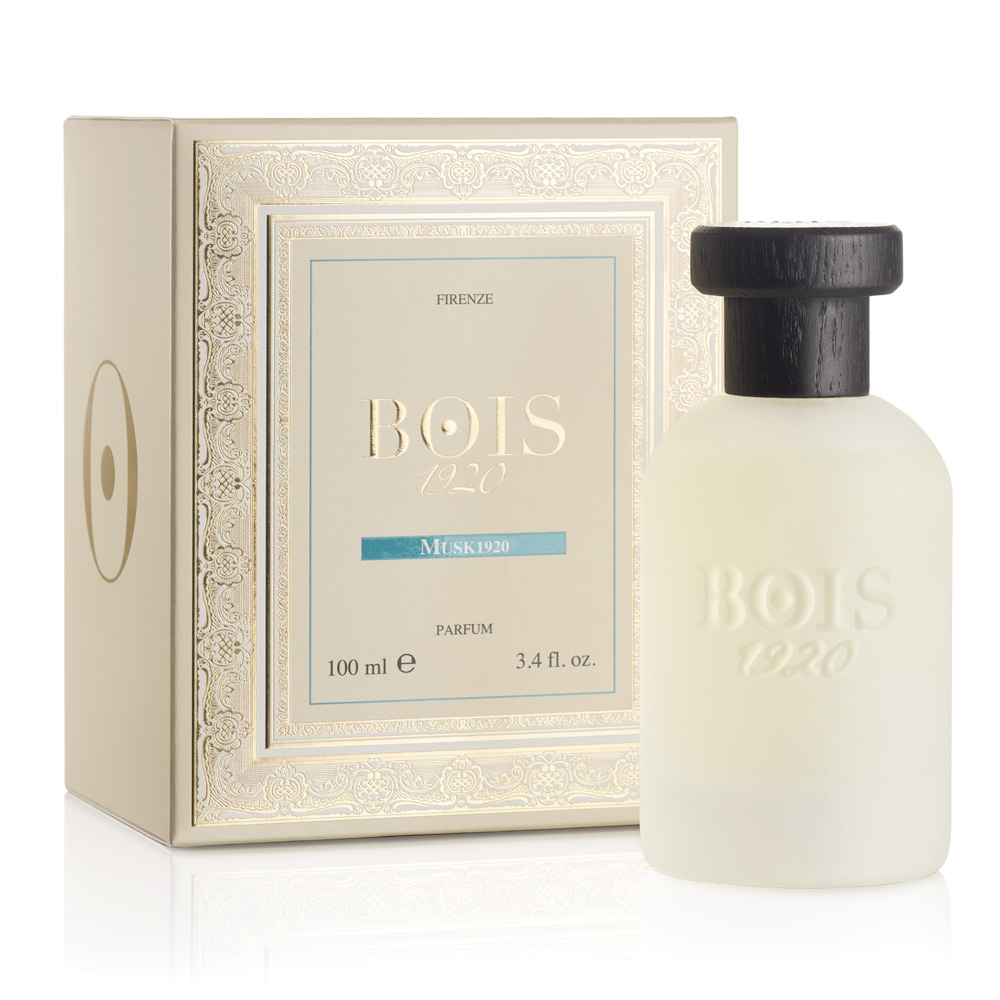
At the time of writing, the official Bois 1920 product page places Musk1920 in the Classici collection and lists four formats: 2 ml, 18 ml, 50 ml and 100 ml. Displayed prices range from €5 to €165. Formats, individual prices and availability should be checked directly on the official page before purchase because launch details may change.
Bois 1920 Musk1920 First Verdict
Bois 1920 Musk1920 is interesting because it avoids the easiest version of a musk launch. The brand could have offered a sparse pyramid dominated by clean musks and pale woods. Instead, it surrounds the second-skin concept with an extensive fruit accord, marine notes, lavender, iris, lily of the valley, vanilla, tonka and sandalwood.
That could prove to be an ambitious demonstration that quiet does not have to mean minimal. It could equally produce a composition whose intimate positioning only becomes clear after the fruit settles. Until it is tested, those remain possibilities rather than conclusions.
For now, Bois 1920 Musk1920 belongs firmly in the must-test category. The concept is specific, the contrast between the official story and the olfactory pyramid is genuinely intriguing, and the full verdict must wait for skin. My sample collection was obviously becoming dangerously manageable anyway.
Quick Reference
| Brand | Bois 1920 |
| Fragrance | Musk1920 |
| Collection | Classici |
| Top notes | Plum, pineapple, mango, blackcurrant, peach, marine notes |
| Heart notes | Lavender, iris, lily of the valley |
| Base notes | Tonka bean, vanilla, sandalwood, ambergris, musk |
| Formats listed | 2 ml, 18 ml, 50 ml, 100 ml |
| Displayed price range | €5–€165 at the time of writing |
| Testing status | Preview only; not tested on skin |
| Perfumer | Arturetto Landi |
| One new fragrance down, approximately 847 to go. Explore New Releases. |