Fugazzi Angel Dust Red Gold: Three Versions, One Obsession
Five years after the original Angel Dust, Fugazzi introduces Red Gold, a limited-edition extrait with a saffron-infused twist. But how different is it from the original Eau de Parfum and Extrait?
Fugazzi Angel Dust Red Gold arrives to celebrate the fifth anniversary of a fragrance that has become one of the brand’s signatures. Some perfumes enjoy their moment in the spotlight and quietly disappear into the increasingly crowded world of perfumery. Others become important enough to inspire new concentrations, reinterpretations and anniversary editions. Angel Dust clearly belongs to the second category.
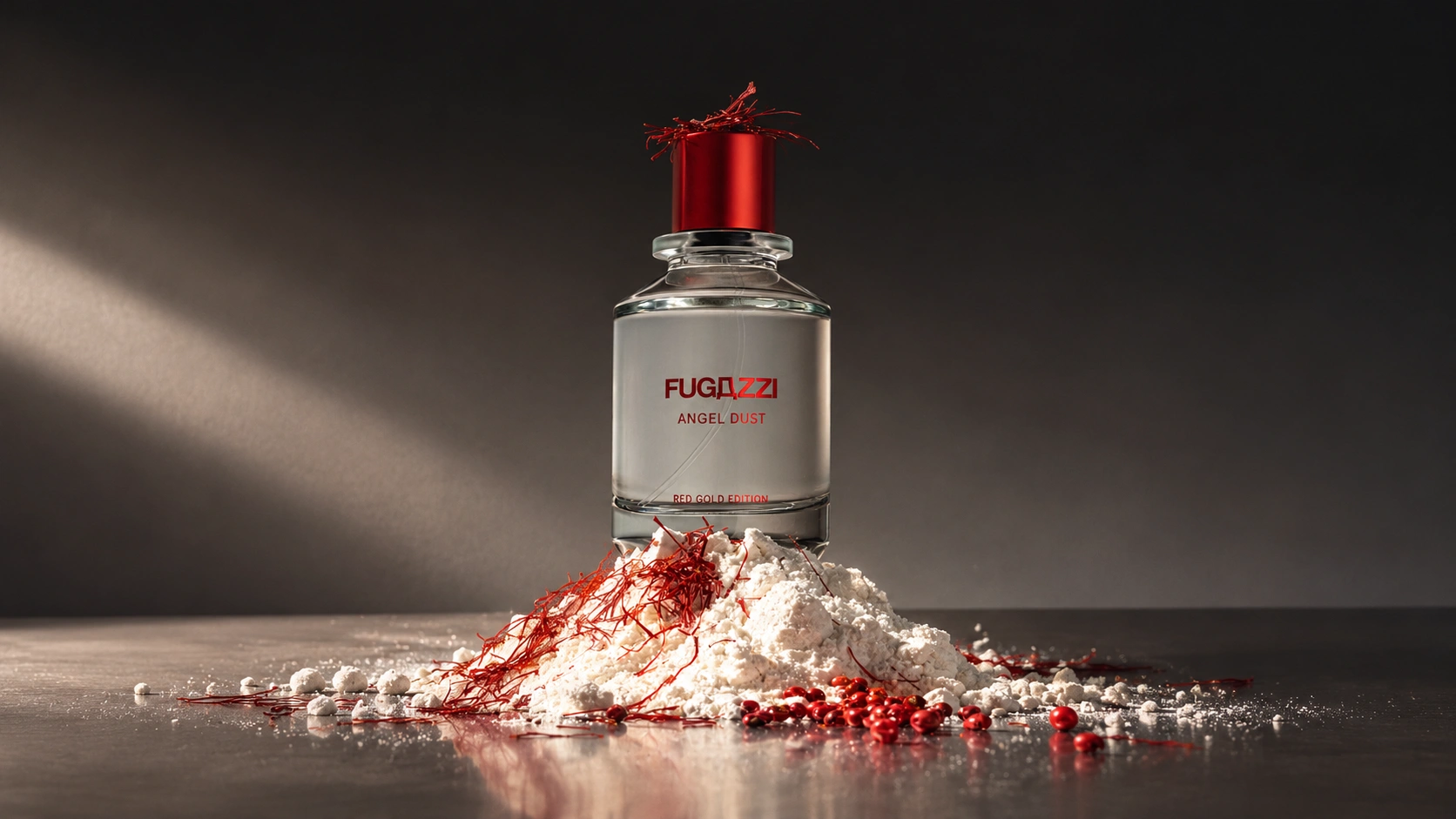
To celebrate its fifth anniversary, the Amsterdam-based brand has introduced Angel Dust Red Gold, a limited-edition Extrait de Parfum that revisits the familiar composition with a new saffron-inspired opening. There is also a rather striking red cap, because apparently a new fragrance release isn’t complete without giving collectors another reason to reconsider their financial priorities.
But beyond the packaging, what exactly has changed? And with three interpretations of Angel Dust now available, which one might deserve your attention?
Let’s look at how this particular obsession has evolved.
| Editor’s note: This article is based on official information published by Fugazzi and an analysis of the declared compositions. It is a launch overview and editorial comparison, not a first-hand fragrance review. Descriptions of potential olfactory differences should not be interpreted as results from personal skin testing. |
Angel Dust Eau de Parfum: Where It All Began
Before the Extrait, before the anniversary celebrations and certainly before that red cap entered the picture, there was the original Angel Dust Eau de Parfum.
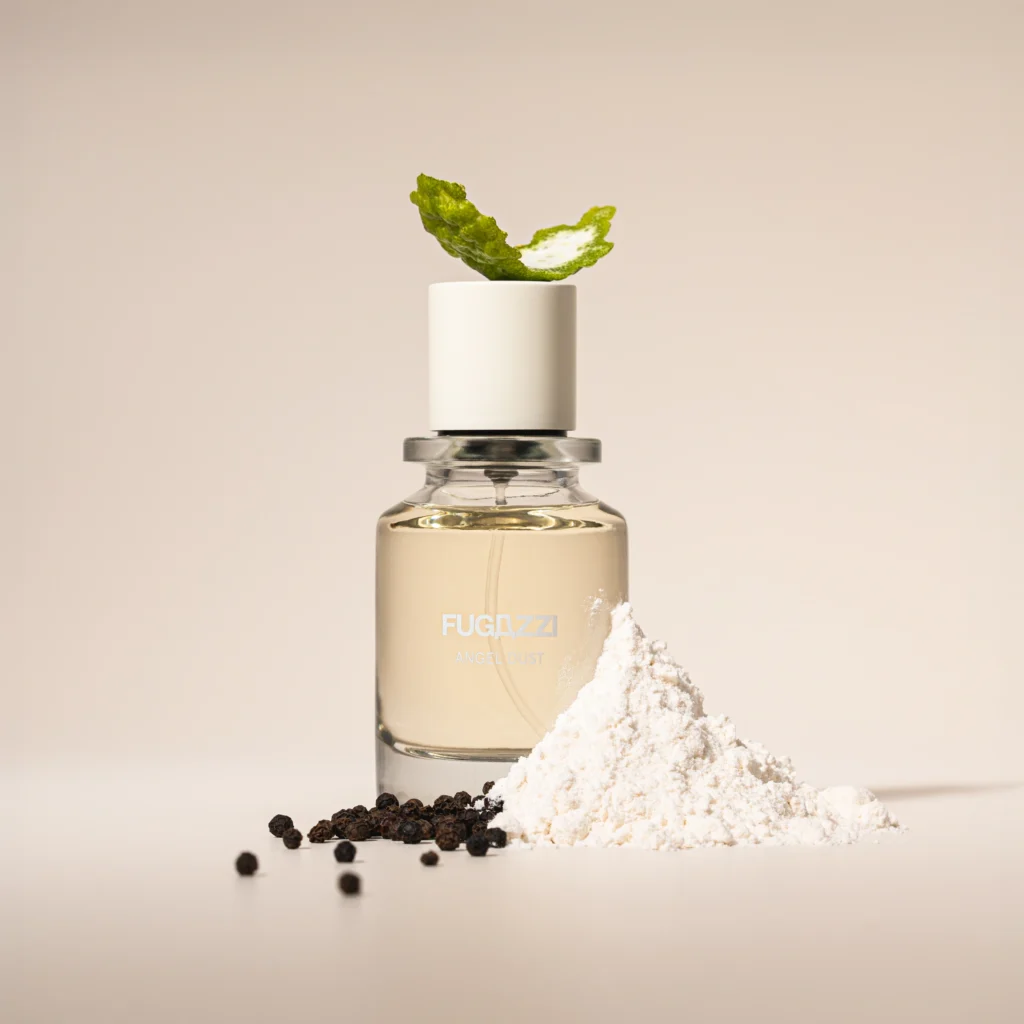
At the centre of the composition is Cashmeran, a synthetic aroma material valued for its distinctive combination of woody, musky and softly powdery facets. Rather than building the fragrance around an elaborate succession of contrasting notes, Fugazzi places this material at the heart of an intimate, comforting olfactory identity.
The brand lists transparent woods, cashmere and white amber as the composition’s defining elements, while its fuller description also references Calabrian bergamot and a subtle peppery accent. Together, these suggest a fragrance built around softness, warmth and the kind of understated sensuality that doesn’t necessarily need to announce its arrival from across the room.
Fugazzi describes Angel Dust as a fragrance for the introvert, someone who attracts attention without actively demanding it. A rather appealing concept in a perfume industry where every other launch seems determined to be louder, stronger and more unforgettable than everything that came before.
With a declared concentration of 20%, the original Eau de Parfum establishes the foundation of the collection: woody, musky and centred on that enveloping cashmere effect.
Angel Dust Extrait de Parfum: Turning Up the Intensity
Naturally, there comes a point when someone looks at a successful fragrance and wonders whether it could be made more intense.
Enter Angel Dust Extrait de Parfum.
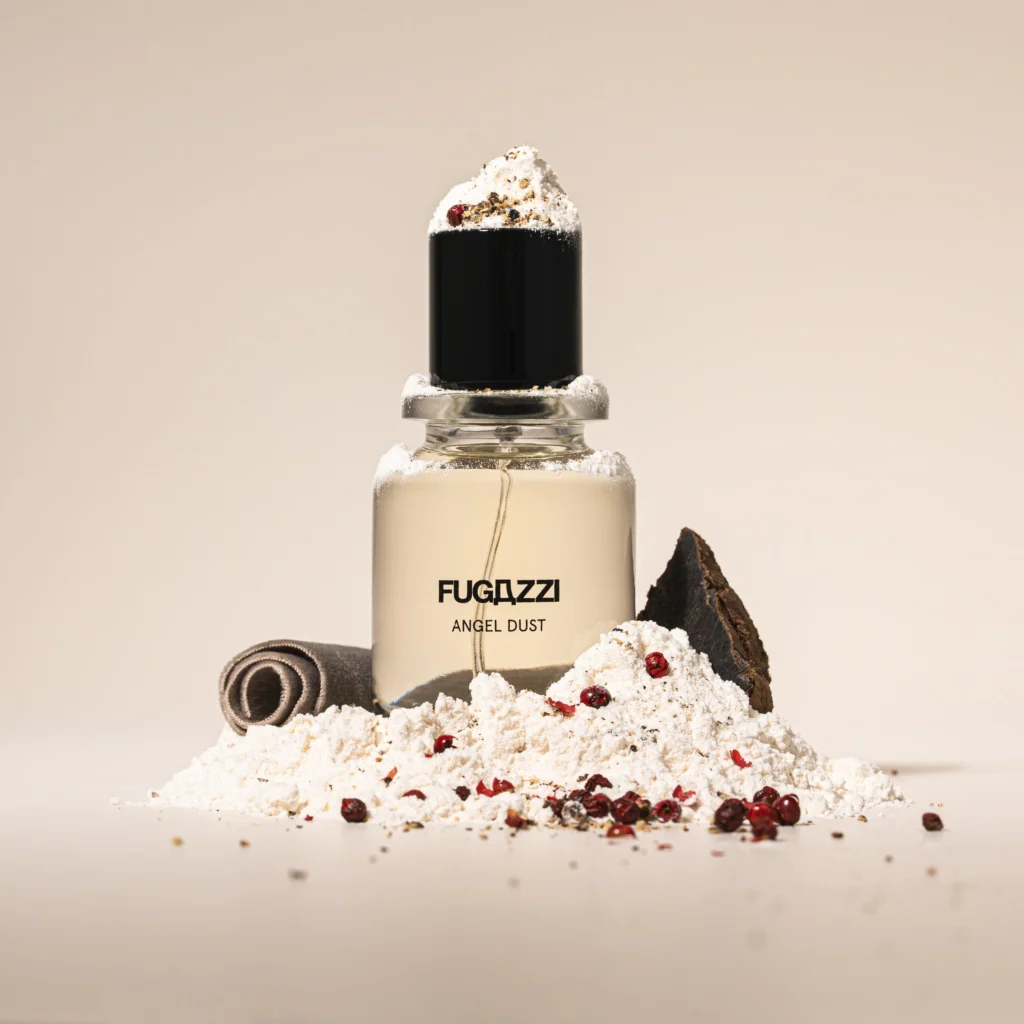
Here, Fugazzi increases the fragrance concentration to 30% and introduces a more pronounced spicy-woody character. The officially listed notes include pink pepper, cashmere, white amber and dark woods, replacing the original’s emphasis on transparent woods with something that appears richer and more assertive.
According to the brand, the Extrait also increases the presence of white amber and Cashmeran, while strengthening the peppery dimension through the addition of pink pepper.
On paper, this creates an interesting shift in personality. Where the Eau de Parfum focuses on a softer, more transparent interpretation of woody musk, the Extrait moves towards a warmer, darker and more textured composition.
That doesn’t necessarily mean it will be twice as powerful, despite the higher concentration. Perfume doesn’t work quite so conveniently, unfortunately. Projection, longevity and overall intensity depend on the complete formula, not simply on the percentage of aromatic concentrate.
Still, the intention behind the Extrait seems clear: preserve the recognizable character of Angel Dust while giving its woody, musky and spicy elements greater emphasis.
For anyone attracted to the original concept but interested in a more substantial interpretation, this is where the collection becomes particularly intriguing.
Angel Dust Red Gold: A Golden Twist for the Fifth Anniversary
And now we arrive at the newest member of the family.
Fugazzi Angel Dust Red Gold celebrates five years of the original fragrance with a limited-edition Extrait de Parfum, distinguished by its metallic red cap and matching details.
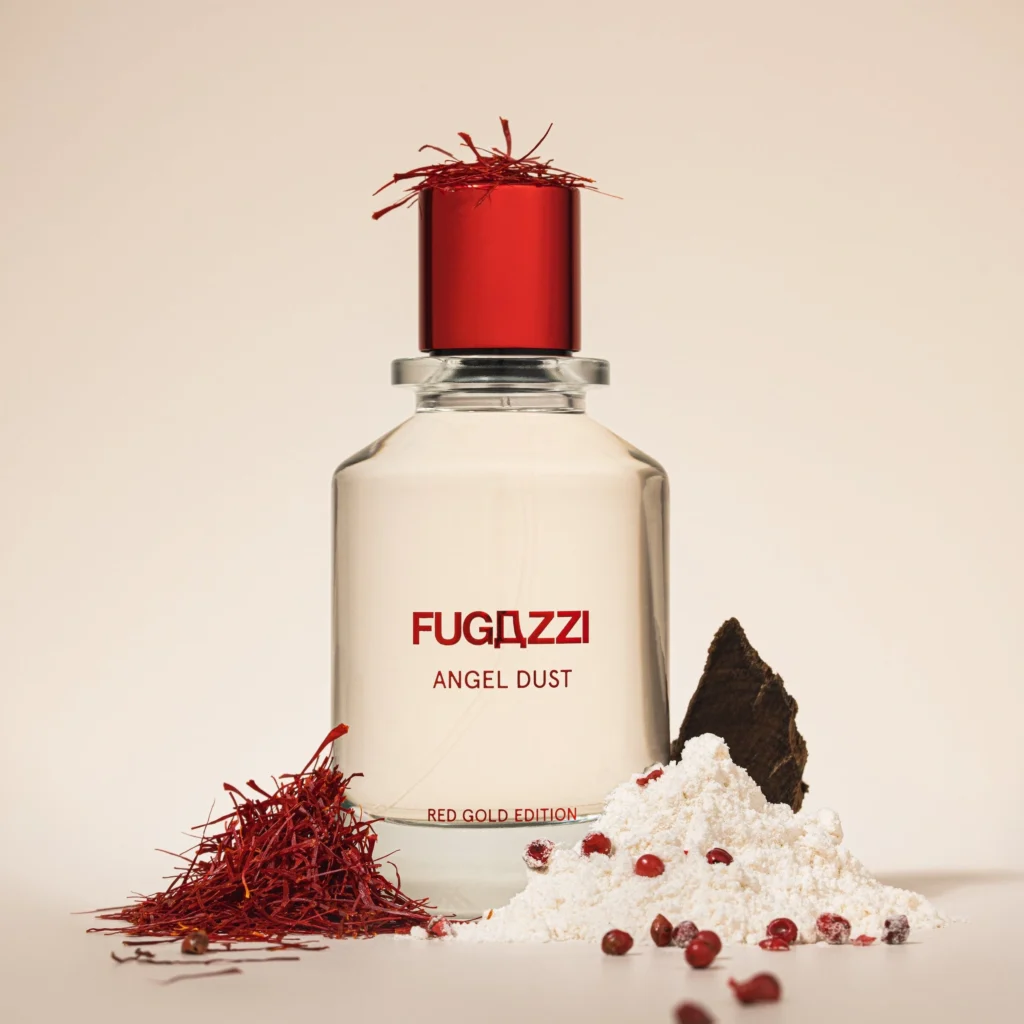
Visually, it is a relatively simple change, but an effective one. The familiar minimalist design remains intact, while the red accents introduce a bolder, more dramatic personality. Sometimes all it takes is a different cap to make a perfectly reasonable person start contemplating another perfume purchase.
The more interesting development, however, is inside the bottle.
According to Fugazzi, Red Gold retains the heart and base of the Angel Dust composition, preserving its cashmere woods, white amber and soft musky character. The principal modification comes in the opening, where Safraleine and Safranal introduce a saffron-inspired dimension.
Both materials contribute to the olfactory impression of saffron, although they have different aromatic characteristics. Safraleine is associated with spicy, leathery and warm facets, while Safranal is a key contributor to the characteristic aroma of saffron.
Their inclusion suggests an opening with a more pronounced golden warmth, potentially introducing a subtly leathery, spicy contrast to the familiar softness of the Angel Dust DNA.
Fugazzi also lists pink pepper, cashmere, white amber and dark woods among Red Gold’s notes. That makes the composition particularly interesting when compared with Angel Dust Extrait, which already features those same four elements.
At 30% concentration, Red Gold is positioned alongside the Extrait rather than the original Eau de Parfum. It is therefore best understood, at least from the information currently available, as a new interpretation of the more concentrated Angel Dust formula rather than a completely separate olfactory creation.
And that brings us to the question collectors will inevitably ask.
Angel Dust Red Gold vs Extrait: Is the Difference Significant?
Looking at the official compositions, Red Gold and Angel Dust Extrait share a remarkably similar foundation.
Both feature pink pepper, cashmere, white amber and dark woods. Both have a declared concentration of 30%. Both belong to the broader woody, musky universe that defines the Angel Dust collection.
The main distinction lies in Red Gold’s saffron-inspired opening.
This is more interesting than it might initially sound. Even when a fragrance retains a familiar heart and base, changes to the opening can significantly influence its first impression and the way the composition is perceived as it develops.
In the case of Red Gold, the combination of Safraleine and Safranal could introduce a warmer, more aromatic and potentially leathery character, particularly during the initial stages. The Extrait, by comparison, places greater emphasis on its peppery and dark woody profile.
But there is an important distinction between what a composition suggests on paper and what actually happens on the skin.
Without a proper side-by-side test, it would be premature to claim that Red Gold smells dramatically different, lasts longer or performs better than the existing Extrait. The brand itself emphasizes continuity rather than reinvention, describing the anniversary edition as a modification of the opening while maintaining the familiar heart and base.
In other words, Fugazzi doesn’t appear to be trying to replace Angel Dust Extrait. It is offering another way to experience it.
And for a fragrance built around a relatively focused woody-musky identity, even a carefully chosen change in the opening could be enough to create a distinct personality.
Three Versions of Angel Dust: Which One Should You Choose?
The interesting thing about this collection is that the three versions don’t necessarily compete for exactly the same audience.
Angel Dust Eau de Parfum is the natural starting point for anyone interested in the original concept: Cashmeran, transparent woods and white amber arranged around a soft, musky character. With its 20% concentration, it represents the collection’s initial interpretation.
Angel Dust Extrait de Parfum moves towards a more substantial woody-spicy profile. Pink pepper and darker woods give the composition a different direction, while the concentration increases to 30%. On paper, it is the most obvious candidate for those seeking a richer interpretation of the Angel Dust signature.
Angel Dust Red Gold introduces something different: a saffron-inspired opening layered over the familiar Extrait territory. Its appeal lies less in an entirely new fragrance structure and more in the possibility of experiencing a known composition through a warmer, more golden and potentially leathery perspective.
Choosing between them therefore depends on what attracts you most: the softer original, the darker Extrait or the saffron-accented anniversary edition.
Of course, anyone who already owns both existing versions might be asking a slightly different question: do I really need a third?
A question that perfume collectors have been spectacularly unsuccessful at answering for decades.
Angel Dust Red Gold: Price and Availability
Angel Dust Red Gold is presented as a limited-edition fragrance, with a 30% concentration and a listed price of €205 for 100 ml on the official Fugazzi website.
For comparison, the original Angel Dust Eau de Parfum is listed at €140 for 100 ml, while Angel Dust Extrait de Parfum is priced at €205 for the same size.
Interestingly, Red Gold therefore shares the Extrait’s price point rather than introducing an additional anniversary premium. Considering how frequently the words limited edition are used to justify increasingly ambitious pricing, that is a welcome detail.
The brand has not established, in the information reviewed for this article, how many bottles will be produced or how long the edition will remain available. Limited availability should therefore not automatically be interpreted as a numbered or exceptionally small production run.
Final Thoughts: A New Chapter, Not a New Beginning
What makes Angel Dust Red Gold interesting isn’t simply the arrival of another flanker. It is the way Fugazzi has chosen to celebrate the fifth anniversary of a fragrance that has become an important part of its identity.
Rather than completely rebuilding the formula, the brand has focused on a new opening, introducing saffron-inspired materials while preserving the composition’s familiar woody-musky foundation.
Whether that change is significant enough to justify owning Red Gold alongside Angel Dust Extrait remains a question that only a proper comparative skin test can answer. And that, ultimately, is where the real interest lies.
For now, Red Gold looks like a thoughtful addition to the collection, particularly for those who appreciate saffron’s warm, spicy and occasionally leathery nuances.
As for the bottle, the red cap is undeniably appealing.
Which is terribly inconvenient for anyone attempting to maintain even a vaguely sensible perfume wishlist.
| THREE ANGELS, ZERO SELF-CONTROL. Still looking for your next fragrant temptation? Explore our New Releases and discover more reasons to make your wallet deeply uncomfortable. |