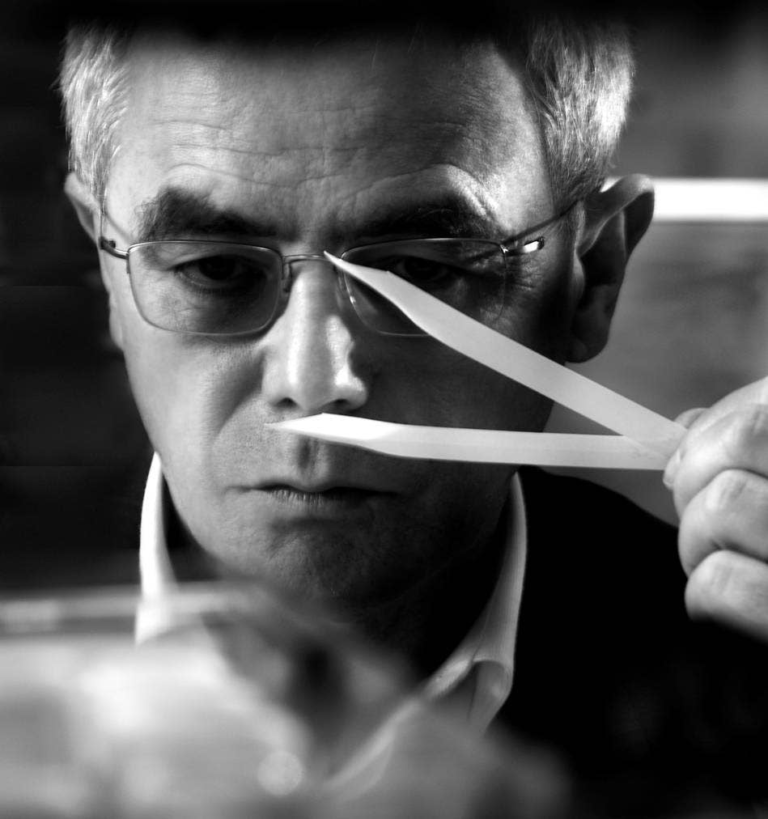
Jacques Polge: The Man Who Shaped Modern Chanel
There are perfumers whose names become inseparable from a single masterpiece. Jacques Polge did something rather different.
For almost four decades, he helped shape the olfactory identity of one of the most recognisable houses in the world.
When Polge arrived at Chanel in 1978, he became only the third perfumer in the history of the house, following Ernest Beaux and Henri Robert. When he eventually handed the role to his son Olivier Polge in 2015, the Chanel fragrance universe looked remarkably different from the one he had inherited.
Between those two dates came Coco, Égoïste, Allure, Coco Mademoiselle, Chance and Bleu de Chanel, alongside reinterpretations of existing icons and the development of Les Exclusifs de Chanel.
It is difficult to think of another perfumer whose work became so closely intertwined with the evolution of a single major fragrance house.
And perhaps that is the most interesting way to understand Jacques Polge.
Not simply as the man behind a collection of successful perfumes, but as the perfumer who helped Chanel smell like Chanel for a new era.
From the South of France to Chanel
Jacques Polge was born in 1943 and grew up near Avignon in the south of France. In interviews, he often recalled spending summers around Grasse, where the surrounding landscape and its jasmine left an early impression on him. His path into perfumery was not entirely obvious: he studied English and literature before eventually turning towards fragrance.
That literary background feels strangely appropriate.
Polge has spoken about perfume as a form of poetry, something capable of communicating without words. It is a romantic idea, certainly, but it also offers a useful clue to his approach. His best work rarely feels like an exercise in displaying ingredients. The effect matters more than showing how cleverly the machinery underneath has been assembled.
He began his professional career before joining Chanel, working within the traditional fragrance industry and developing his craft at Roure Bertrand Dupont. Then, in 1978, came the appointment that would define his career.
Chanel already possessed one of the most intimidating fragrance legacies imaginable.
N°5 alone would have been enough.
Polge’s task was not to replace that history. It was to continue it.
The Difficult Art of Moving Forward
Working as an in-house perfumer is fundamentally different from moving from brand to brand.
A perfumer becomes a guardian as much as a creator. New ideas have to exist within an established language, especially when that language includes fragrances as culturally entrenched as N°5, N°19 and Pour Monsieur.
This may be where Jacques Polge’s importance becomes clearer.
His Chanel perfumes do not all smell alike. In fact, several of them seem to have very little in common. Yet there is often a sense of structure, polish and restraint running beneath them. Even when they are rich, they rarely feel accidental. Even when designed for a broad audience, they retain a certain precision.
That is an interpretation rather than an official “Jacques Polge signature”, and perhaps that distinction matters. Trying to reduce a career spanning decades to three favourite ingredients would be rather pointless.
His signature may instead lie in his ability to change.
Coco: A New Chapter
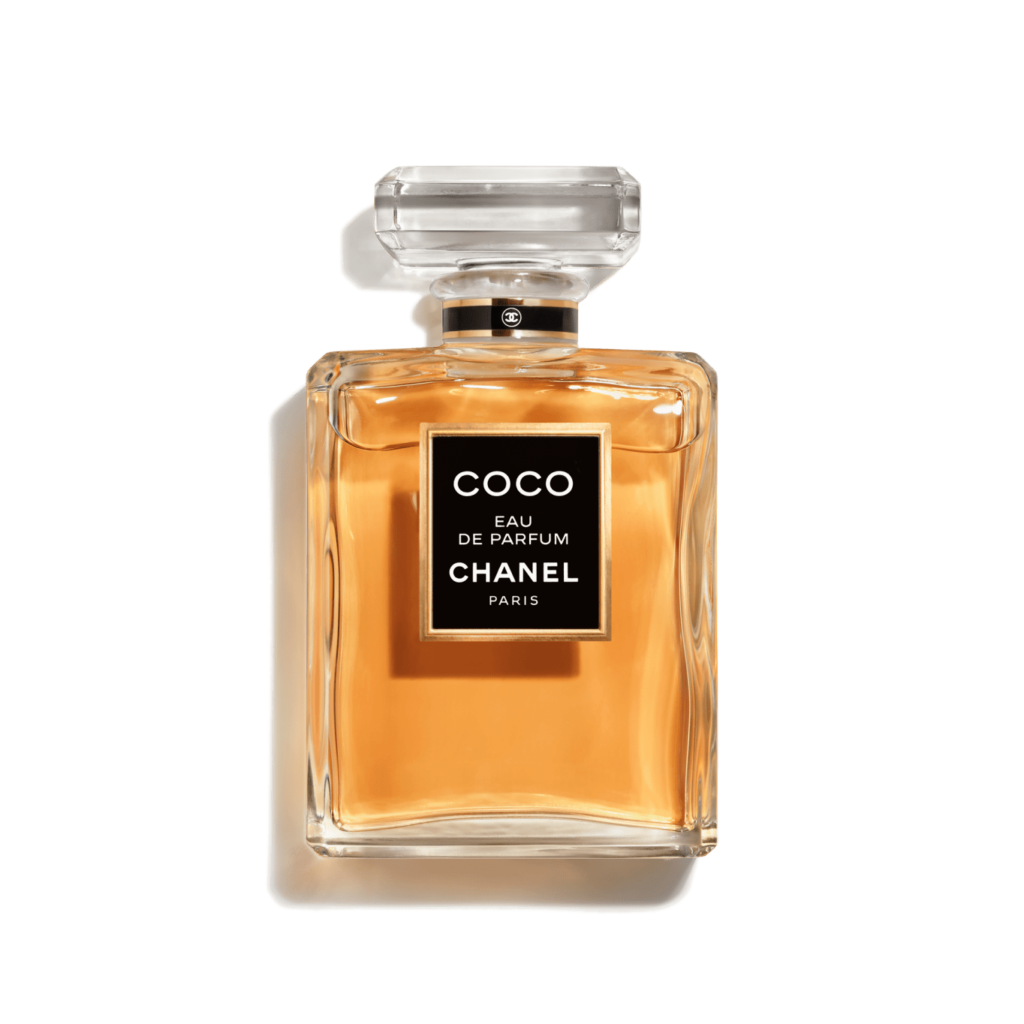
Coco, launched in 1984, was Jacques Polge’s first women’s fragrance for Chanel. The house describes it as inspired by Gabrielle Chanel’s love of Venice and her Baroque universe.
And Coco is certainly not timid.
Mandarin, jasmine, ylang-ylang and orange blossom meet a warm base built around patchouli, benzoin and tonka. It is sumptuous, spicy and enveloping, a fragrance that seems almost deliberately unconcerned with minimalism.
Yet it does not feel disconnected from Chanel.
That would become one of Polge’s recurring strengths: expanding what the house could be without making the expansion feel like an identity crisis.
Two years later, he faced an even more delicate task.
Reinterpreting N°5
You do not casually redesign Chanel N°5.
In 1986, however, Jacques Polge created the Eau de Parfum interpretation of Ernest Beaux’s original composition, conceived as a fuller modern expression of the iconic fragrance.
This is an important part of his legacy because it illustrates something beyond invention.
A house such as Chanel cannot survive on preservation alone. Icons need to remain understandable to new generations without being stripped of what made them icons in the first place.
Polge’s career repeatedly occupied that uncomfortable territory between respect and evolution.
Sometimes evolution meant revisiting the past.
Elsewhere, it meant moving decisively away from it.
Égoïste and the Freedom to Be Difficult
Égoïste is one of the more fascinating episodes in Polge’s Chanel career.
Originally connected to the earlier Bois Noir, the fragrance eventually appeared as Égoïste in 1990 and became one of the most distinctive masculine Chanel creations of its period. Polge has also identified it as a particularly personal creation.
It is useful in understanding his range.
The man who would later create the extraordinarily accessible Bleu de Chanel was also capable of producing something much less eager to please.
That contradiction matters.
Jacques Polge was not simply the architect of commercial Chanel perfumery. His work constantly moved between accessibility and character, between fragrances capable of becoming global signatures and compositions willing to be somewhat stranger.
From Allure to Coco Mademoiselle
By the 1990s and early 2000s, Polge’s role in defining modern Chanel became even more apparent.
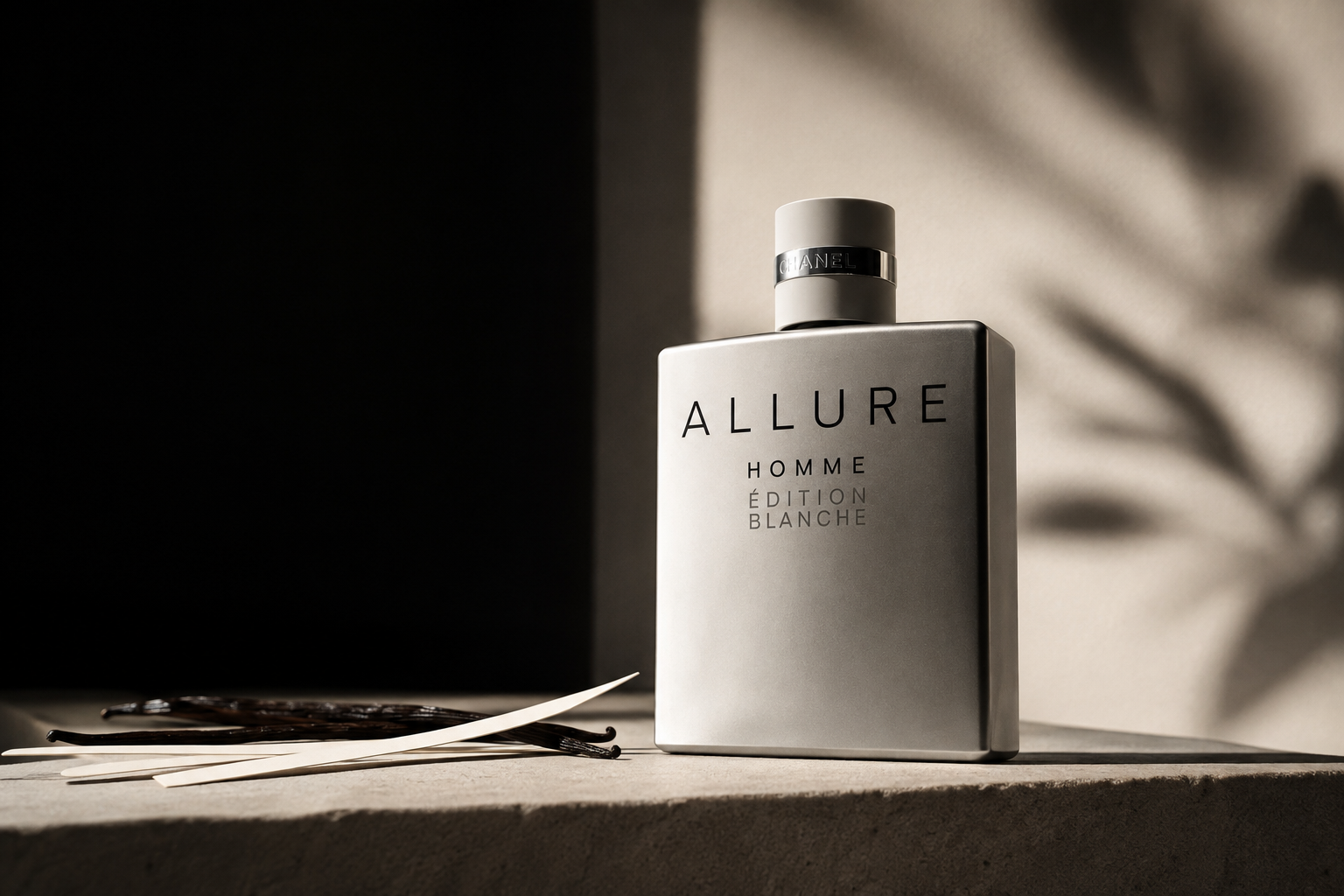
Allure arrived in 1996, followed by its masculine counterpart and eventually an entire family of interpretations. Rather than building the fragrance around one obvious central idea, Allure played with multiple facets, fitting neatly into Polge’s tendency to favor balance over spectacle.
Then came Coco Mademoiselle in 2001.
Chanel describes Polge’s creation as a fresh oriental fragrance that helped bring the chypre family back into contemporary perfumery, notably through the use of fractionated patchouli.
Whatever one thinks of the endless wave of fragrances that followed its success, Coco Mademoiselle became enormously influential.
More importantly for Polge’s story, compare it with Coco.
Both belong unmistakably to Chanel. Both reference Gabrielle Chanel. Yet the 1984 Coco and the 2001 Coco Mademoiselle speak almost completely different olfactory languages.
Seventeen years separate them, and Polge did not simply repeat the formula that had worked before.
He moved with the house.
Chance followed in 2002, extending Chanel into another, younger territory without abandoning its highly controlled aesthetic.
This is where describing Polge as merely “the nose behind Chanel” begins to feel inadequate. He was helping the house negotiate different generations of perfume buyers while maintaining a surprisingly coherent identity.
Then Came Bleu
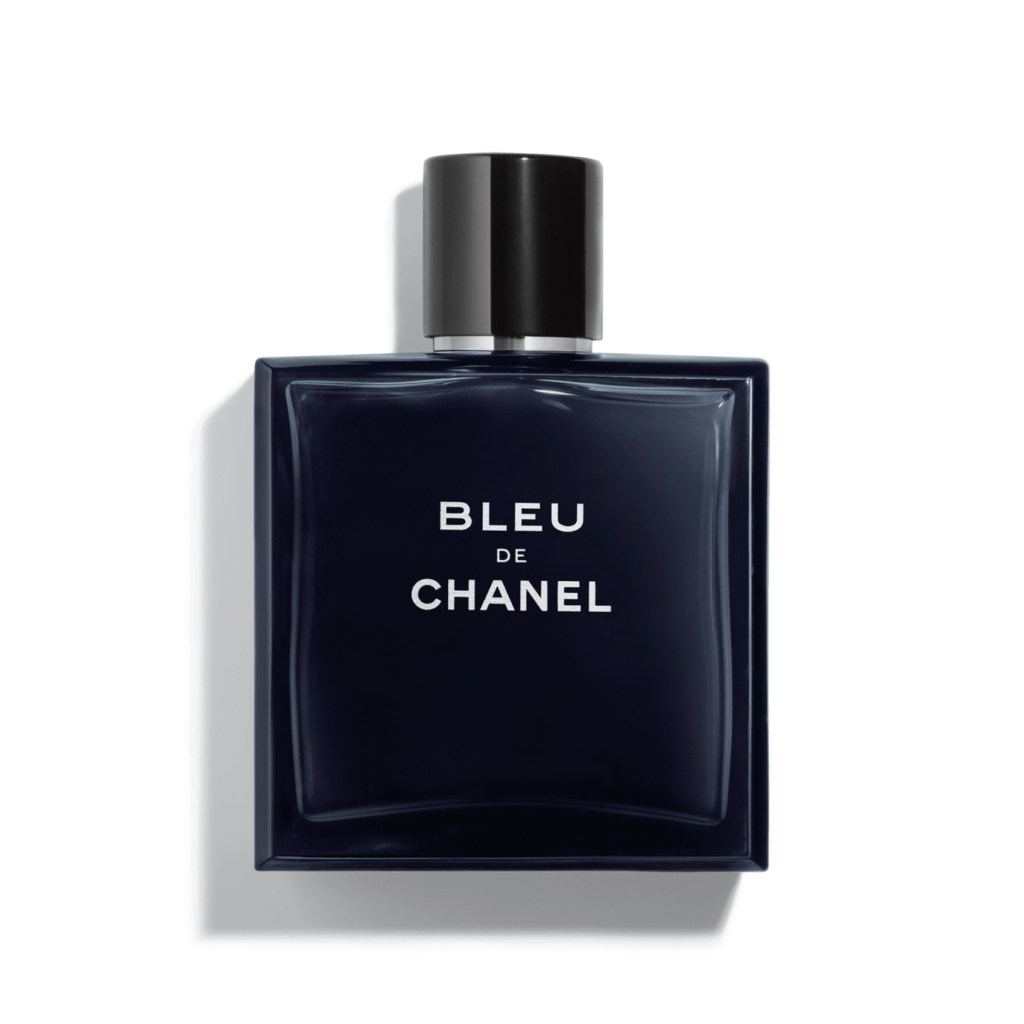
If one fragrance demonstrates the scale of Polge’s influence on contemporary designer perfumery, Bleu de Chanel may be the obvious candidate.
The original Eau de Toilette launched in 2010, created by Jacques Polge and introduced through a campaign starring Gaspard Ulliel and directed by Martin Scorsese.
Bleu was a very different proposition from Égoïste.
Freshness, woods and an immediately legible modern masculinity made it far easier to approach. It subsequently became the foundation of one of Chanel’s most important masculine fragrance lines.
The Eau de Parfum followed in 2014, still under Jacques Polge. Later interpretations would become part of Olivier Polge’s work after succeeding his father.
With hindsight, Bleu also feels like an appropriate closing chapter.
Jacques Polge had entered a Chanel still living relatively close to the world established by Beaux and Robert. He left behind a house capable of moving confidently between N°5, Coco Mademoiselle, Chance, Les Exclusifs and Bleu de Chanel.
That is not a small transformation.
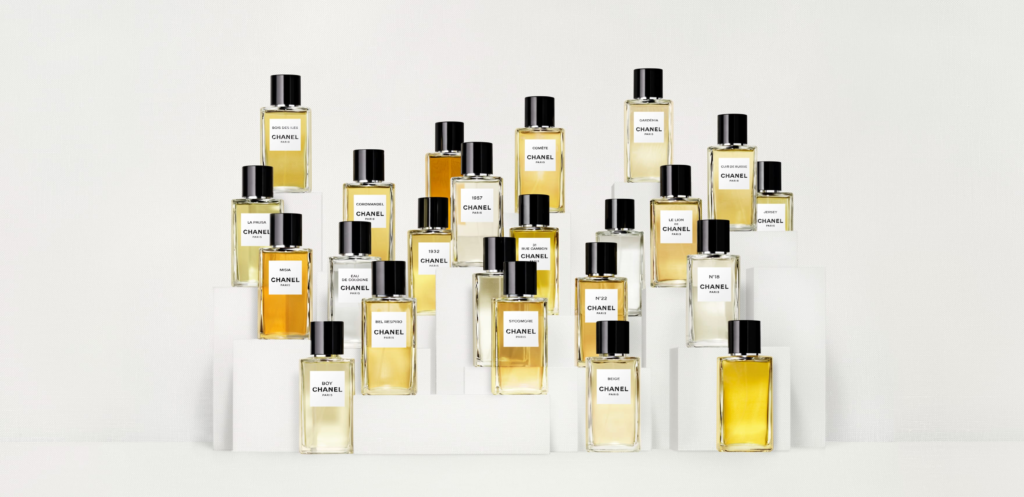
Another Side of Chanel: Les Exclusifs
Focusing only on the blockbusters, however, would give us an incomplete picture.
Under Jacques Polge, Chanel also developed Les Exclusifs de Chanel, a collection that allowed the house to explore its history and materials in a more specialized context. Creations associated with Polge, often working with Christopher Sheldrake, include Coromandel, 31 Rue Cambon, Bel Respiro, 28 La Pausa, Beige and Sycomore.
Here the commercial pressure was different, and so was the opportunity.
The collection could reference places, objects and episodes connected to Gabrielle Chanel while offering compositions that did not necessarily need to function as the next global Coco Mademoiselle.
It reveals another important element of Polge’s tenure: he was not merely building new pillars. He was also helping Chanel turn its own history into an evolving olfactory vocabulary.
The Polge After Polge
In 2013, Chanel announced that Olivier Polge would join the house and work alongside his father before succeeding him. Following Jacques Polge’s retirement, Olivier became director of Fragrance Creation and Development for Chanel.
The family connection is irresistible, naturally. Perfume apparently needed its own succession drama.
But reducing the transition to father and son misses the more interesting point.
Olivier Polge inherited not just a job, but a system Jacques Polge had spent decades developing: the idea of a Chanel perfumer as both author and custodian.
And Olivier has not simply reproduced his father’s work. That, ironically, may be one of the clearest signs that the inheritance succeeded.
Jacques Polge’s Real Legacy
It would be easy to define Jacques Polge through a greatest-hits list.
Coco. Égoïste. Allure. Coco Mademoiselle. Chance. Bleu de Chanel.
Most perfumers would be fortunate to have one or two fragrances of that significance attached to their name.
Yet the list still does not quite explain him.
Jacques Polge’s greater achievement may have been maintaining continuity without allowing continuity to become stagnation.
During his years at Chanel, the perfume market changed radically. Ideas of femininity changed. Masculine perfumery changed. Consumer tastes changed. The industry became faster, larger and considerably more crowded.
Chanel changed too.
But somehow it continued to smell like Chanel.
That may ultimately be Jacques Polge’s signature.
Not one particular accord, ingredient or formula.
He did not simply create a signature perfume. He helped create the modern signature of a house.