
Daniela Andrier: The Perfumer Who Gave Prada Its Scent
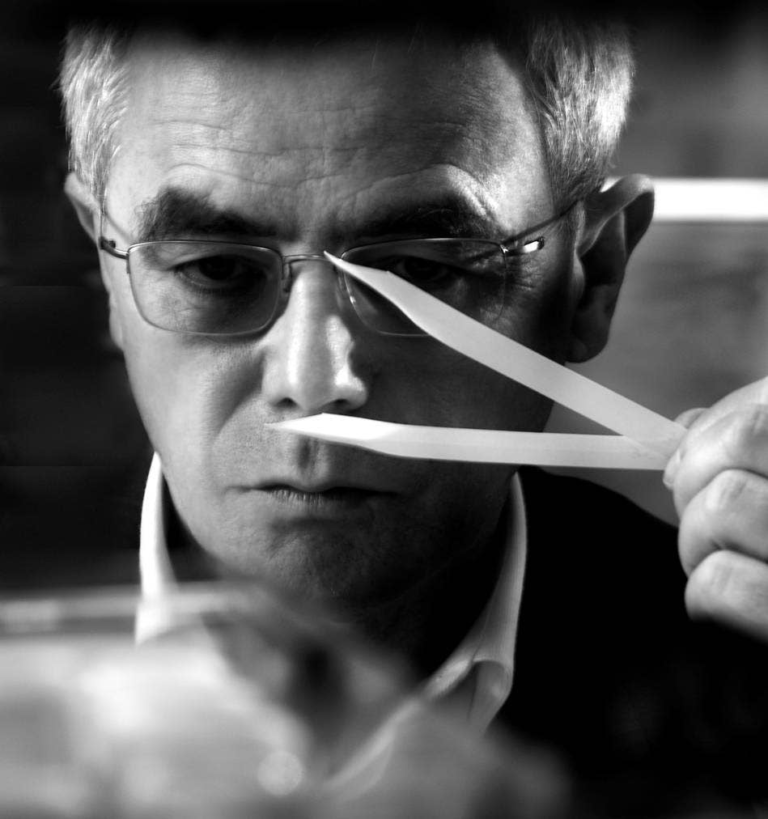
Daniela Andrier is the perfumer behind some of the most recognisable fragrances of recent decades, but her long relationship with Prada represents something more than a list of successful creations.
A signature before a name
There are perfumers whose names are attached to one blockbuster, and others whose work becomes inseparable from the identity of an entire house. Daniela Andrier belongs to the second group. Her career stretches far beyond Prada, yet few modern collaborations between a perfumer and a fashion brand have been as coherent, prolific or influential as hers with the Milanese maison.
The obvious way to tell her story would be chronologically: Heidelberg, philosophy at the Sorbonne, an internship at Chanel in 1988, the Roure Perfumery School and, eventually, her position as Master Perfumer at Givaudan. Those facts matter, but they do not fully explain why her work is so recognizable. The more interesting question is what happens when a perfumer does not simply create fragrances for a brand, but helps teach that brand how to smell.
From philosophy to perfumery
Born in Heidelberg, Daniela Andrier first studied philosophy in Paris. In 1988 she entered Chanel as an intern; the following year she joined the Roure Perfumery School, now part of Givaudan. The path is often summarised as an elegant career change, but the philosophical background feels relevant to the way her perfumes operate. They frequently explore an idea through contrast: cleanliness and sensuality, abstraction and familiarity, transparency and density.
Her early career included time in New York and creations such as Calvin Klein Contradiction, launched in 1997. Decades later, in 2025, The Fragrance Foundation honored her with its Lifetime Achievement Perfumer Award. The recognition reflects not merely longevity, but the extraordinary range of a portfolio that moves between designer landmarks, discreet niche compositions and long-term creative partnerships.
Prada as an olfactory language
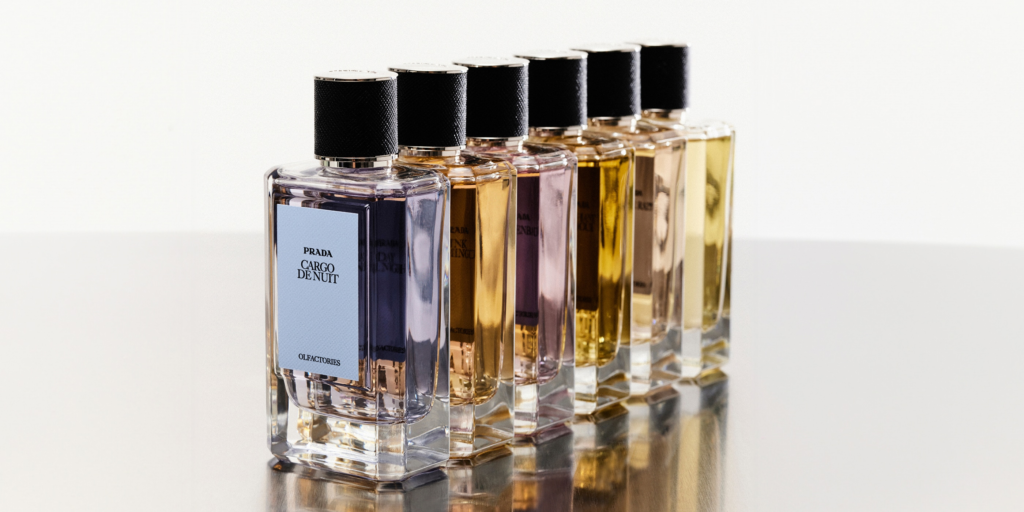
Andrier’s relationship with Prada is the centre of the story because it demonstrates what continuity can achieve in perfumery. Across Les Infusions, Prada Candy, Luna Rossa, L’Homme, La Femme and the more exclusive Olfactories and Mirages projects, she helped create a vocabulary rather than a single signature accord.
That vocabulary is often associated with iris, polished musks, cleanliness and an almost architectural sense of order. But reducing Prada under Andrier to ‘clean iris’ would miss the point. Prada Candy used benzoin and caramel to make sweetness feel deliberately stylized. Luna Rossa translated the maison’s precise modernity into masculine perfumery. L’Homme and La Femme treated gender codes as materials to be arranged, mirrored and blurred. Even when the compositions differ, the intelligence behind them feels continuous.
Infusion d’Iris, released in 2007, remains perhaps the clearest expression of that partnership. Prada officially describes the contemporary fragrance through iris pallida, neroli and mandarin over a woody, enveloping base. More important than a note list, however, is its effect: iris is not presented as a vintage cosmetic cliché, but as something cool, lucid and impeccably composed. It smells like Prada without needing a logo.
| Andrier did not give Prada one smell. She helped give it a way of thinking in scent. |
Five encounters with Daniela Andrier’s work
My own relationship with Daniela Andrier’s work is not theoretical. Her perfumes have appeared throughout different periods of my life, sometimes before I even paid attention to the name of the perfumer behind them. Looking back, they reveal a range that is much broader than the idea of a single Prada aesthetic.
Calvin Klein Contradiction
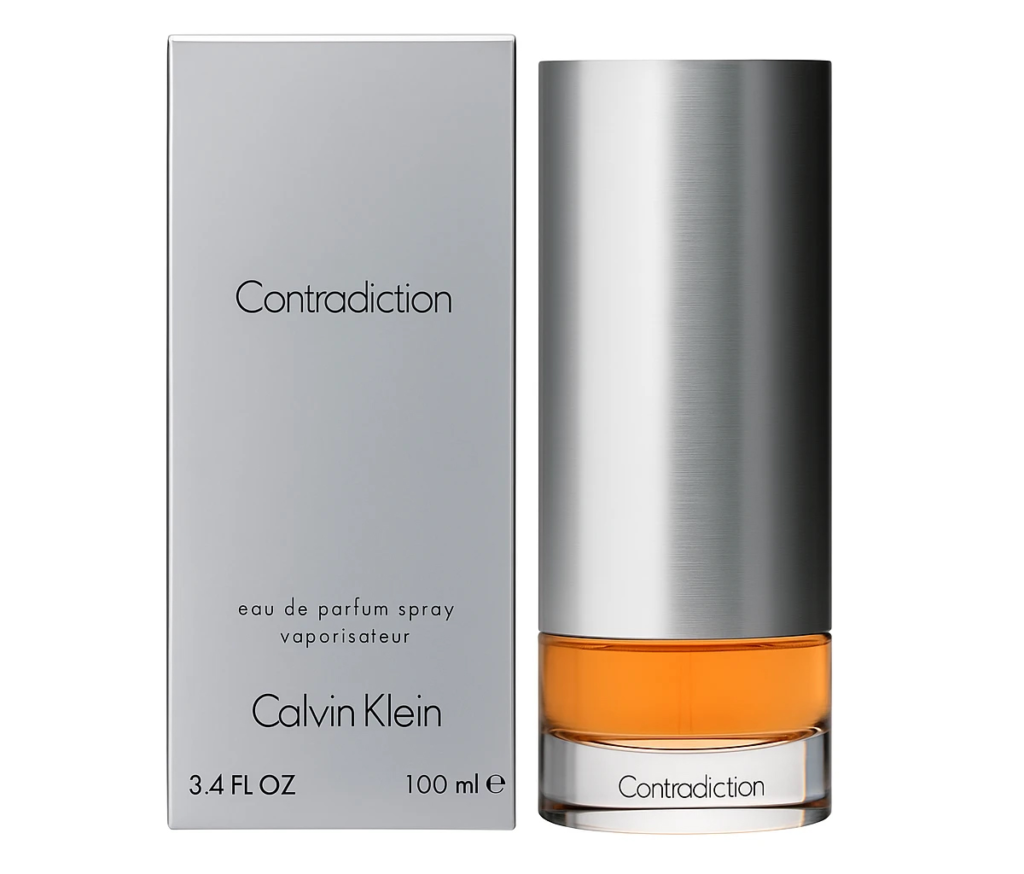
I remember the bottle first: highly designed and almost space-age. The fragrance itself survives in my memory as persistent and intense. Not ‘beast mode’ in the way the term is used today, but certainly not subtle. Contradiction belongs to an era when a designer fragrance could feel assertive without being built around contemporary performance theatre. It also shows an early Andrier already comfortable with tension: even the name proposes opposing ideas rather than a single, easy mood.
Fragonard Bel Oranger
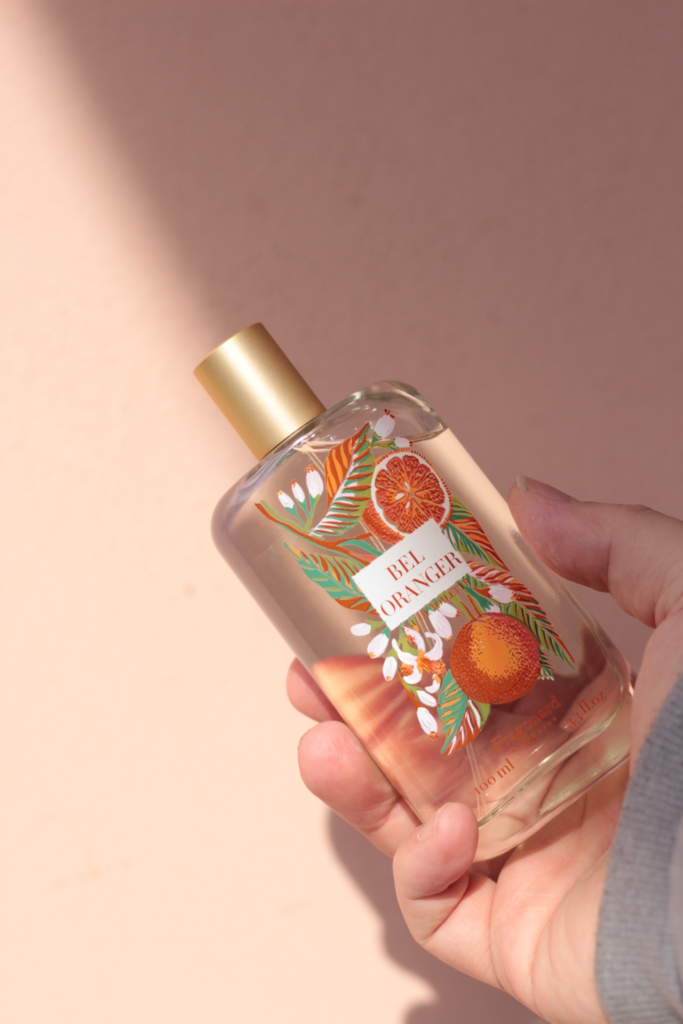
I already have a soft spot for Fragonard, a house capable of offering genuine gems at fantastic prices. Bel Oranger is one of them. Its luminous orange blossom puts me in a good mood every time I wear it. Created in 2023, it demonstrates a different side of Andrier: bright, immediate and generous, without sacrificing structure. It is proof that sophistication does not require either opacity or an intimidating price tag.
Gucci Eau de Parfum (2002)
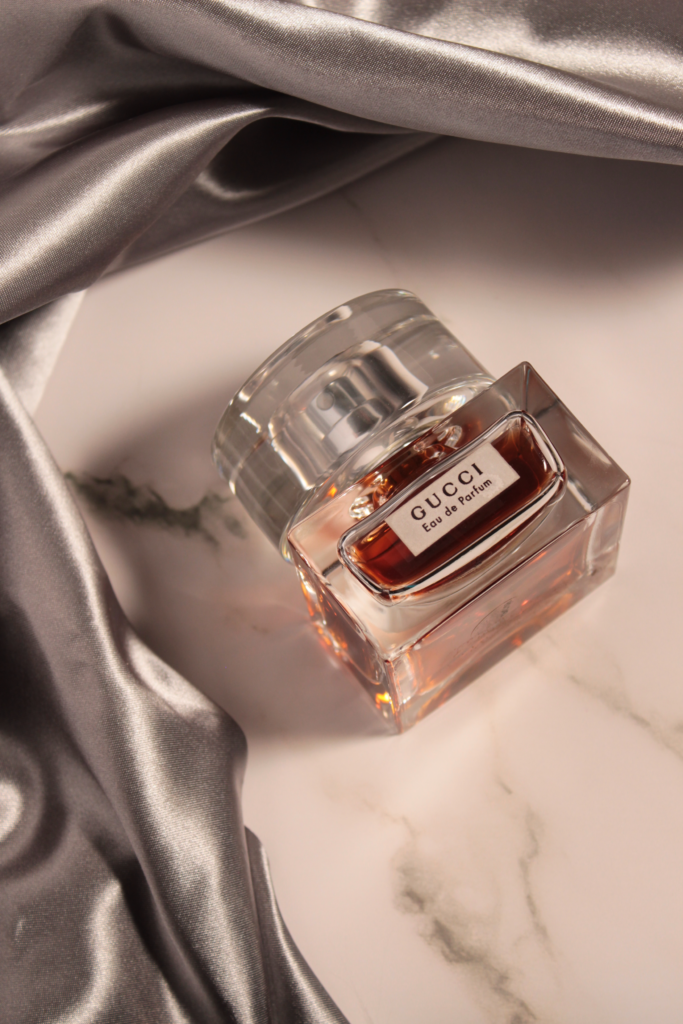
I still own a 50 ml bottle of the original version, preserved like a relic. The dark liquid announces the character before the first spray: opulent, luxurious, warm and enveloping. It is a masterpiece. Gucci Eau de Parfum also resists the temptation to place Andrier inside one neat aesthetic box. This is not the polished transparency most commonly associated with Prada. It is shadow, texture and richness, handled with remarkable control.
Maison Martin Margiela (untitled)
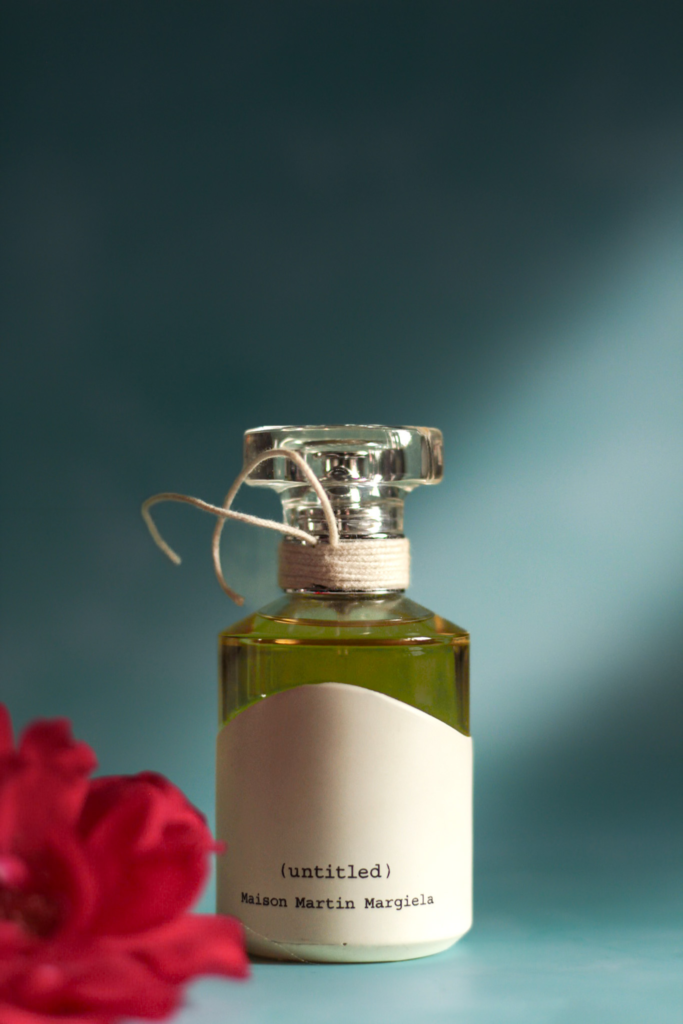
I also own an unopened vintage bottle of (untitled). When I first smelled it, I was disoriented. Yet this is the fragrance that taught me to love green notes, especially galbanum. That initial discomfort matters: some perfumes do not flatter the wearer immediately; they recalibrate the nose. (untitled) did that for me, turning something sharp, green and unfamiliar into a new area of fascination.
Prada Les Infusions
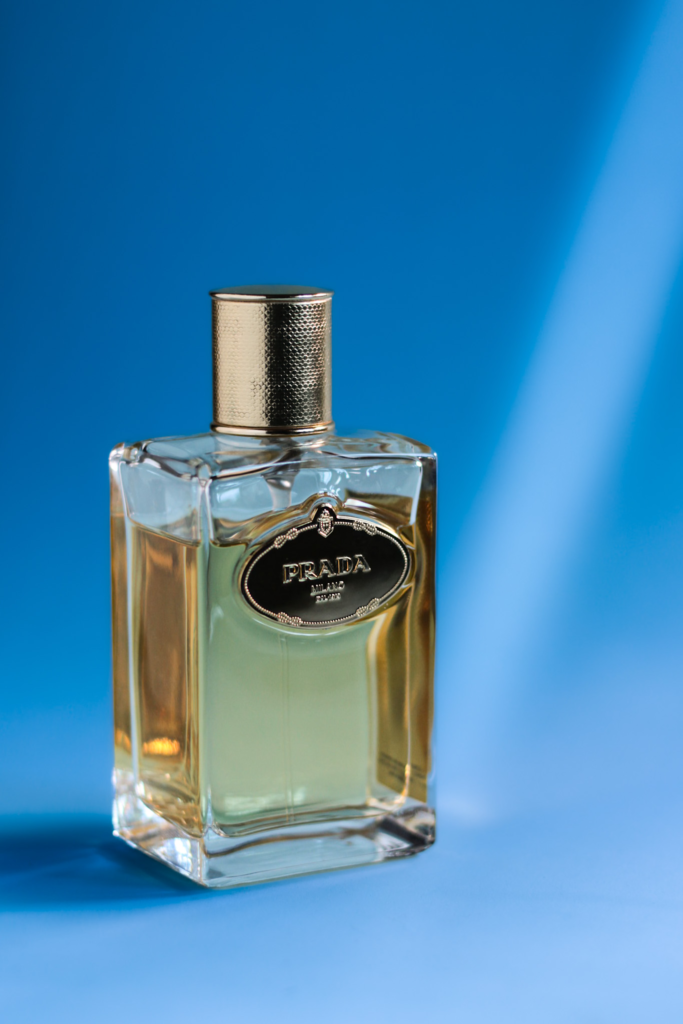
I own several fragrances from Les Infusions, but Infusion d’Iris Eau de Parfum Absolue remains number one for me. It has extraordinary class and a spectacular iris. I still regret not buying Infusion de Tubereuse, especially because I once found it discounted in a perfumery. Thinking about that missed bottle is enough to make me want to slap myself. Perfume collecting is also an archive of terrible decisions.
The Absolue is particularly meaningful because it concentrates what I admire in Andrier’s Prada work: refinement without sterility, softness without vagueness and elegance that never needs to announce itself loudly. It feels composed down to the smallest detail, but it never feels trapped by that precision.
Beyond Prada
A career overview makes the breadth even clearer. Alongside the perfumes discussed here, Andrier has worked for houses including Bottega Veneta, Bvlgari, Guerlain, Miu Miu, Tiffany & Co., Valentino, Yves Saint Laurent and Etat Libre d’Orange. Maison Martin Margiela (untitled), Bottega Veneta Knot and Guerlain Angélique Noire are often cited among the works that reveal her versatility.
The breadth does not cancel the signature. Instead, it suggests that a perfumer’s voice may exist less in one repeated accord than in a way of resolving a brief. In Andrier’s case, that often means clarity, intelligent contrast and a refusal to confuse excess with complexity.
Can one perfumer define a maison?
The answer, in Daniela Andrier’s case, is yes – but not alone. A house’s olfactory identity is built through dialogue: between perfumer and creative direction, formula and bottle, fashion and cultural moment. Prada’s fragrance language emerged from an unusually sustained conversation, closely associated with Miuccia Prada’s taste and Andrier’s ability to translate ideas into scent.
What makes the partnership important is consistency without monotony. Iris, cleanliness and precision recur, but so do sweetness, darkness, sport, abstraction and sensuality. The perfumes do not all smell alike; they seem to belong to the same intellectual universe.
That may be Daniela Andrier’s greatest contribution to Prada. She did not merely produce a sequence of successful releases. She helped create an olfactory grammar – one strong enough to make a fragrance recognizable as Prada before the name on the bottle is read.
| Discover more of the creative minds behind fragrance in The Perfumers. |