
Tea in Perfumery: From Green Tea to a Dark Brew
I went looking for examples of tea in perfumery and discovered a rather inconvenient gap in my collection. I came up with four fragrances. One of them was Gucci Pour Homme II, which I love and which Gucci, in an act of great personal inconvenience, discontinued. The other three made the point of this guide for me. The same word on a note list can lead to mint and citrus, soft iris, or jasmine wrapped in coconut and vanilla.
| The four fragrances below are from my collection. For the note lists, I’ve used the brands’ descriptions where available and Parfumo’s listing for the discontinued Gucci. |
How tea in perfumery gets its character
Start with the leaves. The way tea is processed changes its aroma. Green tea is heated early to limit oxidation, black tea is more fully oxidised, and oolong covers a wide range in between. That gives perfumers several places to start. A green tea accord can suggest crushed leaves or a bright infusion with citrus. Black tea can bring to mind dry leaves, wood or the astringency of a strong brew. Oolong can evoke a floral tea or something much toastier, depending on what the composition emphasises.
A perfume can also suggest the whole drink: the steam, a twist of citrus, or the flowers used to scent the leaves. The useful clue is often the note sitting next to the tea. Bergamot and peppermint point in a different direction from cinnamon and tobacco. And the word tea on a label describes an olfactory idea. A brand may use a tea extract or build an accord to evoke it. There’s more on that distinction in my guide to reading a perfume’s note list.
Four tea fragrances from my collection
Van Cleef & Arpels Thé Amara — Tea with a cool edge

Van Cleef & Arpels takes its cue from a tea plantation in the early morning. Bergamot and peppermint set up the cool, bright side of the composition, while Cashmeran and white musk give it a softer landing. Peppermint is the detail I’d pay attention to here. It helps explain why tea can conjure the air around the leaves as much as the hot drink. For a take on green tea in perfumery that leans towards crushed leaves and citrus zest, I’d start with Thé Amara.
Estée Lauder Tender Light — Tea with bergamot and iris

Estée Lauder puts a Chinese tea accord alongside bergamot and Florentine iris. Bergamot is the point of connection with Thé Amara, but the iris gives this pairing a different direction. I already gravitate towards iris in perfume, so it makes perfect sense that one of the few tea fragrances I own found its way in via an iris accord. The interesting comparison here is what happens when tea meets something powdery instead of something minty.
Gucci Pour Homme II — Black tea with cinnamon

The one I’d keep a space for even if the tea shelf were full. Parfumo lists violet leaf and bergamot up top, with black tea, cinnamon and pimento in the heart and tobacco among the base notes. The violet leaf is worth keeping in mind alongside all that spice. It gives the composition a cool counterpoint on paper, which helps explain why this is a more interesting reference for black tea than the name alone suggests. It’s discontinued, which makes me doubly glad I have it. I’d happily make room for another perfume that puts black tea and cinnamon together.
Mugler Alien Goddess Intense — Jasmine tea in a floral amber
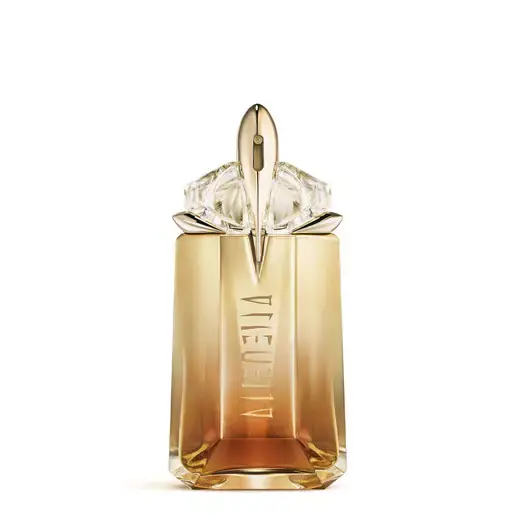
This is the one I’d have overlooked if I’d gone through the collection by name alone. Mugler puts jasmine tea beside jasmine grandiflorum, between bergamot and a coconut accord up top and a warm base with Bourbon vanilla and benzoin. It’s a useful reminder that tea in perfumery can play a supporting role. Here the note is part of a much bigger jasmine story, the kind of detail that can make you go back to a bottle you already own and smell it with a different question in mind. For more on the flower itself, see my guide to jasmine in perfumery.
What I want to smell next
The first benchmark I’d reach for is Bvlgari Eau Parfumée au Thé Vert. Bvlgari launched it in 1992, and the house’s description of today’s Thé Vert pairs green tea with bergamot and neroli. Then I want to try something that gives oolong a more obvious role. Coreterno Zen Anarchy is already on my sampling list for its pairing of Long Jing and oolong. And if I feel like following tea into gourmand territory, Dusita Mocha Absolu brings Thai tea and coffee together. Those last two are leads from my release coverage, based on their published notes.
Four fragrances gave me a decent head start on tea in perfumery and a very specific gap in my collection. I want to smell something with the dry, lightly toasted character of oolong.
| If the difference between a cup of jasmine tea and a black tea accord got you looking more closely at note lists, there’s plenty more to unpack in the Guides archive. |