
A Conversation with Moe Khalaf, Co-Founder of Kajal
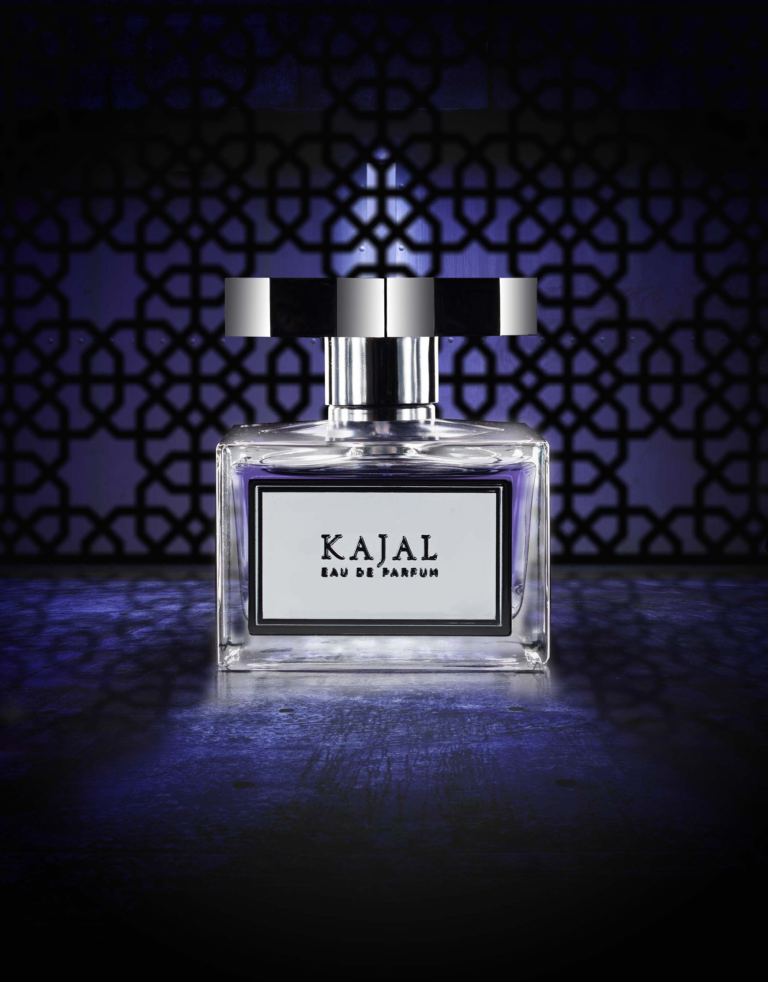
At Pitti Fragranze 2026, I had the opportunity to sit down with Kajal co-founder Moe Khalaf. What was supposed to be an interview became a conversation about artistic perfumery, creative freedom, childhood memories and, inevitably, a few perfume obsessions.
An Invitation I Didn’t Quite Believe
I have deliberately waited a few weeks before writing this article.
Partly because I wanted to give myself enough time to reflect on everything we discussed. Partly because I didn’t want to rush something that deserved more attention than the usual frantic post-fair coverage.
And partly because I’m still processing the fact that I actually had a dedicated meeting with the co-founder of Kajal at Pitti Fragranze.
I suspect that particular realization will require another couple of months.
It all started before the event, when I received an Instagram message from Kajal asking whether I would be interested in meeting Moe Khalaf for a conversation.
Whenever a brand contacts me, my first instinct is to assume they have confused me with another Davide. Preferably one with a much more impressive résumé.
Nevertheless, after confirming the appointment by email, I did what any reasonably responsible fragrance enthusiast would do: I started researching the brand, preparing questions and convincing myself that I could behave like a professional for approximately one hour.
The meeting was scheduled for 2 p.m. on the first day of Pitti Fragranze.
I arrived in Florence shortly before noon, which gave me enough time to explore the exhibition, discover fragrances and talk to various brands.
It also gave my subconscious two hours to repeat a very specific instruction:
Don’t forget your appointment. Don’t be late. And please, for once, don’t embarrass yourself.
My subconscious knows me extremely well.
| Discover Kajal Perfumes Curious about the house behind this conversation? Explore my Kajal Brand Focus, where I take a closer look at its identity, inspirations and fragrances. |
When an Interview Becomes a Conversation
A few minutes before 2 p.m., I arrived at the Kajal stand and announced that I had an appointment with the founder.
For one glorious moment, I felt like an editor from Vogue.
Any nervousness I had brought with me, however, disappeared surprisingly quickly.
Moe was immediately welcoming, relaxed and genuinely easy to talk to. There was nothing particularly formal about the atmosphere, despite the fact that we had arranged an interview.
It wasn’t quite like chatting with an old friend, and I wouldn’t pretend otherwise. But there was a warmth and courtesy to the exchange that made the conversation feel wonderfully natural.
Within minutes, I stopped worrying about asking the right questions and simply enjoyed talking about perfume with someone who clearly shared my enthusiasm.
I had prepared a list of questions, of course. A reasonably serious one, too.
I think I managed to ask approximately two of them.
The problem is that when I start talking about perfume with someone who shares the same enthusiasm, the concept of following a predetermined list becomes increasingly theoretical.
Instead, we found ourselves discussing the creative process, the relationship between brands and perfumers, the industry, personal memories and even a fragrance from a French house we both love.
What follows, therefore, isn’t a traditional interview.
It’s my attempt to reconstruct a conversation that I found genuinely fascinating, and that offered a more personal perspective on the philosophy behind Kajal.
Beyond Niche: Why Moe Prefers Artistic Perfumery
One of the most interesting subjects we discussed was the expression niche perfumery.
It’s a term we use constantly, but does it still describe what independent fragrance houses are trying to achieve?
Moe has previously argued that artistic perfumery may be a more meaningful description, and our conversation helped me understand why.
For him, creating a fragrance is a form of artistic expression. It brings together different experiences, perspectives and interpretations, which gradually become a composition with an identity of its own.
What struck me most was how frequently our discussion returned to one particular word: collaboration.
And almost every time, collaboration was accompanied by another recurring idea: perspective.
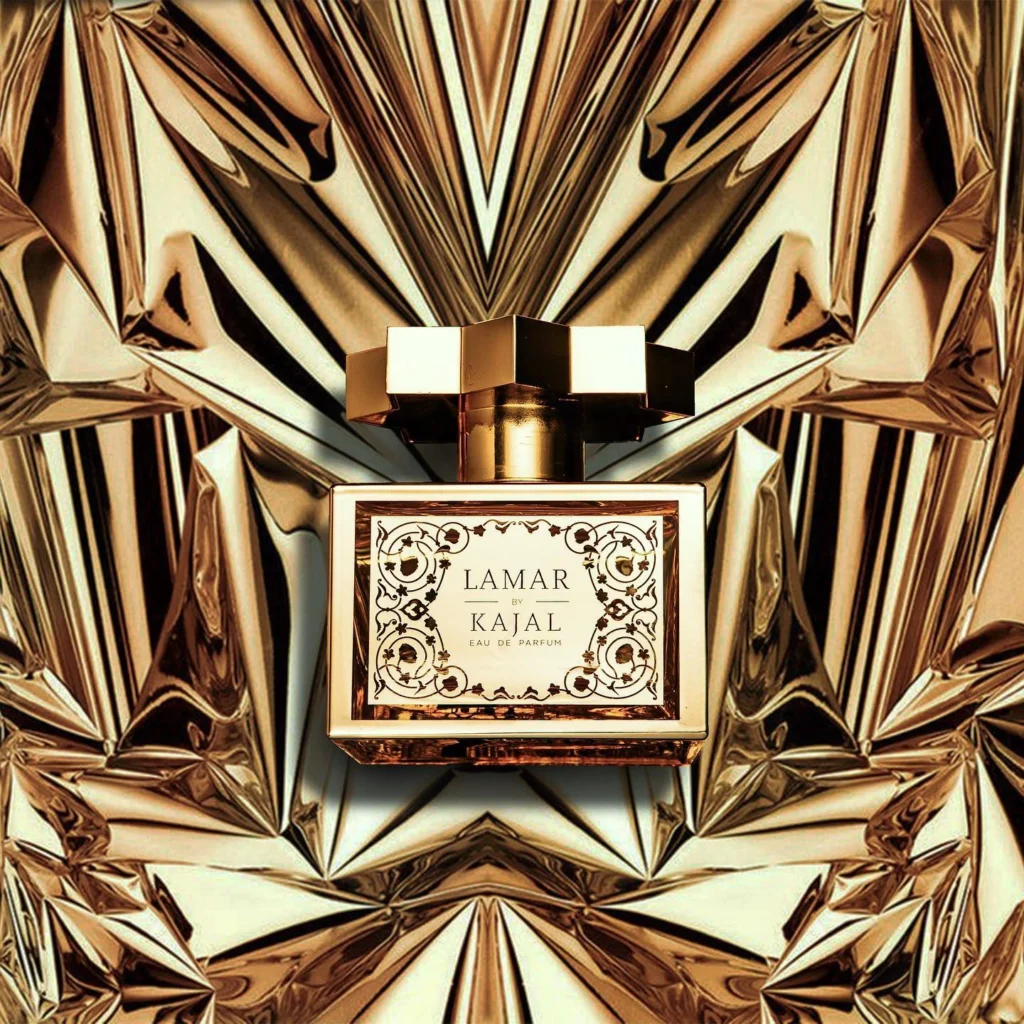
A fragrance doesn’t simply begin with a brand preparing a brief and asking a perfumer to execute it.
Naturally, the brief matters. It establishes the direction, the inspiration and the identity the finished fragrance should communicate.
But for Moe, that is only the beginning.
The process should become an ongoing exchange between the house and the perfumer, with both contributing ideas and responding to each other’s interpretations.
It’s a distinction I particularly appreciated.
A perfumer isn’t simply someone hired to translate a marketing department’s instructions into something that smells pleasant.
They are an artist bringing their own experience, imagination and sensibility to the project.
And that contribution deserves recognition.
Giving the Perfumer a Voice
During our conversation, I was particularly interested in Moe’s respect for the people who create Kajal’s fragrances.
A finished composition must unmistakably belong to the house. It should reflect the brand’s values, aesthetic and creative direction.
But it should also retain something of the perfumer who developed it.
Otherwise, what is supposed to be a collaboration risks becoming a one-sided exercise.
This made me think about how frequently the fragrance industry celebrates brands while the people responsible for the actual compositions remain relatively unknown.
It’s one of the reasons I wanted to create The Perfumers section on Davide Parfums.
We spend an extraordinary amount of time discussing bottles, launches and notes. Surely we can spare some attention for the creative minds behind them.
And listening to Moe explain his approach reinforced that conviction.
A successful fragrance collaboration, at least from the perspective he shared with me, isn’t about eliminating creative differences.
It’s about finding a way for different perspectives to produce something neither party would have created quite the same way alone.

What Can Artistic Perfumery Learn from the Beauty Giants?
Before establishing Kajal with Ibrahim Faris, Moe had gained experience working with major names in the international beauty and fragrance industry.
His professional background made me curious about one particular question.
What can an artistic fragrance house learn from the large beauty corporations without becoming one itself?
I wasn’t especially interested in sales figures, market shares or financial projections.
There are already enough people discussing those subjects, and I wasn’t about to waste a perfectly good perfume conversation pretending to be a financial analyst.
What interested me was the philosophy.
From our discussion, I understood that Moe looks at successful international companies with an interest in understanding how they achieved their position.
There are lessons worth learning from their development, organization and long-term strategies.
But adopting those lessons doesn’t mean sacrificing a smaller brand’s identity.
Quite the opposite.
For Kajal, growth should remain compatible with the values and creative principles that shaped the house in the first place.
And that brings us to something I found particularly refreshing: the importance of knowing when not to release a perfume.
Why the Right Fragrance Sometimes Needs to Wait
The fragrance industry isn’t particularly famous for its patience.
New launches follow new launches, collections expand and the calendar keeps demanding something exciting.
But during our conversation, Moe explained that a project doesn’t necessarily move forward simply because the market appears ready for it.
Of course, trends and commercial expectations cannot be completely ignored.
Yet they shouldn’t become the only reasons for bringing a fragrance into existence.
Some projects, he told me, have been set aside during their development.
Not because the ideas were necessarily unsuccessful, but because they didn’t fully express what Kajal wanted to communicate at that particular moment.
An idea can be interesting without being right for today.
And sometimes, returning to it later allows the brand to explore a different aspect of its identity.
I found that approach particularly appealing.
There is something reassuring about a brand that allows a composition to develop at its own pace rather than treating every promising concept as an urgent addition to the catalogue.
A fragrance should have a reason to exist beyond the fact that there happens to be room for another bottle on the shelf.
Although, speaking personally, I can almost always find room for another bottle.
Unfortunately.

Kajal Is Entering Its Teenage Years
One of my favourite moments of the conversation came when Moe described his relationship with Kajal after more than a decade.
He compared the brand to a child.
In its early years, it needed to be guided, educated and helped to develop a recognizable identity.
Now, however, that child is approaching adolescence.
And we all know what adolescence can bring.
A little independence. A willingness to experiment. Perhaps even a rebellious streak.
I loved that comparison.
It suggests a house that doesn’t consider its identity a finished, immovable concept.
Kajal has established its foundations, but there is still room to grow, experiment and reveal unexpected sides of its personality.
If the next chapter involves a slightly rebellious teenager, I am absolutely interested in seeing what happens.
Although I sincerely hope the metaphorical teenager doesn’t start asking for a motorcycle.
A Detour into Eau de Moe
Naturally, our conversation didn’t remain exclusively focused on Kajal.
I also had the opportunity to congratulate Moe on his other fragrance project, Eau de Moe, whose concept I find particularly appealing.
I especially appreciate the personal dimension behind the fragrances and their names.
I also had the chance to smell one of its newer creations briefly.
Now, anyone who has attended Pitti Fragranze knows that evaluating a perfume properly in the middle of an exhibition is practically an Olympic discipline.
After smelling dozens of compositions, your nose begins negotiating its working conditions.
So I certainly wouldn’t pretend that a quick impression at the stand is equivalent to wearing a fragrance for an entire day.
But what I smelled was genuinely intriguing.
Which was excellent news for my curiosity.
And considerably less encouraging news for my bank account.
From Calvin Klein Obsession to Dior Homme Intense
Eventually, I couldn’t resist moving the conversation towards a subject I find endlessly fascinating: the fragrances that stay with us.
I already knew about Moe’s early attachment to Calvin Klein Obsession, a fragrance that also occupies a special place in my memories of the 1990s.
That deep amber colour alone is enough to send me straight back several decades.
We discussed it briefly, and I couldn’t help enjoying the fact that a perfume which meant so much to me had also played a part in his personal fragrance journey.
But I had another question.
Actually, two.
I wanted to know which fragrance he considered such a masterpiece that he would love to have it in his own portfolio.
And which perfume note, or notes, currently fascinated him the most.
His answer to the first question?
Well.
I suppose there are worse examples of good taste.
As someone who has loved the Dior Homme universe for years, I found that answer particularly satisfying.
My entirely unbiased assessment is that Dior Homme Intense comes dangerously close to perfection.
Naturally, I am completely objective about this.
Almost.
Lavender, Roses and the Power of Memory
The answer to my question about his current olfactory fascinations was just as interesting.
Moe mentioned two notes: lavender and rose.
Lavender holds a particularly personal meaning for him.
It’s connected to his childhood and family memories, giving it an emotional significance that extends far beyond its role in a fragrance formula.
I found that especially touching.
Because sometimes an ingredient matters not simply because of the way it smells, but because of the people, places and experiences it brings back.
Rose, meanwhile, fascinates him for a different reason.
Despite being one of the most familiar materials in perfumery, it continues to offer an extraordinary range of interpretations and nuances.
And he’s right.
We often speak about rose as though it were a single, easily recognizable olfactory idea.
In reality, it can be fresh, green, fruity, dark, spicy, velvety or surprisingly unconventional.
Coming from someone involved in developing new fragrances, that curiosity about familiar materials struck me as a promising sign.
After all, innovation doesn’t always require discovering something entirely new.
Sometimes it means approaching something we think we already know from a completely different angle.
One Last Surprise: Kajal V

Before leaving, I received one final surprise.
Moe very kindly gifted me a full-size bottle of Kajal V.
Yes, an actual full-size bottle.
I had already spent the entire meeting wondering whether I was dreaming, and apparently the universe decided to make the situation even less believable.
I won’t turn this article into a review of Kajal V, though.
That fragrance deserves its own space, its own testing and, inevitably, a considerable amount of my attention.
What I will say is that the gesture was incredibly generous, and I appreciated it.
But more than the gift, what stayed with me was the conversation itself.
The willingness to share ideas, discuss the creative process and speak openly about something we both genuinely love.
I went to Pitti hoping to discover interesting fragrances.
I left with a much more personal understanding of the thinking behind a house I already admired.
The Conversation That Stayed with Me
Looking back, I’m glad I didn’t publish this article immediately after Pitti.
I needed time to think about the ideas that kept returning to me: collaboration, artistic freedom, respect for perfumers and the importance of allowing a fragrance to find its moment.
Perhaps most of all, I appreciated meeting someone who has spent years working in the industry but still speaks about perfume with genuine curiosity.
It reminded me why I started Davide Parfums in the first place.
Not to collect press releases or race to announce every new launch.
But to explore the people, memories and ideas behind the fragrances that capture my attention.
So, thank you, Moe, for taking the time to meet me and for such an enjoyable conversation.
I’m genuinely curious to discover what Kajal’s rebellious teenage years will bring.
In the meantime, I’ll continue adding Kajal fragrances to my wishlist.
At this point, it’s probably approaching the length of the Silk Road.
And unlike the Silk Road, mine seems to have no end.
| Editorial Disclosure: This article is based on my personal conversation with Moe Khalaf at Pitti Fragranze 2026. The meeting was arranged following an invitation from Kajal. At the end of our conversation, I received a complimentary full-size bottle of Kajal V. No payment was received for this article, and the opinions expressed are my own. The conversation is presented as an editorial account rather than a verbatim transcript. |