Robert Piguet Fracas: The Tuberose That Changed Perfume
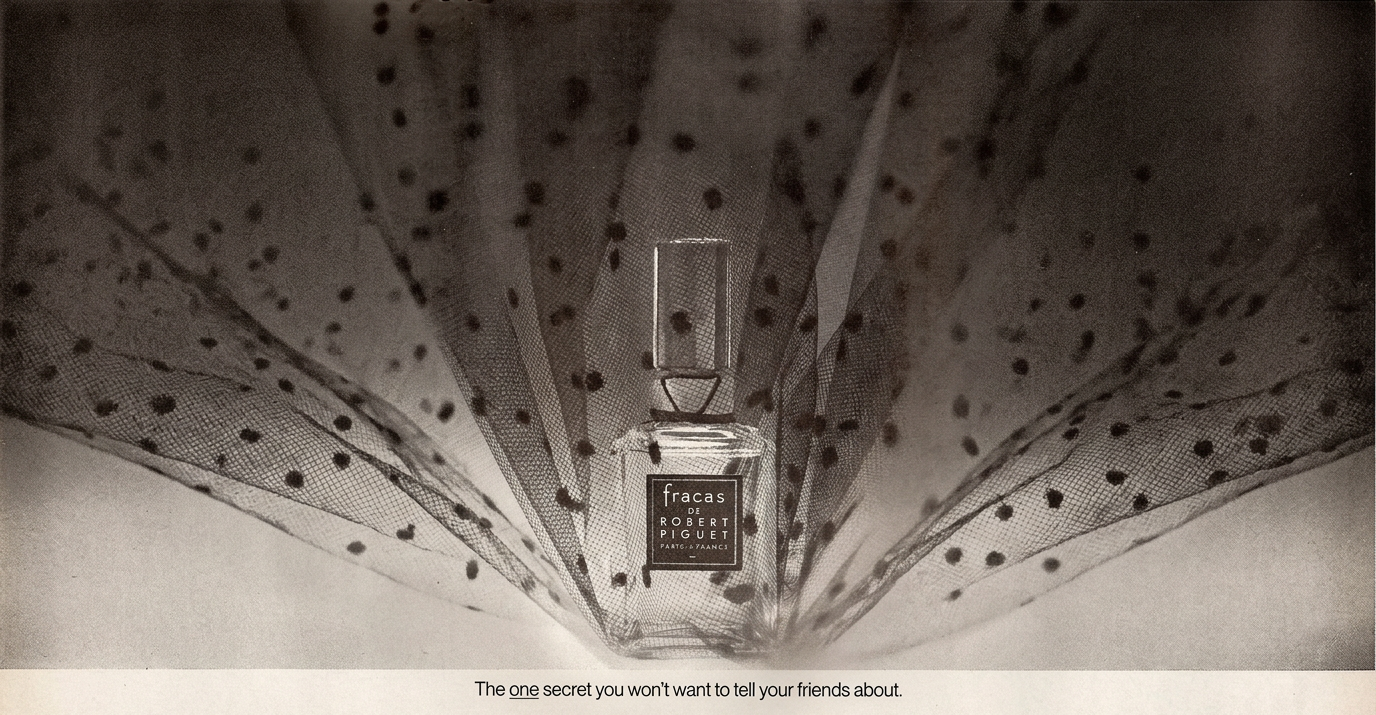
“The one secret you won’t want to tell your friends about.” That is the line beneath a vintage advertisement for Robert Piguet Fracas. It is a wonderfully elegant promise and, olfactorily speaking, almost comic. Fracas may be called a secret, but it has never behaved like one. This is a perfume built around tuberose at its most opulent, physical and impossible to ignore.
Created in 1948 by Germaine Cellier for the couturier Robert Piguet, Fracas did more than establish a successful floral fragrance. It created one of perfumery’s defining interpretations of tuberose and gave generations of perfumers a reference point they would admire, reinterpret, soften, modernize or attempt to escape. More than seventy-five years later, its name still functions as shorthand for white florals with no interest in apologizing for their presence.
A couturier, a perfumer and a post-war provocation
Robert Piguet was one of the influential figures of twentieth-century French couture. His fashion house became associated with disciplined elegance, but his work with Germaine Cellier produced fragrances that were anything but timid. Bandit, released in the 1940s, sharpened leather and chypre materials into something audacious. Fracas followed in 1948 and pushed in another direction: not dark leather, but an extravagant floral body.
The Fragrance Foundation France describes Bandit and Fracas as works that helped mark a turn toward a new era in perfumery. That shift matters. Fracas was not merely a pleasant bouquet designed to decorate the wearer. Its white flowers were amplified until femininity became theatrical, sensual and almost confrontational.
Cellier was working in a profession overwhelmingly dominated by men. The Osmothèque remembers her as an independent and flamboyant figure whose compositions were revolutionary, unique and unforgettable. Those words can sound like heritage-marketing varnish when applied carelessly. In her case, the formulas support the mythology.
Germaine Cellier did not believe in whispering
Cellier’s work repeatedly relied on decisive gestures. Vent Vert for Balmain became famous for its extraordinary use of galbanum. Bandit gave leather a sharp, uncompromising profile. For Fracas, she built a monumental floral accord around tuberose and orange blossom, supported by jasmine and other materials that reinforced the flower’s creamy, green, narcotic and animalic contradictions.
The tuberose is already a perfume in itself. It can smell creamy and luminous, but also fleshy, humid and unsettling. Fracas does not tidy up those contradictions. It stages them. The flower is not reduced to bridal cleanliness or polite sweetness; it is allowed to suggest skin, heat, excess and the faint possibility of scandal.
That is why calling Robert Piguet Fracas simply a “white floral” feels technically correct and emotionally inadequate. It is like describing a grand opera as organized sound. The category is accurate. The scale is missing.
What does Robert Piguet Fracas smell like?
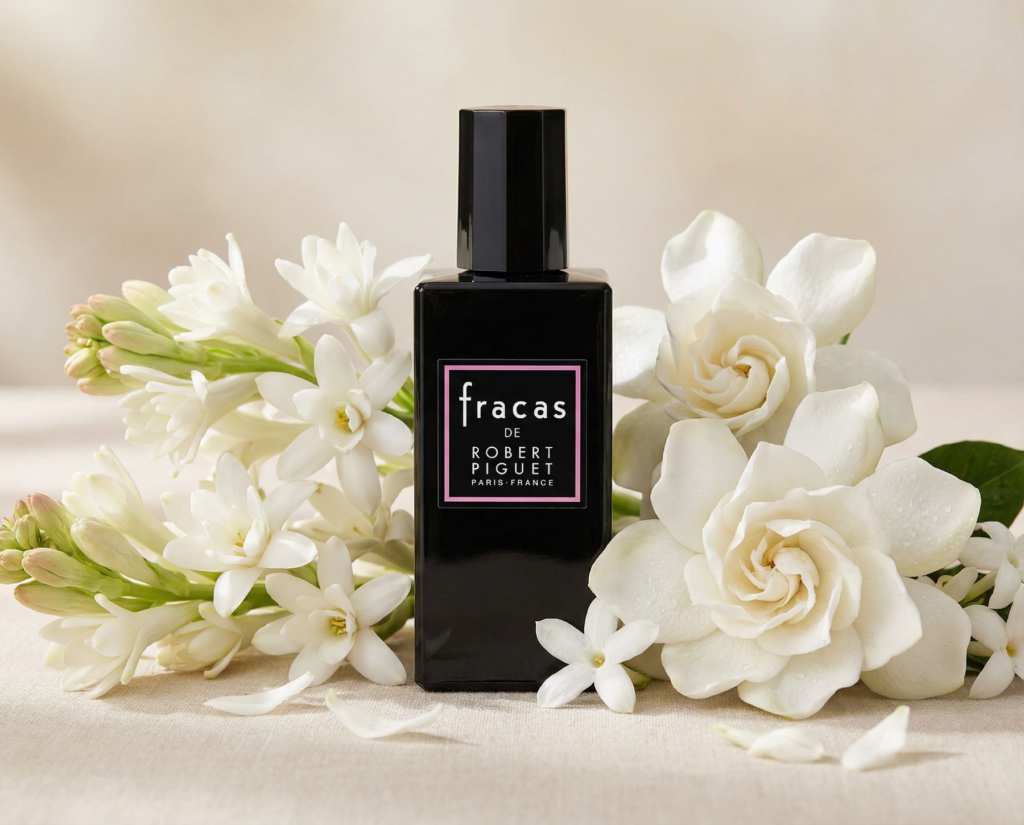
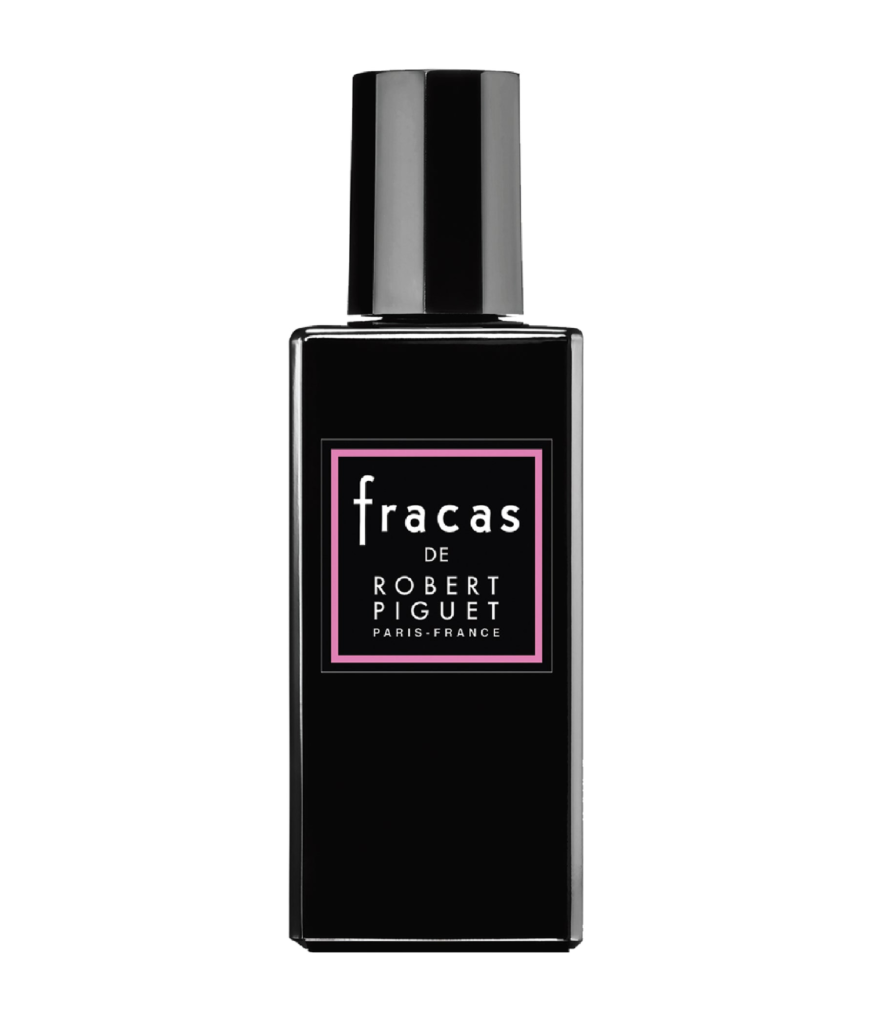
Robert Piguet’s current official structure lists bergamot and mandarin at the top; jasmine, tuberose and gardenia in the heart; and musk and sandalwood in the base. The architecture sounds concise, but Fracas has never been culturally understood as a neat pyramid. Its identity lies in the mass and movement of the floral accord: creamy tuberose expanding through jasmine and gardenia, with citrus providing lift and woods and musk giving the flowers a body on which to remain.
Historical discussions of the formula describe a considerably more complex construction, including orange blossom, iris and green materials. We should be careful here. A perfume released in 1948 and sold today has passed through changing materials, regulations, ownership and production realities. The current product carries the name and aesthetic lineage of Cellier’s creation; it should not automatically be presented as chemically identical to the liquid first sold in Piguet’s era.
| ROBERT PIGUET FRACAS CURRENT OFFICIAL NOTES Top: bergamot and mandarin. Heart: jasmine, tuberose and gardenia. Base: musk and sandalwood. |
Why Fracas became the tuberose reference
A landmark perfume is not necessarily the first fragrance to use a material. It is the one that teaches everyone after it what that material can do. Robert Piguet Fracas made tuberose feel monumental. It demonstrated that a floral perfume could be sophisticated without being restrained, feminine without being fragile and seductive without asking permission.
Its influence extends beyond perfumes that resemble it note for note. Every later tuberose composition must make a decision in relation to the territory Fracas helped define. Should the flower become greener? Airier? More tropical? More transparent? More medicinal? More contemporary? Even rejection acknowledges the reference point.
This is also why Fracas remains polarizing. A perfume that established its reputation through abundance will never satisfy everyone searching for discretion. But universal approval would almost diminish it. Fracas became iconic partly because it has a point of view strong enough to produce devotion and resistance in equal measure.
| Three generations of tuberose. From the carnal blueprint established by Fracas, move to the glorious 1990s excess of Versace Blonde, then discover how Valentino Vendetta Donna translates the flower into a contemporary floral-gourmand structure built around red orange nectar and creamy sandalwood. |
Fracas today: an icon becomes a family
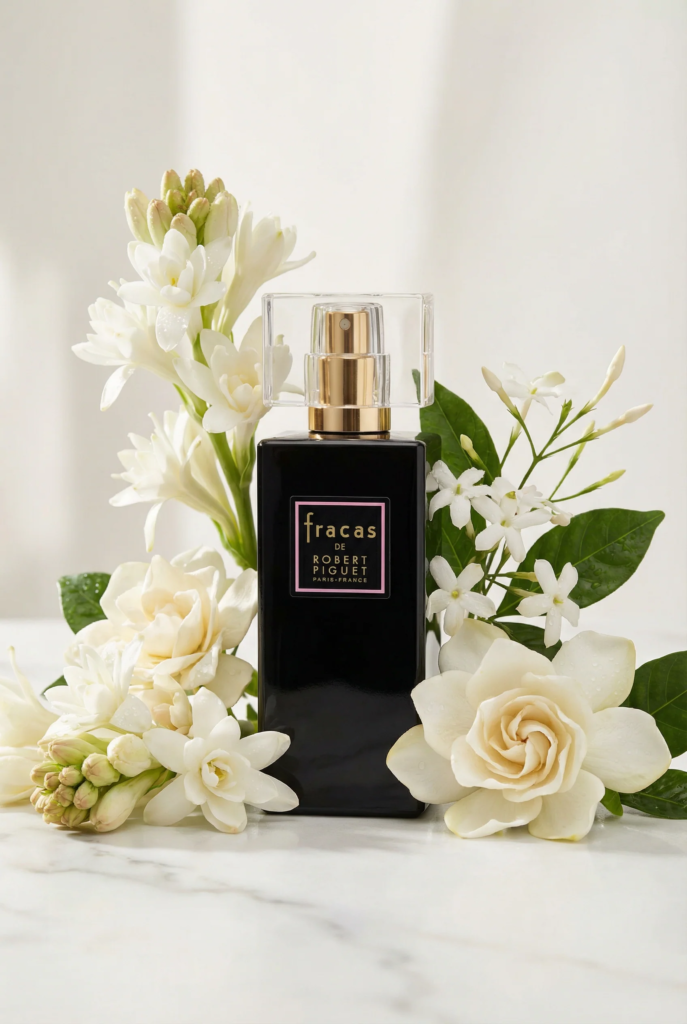
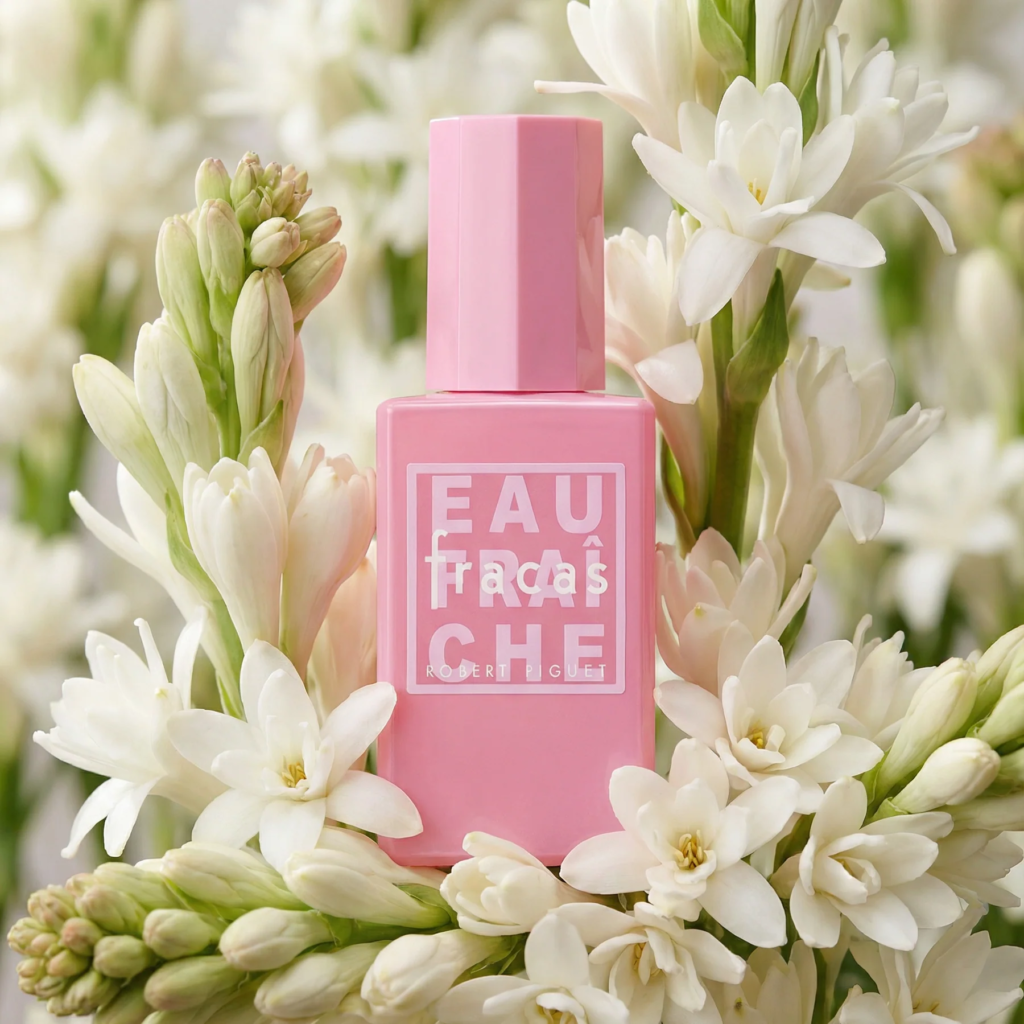
Robert Piguet Parfums continues to sell Fracas in multiple formats and interpretations. The classic Eau de Parfum remains the centre of the line, while the Parfum Extrait offers a higher-concentration presentation of the signature. Fracas Eau Fraîche is positioned as a contemporary, lighter interpretation inspired by the 1948 icon.
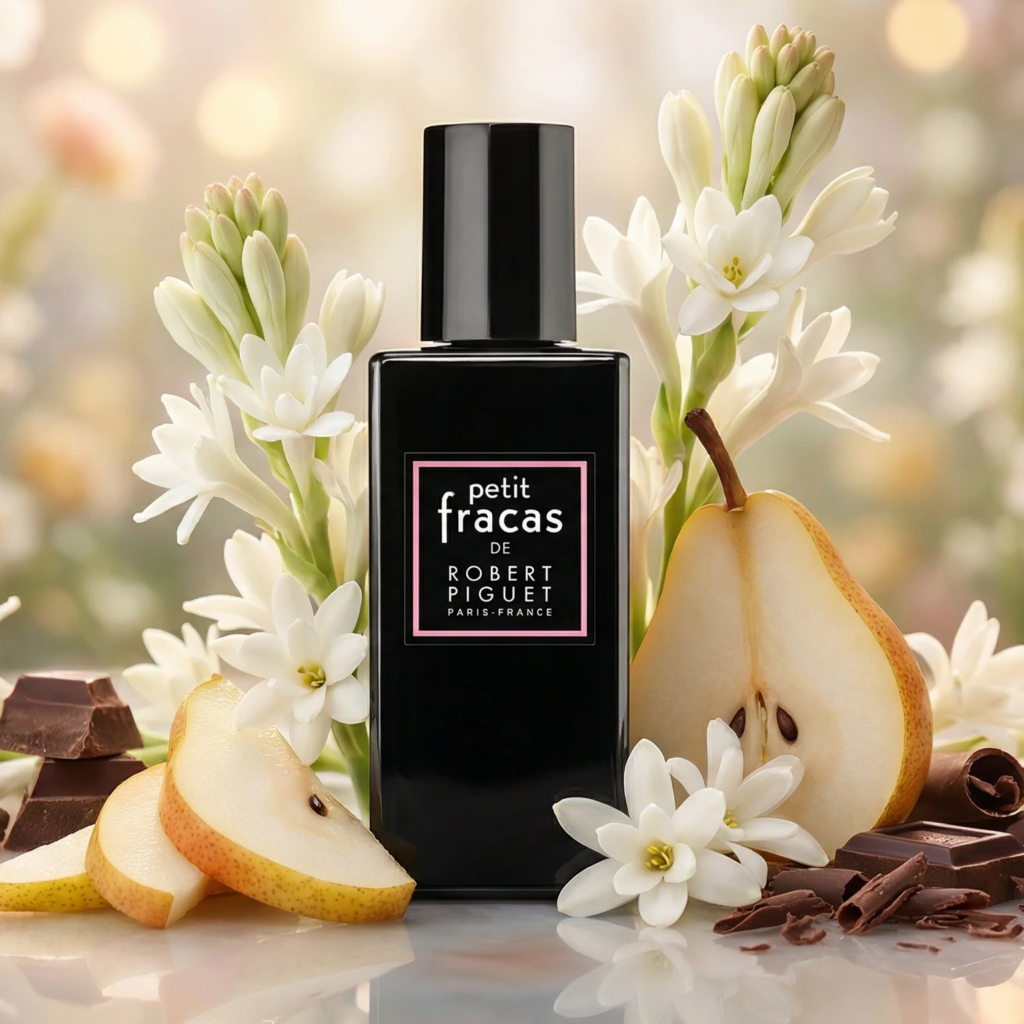
Petit Fracas takes a more playful route. Created by Aurélien Guichard, it connects tuberose, gardenia and jasmine with pear and a gourmand accent that includes cocoa. It belongs to the Fracas family, but it should not be described as merely another concentration of the original. It is a separate composition that uses the name, floral lineage and attitude as its starting point.
An icon does not need to remain frozen
Purists often approach reformulation and extension with understandable suspicion. Preservation matters, especially when a perfume has shaped the language of its category. But an icon survives not only because someone keeps a bottle on a shelf. It survives because people continue to smell it, debate it, reinterpret it and discover its descendants.
The responsible position sits between two fantasies. The current Fracas should not be declared an untouched 1948 artefact. Nor should every later version be dismissed automatically as irrelevant. The history, the surviving signature and the modern product are connected, but they are not interchangeable. Treating those distinctions honestly makes the legacy more interesting, not less.
A personal thank you to Germaine Cellier
And finally, a personal thank you to Germaine Cellier. Without her, perhaps none of us would have learned to love tuberose in quite this way: so carnal, so seductive and so gloriously unwilling to behave. She did not simply place a white flower inside a perfume. She gave it a body, a voice and the confidence to enter a room before the person wearing it.
Many tuberose fragrances have followed, and many more will come. But Fracas remains the unavoidable ancestor: the perfume that proved beauty could be creamy and dangerous at the same time. We owe Cellier more than a place in perfume history. We owe her every moment in which tuberose stops smelling merely floral and begins to feel alive.
The verdict: why Fracas is still iconic
Robert Piguet Fracas deserves its place among the essential perfumes of the twentieth century because it did not merely reflect a style; it established one. Germaine Cellier transformed tuberose into an olfactory archetype of excess, sensuality and fearless femininity. The fragrance’s exact material form may have evolved, but its central proposition remains startlingly clear: white flowers do not have to be innocent.
Presented as a secret and remembered as a disturbance, Fracas is still doing what its name promises. It makes an entrance. It starts a conversation. And more than seventy-five years later, it continues to leave the room smelling slightly less well behaved than it found it.
| More perfumes that changed the language of fragrance. → Explore the Iconic Perfumes series. |