Neroli, Orange Blossom and Petitgrain: Same Tree, Different Mood
One bitter orange tree, three raw materials, and roughly zero consistency in how perfume brands actually use these words.
Neroli vs orange blossom is one of those perfume distinctions that sounds unnecessarily technical until you realise they can actually come from the very same flowers.
Bitter orange is showing off. Most plants hand perfumery one decent material and call it a career. Citrus aurantium hands over several, pulled from different parts of itself and processed in different ways. Three of them regularly end up in fragrance descriptions: neroli, orange blossom and petitgrain.
Sometimes they even appear in the same pyramid. Occasionally, they are treated as if they were interchangeable synonyms for “smells a bit like orange flowers.”
They are not.
They share a family tree, not a personality.
| Testing note: this is an explainer, not a review. The fragrances mentioned further down are discussed through their official notes and brand descriptions, not through me testing all of them side by side in one sitting. |
One Tree, Doing All the Work
Citrus aurantium, the bitter or Seville orange, is cultivated across the Mediterranean basin, with Tunisia, Morocco and Egypt among the important sources for flower-derived materials.
Almost every part of it earns a paycheck in perfumery.
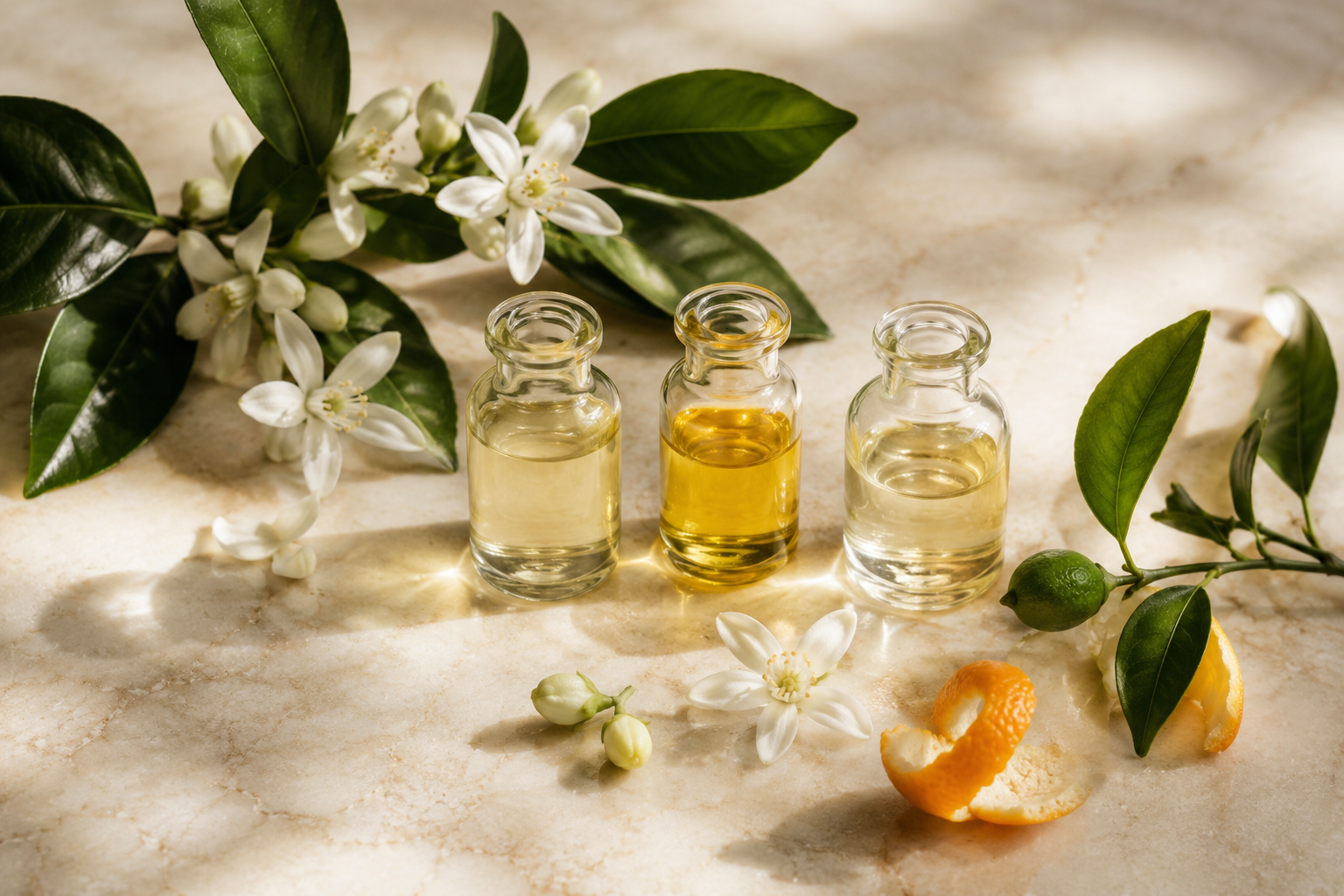
The peel gives bitter orange oil. The flowers can give us neroli and orange blossom absolute. The leaves and twigs give petitgrain.
Same botanical name, three very different business cards.
Neroli, the One Everyone Namedrops
Neroli is produced by steam-distilling the fresh flowers of the bitter orange tree.
And those flowers are not particularly generous.
Raw-material suppliers report extremely low yields, which helps explain why genuine neroli essential oil is an expensive material. Romance and seventeenth-century princesses make for better marketing copy, admittedly, but chemistry and yield tend to be rather less sentimental.
Olfactively, neroli is typically bright, green and citrusy, with a characteristic bitterness and a faintly soapy or aromatic edge that prevents it from becoming straightforwardly sweet.
It often works around the top and heart of a composition, particularly in colognes and fresh florals, bringing light, lift and that unmistakable Mediterranean brightness.
Orange Blossom Absolute, the Rich Relative
Here is the detail actually worth remembering: orange blossom absolute can come from the same flowers used to produce neroli.
Not a different bloom. Not a different species. The difference is primarily in how those flowers are processed.
While neroli essential oil is obtained through steam distillation, orange blossom absolute is produced through solvent extraction, traditionally passing through a concrete before reaching the absolute.
That change matters.
Compared with the brighter, greener character associated with neroli, orange blossom absolute tends to smell warmer, richer and more enveloping. It can have creamy, honeyed and sometimes faintly indolic or animalic facets.
If neroli lets the light into the room, orange blossom absolute has already drawn the curtains and ordered something expensive.
It therefore feels perfectly at home in the heart and deeper portions of floral, ambery and chypre-style compositions where an orange-flower effect needs considerably more weight.
Petitgrain, the Sibling Nobody Puts on the Label
Petitgrain skips the flowers entirely.
It is steam-distilled primarily from the leaves and twigs of the bitter orange tree. Historically, small unripe fruits were also involved, which explains the name: petit grain, or “little grain.”
Different part of the plant, different smell.
Petitgrain is green, woody, aromatic and bitter, but its bitterness tends to feel more herbal and leafy than floral. There can be citrus running through it, but this is citrus seen from underneath the tree rather than from inside the blossom.
It appears frequently in the upper portions of compositions, especially classic colognes and fougère structures, where it adds freshness, dryness and aromatic structure.
It rarely gets star billing.
Apparently leaves need better PR.
Neroli vs Orange Blossom: The Cheat Sheet
| Neroli | Orange Blossom Absolute | Petitgrain | |
| Plant part | Flowers | Flowers, potentially the same blossoms used for neroli | Leaves and twigs |
| Extraction | Steam distillation | Solvent extraction | Steam distillation |
| Character | Bright, green, citrusy, bitter | Warm, creamy, honeyed, sometimes indolic | Green, woody, aromatic, bitter |
| Typical role | Top / heart | Heart / deeper floral structure | Top / heart |
These are general tendencies, not laws carved into stone. Origin, quality of the raw material, extraction, dosage and everything surrounding it in the formula can shift the final impression considerably.
Why the Pyramid Lies to You a Little
This is where things get messy, Linda.
A fragrance pyramid is primarily a communication tool. It tells us how a perfume is intended to smell and develop, but it should not be read as a literal ingredient list or formula.
When a brand lists “neroli,” for example, that does not necessarily tell us that a specific quantity of natural neroli essential oil is sitting inside the bottle. The word may describe the olfactory effect the composition is creating, whether through natural materials, other perfumery materials, or a combination of them.
The same applies to orange blossom, jasmine, rose and practically every other familiar note appearing in perfume marketing.
Then come crowdsourced note databases, where notes can also reflect perception and interpretation rather than privileged access to the actual formula.
None of this makes fragrance pyramids useless. Far from it.
It simply means that reading neroli on a product page is a useful description of what you might smell, not a chemical guarantee of what went into the formula.
Four Bottles, One Family Tree
Perris Monte Carlo Neroli Mediterraneo
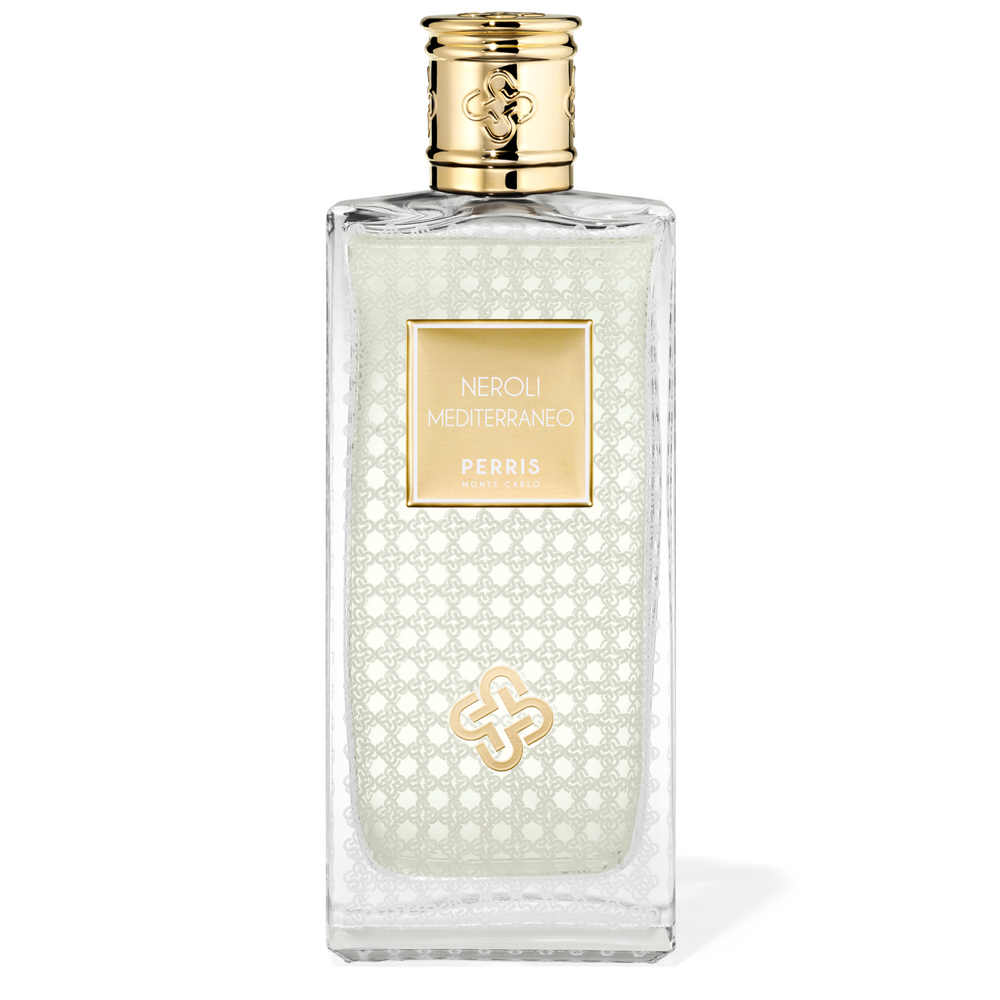
Perris Monte Carlo‘s Neroli Mediterraneo is almost suspiciously convenient for this article.
Created by Gian Luca Perris for the Italy Collection, its official composition brings Sicilian bitter orange, Calabrian bergamot and Sicilian mandarin into the opening, followed by neroli, orange blossom absolute and petitgrain.
All three. In one perfume.
Ginger, geranium and Timur pepper add further lift before musk, cedar and iris settle underneath.
If you want a fragrance that places these different sides of the bitter orange tree into the same conversation, Neroli Mediterraneo essentially puts them around one table and lets them argue it out.
Tom Ford Neroli Portofino
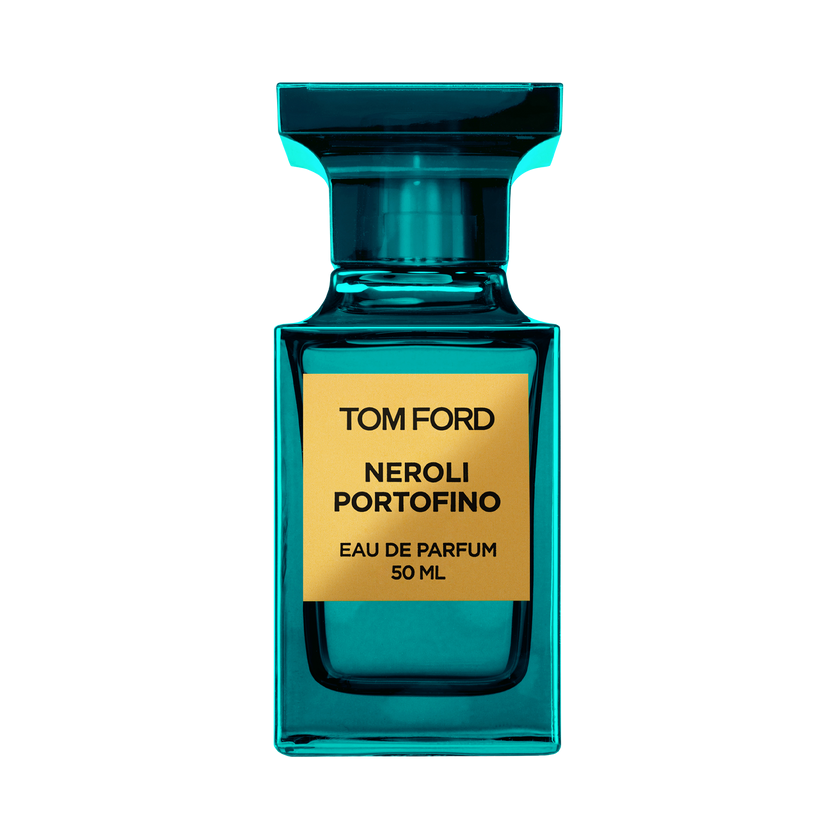
Neroli Portofino by Tom Ford represents the brighter end of the spectrum.
Its construction places neroli alongside citrus and aromatic materials, creating the sparkling, clean Mediterranean profile that many people instinctively associate with the word neroli itself.
It is polished, luminous and immediately legible: citrus first, white floral brightness running through it.
There is a reason this particular interpretation became such a recognizable reference point for modern neroli fragrances.
Serge Lutens Fleurs d’Oranger
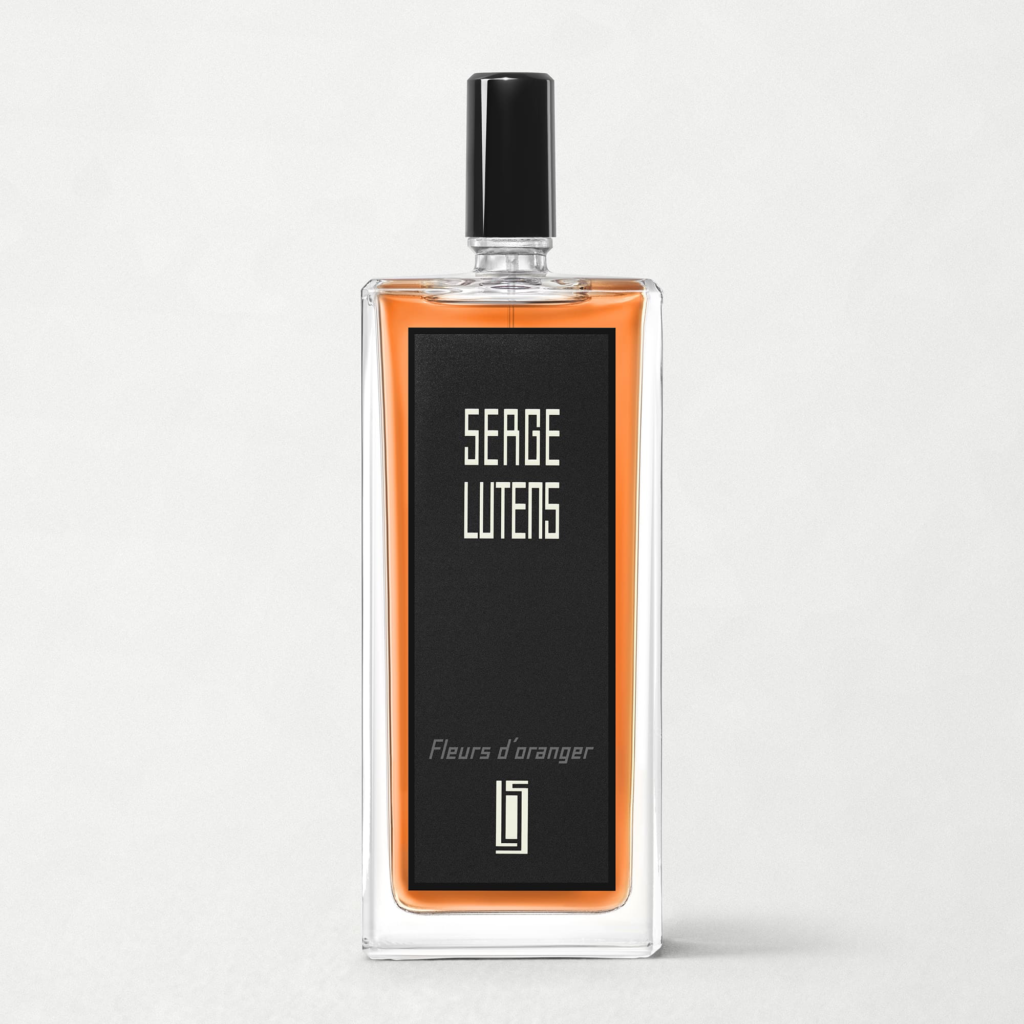
For something richer, Fleurs d’Oranger takes us firmly towards orange blossom territory.
Serge Lutens connects the fragrance to his first encounter with orange blossom in Morocco in 1968. The brand describes the brightness of orange blossom combined with Egyptian jasmine and rose, while Lutens himself refers to the blossom of the bitter orange tree with a hint of civet.
The result is conceptually almost the opposite of the breezy cologne treatment.
Here, orange blossom is not merely sunshine and clean linen. It is floral, sensual and considerably more opulent.
Miller Harris Le Petit Grain
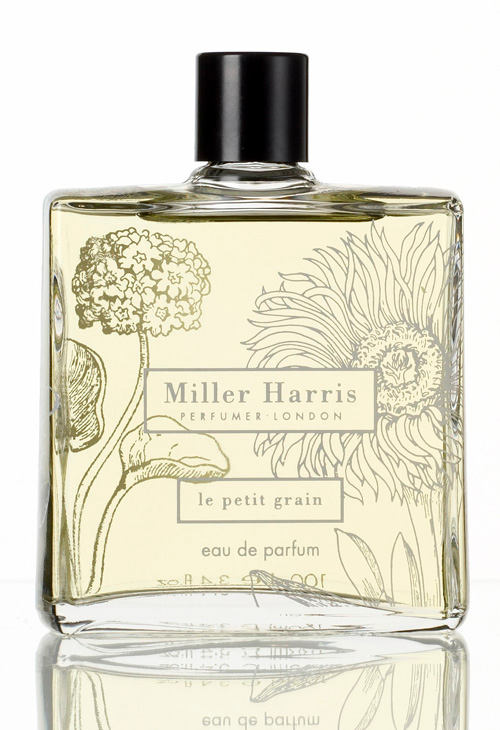
And then there was Le Petit Grain by Miller Harris.
Now discontinued, the fragrance was built around the greener side of the orange tree, combining petitgrain, orange blossom and aromatic herbs over softer woods.
Rather than putting the flower entirely centre stage, its character leaned into the crisp, leafy freshness that makes petitgrain so useful in perfumery.
More foliage than bouquet.
Which, after all this talk about orange flowers, feels like the tree finally getting some representation.
The Short Version
One tree. Three names. Three genuinely different olfactory materials.
Neroli comes from steam-distilled flowers and generally gives us the brighter, greener and more citrus-like face of orange blossom.
Orange blossom absolute can come from those same flowers, but solvent extraction produces a richer, warmer and more enveloping material.
Petitgrain changes the raw material entirely, using the leaves and twigs to produce something greener, woodier and more aromatic.
And fragrance pyramids?
Useful maps. Not laboratory reports.
So the next time neroli, orange blossom and petitgrain appear together on a note list, at least you’ll know the bitter orange tree isn’t repeating itself.
It’s just doing far too much work.
| Perfume is serious. We don’t have to be. Explore our Guides section. |