Pistachio in Perfumery: From Green Nut to Gourmand Obsession
I love pistachio in almost every possible form.
Roasted, salted, turned into gelato, buried inside a pastry and, apparently, sprayed on my neck. I was never going to be objective about this.
But my fascination with pistachio in perfumery goes beyond the fact that I would happily eat my body weight in it. Because pistachio is one of those notes that seems immediately familiar until you start paying attention to how differently perfumers use it.
Sometimes it smells creamy and sweet. Sometimes toasted and nutty. Sometimes green, almost vegetal. In other fragrances, you might barely recognize it as pistachio at all.
And that is precisely what makes it interesting.
Because the pistachio we smell in perfume isn’t quite as straightforward as cracking open a shell.
What Does Pistachio Actually Smell Like?
Think of pistachio and chances are your brain goes somewhere delicious: gelato, praline, cream, perhaps something sweet and slightly almond-like.
The nut itself tells a more complicated story.
Fresh pistachio can have distinctly green, resinous and even slightly pine-like facets. Roasting changes its aromatic profile dramatically, producing the toasted, nutty and almost coffee-like qualities we more readily associate with pistachio as food.
Which already gives perfumers considerably more to play with than pistachio = dessert.
So, Is There Actually Pistachio in Your Perfume?
Usually, not in the way you might imagine.
Unlike many floral or citrus materials, pistachio in perfumery is usually an imaginative reconstruction rather than the direct smell of an essential oil.
Pistachio isn’t a conventional perfumery raw material like bergamot oil, patchouli essence or jasmine absolute. The familiar effect is generally reconstructed as an accord, using different aromatic materials to create the impression of pistachio.
Pyrazines can help create roasted and nutty facets. Lactones can bring creamy, buttery textures. Benzaldehyde can push the composition towards almond and marzipan territory, while green or terpenic materials can recreate something closer to the fresher character of the raw nut.
And suddenly it becomes obvious why two perfumes listing pistachio can smell almost nothing alike.
One perfumer can turn it into gelato. Another can make it dry and toasted. Another can surround it with flowers. Another can emphasize its greener side.
Pistachio isn’t really one smell in perfumery.
It’s a palette.
Before Pistachio Became an Obsession
Judging by the number of pistachio fragrances appearing today, you could be forgiven for assuming someone discovered the nut approximately fifteen minutes ago.
They didn’t.
Pistachio had already been appearing in major fragrances well before the current gourmand explosion. What has changed is its role.
It used to be one color among many. Increasingly, pistachio has become the entire painting.
A few fragrances show that evolution particularly well.
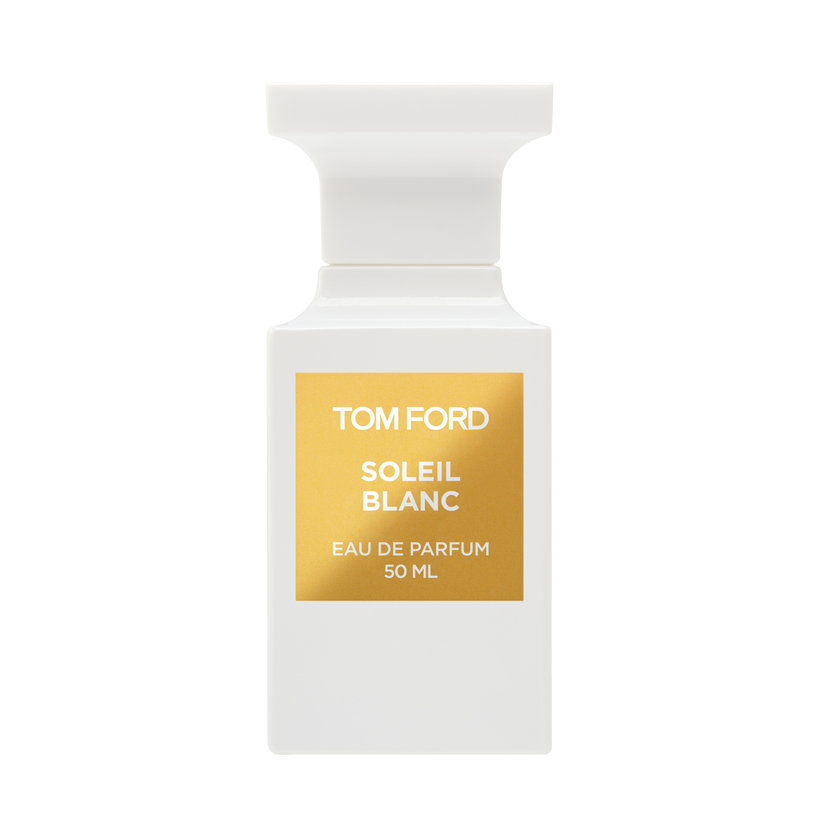
Tom Ford Soleil Blanc: Pistachio in the Background
Released in 2016 and composed by Natalie Gracia-Cetto, Tom Ford Soleil Blanc is an excellent reminder that pistachio doesn’t need to make a perfume smell like dessert.
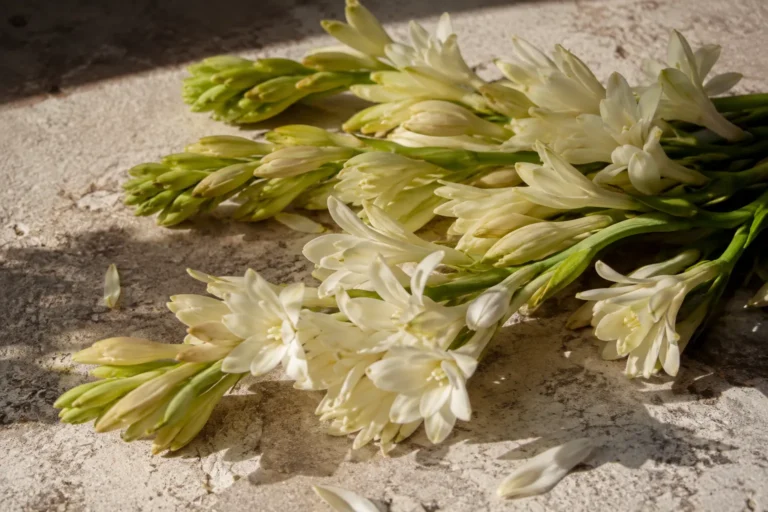
Here it appears alongside bergamot, cardamom and pink pepper before the composition moves into tuberose, ylang-ylang and jasmine, with coconut, amber, tonka bean and benzoin underneath.
Pistachio isn’t the destination. It’s part of the texture.
Within such a creamy, solar composition, its nutty character helps bridge spices, white flowers and the richer coconut-tonka base.
And this may actually be one of the most sophisticated uses of pistachio: you don’t necessarily need to recognize the nut for it to be doing something useful.
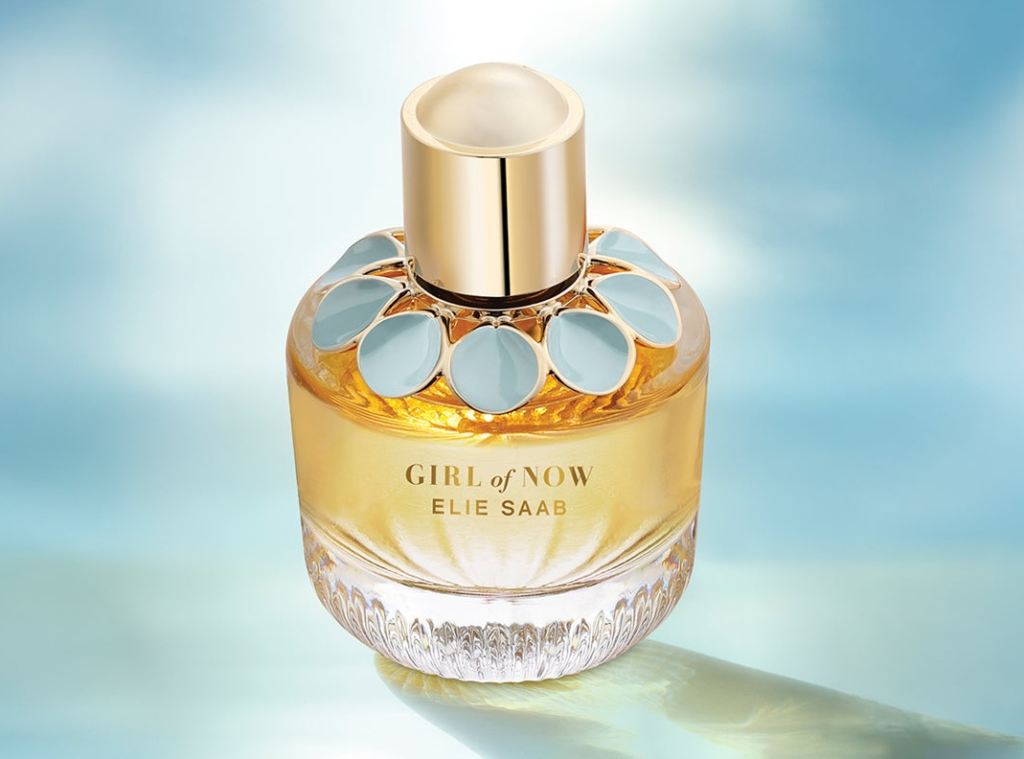
Elie Saab Girl of Now: Pistachio Goes Gourmand
Then came Girl of Now in 2017.
And, OMG, Girl of Now.
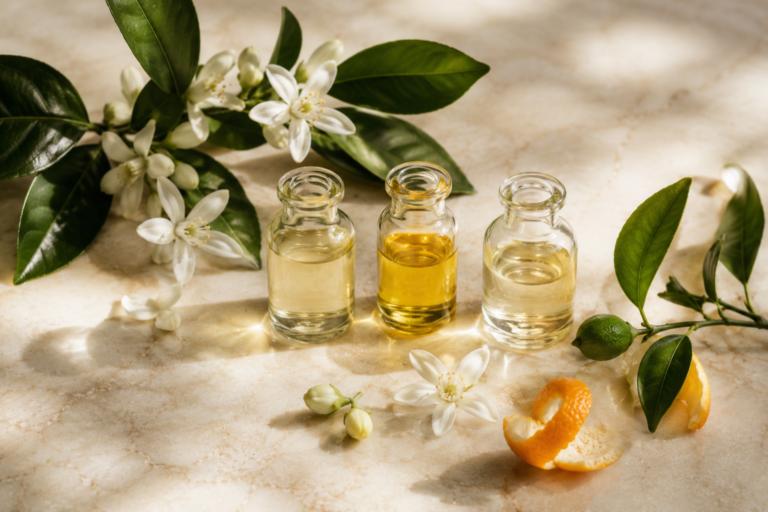
Created by Dominique Ropion and Sophie Labbé, the fragrance opens with pistachio, pear and mandarin before moving into almond, orange blossom and magnolia, eventually settling into almond milk, tonka bean, cashmeran and patchouli.
Here the nutty character is much more explicit.
Pistachio and almond reinforce each other, but the orange blossom keeps the fragrance firmly connected to perfumery rather than turning it into something that merely smells edible.
Looking back at Girl of Now now is particularly interesting because it feels like a bridge between two periods. It arrived years before today’s pistachio avalanche, yet already understood exactly how well the note could work inside a modern floral gourmand.
TikTok did not invent pistachio perfume. Humanity somehow survived beforehand.
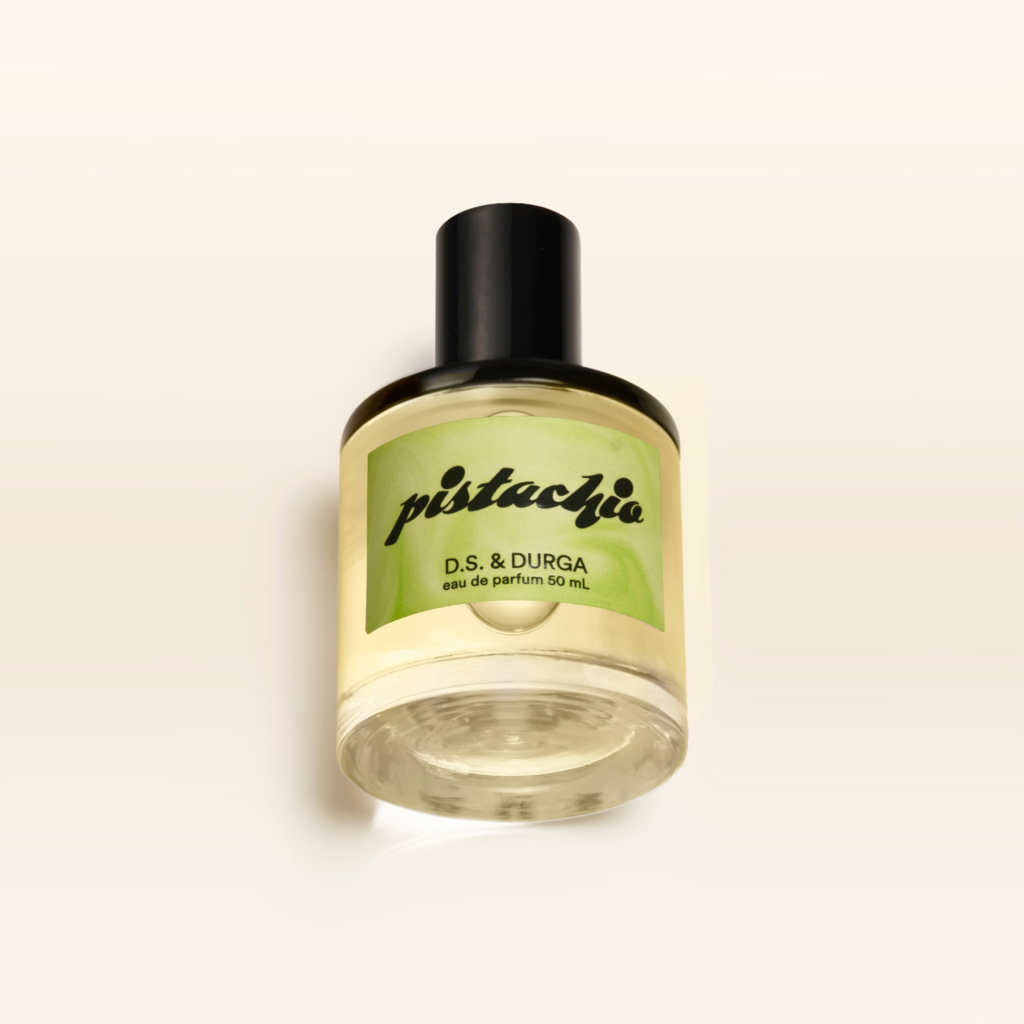
D.S. & Durga Pistachio: Make It the Point
With D.S. & Durga Pistachio, subtlety politely leaves the room.
The brand itself describes a structure of pistachio, cardamom and raw sugar; then more pistachio, roasted almond and patchouli; followed by even more pistachio, warm musk and vanilla crème.
There really isn’t much ambiguity in the briefing.
More interestingly, the fragrance began as a Studio Juice limited edition of only 100 bottles. According to D.S. & Durga, the response to the concept convinced the brand to add it to the permanent line.
This represents a significant change in how pistachio is treated.
It’s no longer there to support another idea.
Pistachio is the idea.
And the composition explores several sides of it simultaneously: green, toasted, sugary, creamy and nutty.
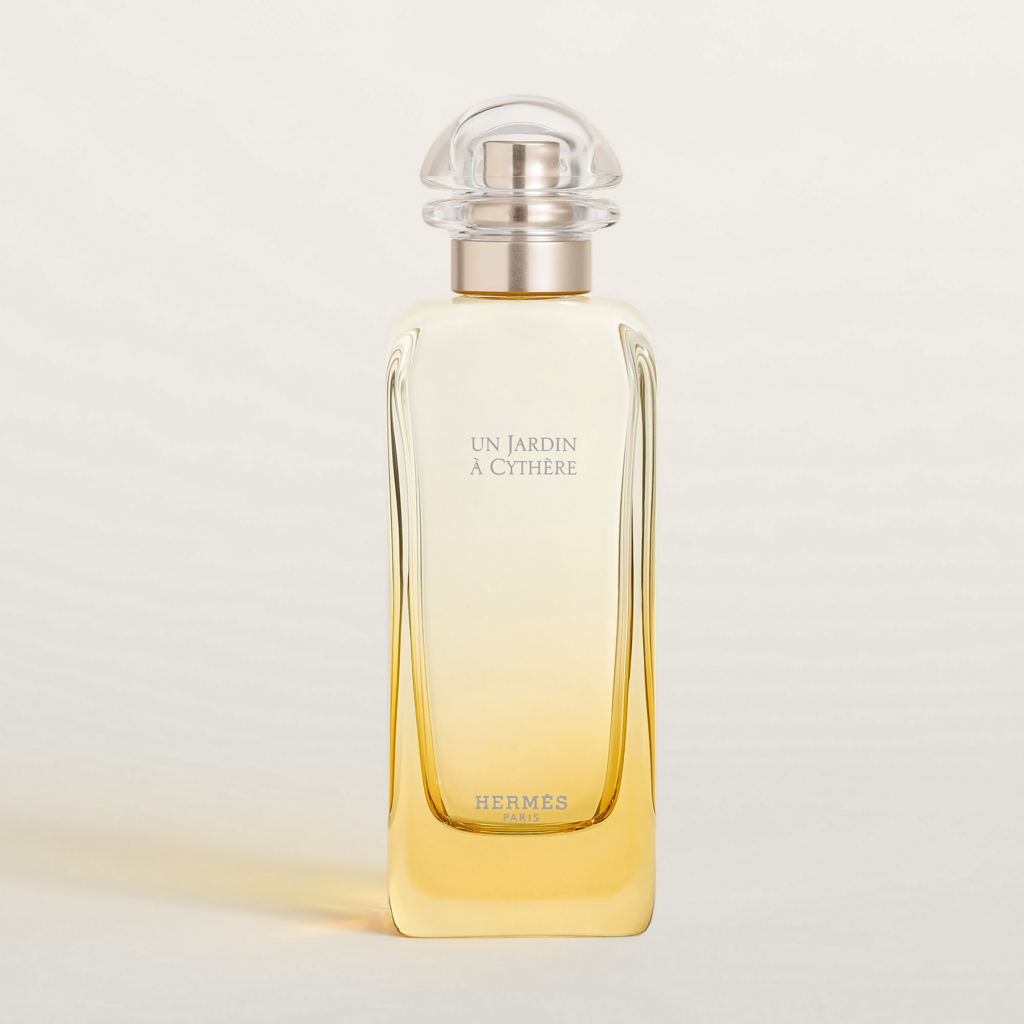
Hermès Un Jardin à Cythère: Pistachio Without Dessert
And then Christine Nagel does something wonderfully inconvenient to anyone attempting to define pistachio as a gourmand note.
Un Jardin à Cythère.
Created for Hermès, the fragrance combines golden grasses, olive wood and fresh pistachio. Hermès describes it as citrusy and woody rather than gourmand, inspired by Nagel’s memories of travelling through Greece.
This is precisely why it belongs in this conversation.
Remove caramel. Remove vanilla cream. Remove pastry.
What remains is another facet of pistachio entirely: fresh, Mediterranean, vegetal and softly nutty.
The pistachio hasn’t changed.
Our expectations have.
And Un Jardin à Cythère demonstrates beautifully that the note doesn’t inherently belong to the dessert trolley.
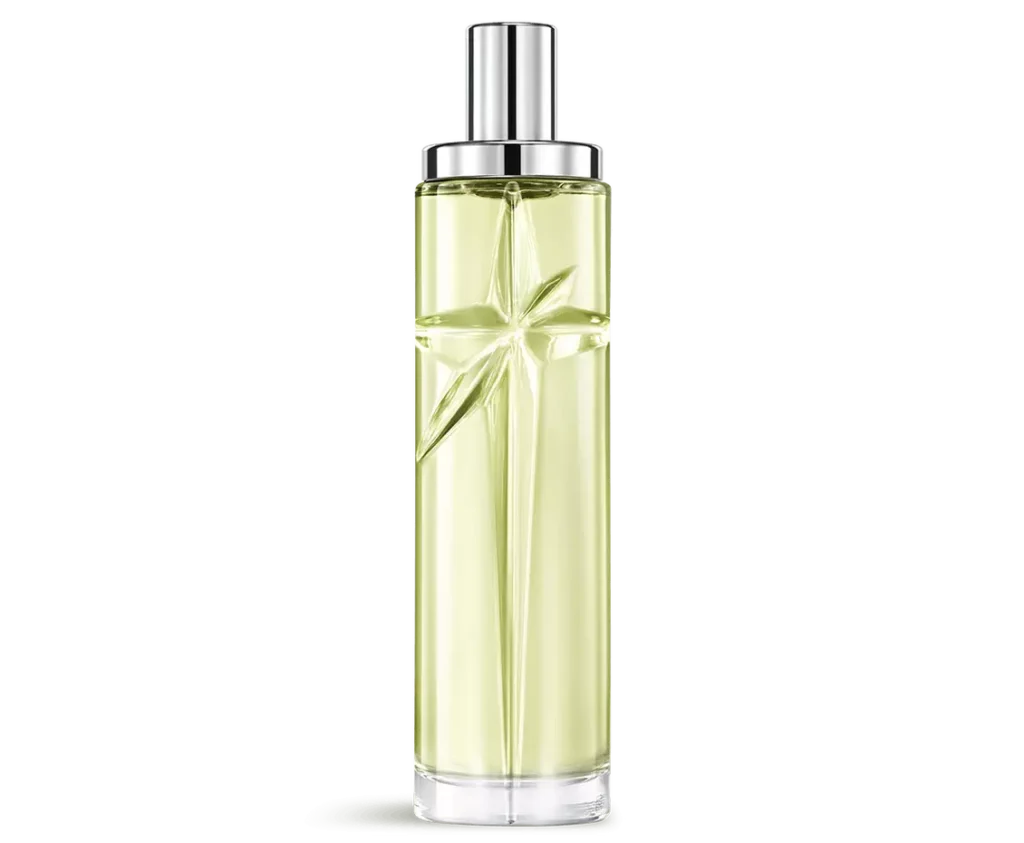
Mugler Starlicious Pistachio Praline: Welcome to the Pistachio Era
Jump to 2026 and we arrive somewhere completely different.
Mugler Starlicious Pistachio Praline doesn’t hide what it intends to do. Pistachio sits with praline and caramel over woods and patchouli, while Mugler positions Starlicious around a lighter interpretation of the eau gourmande.
And this is perhaps where the story comes full circle.
The supporting note has become the headline.
Pistachio now has enough cultural recognition that a major designer brand can put it directly in the name, color the fragrance pale green and surround the bottle with actual pistachios and dripping caramel.
Nobody needs the concept explained anymore.
We know exactly what fantasy we’re being sold.
| I explored its creamy, edible—and surprisingly dark—evolution in my full Mugler Starlicious Pistachio Praline review, based on three official samples. |
Why Does Pistachio Work So Well in Perfume?
Because it cheats.
Vanilla immediately brings sweetness. Almond easily moves toward marzipan. Hazelnut tends to feel toasted and rich.
Pistachio can borrow something from all of them without completely belonging to any of those worlds.
It can be green without being sharply vegetal, gourmand without necessarily becoming sugary, creamy without simply smelling milky and nutty without becoming overwhelmingly roasted.
That makes it extraordinarily useful.
Surround it with vanilla, caramel and praline and you have dessert.
Put it beside tuberose, ylang-ylang and coconut and it becomes solar.
Pair it with almond and orange blossom and it turns into a floral gourmand.
Give it olive wood and grasses and suddenly you’re somewhere under the Greek sun.
Same nut. Entirely different wardrobe.
Is Pistachio the New Vanilla?
No.
And I hope it never becomes one.
Vanilla occupies a unique place in perfumery. It isn’t merely fashionable; it’s part of the language perfumers have been using for generations.
Pistachio feels different.
Its current popularity certainly belongs to the broader gourmand boom, and we’re undoubtedly going to smell a lot more of it before the industry discovers another edible object to collectively obsess over.
Some will be wonderful. Some will presumably smell like somebody dropped a macaron into a laboratory.
But reducing pistachio to a trend misses what makes it genuinely interesting.
From Soleil Blanc to Girl of Now, from D.S. & Durga to Hermès and now Mugler, the note has already demonstrated that it can be supporting actor, gourmand star, green accent, creamy texture or full-blown dessert fantasy.
Maybe pistachio isn’t replacing vanilla.
Maybe it’s simply proof that gourmand perfumery has finally discovered there are other things in the pantry.
| More perfume notes, stories and olfactory rabbit holes await in Perfume Guides. |