Amber in Perfumery:The Note That Doesn’t Really Exist
Amber in perfumery is basically everywhere. There is just one small problem: technically, it doesn’t really exist.
At least, not in the way iris, jasmine or sandalwood do.
When a fragrance lists “amber” among its notes, there usually isn’t a mysterious golden substance being extracted somewhere and poured into the formula. In classical perfumery, amber is an accord: a constructed impression of warmth, sweetness and resinous depth, traditionally built around materials such as labdanum, benzoin and vanilla.
And no, amber, ambergris and Ambroxan are not the same thing. Because apparently perfume terminology wasn’t confusing enough already.
So, What Is Amber?
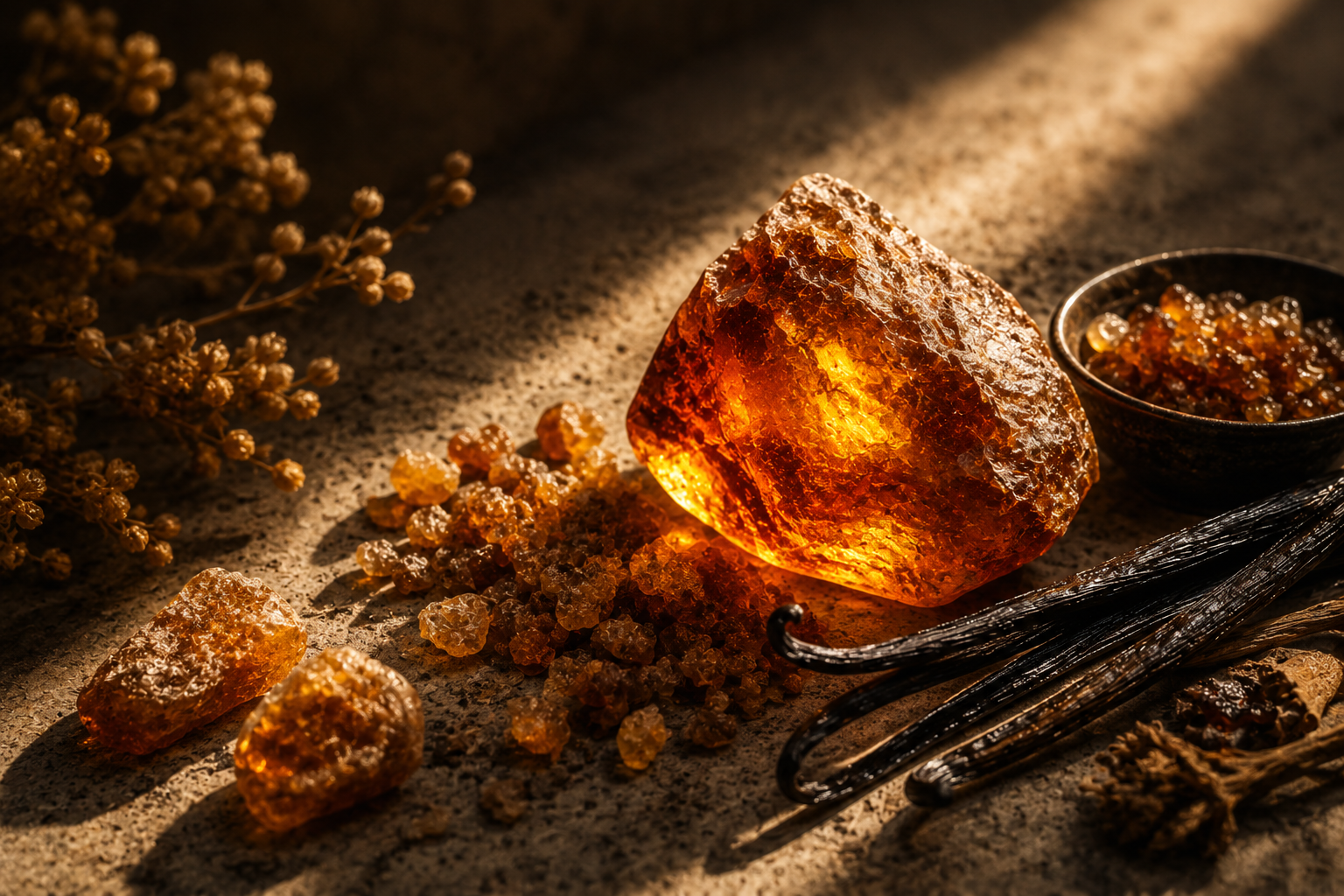
The amber used in perfume has essentially nothing to do with the fossilized golden resin used in jewellery. That material may look exactly like what an amber perfume feels as though it should smell like, but it is not the source of the classic perfumery note.
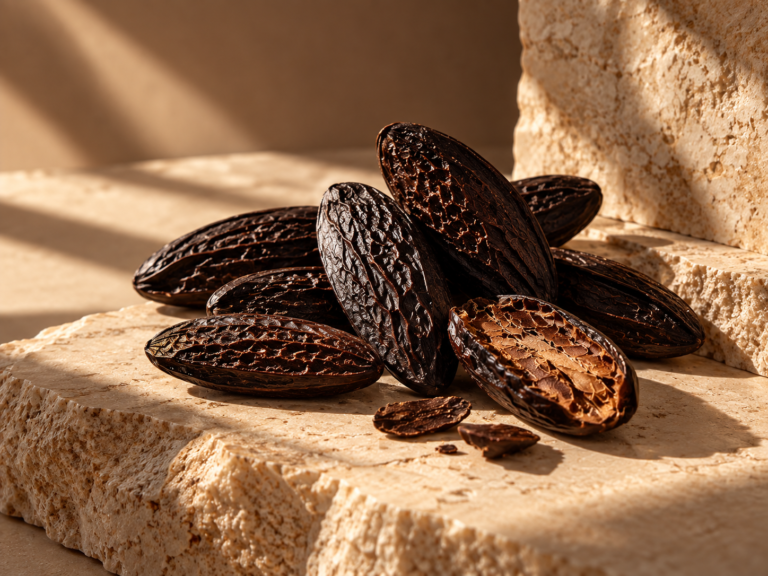
Instead, perfumers create an amber effect by combining materials. A traditional formula often revolves around labdanum, benzoin and vanilla, sometimes enriched with tonka bean, balsams, spices or other resins.
The proportions matter enormously. Push the vanilla and benzoin forward and amber can become soft, sweet, balsamic and almost edible. Emphasize labdanum and it can feel darker, leathery, smoky or animalic. Add woods and modern amber materials and the result can become dry, mineral or almost abstract.
So “amber” is less a single smell than an idea. Warmth is probably the easiest way to recognize it.
The Classic Amber Trio
If we reduce the traditional amber accord to its most recognizable architecture, three materials repeatedly appear: labdanum, benzoin and vanilla.
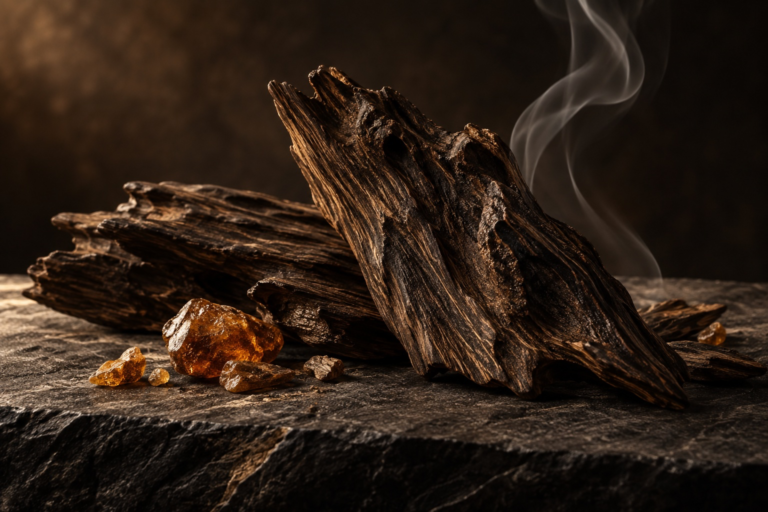
Labdanum is a sticky resin obtained from Cistus shrubs and brings darkness, warmth and complexity. Its facets can move from leathery and resinous to honeyed or slightly fruity. Its history in fragrance reaches back centuries, long before anyone was arguing about perfume notes on the internet.
Benzoin adds a smoother balsamic sweetness, often with vanilla-like, caramelized or softly resinous nuances. Vanilla then rounds the accord, bringing sweetness and familiarity.
Together they can create that golden, enveloping effect we have learned to call amber, even though no piece of actual amber has participated in proceedings.
Amber in perfumery Is Not Ambergris
This is where things become needlessly entertaining.
Ambergris is a completely different material. It originates in the digestive system of the sperm whale and, after long exposure to sea, air and sunlight, develops the complex odour that historically made it extraordinarily valuable to perfumers.
Rather than the sweet balsamic profile of a classic amber accord, aged ambergris can suggest salty, marine, musky, animalic and skin-like facets. Historically it was also prized for the way it could add diffusion, persistence and complexity to a composition.
The similarity in the names has caused generations of confusion, but olfactively and materially amber and ambergris belong to different stories.
And Ambroxan Is Something Else Again
Then we arrive at Ambroxan, or more broadly the family of modern ambergris-inspired materials.
Research into the odorous components of natural ambergris eventually led perfumers and fragrance houses toward molecules capable of reproducing some of its most desirable effects. Materials in the Ambrox family offer powerful ambery, woody, musky and sometimes mineral or skin-like facets, with excellent tenacity.
This is why a modern fragrance described as “ambery” may smell nothing like the plush vanilla-labdanum accord you had in mind. Contemporary perfumery has expanded the word amber far beyond its classical sweet-resinous meaning.
One word. Several completely different olfactory ideas. Very efficient naming system.
How Does Amber Smell?
The annoying but accurate answer is: it depends.
A classical amber can smell warm, resinous, balsamic, sweet, powdery and sensual. Some versions feel almost edible; others lean smoky, leathery or incense-like.
Modern amber structures can be much drier. Woods, musks and powerful ambery molecules can create something radiant, mineral, clean or extremely persistent, sometimes with very little obvious sweetness.
That versatility explains why amber appears across so many fragrance styles. It can soften florals, warm woods, deepen gourmands or provide the long-lasting architecture underneath an otherwise transparent composition.
Why Amber Became So Important
The development of modern amber perfumery is closely tied to the expansion of synthetic materials in the late nineteenth and early twentieth centuries. The arrival of vanillin made new kinds of sweet, warm accords possible, while perfume bases developed by ingredient houses helped establish increasingly sophisticated amber structures.
Over time, the idea grew far beyond a single recipe. Amber became a fragrance family, a descriptive term and eventually an entire vocabulary of its own.
Today we encounter amber floral, amber woody, amber vanilla, dry amber and countless variations. These labels are useful as broad directions, but they should not be read as proof that every fragrance contains the same traditional accord.
Amber, in Short
Amber is one of perfumery’s best illusions.
It looks like it should be a material. It sounds like it should be a material. Fragrance pyramids routinely present it as though someone simply opened a bottle labelled AMBER and added three drops.
In reality, it is usually construction, interpretation and atmosphere.
Perhaps that is exactly why it has survived so well. There is no single amber that perfumers have to reproduce faithfully. It can be golden and sweet, dark and resinous, dry and woody, soft and skin-like or aggressively modern.
Amber does not really exist as one perfume ingredient. And somehow that has allowed it to become almost everything.
Five Faces of Amber From My Collection
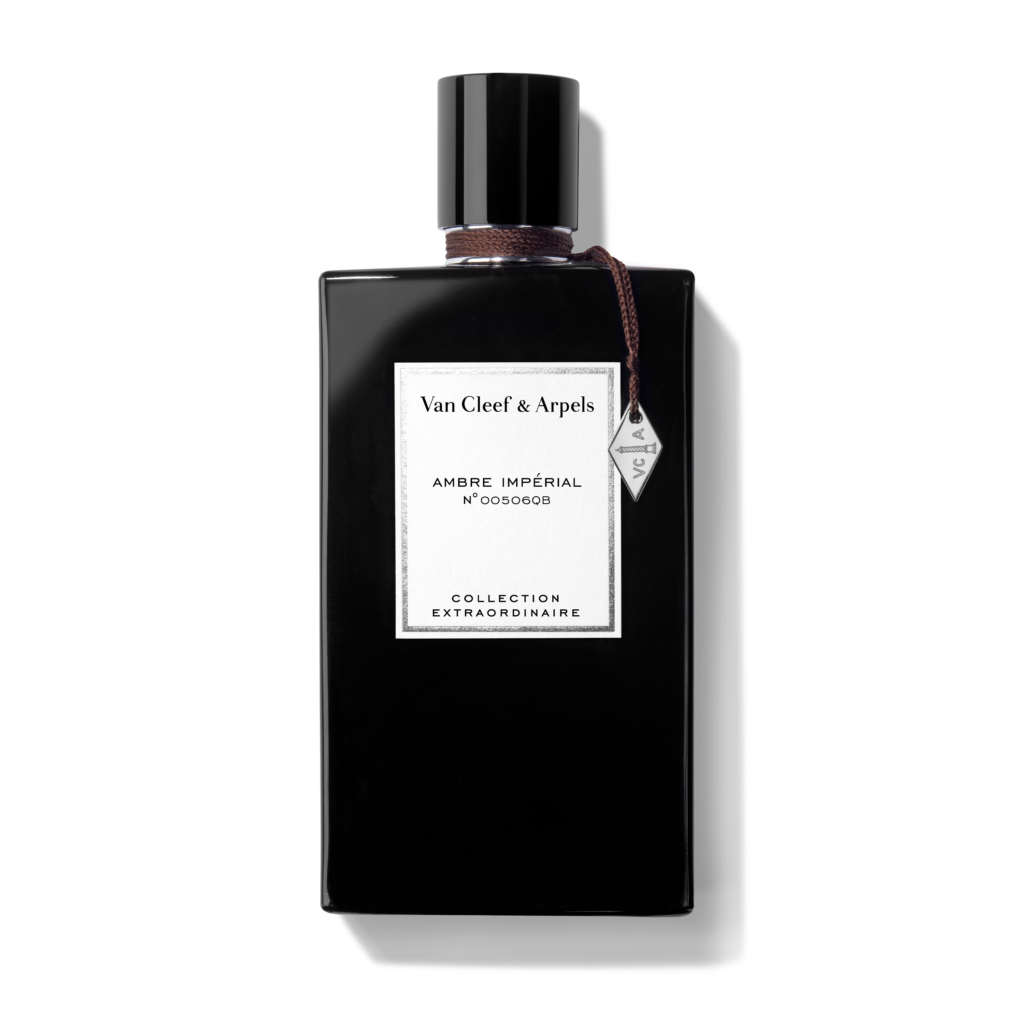
Van Cleef & Arpels Ambre Impérial — The Resinous Amber
If I had to choose one bottle from my collection to illustrate the more classical, resinous idea of amber, Ambre Impérial would be an obvious candidate. Benzoin, vanilla and tonka create a warm, balsamic sweetness, while the composition retains enough depth and texture to keep it from feeling simply gourmand. This is amber as something golden, enveloping and unapologetically rich.
Jean Paul Gaultier Gaultier² — The Sensual Amber
The original Gaultier² from 2005, created by Francis Kurkdjian, strips the idea down to an almost deceptively simple combination of amber, vanilla and musk. The result is warm, soft and distinctly sensual, showing how an amber structure can move away from resinous heaviness and become something much closer to skin.
My Burberry Black — The Floral Amber
My Burberry Black demonstrates what happens when amber works in support of a floral composition rather than demanding the entire stage. Jasmine and rose are wrapped in a richer base with patchouli and amber, while peach adds a dark, syrupy fruitiness. Here, amber provides warmth and depth to the flowers rather than turning the fragrance into a conventional amber perfume.
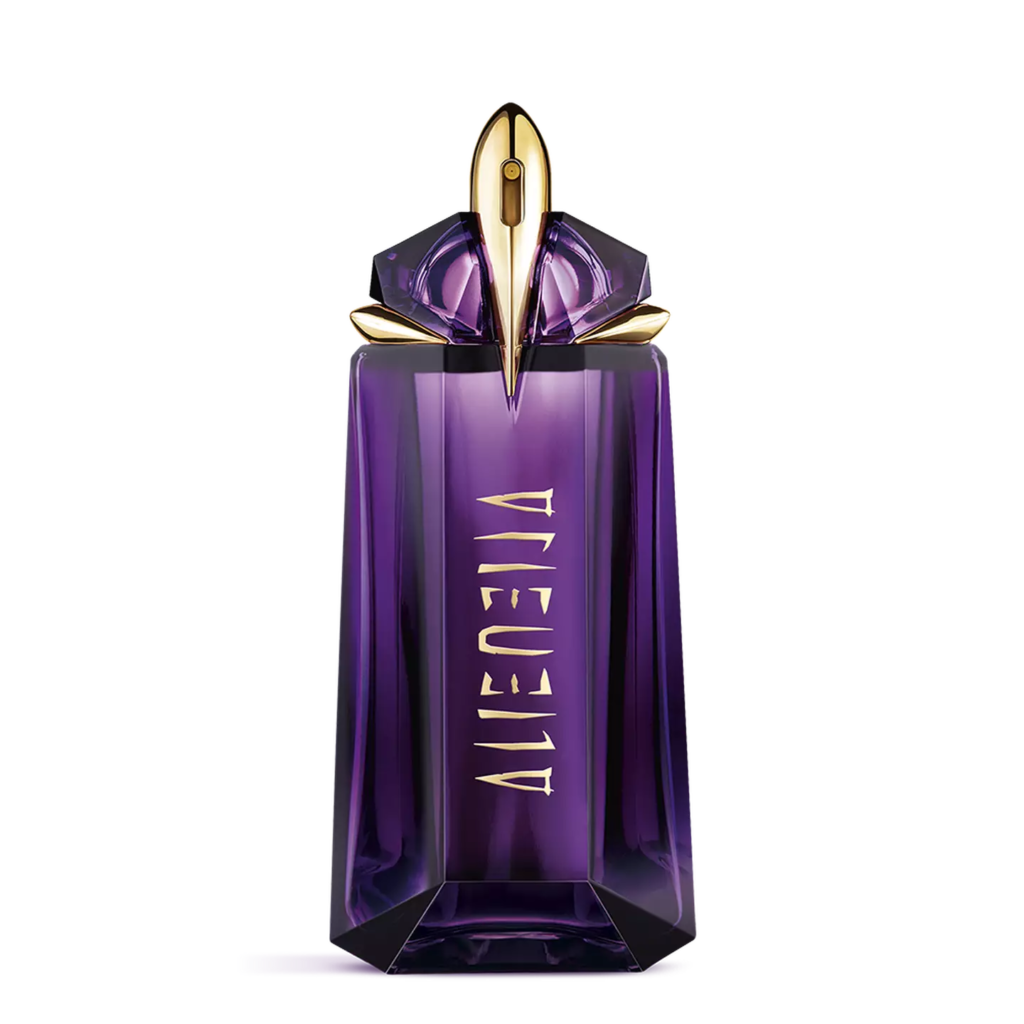
Mugler Alien Eau de Parfum — The Radiant Amber
Alien is one of the clearest examples in my collection of how far the idea of amber can travel from the traditional labdanum-benzoin-vanilla model. Its famous structure of jasmine sambac, cashmeran and white amber feels luminous, abstract and almost electrically radiant. This is not the cosy golden glow of a classical amber. It is amber with the lights turned all the way up.
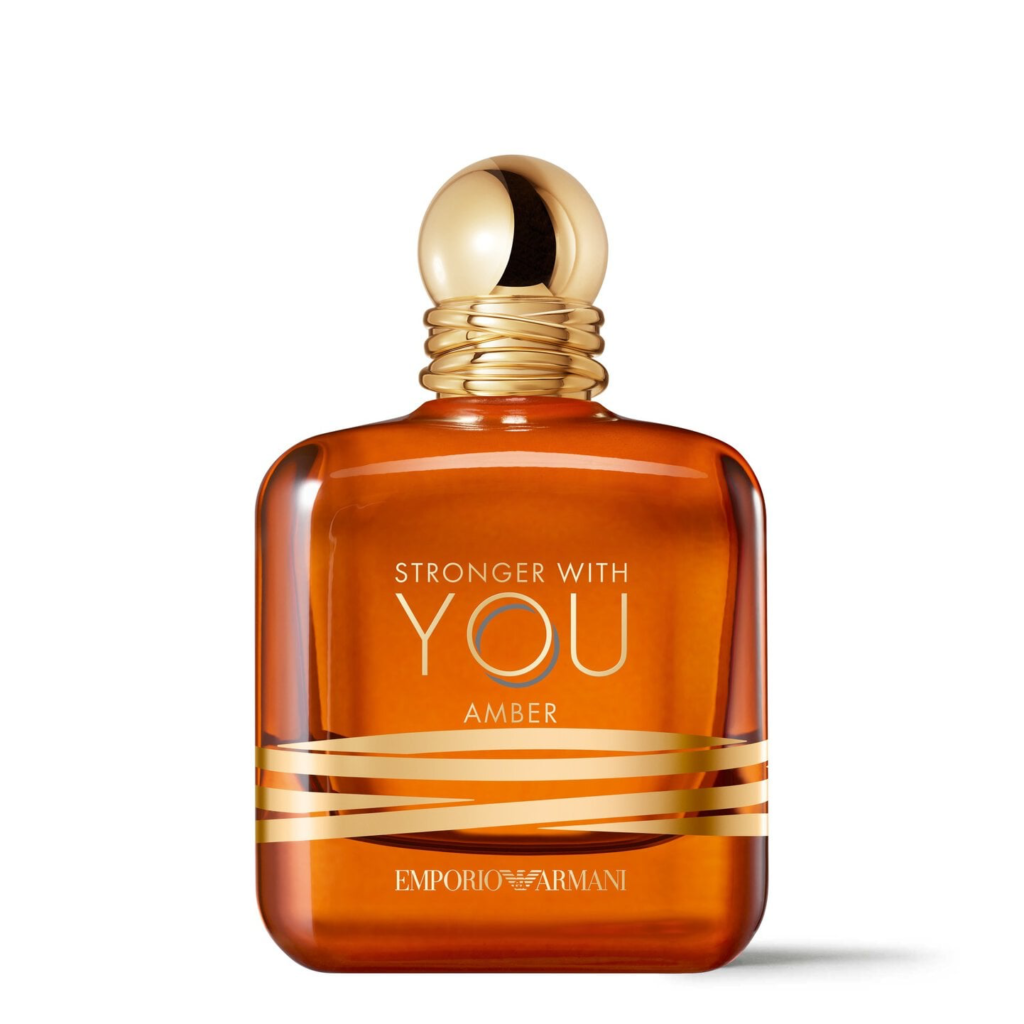
Emporio Armani Stronger With You Amber — The Sweet Contemporary Amber
Stronger With You Amber takes the concept into unmistakably modern sweet territory. Its amber accord sits alongside lavender and Bourbon vanilla, producing something warm, smooth and immediately comforting. It shows how naturally contemporary amber can overlap with vanilla-heavy, gourmand-adjacent perfumery without becoming identical to a traditional amber accord.
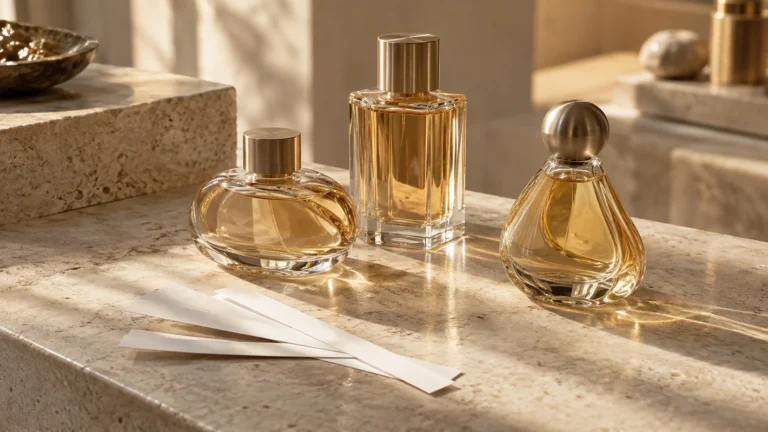
Five bottles, five rather different interpretations of the same word. Which is exactly the problem, and the fun, with amber: it has never been one fixed smell.
| Perfume is complicated enough without pretending we know everything. Explore more perfume guides here. |