Leather in Perfumery: From Polished Suede to Animalic Darkness
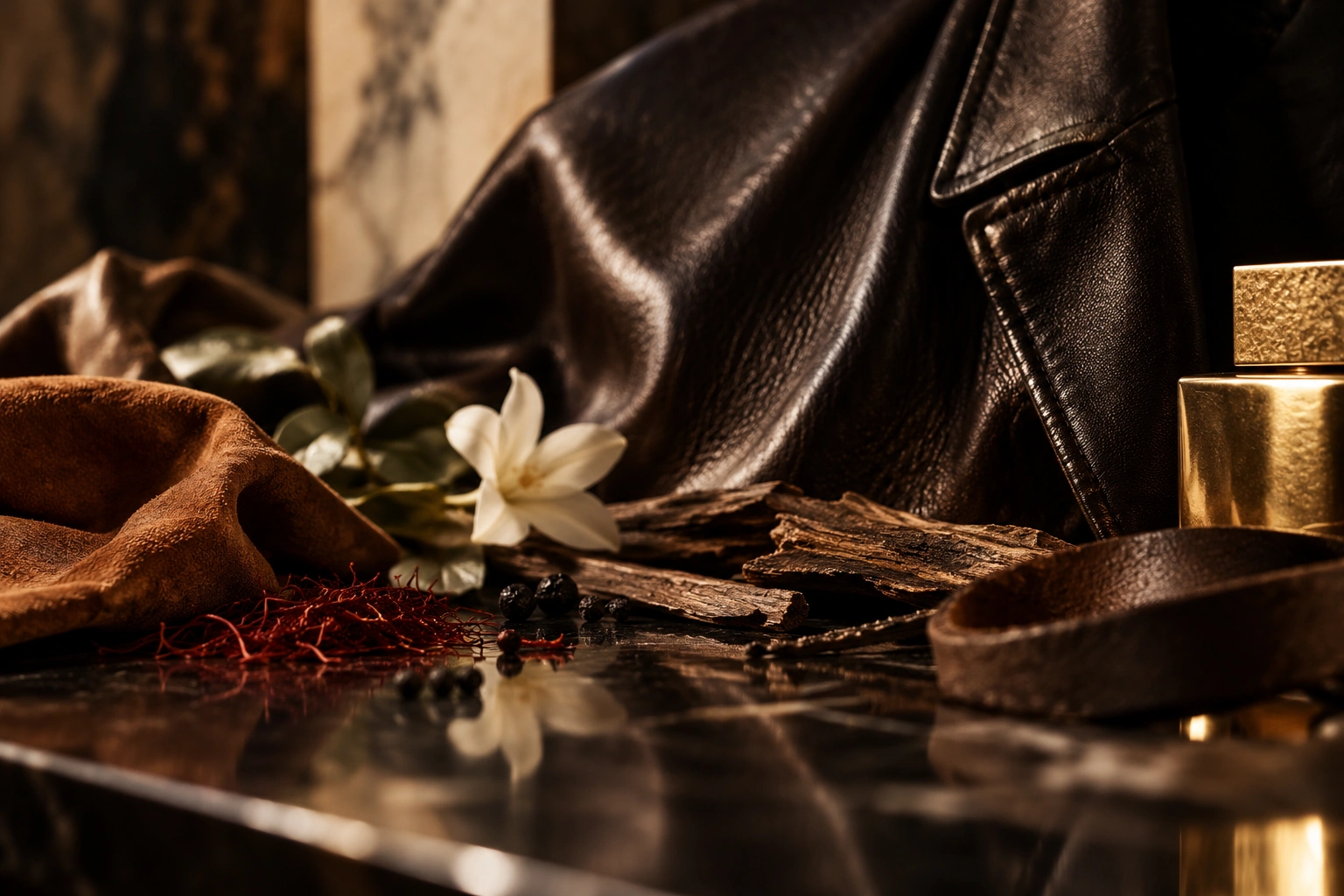
From the polished elegance of a luxury handbag to the unmistakable smell of a brand-new leather jacket, leather in perfumery can take remarkably different forms. But how do perfumers recreate a material that cannot simply be distilled into an essential oil?
There are smells capable of transporting us somewhere almost instantly. Freshly cut grass, an old wooden wardrobe, warm bread coming out of the oven. And then there is leather in perfumery, an accord that can summon entire places, memories and textures without a single piece of actual leather being present in the bottle.
A new leather jacket. An expensive handbag. The interior of a beautifully maintained vintage car. Or perhaps a rather less innocent encounter involving a leather garment that doesn’t remain on its owner for very long.
Perfumery, thankfully, has room for all these interpretations.
What makes leather particularly fascinating is that it doesn’t possess one universally recognizable olfactory personality. It can be dry, smoky, powdery, creamy, woody, floral, animalic or almost impossibly soft.
And unlike rose, jasmine or bergamot, there isn’t a leather essential oil that perfumers can simply extract from a hide.
Which raises an interesting question: if perfume doesn’t actually contain leather, what exactly are we smelling?
What Is a Leather Accord in Perfumery?
Leather is generally a reconstructed olfactory accord, created by combining different aromatic materials to evoke the smell, texture or atmosphere associated with leather goods.
Rather than copying one precise odor, perfumers can build different impressions around the same idea.
A smoky leather accord might recall an old saddle or a well-worn jacket, while a softer composition can suggest suede gloves, luxurious handbags or the delicate interior of a designer accessory.
Materials traditionally associated with leathery effects include birch tar, styrax, labdanum and isobutyl quinoline, together with modern aroma molecules capable of producing softer, warmer or more abstract leather sensations.
Isobutyl quinoline, for example, can bring intensely bitter, green and leathery facets. Birch tar has historically contributed smoky characteristics, while balsamic and resinous materials can lend warmth and depth.
This doesn’t mean every leather perfume contains the same ingredients, or that these particular materials are present in the five fragrances we’re about to explore. Individual formulas remain proprietary.
What matters is the result: a recognizable leather impression constructed through combinations of materials rather than extracted from leather itself.
I find something wonderfully absurd about that. We can spend a small fortune on a perfume that smells like an expensive leather handbag, only to discover that neither the handbag nor its leather had anything to do with making it.
Perfumery is a fascinating industry.
A Brief History of Leather in Perfume
The relationship between leather and fragrance is much older than modern perfume marketing.
In Europe, the tradition of perfumed leather goods was particularly associated with glove-making. The tanning process could leave unpleasant odors, so gloves were treated with fragrant substances to make them more appealing to fashionable clients.
Grasse, now celebrated as one of the historical centres of French perfumery, was closely connected with this tradition.
Over time, the connection between leather, refinement and fragrance became an olfactory style in its own right.
During the twentieth century, perfumes such as Caron’s Tabac Blond, Chanel’s Cuir de Russie and Robert Piguet’s Bandit helped establish different interpretations of leathery perfumery, from smoky elegance to more assertive, almost rebellious compositions.
These were not simply perfumes designed to smell like a new pair of shoes. Leather became a creative language associated with sophistication, confidence, sensuality and sometimes deliberate provocation.
And importantly, it was never exclusively a masculine language.
Some of the most influential leather fragrances were marketed to women or challenged the conventional divisions between masculine and feminine scent.
Perhaps the more interesting question was never who should wear leather, but what kind of leather they wanted to wear.
From Suede to Smoke: The Many Personalities of Leather
One of the reasons I find this accord so interesting is its extraordinary versatility.
Soft suede can be powdery, smooth and almost intimate. It often works beautifully beside iris, violet or musky notes, creating an impression that feels more like touching an expensive material than smelling something traditionally dark or smoky.
Smoky leather moves towards birch tar, woods and resinous materials. It can suggest worn jackets, saddlery, old libraries or objects with a particularly evocative history.
Floral leather creates a different kind of contrast. Rose, jasmine, iris or osmanthus can soften the accord, illuminate it or reveal an unexpected sensuality.
Animalic leather, meanwhile, is generally less interested in good manners. It can feel raw, warm, provocative and intensely physical, although that doesn’t necessarily mean unpleasant.
None of these styles is inherently superior.
A beautifully polished leather accord can be as interesting as a rugged, smoky one. And an understated suede nuance can sometimes create more character than a fragrance that announces its presence from the other side of the building.
Leather is also a wonderful example of how different our associations with perfume can be. One person might imagine a luxury boutique, another a vintage car, and somebody else a motorcycle jacket.
Personally, I have recently been rather distracted by the many leather interpretations in Tom Ford’s Ombré Leather collection. In particular, the contrast between the polished original and the more animalic Parfum demonstrates how far a perfumer can take the same central idea.
You can explore those differences in my Tom Ford Ombré Leather collection guide.
But leather doesn’t begin and end with Tom Ford. And thankfully, my collection gives us a few other directions to explore.
Five Leather Fragrances From My Collection
Rather than offering a definitive ranking of the best leather perfumes, I’ve chosen five fragrances from my own collection that illustrate how differently brands approach this fascinating accord.
The following observations focus on the published compositions and their olfactory concepts. They aren’t controlled comparative skin tests, and I won’t pretend that reading a note pyramid is the same as smelling a fragrance.
BOSS Bottled Beyond: When Leather Meets Ginger
Some leather fragrances surround their central accord with smoke, tobacco or heavy woods. BOSS Bottled Beyond takes a different route, pairing leather with the vivid, stimulating character of ginger.
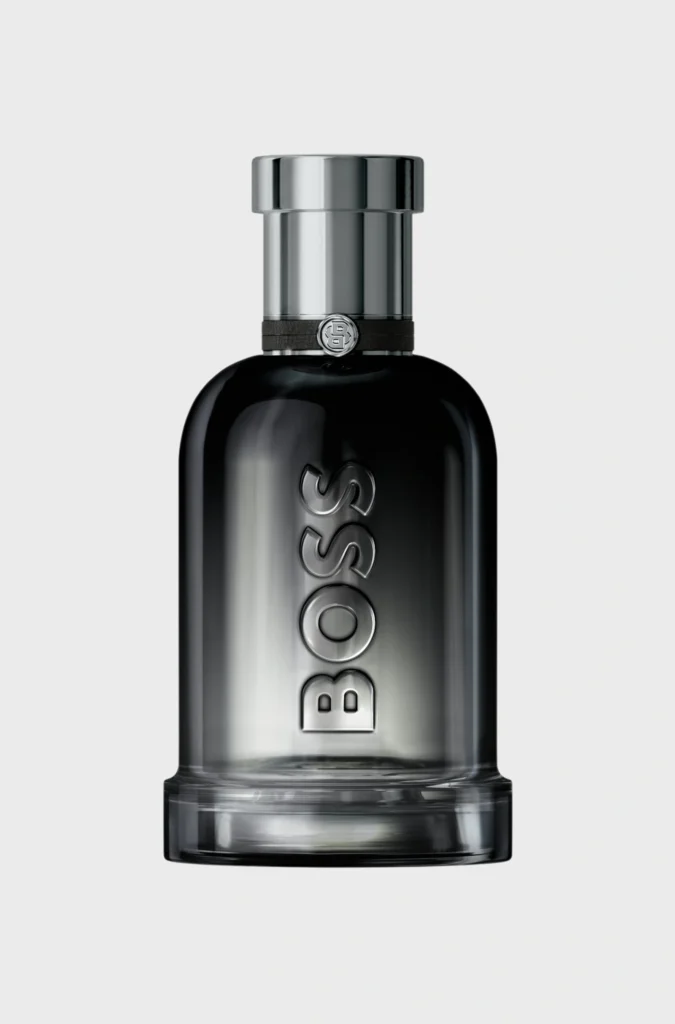
Hugo Boss presents this contrast as the meeting of two apparently opposing sensations: the freshness and energy of ginger against the deeper, more sensual personality of leather.
It is an interesting way of approaching a note that can sometimes feel traditionally dark or imposing.
Ginger offers the conceptual possibility of lightness, sharpness and movement, preventing the leather theme from being associated exclusively with heaviness or vintage sophistication.
The result, at least in the brand’s creative presentation, is a thoroughly contemporary interpretation of masculine perfumery.
And I rather like the simplicity of the idea. Two strong olfactory personalities, each given enough importance to create a contrast without requiring seventeen additional notes and an elaborate story about conquering one’s destiny.
Sometimes, ginger and leather are quite enough to start an interesting conversation.
Burberry Hero Parfum Intense: Leather Beneath the Cedarwood
With Burberry Hero Parfum Intense, the focus shifts towards woods.
Burberry describes the fragrance through three distinct cedarwood oils, energized by black pepper and supported by a deeper leather note in the base.
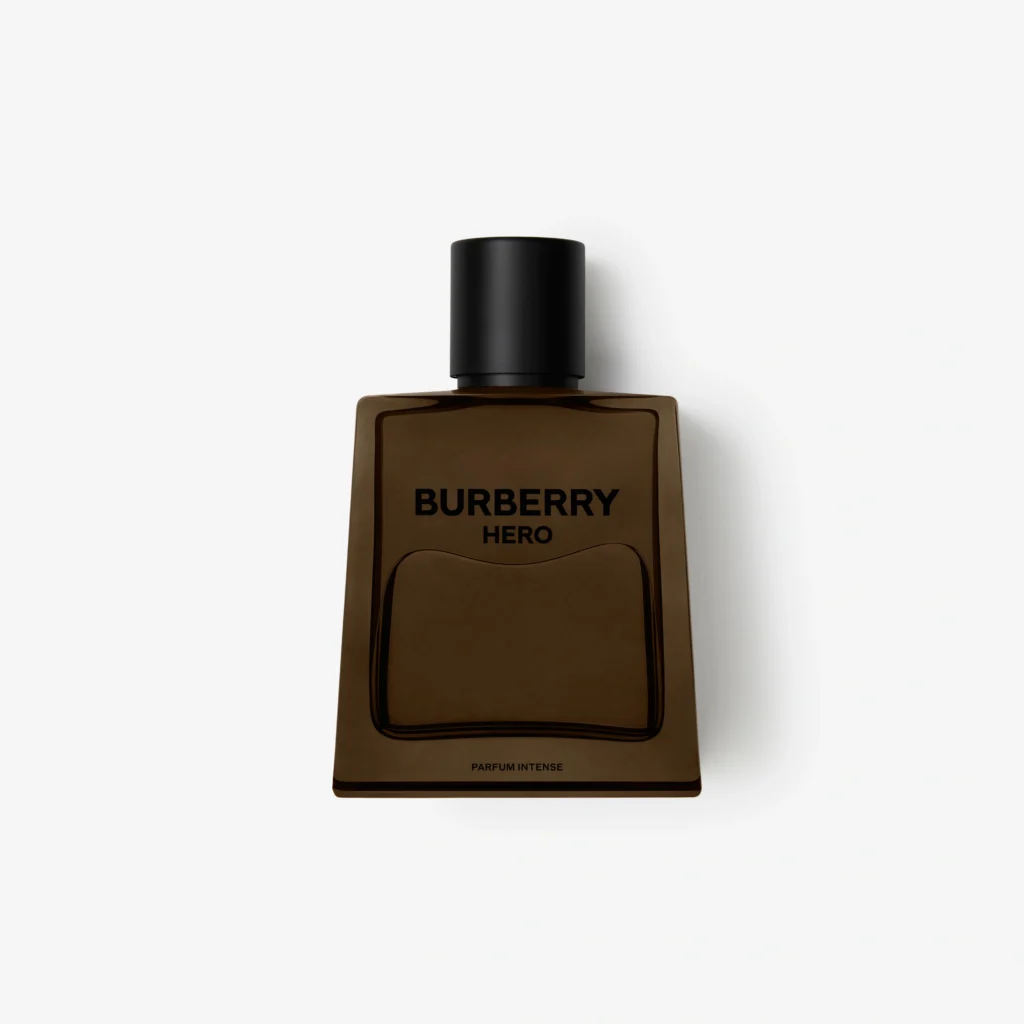
Here, leather isn’t presented as an isolated protagonist. Instead, it reinforces the structure of a woody composition, contributing richness and a darker character.
I find this approach particularly interesting because cedarwood and leather can evoke related ideas of texture: dryness, structure, polished surfaces and the materials used in beautifully crafted objects.
Black pepper introduces another contrast, bringing an aromatic, spicy dimension to an otherwise substantial woody composition.
It also raises a useful point about leather in perfumery: the accord doesn’t always need to dominate the entire fragrance.
Sometimes its greatest contribution is architectural, lending depth or character to materials that remain more immediately recognizable.
A little like the excellent supporting actor who turns out to be the most interesting person in the film.
Kenzo Homme Indigo: Leather, Iris and an Unexpected Marine Accord
Kenzo Homme Indigo might be one of the more surprising combinations in this selection.
Created by Quentin Bisch, the fragrance brings together a marine accord, iris and leather, three elements that don’t necessarily appear destined for the same composition.
Kenzo describes the iris as possessing creamy and woody facets, while the marine accord introduces a different sense of freshness and space. The leather appears in the base, bringing warmth and sensuality to the structure.
The combination raises an interesting question: how can an accord associated with dense, tactile materials coexist with something as fluid and atmospheric as the sea?
Iris seems like a particularly elegant way of connecting these two worlds.
Depending on its treatment, it can feel powdery, creamy, woody or almost cool to the touch, making it a fascinating companion to softer interpretations of leather.
And considering my affection for iris, this is exactly the sort of olfactory contrast that catches my attention.
There is also something appealing about the idea of leather appearing within a marine fragrance without turning the composition into the familiar territory of aquatic freshness alone.
Apparently, even the ocean has developed an interest in luxury accessories.
Guerlain Patchouli Ardent: Rose, Patchouli and the Softer Side of Leather
With Guerlain Patchouli Ardent, we leave the more obviously masculine positioning of the previous fragrances and explore a composition built around a different kind of contrast.
Part of the Absolus Allegoria collection, Patchouli Ardent reinterprets patchouli through its relationship with rose, leather and musks.
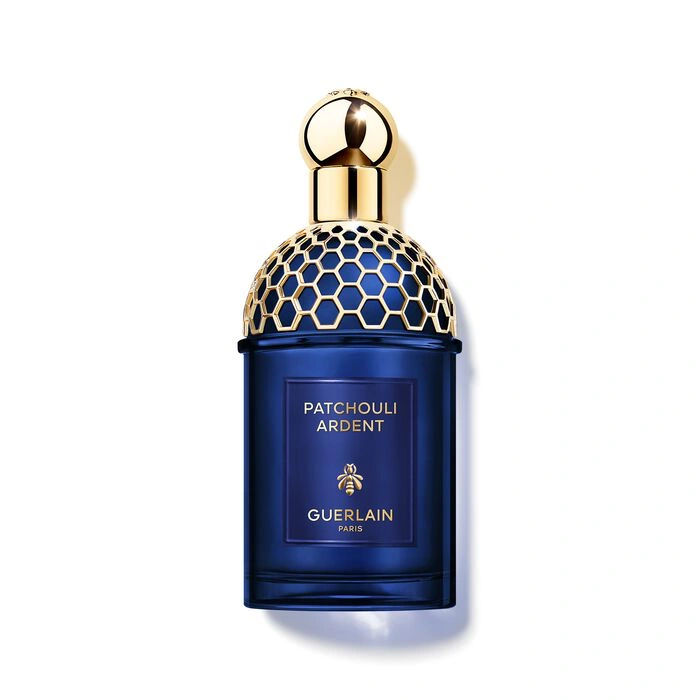
Guerlain presents patchouli as a material capable of revealing both shadow and light, with the floral elements introducing brightness while the leather-and-musk accord adds a more sensual dimension.
This is exactly why I enjoy examining perfume notes beyond their conventional stereotypes.
Patchouli doesn’t have to smell like a dark, earthy forest. Rose doesn’t have to become a predictable bouquet. And leather certainly doesn’t need to evoke a black motorcycle jacket every time it appears.
Together, these materials offer the possibility of a richer, more textured composition in which floral softness and darker depth coexist.
Guerlain also has an extraordinary heritage in perfumery, which makes its exploration of materials such as patchouli particularly interesting to me.
It is a reminder that leather can be part of an elegant floral composition rather than merely an exercise in rugged intensity.
Estée Lauder Paradise Moon: Osmanthus and the Sensuality of Leather
Finally, Estée Lauder Paradise Moon takes us somewhere more atmospheric.
Part of the Luxury Fragrance Collection, Paradise Moon combines osmanthus flowers, Spanish cistus oil and a burnished leather accord.
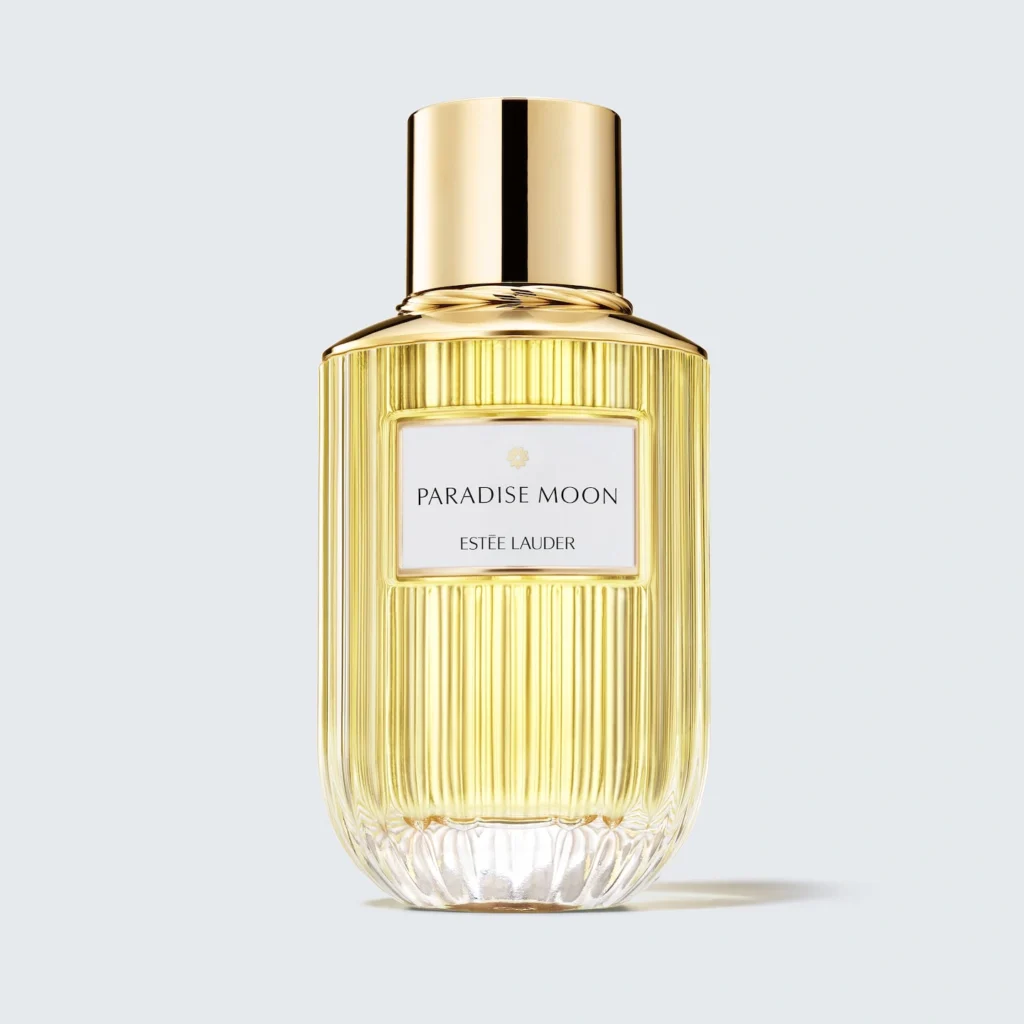
The brand presents the fragrance through the imagery of a mysterious, moonlit forest, with richly scented flowers surrounded by a darker, almost untamed atmosphere.
What makes this composition particularly compelling on paper is the role of osmanthus.
This flower is fascinating because its olfactory character can include fruity, apricot-like, floral and naturally leathery nuances. It can therefore create an unusually convincing bridge between softness and the more textured personality of leather.
Cistus, meanwhile, brings a resinous character that fits naturally within this darker, warmer concept.
Unlike the ginger-and-leather contrast of BOSS Bottled Beyond or the marine freshness of Kenzo Homme Indigo, Paradise Moon places leather within an enveloping floral and resinous world.
It is an evocative example of how the same accord can support a composition built around flowers without surrendering its sensual identity.
And after all, a moonlit forest sounds considerably more inviting when someone has thoughtfully supplied the osmanthus.
Leather Isn’t Always About Dark Jackets
One of the most useful things about exploring these five fragrances is discovering just how differently leather can function in a composition.
In BOSS Bottled Beyond, it stands beside ginger. In Burberry Hero Parfum Intense, it reinforces cedarwood. Kenzo Homme Indigo places it alongside iris and marine freshness, while Guerlain Patchouli Ardent explores its relationship with rose and patchouli. Estée Lauder Paradise Moon builds an atmosphere around osmanthus, cistus and burnished leather.
Five fragrances, five different ways of approaching the same idea.
And leather can inspire compositions that focus as much on the memory of an object as on a recognizable perfume accord.
One recent example is Laboratorio Olfattivo Bagage à Main, a fragrance inspired by the memory of a handcrafted leather travel bag. It offers an interesting conceptual contrast to the more dramatic or sensual leather interpretations we’ve explored here.
I haven’t included it among the five fragrances from my collection, but its creative premise is a particularly good reminder that leather can tell stories about craftsmanship, travel and personal memories rather than simply projecting an image of power or seduction.
In that sense, perfumery can do something rather wonderful: it can transform the memory of a familiar material into an entirely new experience.
And sometimes, that memory is more emotionally compelling than the expensive object itself.
A rare victory for the bank account.
Final Thoughts: Leather Is Never Just Leather
What makes leather in perfumery so captivating is its ability to move between entirely different worlds.
It can be polished and elegant, soft and powdery, floral and sensual, or dark enough to suggest that somebody should probably leave the lights off.
The accord has a fascinating history, but its creative possibilities are far from exhausted.
From classical leather chypres to modern combinations with ginger, iris, rose and osmanthus, perfumers continue to demonstrate that leather is less a fixed smell than an extraordinarily flexible olfactory idea.
And perhaps that is what I appreciate most.
I don’t collect fragrances because I want every bottle to behave in the same way, deliver the same performance or satisfy an imaginary checklist of notes.
I want perfumes capable of offering something different, whether that’s an unexpected contrast, a beautiful memory or simply the pleasure of discovering a material from another perspective.
Leather can do all three.
Of course, there is a small irony in celebrating the smell of luxury handbags and expensive jackets through perfumes that frequently cost almost as much as the accessories themselves.
But at least perfume doesn’t require a matching pair of shoes.
| Editorial note: The five fragrances featured belong to my personal collection. Their descriptions in this guide are based on the brands’ published compositions and creative concepts, not on a dedicated side-by-side wearing test. Individual scent impressions, performance claims and comparative preferences have deliberately been left out where not established through documented testing. |