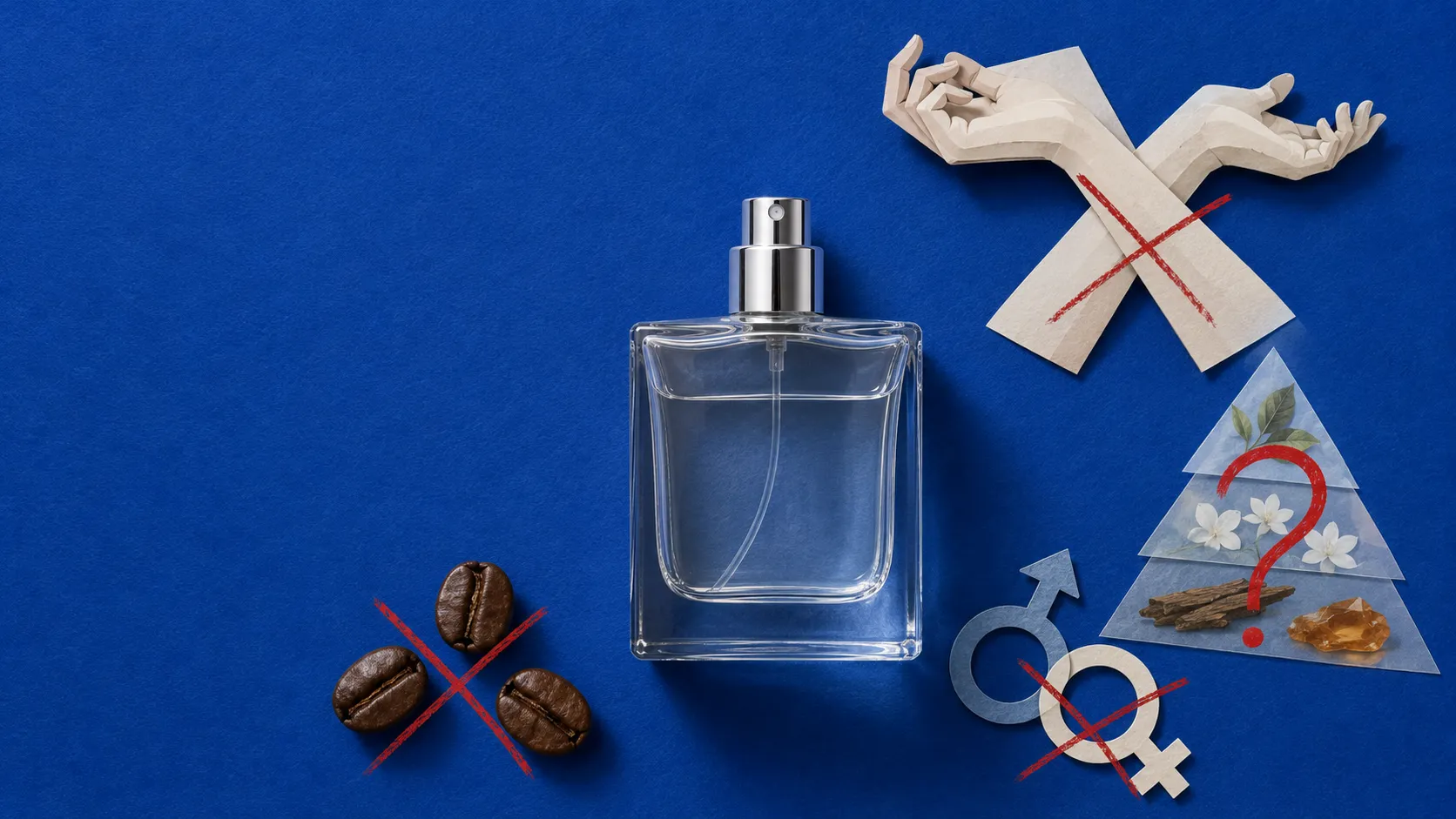
8 Shocking perfume myths that need to retire
From coffee beans to wrist rubbing: separating fragrance facts from fragrant nonsense.
Perfume already involves enough chemistry, memory and personal taste. It does not need the extra layer of folklore we keep repeating as if it had been engraved on a marble tablet by the patron saint of overspraying.
Some perfume myths are harmless. Others make us distrust our own noses, confuse price with quality or respray until the room starts filing a formal complaint. The goal here is not to replace old rules with new ones. It is to understand what is actually happening, leave room for nuance and then wear whatever makes us happy.
So, Linda, let us retire eight pieces of fragrant nonsense.
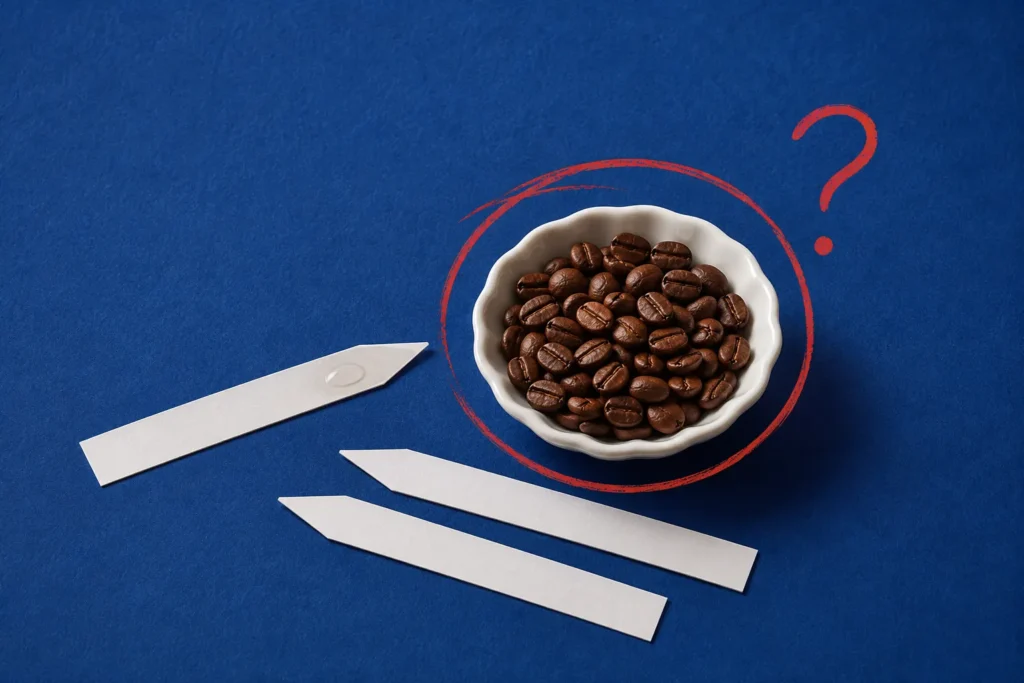
Myth #1: Coffee beans reset your nose
The coffee jar at a perfume counter feels wonderfully official. Unfortunately, it is not an olfactory reset button.
A small 2011 study compared coffee beans, lemon slices and plain air after repeated fragrance smelling. Coffee did not produce better odour-identification performance than either lemon or air. Coffee simply gives your nose another strong smell to process; it does not magically erase everything that came before.
A better approach is less theatrical: step away for a moment, breathe fresh air and return after a short break. Smelling your own clean, unscented skin may also provide a familiar reference without adding another aggressive aroma.
| Verdict: coffee is a beverage, not Ctrl+Alt+Delete for your nose. |
Myth #2: Expensive perfumes are always better
Price can tell you many things. It may reflect raw materials, development, packaging, distribution, marketing, limited production, retail positioning or simple brand prestige. What it cannot guarantee is that you will prefer the result.
Quality is not completely imaginary: balance, stability, texture and construction matter. But enjoyment remains personal. A beautifully made €350 perfume can leave you cold, while a €70 bottle can become the fragrance you reach for every week. Cost and pleasure are related only when your own nose says they are.
This is why testing matters more than price mythology. Smell first. Check the label later. Your wallet already understands this argument perfectly.
| Verdict: expensive may mean costly. It does not automatically mean better for you. |
Myth #3: Natural is always better
“Natural” sounds virtuous. “Synthetic” sounds like it should arrive wearing a laboratory coat and carrying a warning sign. Chemistry is less interested in our branding preferences.
Natural and synthetic fragrance materials are both collections of chemicals. Their safety depends on the substance, concentration and exposure, not simply on where they came from. Natural materials can contain allergens or sensitising compounds; synthetic molecules can offer consistency, stability and effects that cannot be obtained sustainably or reliably from nature.
Modern perfumery usually combines both. The useful question is not “Is it natural?” but “Does this material perform safely and beautifully in this formula?”
| Verdict: natural ≠ automatically better. Synthetic ≠ automatically worse. |
Myth #4: The listed notes are everything inside the perfume
Bergamot. Rose. Cedar. Vanilla. A note list reads like a tidy recipe, but it is better understood as a map for the wearer.
In the EU, an aromatic composition can appear on the ingredients list under the collective term “parfum” or “aroma”, while certain regulated fragrance allergens must be declared separately above applicable thresholds. The European Commission notes that fragrance formulas may contain from ten to 300 or more ingredients.
The pyramid or official note list is therefore not the confidential formula. It is a creative and marketing summary: a selection of recognisable impressions that helps describe the fragrance. A listed “rose” may involve rose extract, several aroma molecules, or an accord built without literal rose oil. The note describes what the perfumer wants you to perceive, not necessarily one ingredient you could point to in a beaker.
| Verdict: the note list tells the story. The formula contains the machinery. |
Myth #5: Reviews tell you how a perfume really smells
Reviews can be useful, entertaining and occasionally dangerous to your bank account. They are not objective smell transcripts.
Odour perception is shaped by context, memory, language and expectation. Research has shown that labels can change ratings of pleasantness and influence how an odour is interpreted. Once someone tells you a fragrance smells like burnt plastic, tomato leaves or a dentist’s waiting room, your brain may begin searching for exactly that image.
Reviews are best used after an initial smell whenever possible. Spray. Smell. Form a first impression. Then read what everyone else thinks and enjoy discovering how differently human noses and brains behave.
| Verdict: reviews provide perspectives, not verdicts from the Supreme Court of Jasmine. |
Myth #6: More sprays fix poor performance
This one needs nuance. More sprays increase the amount of fragrance applied, so a scent may project more strongly or remain detectable for longer. What extra sprays cannot do is rewrite the formula’s intrinsic evaporation profile.
A deliberately transparent citrus cologne will not become a dense amber extrait because you sprayed it twelve times. You have simply applied more of the same structure. Too much can also speed up your own olfactory adaptation, making you think the perfume has disappeared while everybody around you is still receiving the full presentation.
Start conservatively, assess the perfume in the actual setting and adjust. Before respraying, ask someone nearby. Linda, dosage matters. Marinating is optional.
| Verdict: more sprays change the dose, not the perfume’s DNA. |
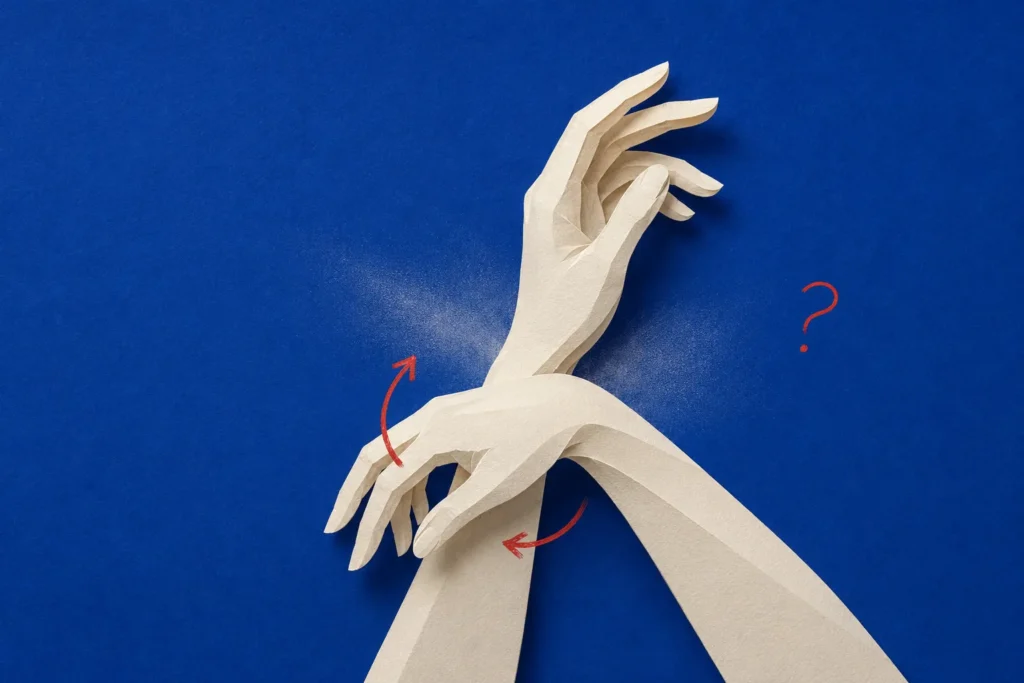
Myth #7: A perfume lasts longer if you rub your wrists together
Rubbing does not “break the molecules” in the dramatic way social media sometimes claims. The molecules are not tiny glass ornaments waiting to shatter.
However, friction adds movement and some warmth. Because the most volatile materials evaporate first, rubbing may disturb the opening and encourage the lightest top-note effects to disappear faster. It certainly offers no proven longevity advantage.
If you want to experience the development as intended, spray and let it dry. Hands off, Linda. Let chemistry do the flirting.
| Verdict: rubbing is not perfume sabotage, but it is not a longevity hack either. |
Myth #8: If I cannot smell it, nobody else can
Your perfume may still be present even when your own brain has quietly moved it into the background.
With continued exposure, the olfactory system can become less responsive to a persistent smell. Researchers distinguish between adaptation at the sensory level and habituation involving attention and central processing, but the everyday result is familiar: you stop noticing the fragrance that other people can still detect.
This is why immediate respraying can become a fragrant arms race. Ask someone else before adding more. Your nose may be bored; the room may not be.
| Verdict: absence from your attention is not proof of absence from the air. |
The only rule worth keeping
Perfume knowledge should not make wearing perfume feel like completing a tax return. It should help us test more intelligently, recognise marketing for what it is and avoid turning preferences into universal laws.
Coffee beans are not magic. Natural materials are not morally superior. A high price is not a personality, and neither is overspraying until the neighbours can identify your base notes.
Know the facts. Ignore the nonsense. Wear what you love.




3 Comments