Dior Sauvage Extrait: Oud, 42 Days and Apparently Elixir Was Not Enough
Dior Sauvage has never been known for whispering. Still, someone at Dior apparently looked at Sauvage Elixir, considered its already formidable reputation, and decided the collection had not yet reached its final level of intensity.
Enter Dior Sauvage Extrait, the first extrait de parfum in the line. Created by Francis Kurkdjian, it brings Vietnamese oud into the Sauvage universe and surrounds it with lavender, bergamot, patchouli, vetiver and cedarwood. In other words, subtlety has once again been invited to wait outside.
This is a first look, not a review. I have not tested the fragrance on skin, so any claims about projection, longevity or how loudly it announces itself in a room would be speculation. What we can examine is the official composition, the unusually detailed production story and the role this new Extrait is expected to play inside the Sauvage collection.
The most concentrated Sauvage yet
Dior presents Sauvage Extrait as the densest and most woody interpretation of the original signature. It is positioned above the existing Eau de Toilette, Eau de Parfum, Parfum and Elixir, pushing the collection into extrait de parfum territory for the first time.
Concentration alone does not automatically make a fragrance better, richer or more sophisticated. It changes the balance of the formula and often affects texture, diffusion and the way notes develop. In this case, Dior has not simply promised more power. The brand has rebuilt the composition around oud and a darker arrangement of woods.
The official composition
| Fresh aromatic accord | Calabrian bergamot and AOP lavender essence from Provence |
| Heart | Vietnamese oud essence with leathery, animalic, honeyed and incense facets |
| Woody structure | Indonesian patchouli, Madagascan vetiver and Virginia cedarwood |
Vietnamese oud enters the wilderness
The oud is the major change. Dior describes the Vietnamese essence as warm and animalic, with leathery facets and natural nuances of honey and frankincense. It sits at the centre of the fragrance rather than appearing as a decorative trace in the background.
Around it, Indonesian patchouli provides darker and smokier depth, while Madagascan vetiver and Virginia cedarwood add lighter, creamier facets. Bergamot and lavender preserve the aromatic freshness that makes the fragrance recognisable as Sauvage, at least on paper.
This contrast is important. A composition made only of oud, leather and dense woods could become heavy very quickly. The fresh opening may be what allows the Extrait to feel connected to the original DNA instead of turning into a completely separate fragrance wearing the Sauvage name for administrative reasons.
Why Dior keeps mentioning 42 days
Once the raw materials are combined, Dior says the formula is matured and steeped for 42 days. During those six weeks, the ingredients are allowed to integrate before the fragrance is bottled.
It is an appealing piece of perfume storytelling, but it also points to the density of the formula. Dior clearly wants Sauvage Extrait to be understood as a more deliberate and precious construction, not simply Elixir with the volume turned up another two clicks.
A bottle filled with blue ink
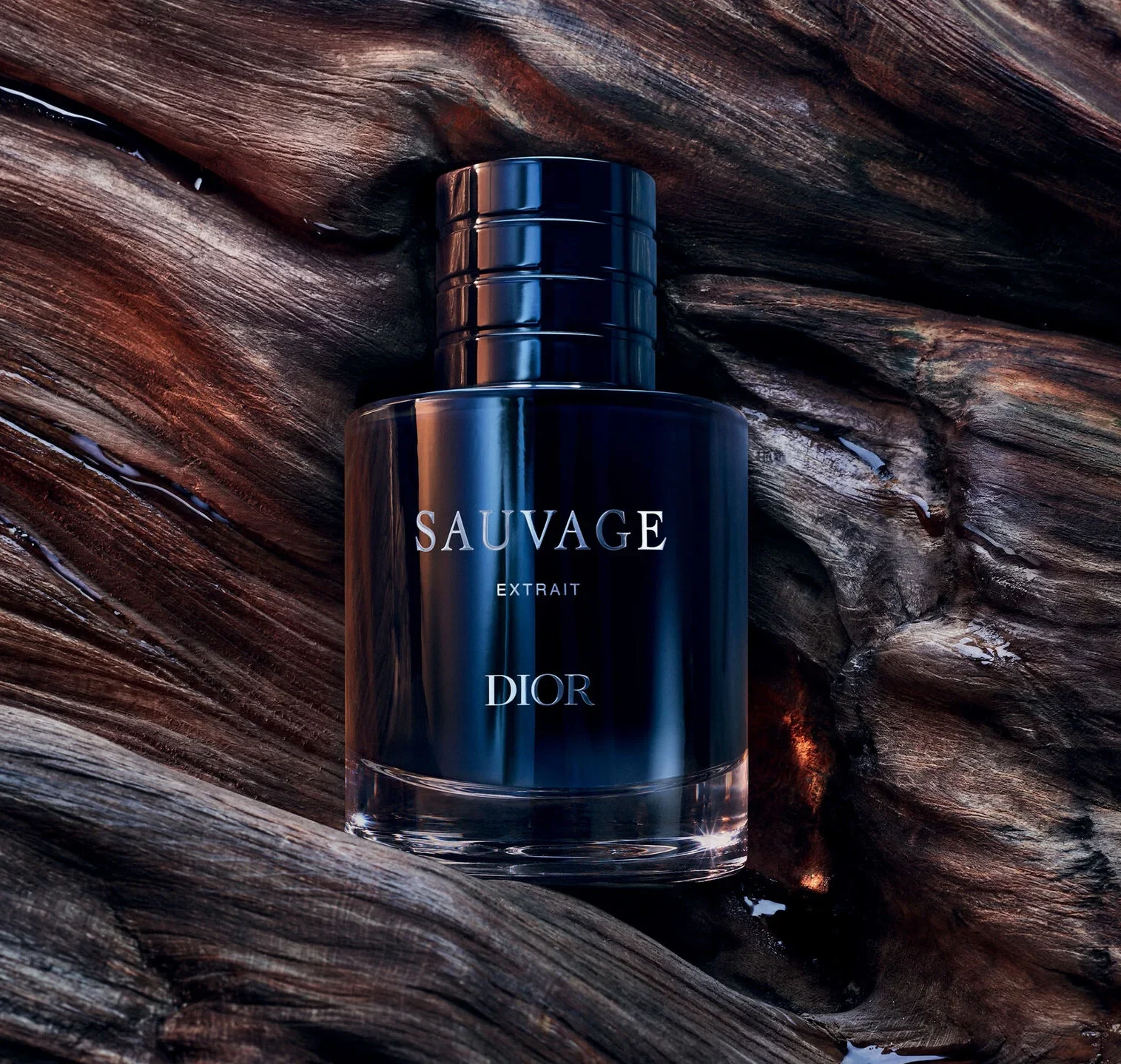
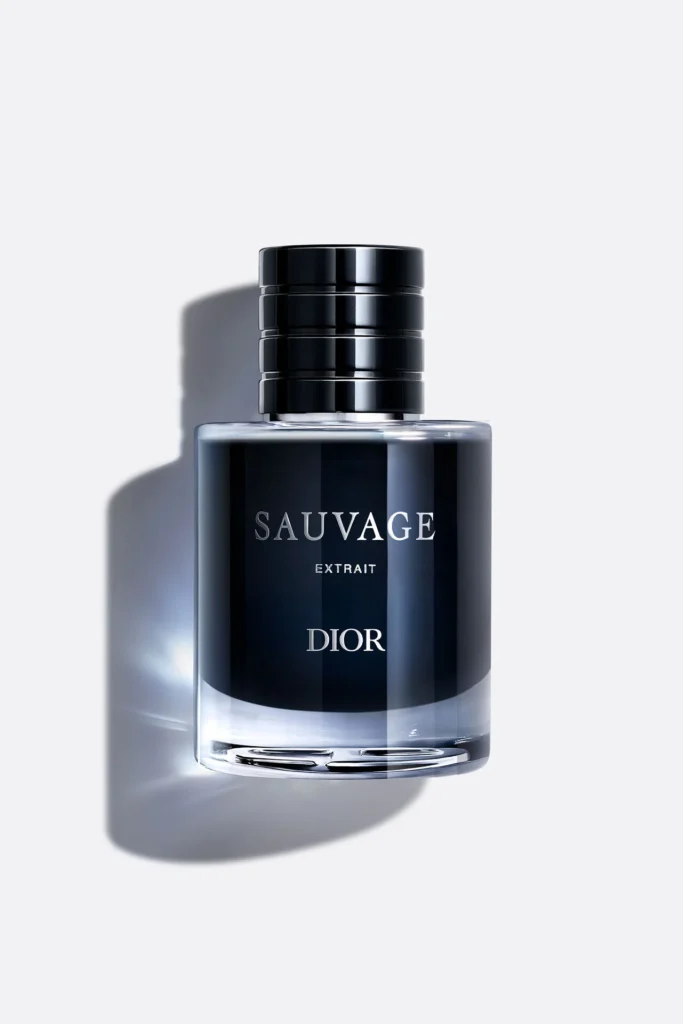
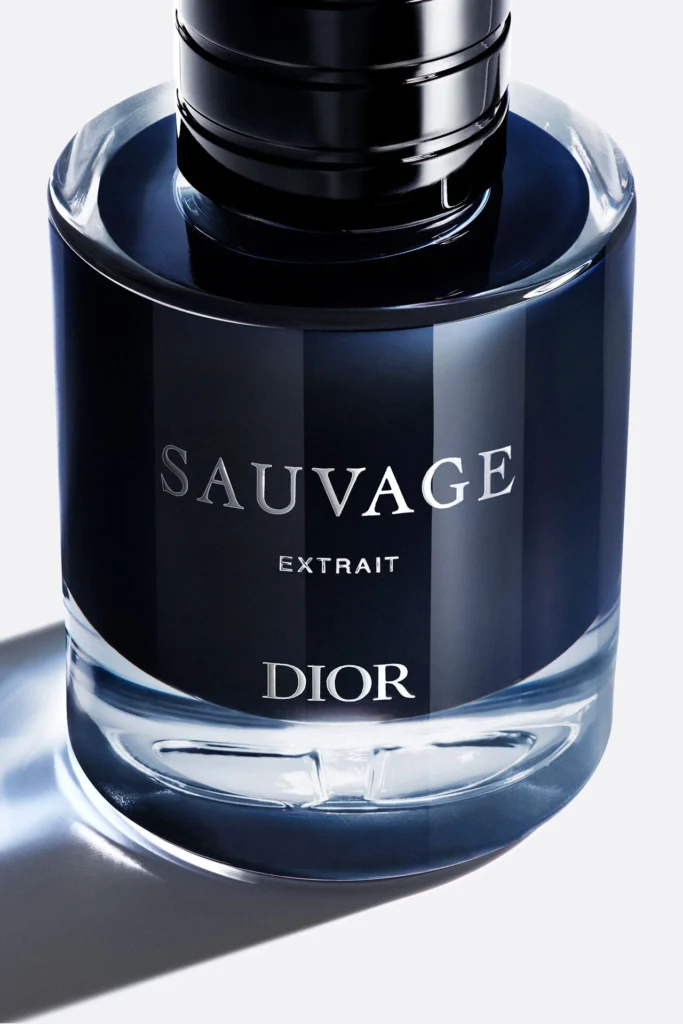
The bottle keeps the familiar Sauvage silhouette but introduces a translucent interior lacquer designed to resemble a drop of deep blue ink suspended inside clear glass. The CD monogram appears on the bottle and cap, giving the presentation a slightly more formal and polished character.
It is still unmistakably Sauvage, but the deeper colour and heavy glass base make the Extrait look more architectural and less casual. The message is clear before the first spray: this is intended to be the expensive, serious one.
Where does Sauvage Extrait fit?
The original Eau de Toilette remains the sharpest and freshest reference point. The Eau de Parfum and Parfum progressively soften and deepen the signature, while Elixir takes it into spicy, concentrated and highly assertive territory. Extrait appears to move sideways from Elixir as much as it moves above it, exchanging part of the spice for oud, leather and a broader woody structure.
That could make it interesting even for people who respect Elixir more than they actually enjoy wearing it. The key question is whether the oud gives Sauvage a genuinely different texture or simply makes an already powerful line darker and more expensive.
First impression, before the skin test
Conceptually, this makes sense. Sauvage is too important for Dior to leave untouched, and an oud focused Extrait is an obvious way to move the franchise further into luxury territory. Francis Kurkdjian also has enough technical control to make the contrast between freshness and dense woods sound genuinely promising.
Do we need another Sauvage? No. Did necessity ever have anything to do with perfume flankers? Also no.
For now, Sauvage Extrait earns a test rather than a blind buy. Vietnamese oud, lavender and noble woods could create the most interesting version of the line in years, or an olfactory security system capable of protecting an entire building. Either way, I would like to know.
Dior Sauvage Extrait: key details
Brand: Dior
Fragrance: Sauvage Extrait
Launch year: 2026
Perfumer: Francis Kurkdjian
Fragrance type: Woody extrait de parfum
Key materials: Bergamot, Provençal lavender, Vietnamese oud, Indonesian patchouli, Madagascan vetiver and Virginia cedarwood
Maturation: 42 days
Size shown by Dior: 50 ml
Explore more new perfume launches here.
2 Comments