Houbigant Néroli Bleu: Riviera Light, Written in Blue
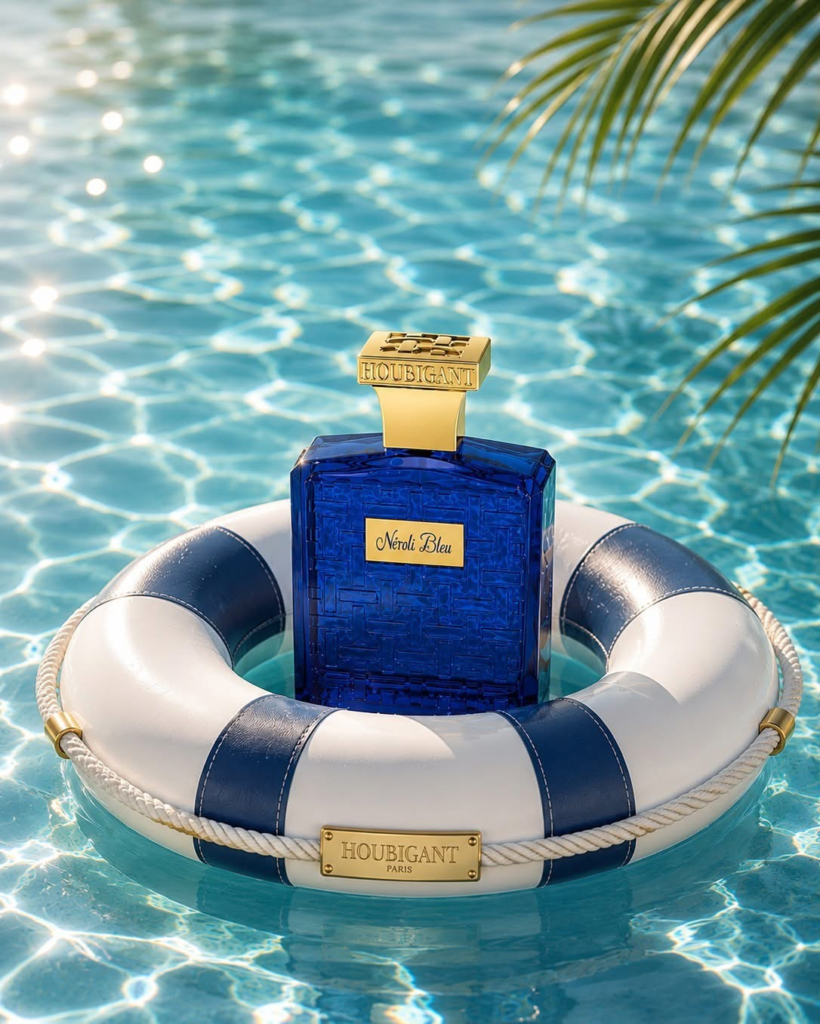
Houbigant Néroli Bleu arrives with an image that is almost impossible to misunderstand: cobalt water, polished gold, Mediterranean light and a name that places neroli at the centre of the frame. Launched in 2026 as part of the Maison’s Côte d’Azur collection, it is an Eau de Parfum Extrême composed around bergamot, peppermint, Espelette pepper, neroli, mimosa, blue ginger, cardamom, orange blossom, musk and mineral amber.
| A NECESSARY NOTE I had not been able to smell Néroli Bleu at the time of writing because Houbigant is not widely stocked where I live. This is therefore a Fragrance Focus, not a review: the observations below examine the official concept and structure, without inventing a skin experience I have not had. |
The Côte d’Azur, reduced to three elements
Houbigant describes the Côte d’Azur collection as an olfactory journey built around light, water and wood. Alongside Bleu Salin and Santal Mistral, Néroli Bleu appears to occupy the luminous end of that triptych: dawn over the Mediterranean, citrus groves warming under the sun and a sea breeze moving through the landscape.
It is familiar Riviera language, certainly, but the note list prevents the idea from becoming a postcard cliché. Peppermint, Espelette pepper, blue ginger and mineral amber introduce coolness, heat and texture around the expected citrus-floral core. On paper, the composition does not simply say “orange blossom in the sun”; it sketches contrasts between brightness and spice, petals and minerals, polish and movement.+
A bright opening with a peppered edge
The official structure begins with bergamot, peppermint and Espelette pepper. Bergamot supplies the classical citrus lift, while peppermint suggests a more incisive kind of freshness. The pepper is the detail that changes the temperature: Espelette is associated with warmth rather than brute force, so the intended effect seems less like a fiery shock and more like a fine red accent drawn through blue light.
That contrast matters. Neroli fragrances can easily retreat into the impeccably clean territory of cologne. Here, at least from the architecture, Houbigant seems interested in keeping the opening alert and tactile before the floral centre takes over.
Neroli at the heart — but not alone
The heart combines neroli with mimosa, blue ginger and cardamom. Neroli brings the green, citrusy facet of bitter-orange blossom; mimosa can add a soft, pollen-like glow; and cardamom supplies aromatic warmth. “Blue ginger” is the most enigmatic name in the composition. Whether read as a material reference or as part of the fragrance’s color vocabulary, it reinforces the idea of freshness with an unusual botanical twist.
It is also worth remembering that neroli and orange blossom are related, but not interchangeable. Both come from the bitter-orange tree, yet perfumery treats them as distinct materials with different textures and associations. Houbigant deliberately places neroli in the heart and orange blossom in the base, suggesting a progression from green radiance toward a softer floral finish.
Orange blossom, musk and mineral amber
The base moves into orange blossom, musk and mineral amber. Those notes point toward a modern frame rather than a purely traditional cologne construction. Musk can smooth the transition from citrus and flowers, while the mineral-amber idea brings the sea and sun-warmed stone back into the story without requiring a literal marine accord.
This is the point where restraint is essential: a note pyramid can describe intention, not prove how a fragrance behaves. The base may feel airy, enveloping, salty, clean or something else entirely on skin. Until I can test it properly, the honest conclusion is simply that Houbigant has designed a structure whose vocabulary feels coherent from first note to last.
Céline Ellena and the value of space
Houbigant Néroli Bleu is attributed to perfumer Céline Ellena. Born into one of perfumery’s best-known creative families, she studied linguistics and psychology before training at ISIPCA and developing her own body of work. That biography is relevant, but it should not reduce her to a surname: her career includes fragrances for major houses and a substantial catalogue for The Different Company.
A composition centred on light, clarity and carefully separated materials feels especially suited to a perfumer whose work is often discussed in terms of observation and structure. Still, this article stops short of treating a family resemblance as a verdict. Néroli Bleu deserves to be encountered as Céline Ellena’s work, not as a footnote to anyone else’s.
The bottle understands the assignment
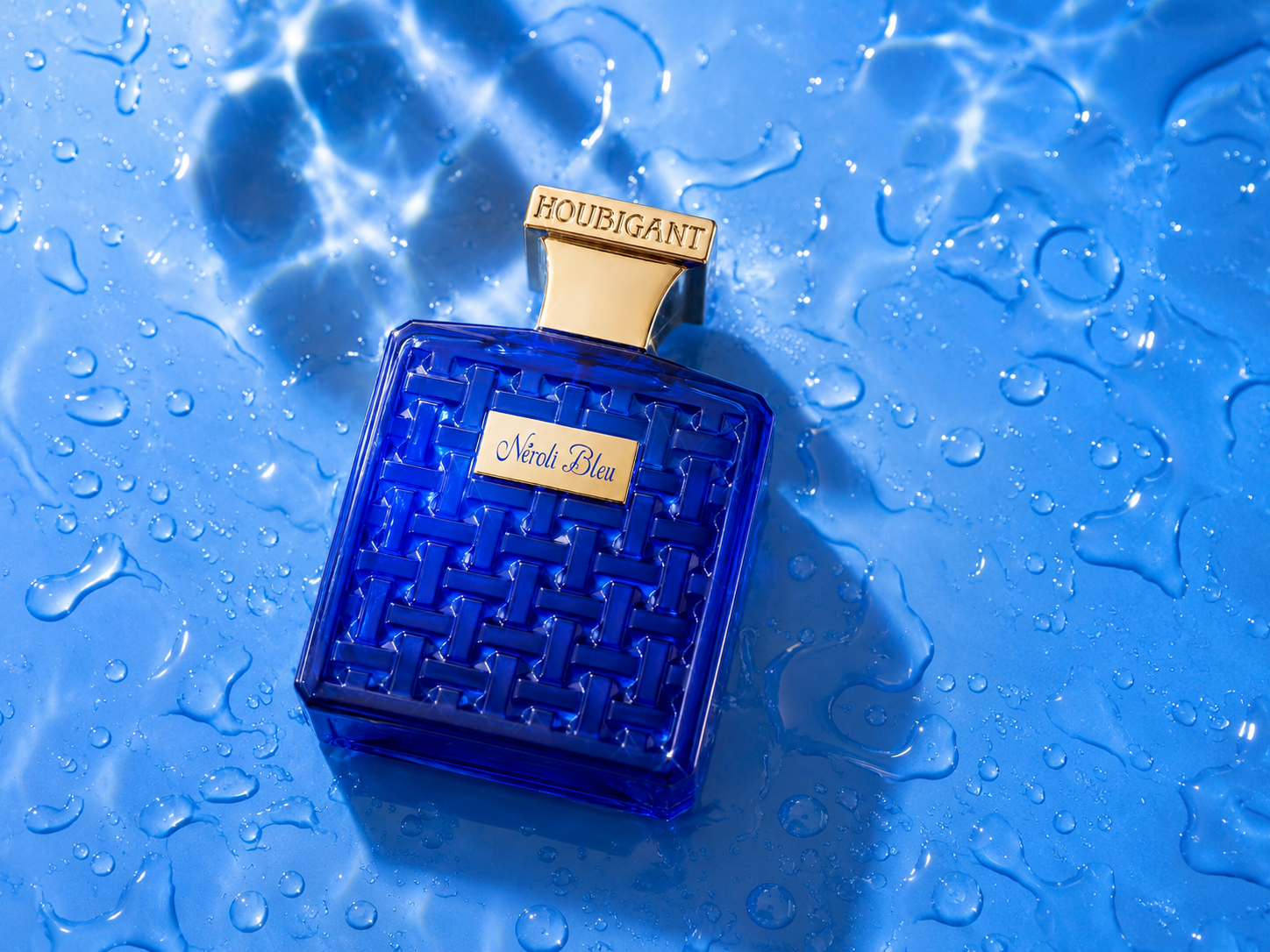
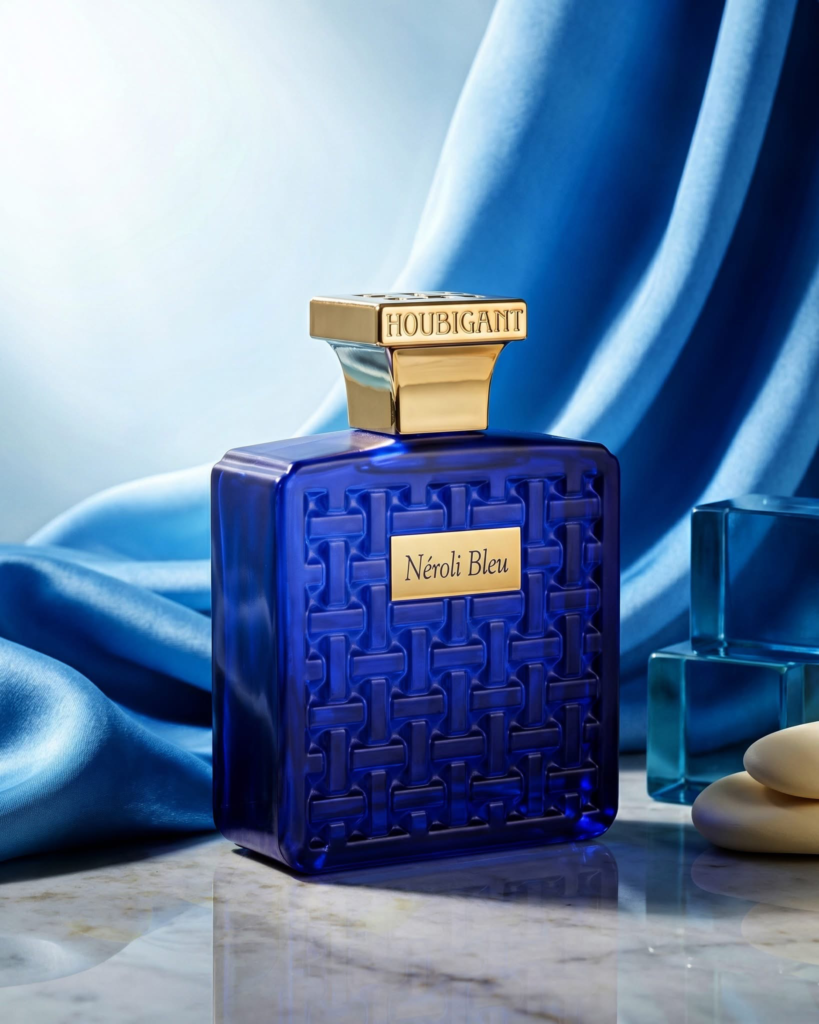
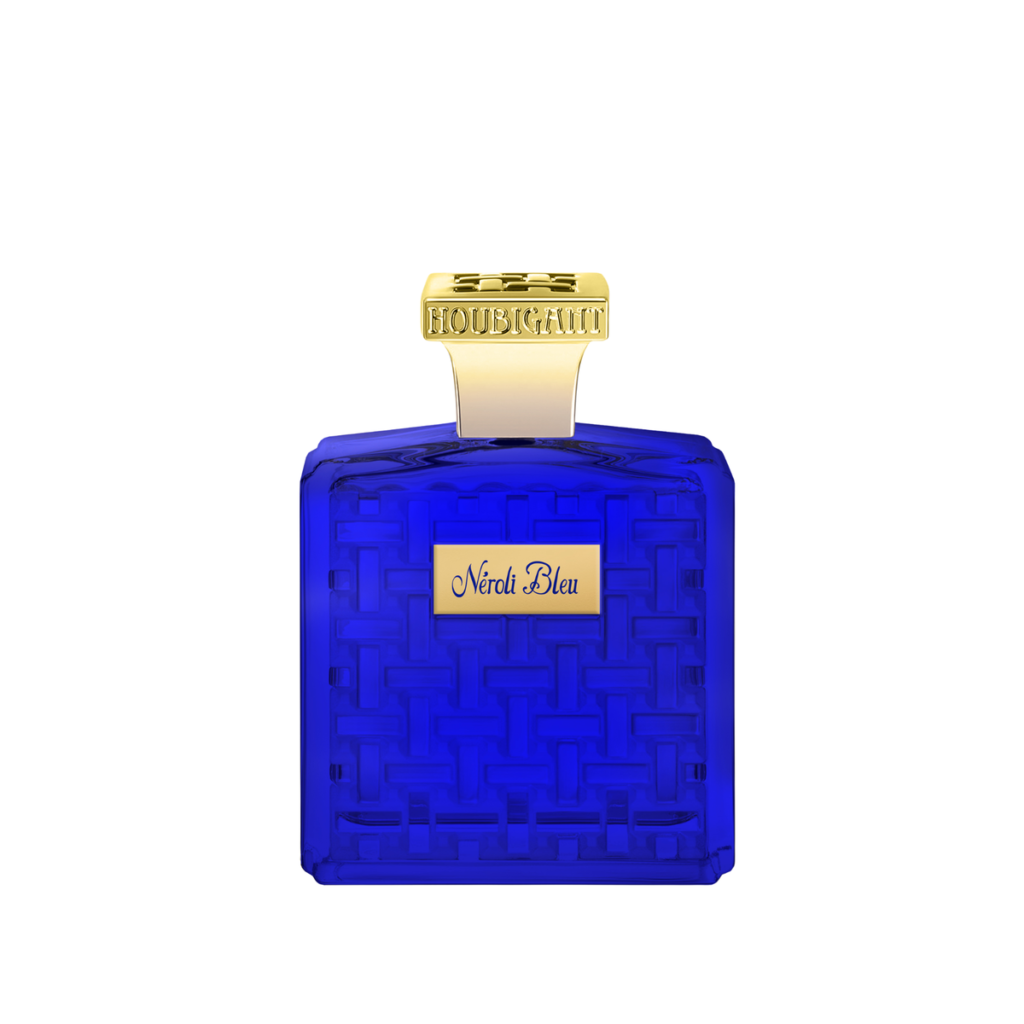
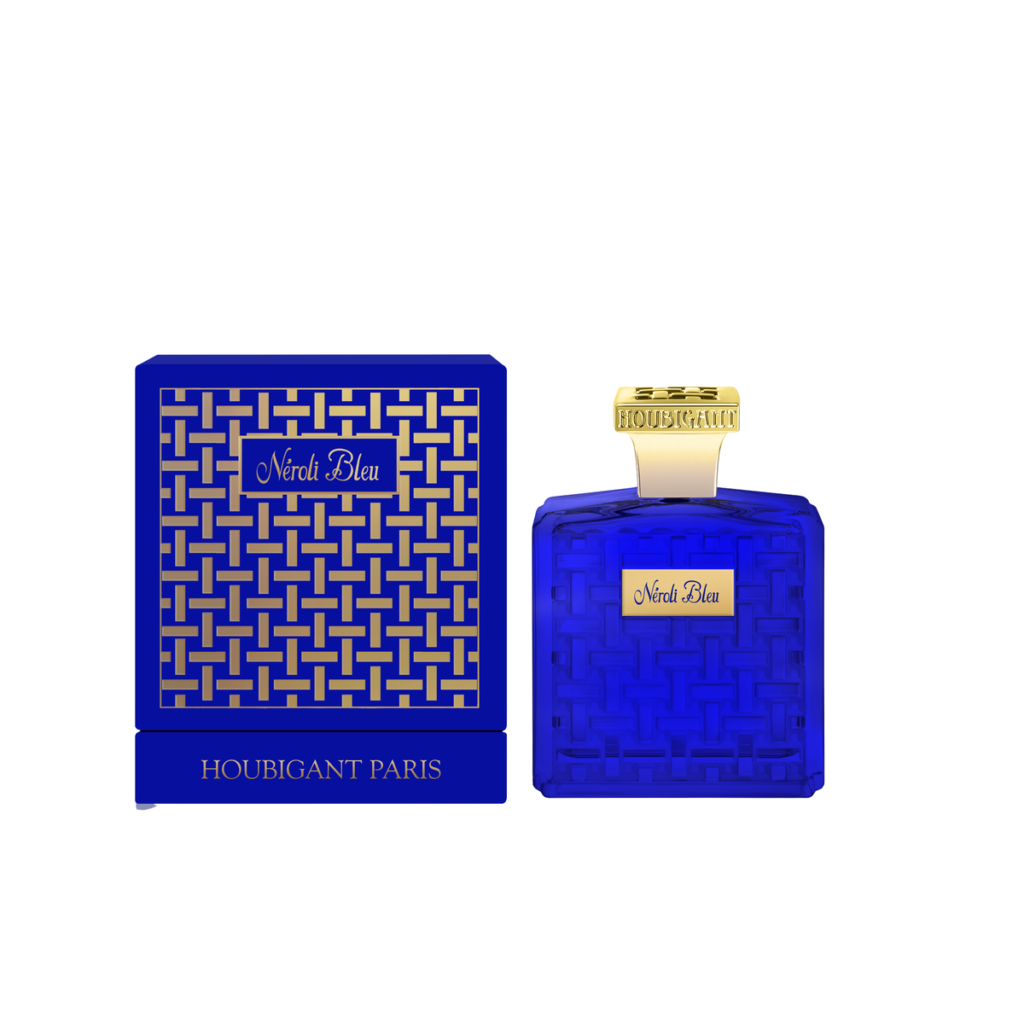
The presentation is unapologetically literal and all the better for it. Deep blue glass, a bright gold label and a faceted cap turn the bottle into a small piece of Riviera theatre. It is elegant, slightly ceremonial and very far from apologizing for being decorative. When a fragrance is called Néroli Bleu, beige minimalism would have felt like a missed opportunity.
A Mediterranean conversation worth continuing
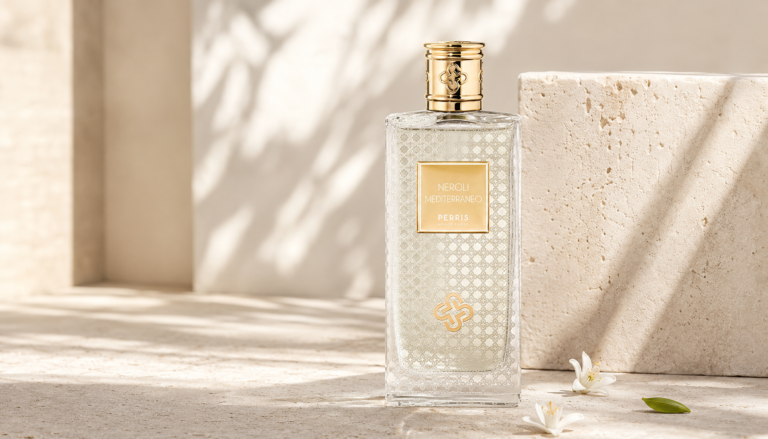
For a second contemporary perspective on neroli, the natural internal companion is Perris Monte Carlo Néroli Mediterraneo. That fragrance can be explored through an actual wear experience; this Houbigant feature remains an examination from a distance. The distinction matters, but so does the shared question: how many different kinds of Mediterranean light can perfumery place inside a bottle?
Read the Néroli Mediterraneo article for another interpretation of the material — one I have actually worn.
Price and availability
At the time of writing, the official European Houbigant website lists Néroli Bleu in a 100 ml bottle at €210. Price and availability can change, so the brand’s own product page remains the best reference before purchasing. More importantly: this is not a blind-buy recommendation. A beautiful pyramid and an excellent bottle can earn attention, but the skin still gets the final vote.
Why it belongs in Fragrance Focus
Houbigant Néroli Bleu interests me because it takes a familiar material and surrounds it with details that complicate the expected freshness: mint, Espelette pepper, mimosa, blue ginger and mineral amber. Whether those contrasts feel as vivid in wear as they do on paper is the unanswered part — and precisely why I would like to find it in a perfumery.
Until then, the fairest position is curiosity without theatre. No imaginary sillage, no invented drydown, no dramatic beach scene presented as personal memory. Just a promising composition, a striking bottle and one more reason to complain that the shops near me need a considerably better Houbigant selection.
| For more perfume portraits built around a material, an idea or a composition — sometimes tested, sometimes examined from the official brief — continue through the Fragrance Focus archive. |