Kajal Perfumes Paris: A Brand to Know Before Pitti Fragranze 2026
There are perfume brands you can understand from a note pyramid, and there are brands that make more sense once you look at the objects, symbols and ideas surrounding the juice. Kajal Perfumes Paris belongs firmly to the second group. The bottles are ornate without being shy about it, the eight-pointed star appears again and again, and the fragrance names move between gemstones, personal stories and cultural references. Subtle minimalism has clearly been excused from the meeting.
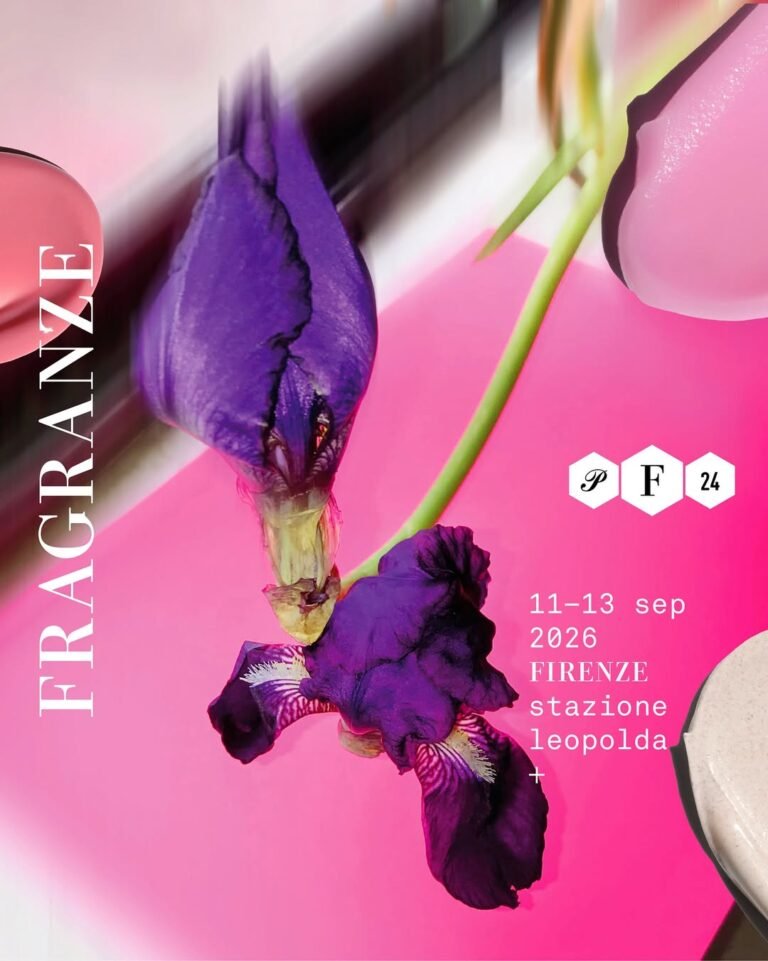
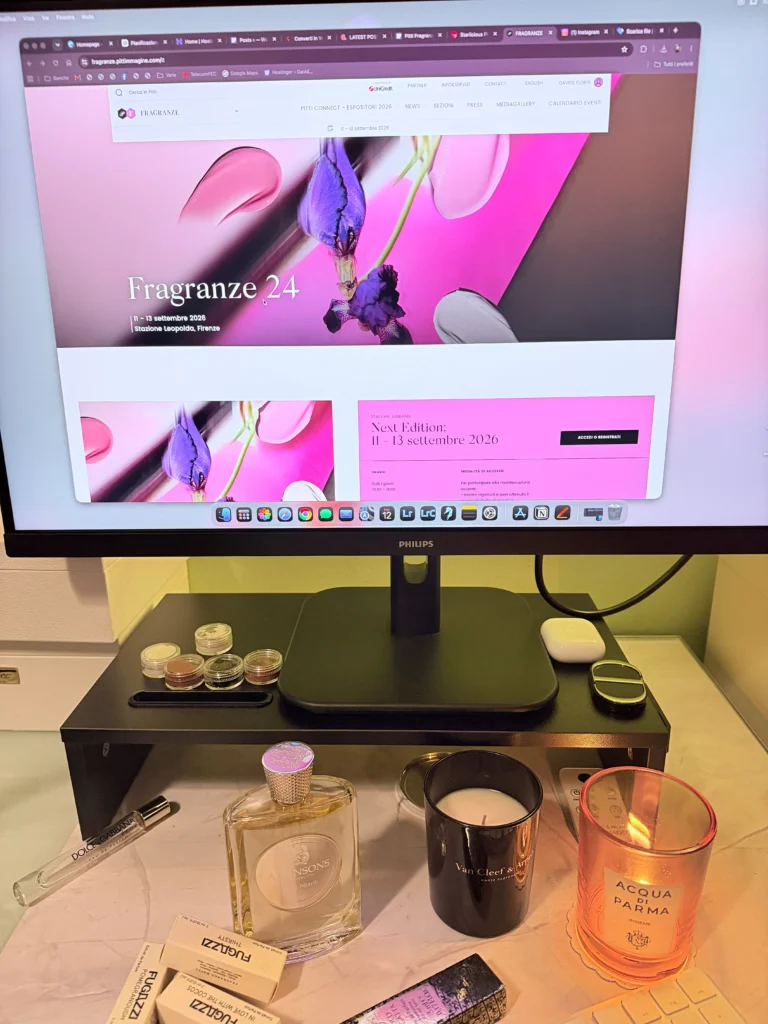
That makes Kajal an interesting house to revisit now. The brand is confirmed among the exhibitors at Pitti Fragranze 2026, taking place at Stazione Leopolda in Florence from 11 to 13 September, where more than 260 brands are expected. Kajal is currently listed at stand B/21. Before smelling through the collection in person, this feels like a useful moment to ask a more basic question: what exactly is Kajal?
From an idea to Kajal
Kajal was created by Moe Khalaf and Ibrahim Faris, two fragrance-industry professionals whose shared project began in the early 2010s; the first Kajal Eau de Parfum arrived in 2014. Khalaf’s route to his own house was not the standard romantic myth of a child blending flowers in a garden and inevitably becoming a perfumer. He has described a childhood in which perfume was actually restricted at home because of his father’s allergies, making fragrance something he encountered almost illicitly. His professional path later took him through YSL Beauté and Estée Lauder Companies before the idea of creating a house of his own became concrete.
That industry background matters. Kajal Perfumes Paris was not conceived as a perfumer-led auteur house. Instead, it works collaboratively with different perfumers, while the brand itself supplies the stories, visual codes and cultural framework. Khalaf has described the intention as an “East meets West” identity, drawing particularly on Middle Eastern, Andalusian and Persian architecture and decorative traditions.
A name with more than one meaning
The name is a useful shortcut into the brand’s philosophy. Kajal refers to the traditional kohl associated with beautifying and defining the eyes, while the brand also connects its name to the Arabic term “khajal”, which it describes through ideas of grace, humility and honor. That second meaning is especially important to Kajal’s own language: beauty is presented not simply as decoration, but as something tied to how we see and regard other people.
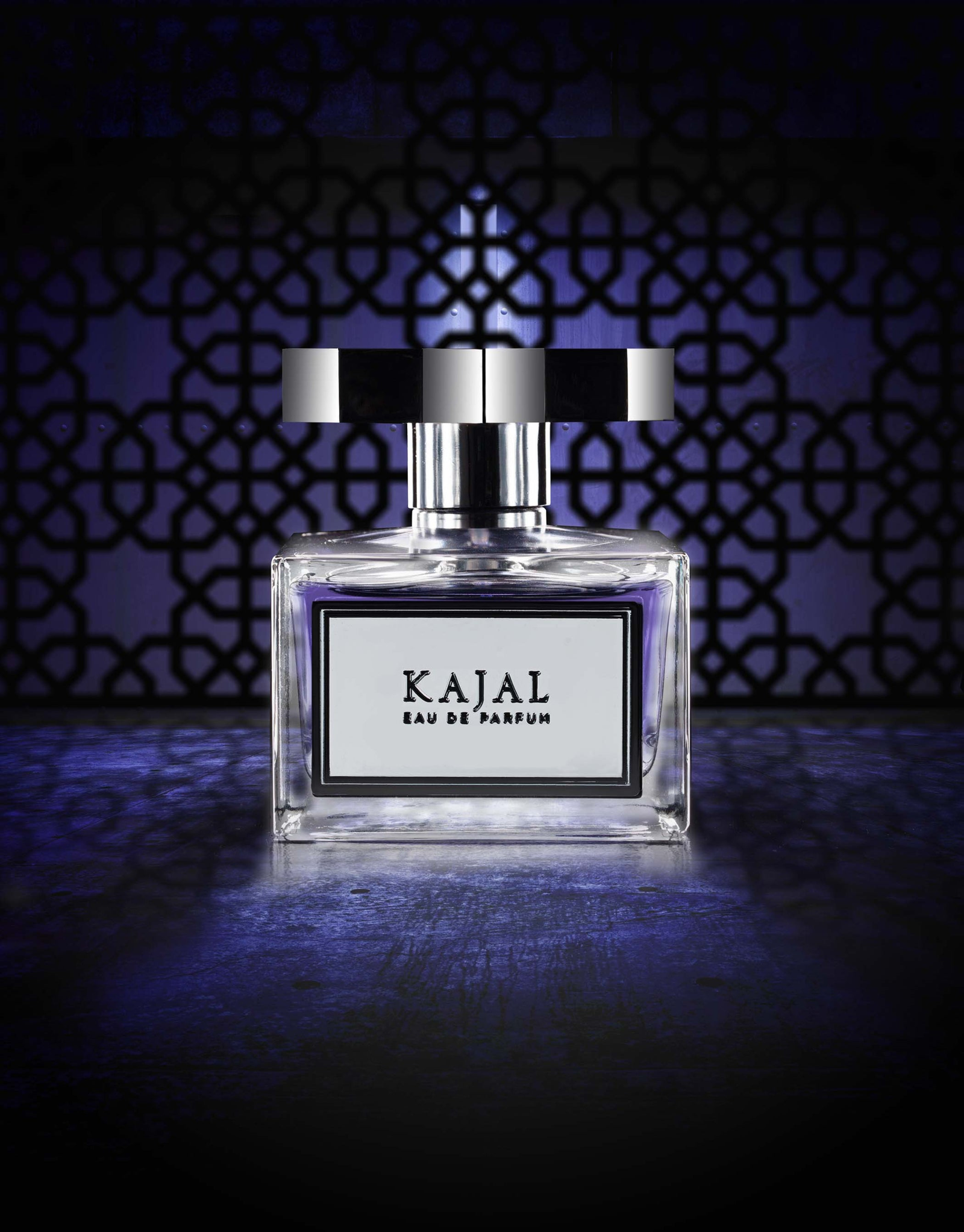
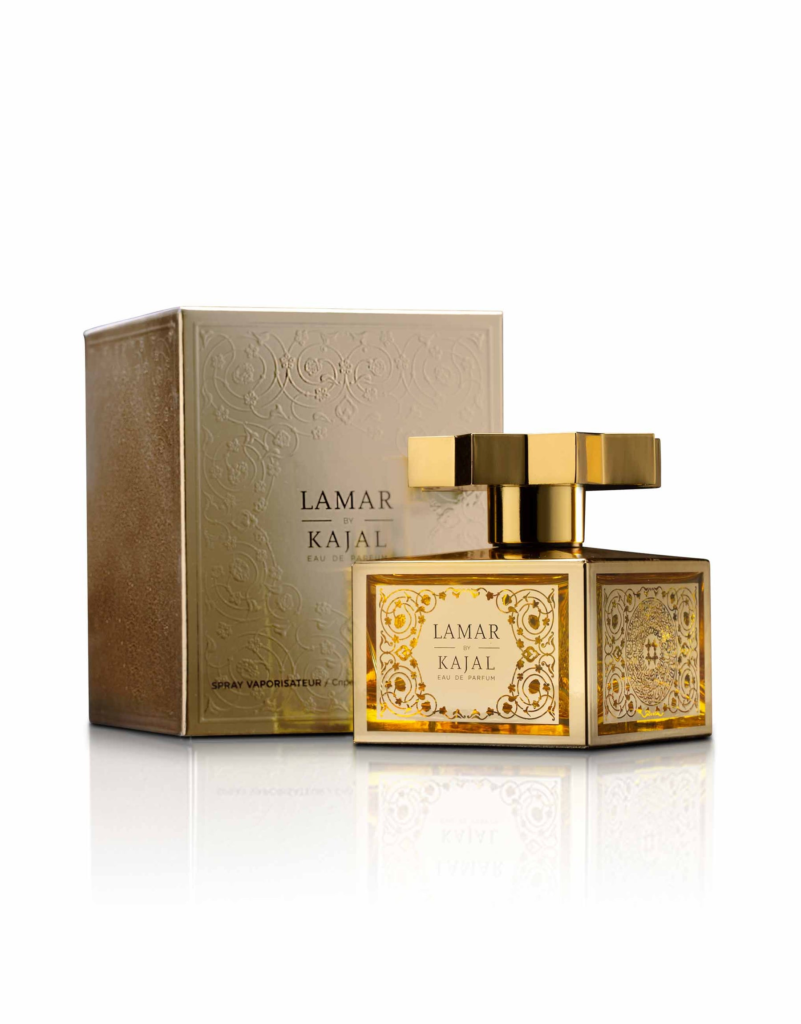
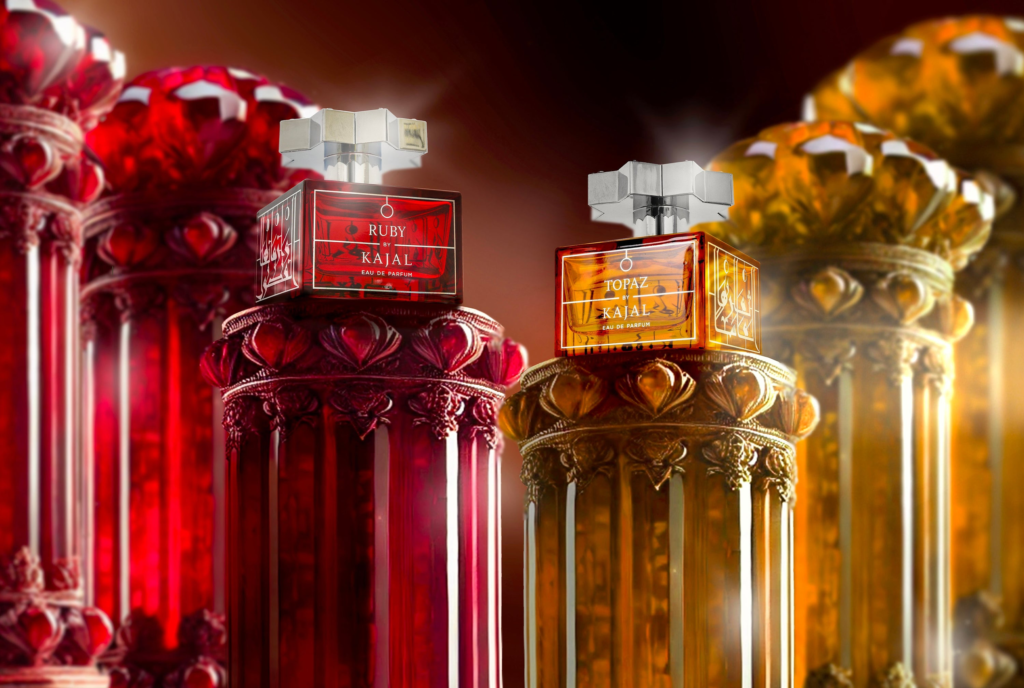
You do not have to adopt every piece of brand philosophy wholesale to see how consistently Kajal translates it into design. Calligraphy, geometric patterns and biomorphic forms recur throughout its visual world. Most recognizable is the eight-pointed star used on the caps, which the house now describes as an emblem of the Maison. In a niche market currently producing enough beige cylindrical bottles to furnish a small Scandinavian hotel, Kajal is at least very sure of what it wants to look like.
The collections: not one Kajal, but several
The current catalogue is divided into several families: Classic, Gold, Gem, Arqam, Wardé and Fiddah, alongside extraits and newer formats. The divisions make more sense as narrative and visual worlds than as rigid olfactory genres.
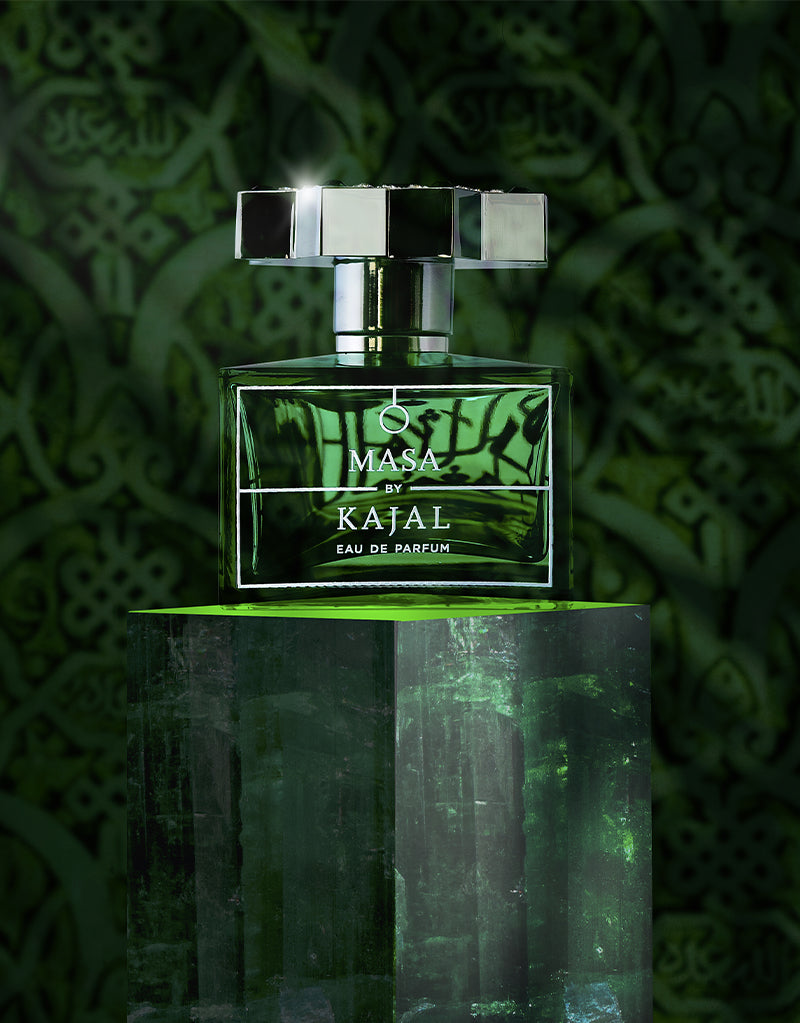
The Classic Collection contains core releases launched individually, while Wardé is explicitly floral in inspiration. Fiddah is built around different moods and personas. The Gold and Gem collections make their symbolism obvious through names and presentation: Lamar, Äican and Dahab sit in the Gold world, while Almaz, Masa, Ruby and Topaz populate the Gem Collection. Arqam takes a more numerical route with Kajal I, II, III and IV.
What connects these families is less a single house accord than a preference for strong identity. Kajal does not appear interested in making every bottle look or sound interchangeable. The catalogue moves from florals to gourmands, woods, spices and brighter fruit-driven compositions, while the design language keeps reminding you that they belong to the same house.
Five names that help map the house
A Brand Focus is not the place to pretend we can reduce an entire catalogue to a “top five”, especially before a proper Pitti smelling session. Still, a few names are useful landmarks.
Kajal Eau de Parfum
The starting point. Launched in 2014, the first fragrance established both the name and the visual vocabulary that would follow.
Dahab
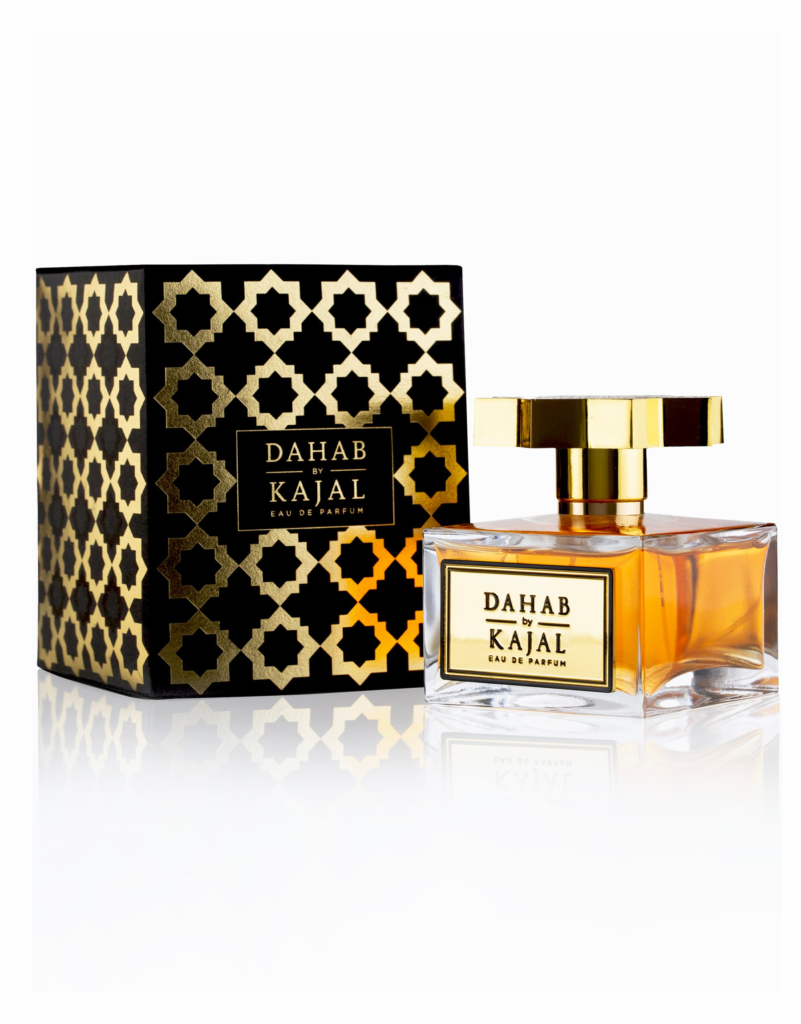
An early expansion of the house and one of the names that helped establish Kajal beyond its debut. “Dahab” means gold in Arabic, making it a natural anchor for the brand’s taste for symbolism and precious materials.
Lamar
One of the most visible contemporary Kajal releases and part of the Gold Collection. It has become a useful reference point for the richer, more opulent side of the catalogue.
Äican
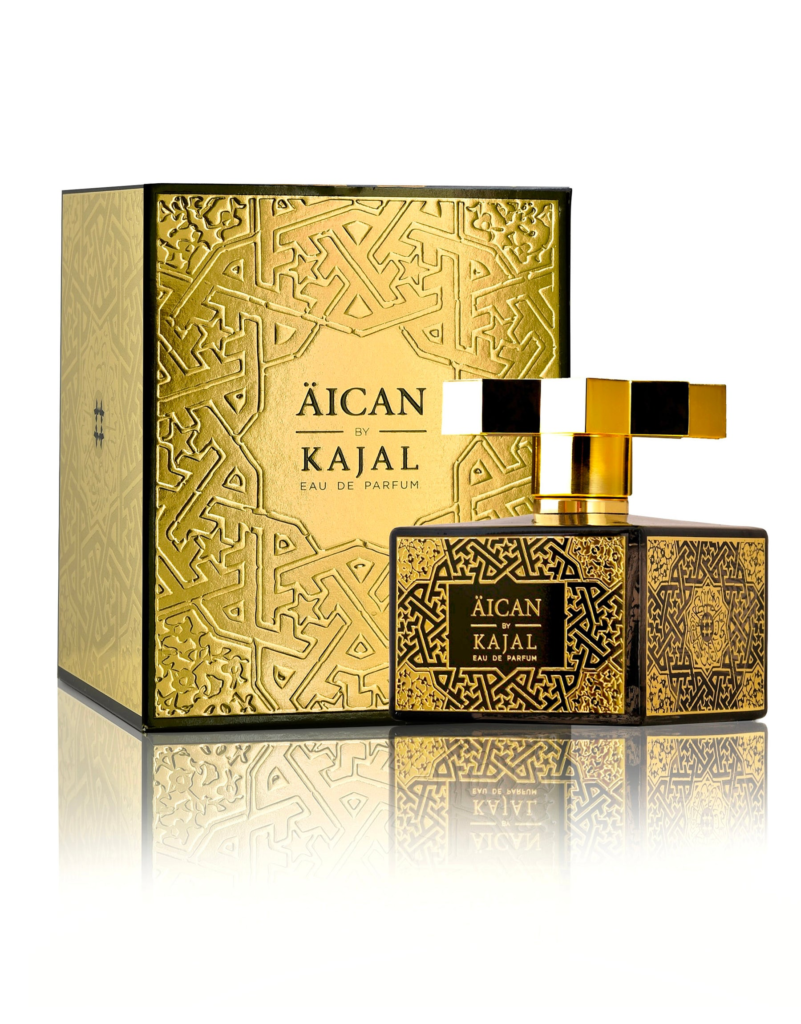
A name built around the affirmative idea “I can”, turning a small motivational phrase into one of Kajal’s most recognizable recent identities.
Masa
Part of the Gem Collection and one of the more personal stories in the catalogue. Khalaf has connected its inspiration to a poem and calligraphy linked to people close to his family, showing how personal narrative can sit underneath the brand’s decorative surface.
There are newer directions too. The current catalogue includes extraits such as Lamar Noir and Dahab Absolu, while Lamar Caviar explores an alcohol-free Perfume d’Eau format. That willingness to extend established names into different concentrations and technologies suggests a house that is no longer simply building a catalogue fragrance by fragrance; it is beginning to build worlds around its strongest ideas.
The perfumers behind the ornament
Kajal’s visual identity may be immediate, but the house has never relied on a single nose. Its history includes collaborations with perfumers such as Christian Carbonnel and Rosendo Mateu, while more recent brand material highlights creators including Toni Cabal, Vincent Ricord and Patrick Müller. Khalaf has said that Kajal does not follow a fixed protocol for choosing perfumers, preferring to find the person who feels right for a particular project.
That collaborative model is worth remembering at Pitti. With a brand this visually assertive, it would be easy to let the bottle do all the talking. The more interesting question is how much continuity can be found in the fragrances themselves when different perfumers are translating the same broader Kajal universe.
Why Kajal is worth meeting at Pitti Fragranze 2026
Pitti Fragranze is useful precisely because websites flatten perfume houses. Online, Kajal can look almost overwhelmingly decorative: jewel references, gold surfaces, elaborate caps, stories about beauty and symbolism. In person, none of that matters if the fragrances do not hold up on blotter and skin.
So the plan in Florence is not to arrive with a verdict already written. It is to smell across the collections, understand which fragrances best express the brand today, and see whether the catalogue feels as coherent in scent as it does in design. I am particularly curious about the contrast between the older signatures and the newer Gold and Gem releases, as well as the growing extrait side of the house.
Kajal Perfumes Paris will be exhibiting at Pitti Fragranze 2026 at Stazione Leopolda, currently listed at stand B/21. I will be there too. Consider this Brand Focus the introduction; Florence gets to provide the evidence.
Quick reference
| Brand | Kajal Perfumes Paris |
| Founders | Moe Khalaf and Ibrahim Faris |
| First fragrance | Kajal Eau de Parfum, 2014 |
| Current collection families | Classic, Gold, Gem, Arqam, Wardé and Fiddah, plus extraits and other formats |
| Signature visual code | Eight-pointed star cap and geometric design |
| Pitti Fragranze 2026 | 11–13 September 2026, Stazione Leopolda, Florence |
| Kajal Perfumes Paris stand | B/21, according to the current official exhibitor listing |
| Davide Parfums testing status | Brand Focus based on research; individual fragrances are not reviewed here unless previously tested elsewhere on the site |
| Linda, Florence is about to smell expensive. See what else is waiting at Pitti Fragranze 2026. → Explore my Pitti Fragranze coverage |