Versace Blonde: When Tuberose Had No Interest in Behaving
A tuberose so loud it made civet look subtle, and the Versace fragrance I went through bottle after bottle of as a teenager.
| Personal context: This is not a contemporary review of a vintage bottle. I wore Versace Blonde extensively when it was current and finished several bottles. The sensory passages below are therefore personal memories of a fragrance I genuinely lived with, not impressions from a present-day retest. Where the historical record is incomplete or sources disagree, that is stated explicitly. |
Versace Blonde does not want your personal space. It wants the room, the hallway outside the room, and possibly the building next door. Released in 1995 and long gone from Versace’s official catalogue, it belongs to a moment when a major fashion house could make maximalism smell like a perfectly reasonable commercial proposition.
For me, though, Blonde is not perfume archaeology. I wore it as a teenager, and not delicately. I went through several bottles. Looking back, the attachment to white flowers and tuberose was apparently there long before I had the vocabulary to explain it.
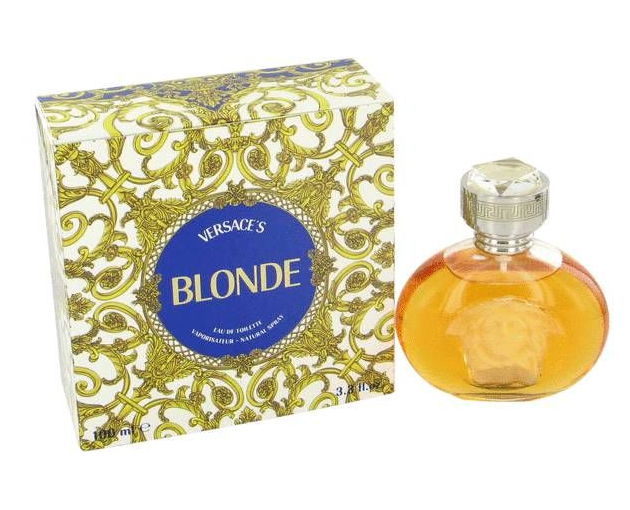
What I remember most clearly is scale. Blonde felt opulent, dense and unapologetically luxurious. Even the golden juice seemed to announce the mood before the first spray. It looked rich. It smelled rich. Subtlety had clearly been given the evening off.
The Versace Years
Blonde launched in 1995 and was composed by Nathalie Feisthauer, then working from Givaudan‘s Paris studio after returning from New York. It sits early in a career that would later range from major designer commissions to independent and niche work.
The fragrance is widely reported to have been created as a tribute to Donatella Versace. Feisthauer has recalled meeting Donatella in Miami during development, with Madonna reportedly present and encouraging tuberose to take the lead. She has also described an unusually generous budget and the use of a substantial quantity of real tuberose absolute. Those details are best treated for what they are: the perfumer’s own recollection of the project, rather than audited production records.
My own relationship with Versace had started around the same time. One evening I saw a television programme showing pieces from Gianni Versace’s Autumn/Winter 1995 collection. That was it. The color, sensuality, decoration and sheer refusal to apologize for excess made immediate sense to me.
Blonde didn’t just smell like Versace to me. It smelled like the Versace I had fallen in love with.
A Floral With the Volume Turned Up
Composition details for a thirty-year-old discontinued fragrance vary between sources, which is worth admitting rather than forcing the past into a suspiciously tidy pyramid. The most consistent published picture places gardenia, violet, neroli or orange blossom, bergamot and pittosporum around the opening; tuberose, ylang-ylang, narcissus and carnation at the heart; and civet, benzoin and musk underneath, with some sources also listing sandalwood or woods.
That structure makes sense beside my memory of Blonde, but memory is not chromatography. What stayed with me was not an orderly progression of notes. It was an enormous white-floral presence, warmth, richness and the unmistakable feeling of a perfume designed to occupy space.
Tuberose Takes Centre Stage
Tuberose is naturally divisive: creamy and buttery on one side, green, camphoraceous and almost rubbery on another. Blonde had no apparent interest in sanding those contradictions into politeness.
I remember it as super-opulent, a golden white-floral perfume whose tuberose felt entirely at home inside the maximalist Versace universe. It is tempting, decades later, to reconstruct every stage of the drydown from memory. I won’t. What I can say honestly is that the tuberose, the richness and the scale are precisely why Blonde remains so vivid to me.
Fracas is the inevitable historical comparison whenever a large tuberose enters the room. Blonde has long been discussed beside Germaine Cellier’s 1948 benchmark, often as a more animalic and aggressively Versace-shaped relative rather than a simple imitation. The comparison is useful, but Blonde deserves to be remembered as its own cultural object.
| Too much tuberose? There is no such thing. Meet the flower behind some of perfumery’s most gloriously excessive creations. → Discover Tuberose in Perfumery |
Blonde and CK One: The 1990s Could Contain Both
Here is the part that makes my teenage perfume wardrobe slightly absurd in retrospect: I wore Blonde and CK One during the same period.
They sit at almost opposite ends of the aesthetic spectrum. Blonde was gold, white flowers, sensuality and excess. CK One represented the other great current moving through the decade: transparency, informality, clean lines and a deliberately unisex kind of minimalism.
I loved both. That contradiction feels more interesting now than it did then. The 1990s were not a neat handover from excess to minimalism; for a while, both languages existed at full volume. Apparently so did my perfume shelf.
Perfume, but Make It Versace
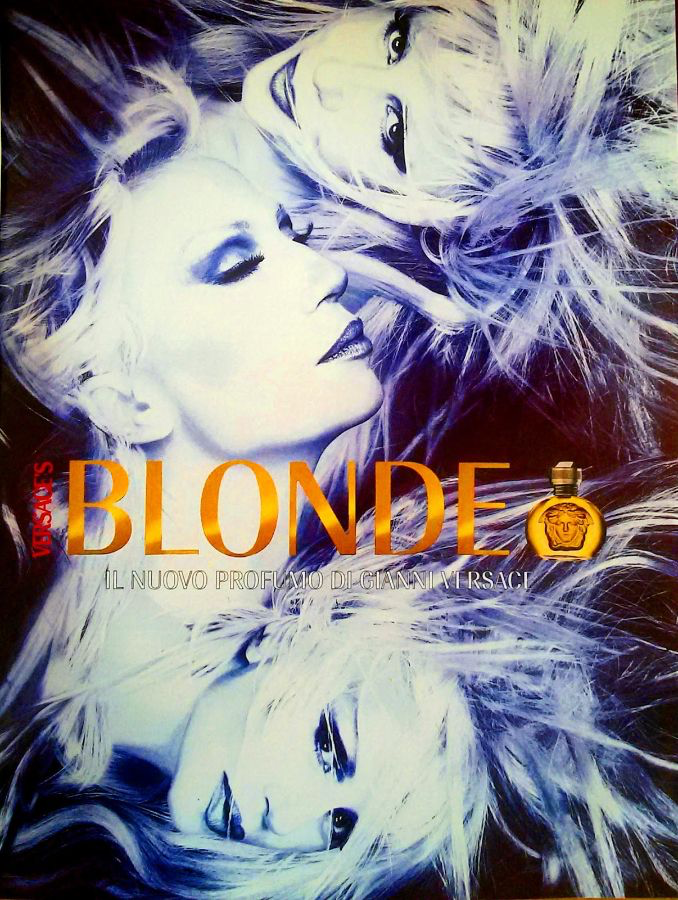
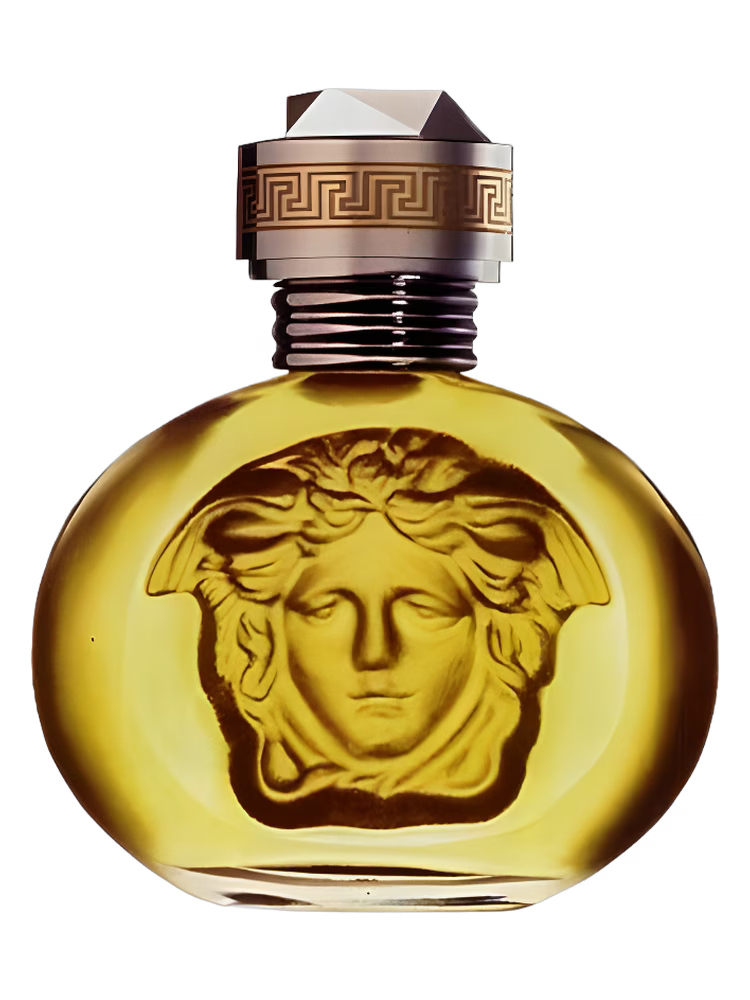
Blonde makes the most sense when read alongside the Gianni-era Versace aesthetic rather than isolated as a list of notes. This was a house fluent in gold, ornament, sexuality, color and visual excess. The perfume’s golden juice and Medusa imagery did not merely decorate the composition; they made the same argument in another medium.
Blonde was not an isolated affair for me either. Over the years I wore fragrances from the Jeans line, the original Versus releases, including the blue men’s and red women’s scents, and even Versace skincare, a range so thoroughly forgotten that one suspects parts of the company may have misplaced the memo themselves.
But Blonde was different. It became the fetish fragrance of that entire relationship with the house: the one that most completely translated what I loved about Versace into scent.
The Images Are Vintage Too
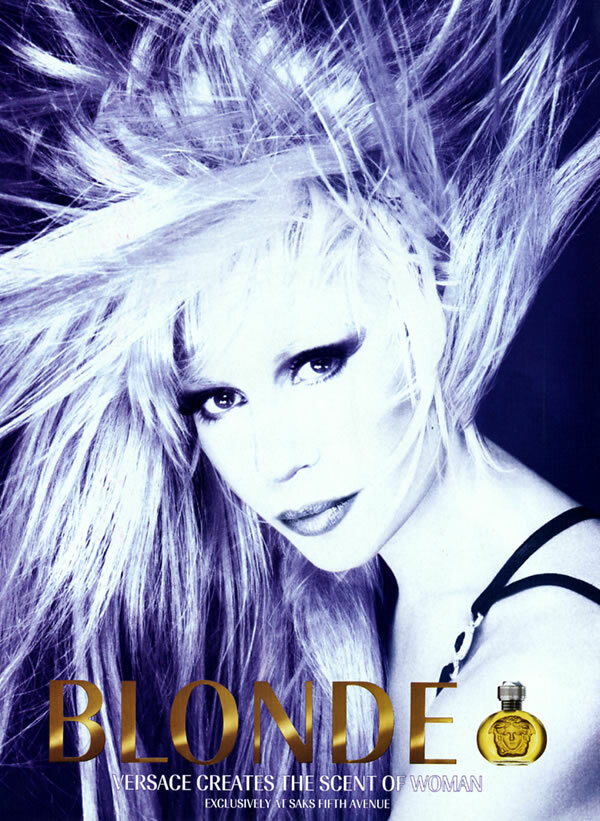
The surviving imagery around Blonde is often small, compressed, grainy and unmistakably of its period. The images used here were sourced from eBay listings, where old packaging, bottles and advertising material still surface long after official digital assets have disappeared.
I have deliberately not tried to make every image look newly produced. The imperfect resolution is part of the archival reality of covering a discontinued 1995 fragrance. These are reference images, not contemporary Versace press assets, and the source is identified accordingly.
What Happened to Blonde?
Blonde is discontinued and absent from Versace’s current catalogue. I could not find a reliably documented date for when production stopped, and enthusiast discussions offer conflicting answers, so no precise discontinuation date is presented here.
Vintage bottles now circulate through resale and auction channels. Claims about reformulations also appear in community discussion, but without sufficiently solid documentation they remain claims rather than facts.
That scarcity is part of why Blonde now feels almost unreachable. I would love to smell it again, but I am not interested in rewriting a teenage memory around an expensive vintage bottle of uncertain storage history and then pretending the result is definitive.
Would Blonde Be Released Today?
Probably not in this form. Mainstream designer perfumery has changed, ingredient practices and regulations have changed, and the commercial centre of gravity has shifted toward propositions designed to be easier to wear and easier to sell broadly.
That does not mean maximalist tuberose disappeared. It moved. Smaller and niche houses can still build fragrances for people actively seeking excess, but a composition with Blonde’s reputation arriving as a major mainstream Versace statement would feel far less inevitable today.
That is precisely why it matters. Blonde documents a moment when designer perfumery could still be gloriously unreasonable.
My (Entirely Necessary) Final Thoughts
I don’t need to pretend I remember every stage of Blonde’s development almost three decades later. I don’t. What I remember is what mattered: the gold, the tuberose, the excess, and the feeling that this was exactly what Versace should smell like.
I have worn many Versace fragrances since. Blonde is still the one.
| Some perfumes deserve more than launch-week attention. Explore more perfumes in Fragrance Focus. |