Acqua di Parma Oud Ambrosia: Italian Citrus Meets Oud Butter
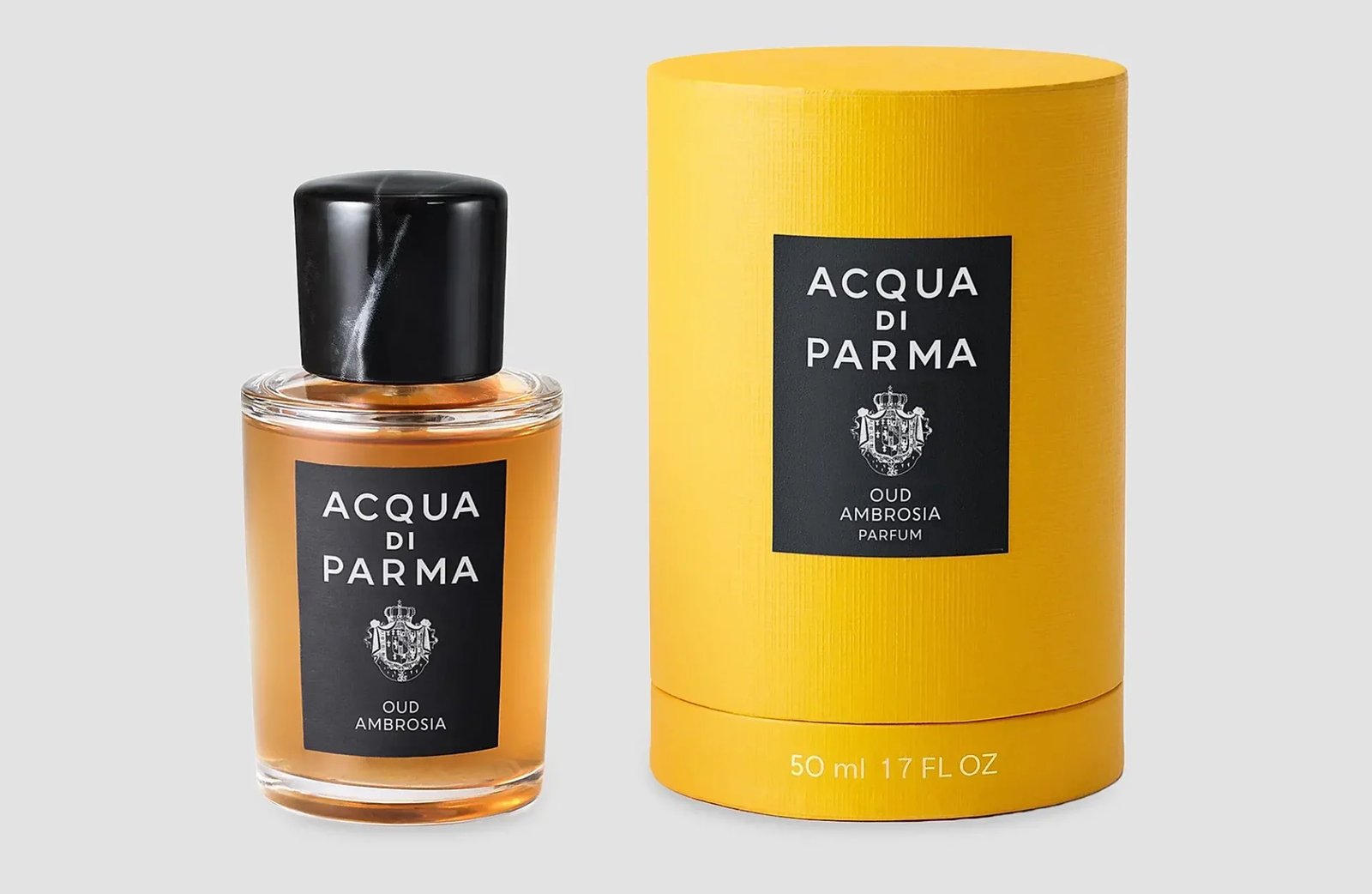
Acqua di Parma Oud Ambrosia is the latest addition to the house’s Signatures of the Sun collection, and it appears determined to make the usual citrus-to-oud journey considerably more indulgent. Italian blood orange, clementine and papaya lead into saffron, violet leaf and a creamy interpretation of agarwood, before leather, honey, amber and tobacco arrive to make sure nobody mistakes this for a polite little cologne.
There is still relatively little information in circulation, which may actually be a blessing. For once, a fragrance can arrive without six months of increasingly dramatic speculation, three leaked pyramids and somebody declaring it a masterpiece before smelling it.
A meeting of two olfactory worlds
Presented as a meeting between Italian exuberance and Arabic warmth, Acqua di Parma Oud Ambrosia follows a contrast that makes immediate sense for the Italian brand. Citrus is part of the house’s language, while oud already has an established place in Signatures of the Sun. The new fragrance does not seem interested in choosing between brightness and depth. It places them in the same bottle and lets the transition do the work.
The opening combines Italian blood orange, clementine and a papaya accord. On paper, that suggests something juicy and sun-warmed rather than classically sparkling. Papaya is the most unexpected part of the trio. It could push the citrus towards a softer, more tropical kind of fruitiness, although that remains an expectation based on the composition, not a verdict from skin.
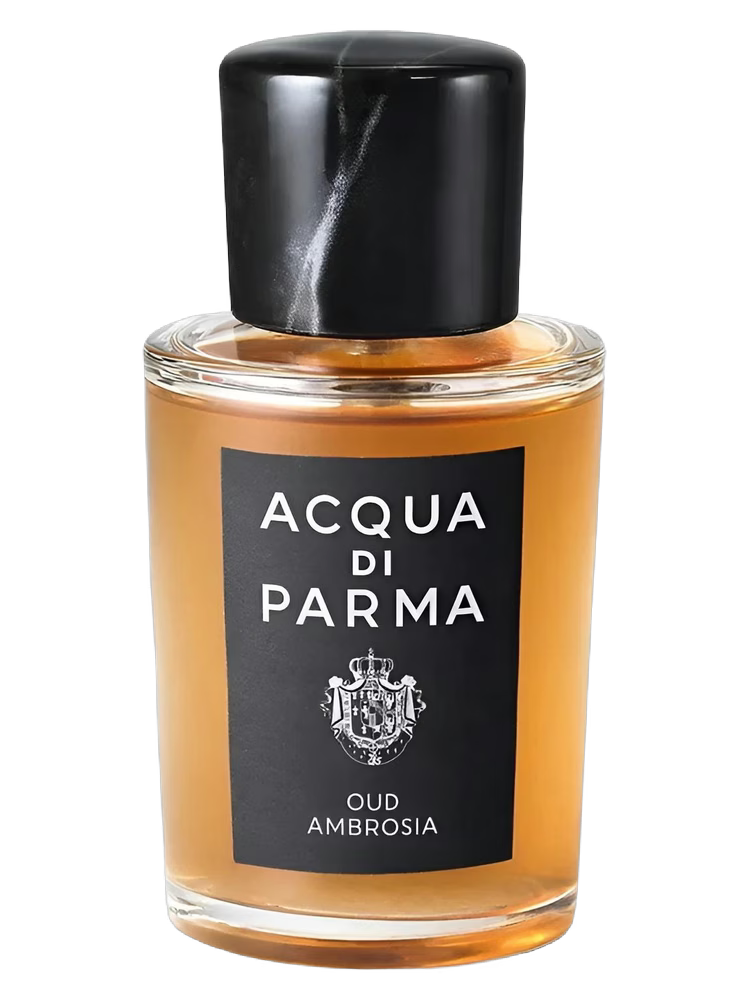
Acqua di Parma Oud Ambrosia and the idea of oud butter
The centre of the fragrance is built around saffron, violet leaf and oud, but the most interesting detail is the so-called Oud Butter. According to the launch description, it is distilled from both the resin and the wood of the Aquilaria tree. The result is presented as a creamier, more refined expression of agarwood, designed to reveal its complexity without making raw power the entire point.
That wording matters. Oud can be smoky, leathery, medicinal, animalic or almost sweet depending on the material and treatment. Describing this version as buttery suggests texture rather than dessert: rounded, dense and smooth. Saffron should reinforce the warm, dry spice, while violet leaf may introduce a cooler green edge before the composition settles into its darker register.
The notes
- Opening: Italian blood orange, papaya accord, clementine
- Heart: saffron, violet leaf, oud / Oud Butter
- Base: woody notes, leather, honey, amber, tobacco
A darker Acqua di Parma, but not an obvious one
Leather, honey, amber and tobacco give the base a familiar vocabulary of warmth, but the construction does not read like a generic sweet oud. The citrus and papaya opening could keep it brighter for longer, while violet leaf offers a potentially sharper contrast to the honeyed and leathery facets underneath.
There is also a useful distinction between depth and heaviness. Acqua di Parma describes the fragrance as intense yet poised. Naturally, brands are not known for advertising a perfume as exhausting, so we will reserve judgment. Still, the promise of a creamy oud framed by fruit, green texture and tobacco is more interesting than another composition built only around darkness and volume.
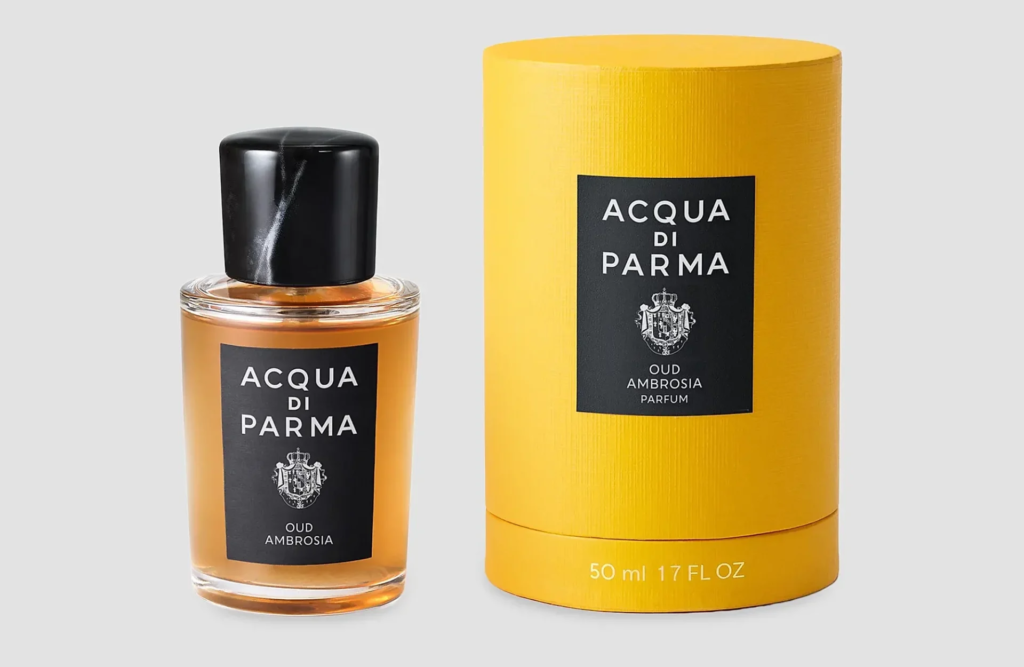
My unnecessary first thoughts
I am already biased because Acqua di Parma is one of the houses I return to most easily. But Acqua di Parma Oud Ambrosia also has a genuinely intriguing pyramid. Blood orange, papaya, saffron, violet leaf, leather, honey and tobacco should not be subtle on paper, yet the idea of Oud Butter suggests that the goal may be richness without roughness.
What interests me most is not simply the presence of oud. As Note di Colonia I showed me, Acqua di Parma knows how to use citrus without making it feel predictable, and that brightness could stop this composition from becoming too dense. Papaya is the detail that makes me curious, violet leaf is the detail that keeps me cautious, and honey with tobacco is the detail already making my sample storage nervous.
At this stage, Oud Ambrosia belongs firmly in the category of fragrances I want to smell, not fragrances I am pretending to have reviewed from a list of notes. Once it reaches my skin, we can find out whether the brightness and depth truly coexist, or whether one of them politely asks the other to leave.
| Your collection was doing perfectly fine sweetie. Let’s ruin that. → Explore New Releases |