Perfume FOMO: A Diagnosis, Not a Confession
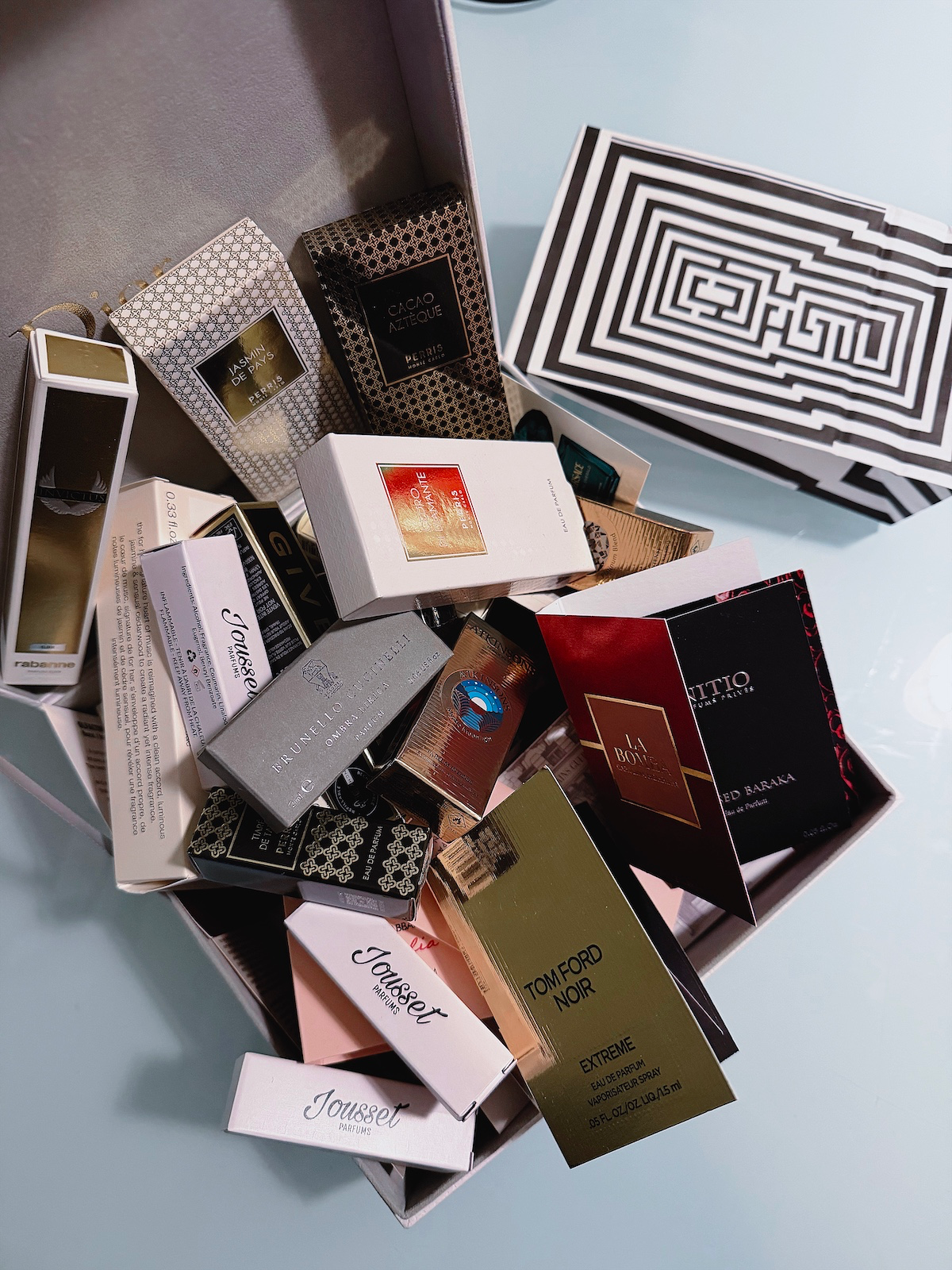
There’s a box (or more than one at this point) in my house. It used to be a nice Dior box – the kind with a lid, the kind that suggested organization. Now it contains Perris Monte Carlo minis wedged against Tom Ford Noir Extreme, an Initio sample leaning onto a Jousset box, and La Bomba staring up at me like it knows exactly what it did. And this is just the beginning.
Perfume FOMO rarely announces itself as a problem. It usually begins with curiosity, a new launch and the apparently harmless thought that one more sample could not possibly hurt.
I didn’t deliberately build a fragrance archive. I kept wanting to smell one more thing, and apparently “one more thing” needs its own storage system.
This is the part nobody puts in the perfume starter guide. The entry fee is not only money. It is restraint, and somehow you end up spending both anyway.
The diagnosis
FOMO, in a perfume context, does not always look like an impulsive full-bottle purchase. Sometimes it is slower and much more respectable-looking. It dresses up as curiosity. It disguises itself as research.
You do not think, “I need this.” You think, “I should probably know what Fugazzi Pomegranoud smells like before I have an opinion about it.” Then a sample set starts to look efficient, because buying several things you had not planned to buy is apparently sensible when they arrive in small vials.
Nobody’s FOMO looks like FOMO from the inside. That is the whole trick of it.
The irritating part is that my curiosity is real. I genuinely enjoy discovering what comes next. I do not want to know every perfume because I need to prove something; I want to know because the possibility of finding another fragrance I love is still exciting. FOMO simply knows how to borrow that enthusiasm and make itself look useful.
| Perfume FOMO does not always lead to another full bottle. Sometimes it simply leaves you with a drawer full of samples and the vague feeling that you are still missing something. |
Exhibit A: the grid
Eventually, the chaos gets sorted. Even accumulation wants to look organized. You make rows, categories and little groups that suggest there was a plan all along.
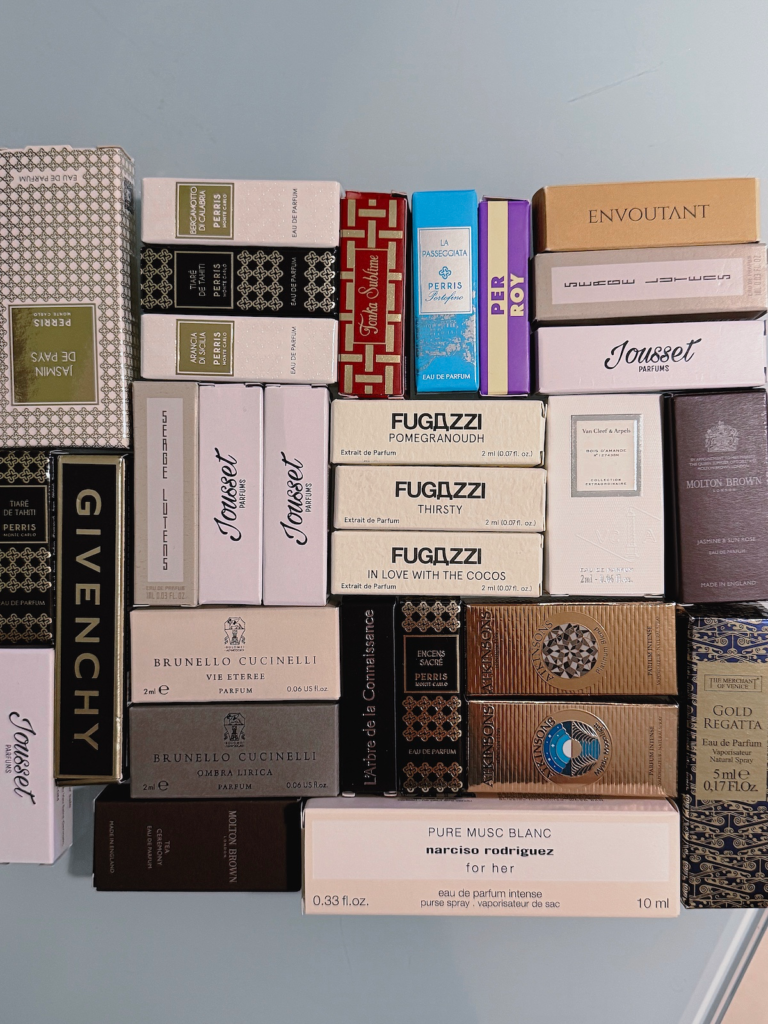
Perris Monte Carlo sits next to Serge Lutens, Brunello Cucinelli, Atkinsons and Van Cleef & Arpels. A Narciso Rodriguez purse spray appears at the end like it wandered into the wrong photoshoot.
This is not a collection organized around one genre, and I do not think it needs to be. My taste thankfully moves between designer and niche, woody and floral, gourmand and citrus. The variety is part of the fun.
The revealing part is not that everything is different. It is that saying no to a sample can feel strangely difficult, as if declining 2ml of perfume were the olfactory equivalent of turning down a canapé.
And most of them are genuinely good. That is not even the problem. The problem is that “genuinely good” describes hundreds of fragrances currently on the market, while my nose continues to behave as though it has been contractually appointed to investigate all of them.
Exhibit B: the same evidence, different angle
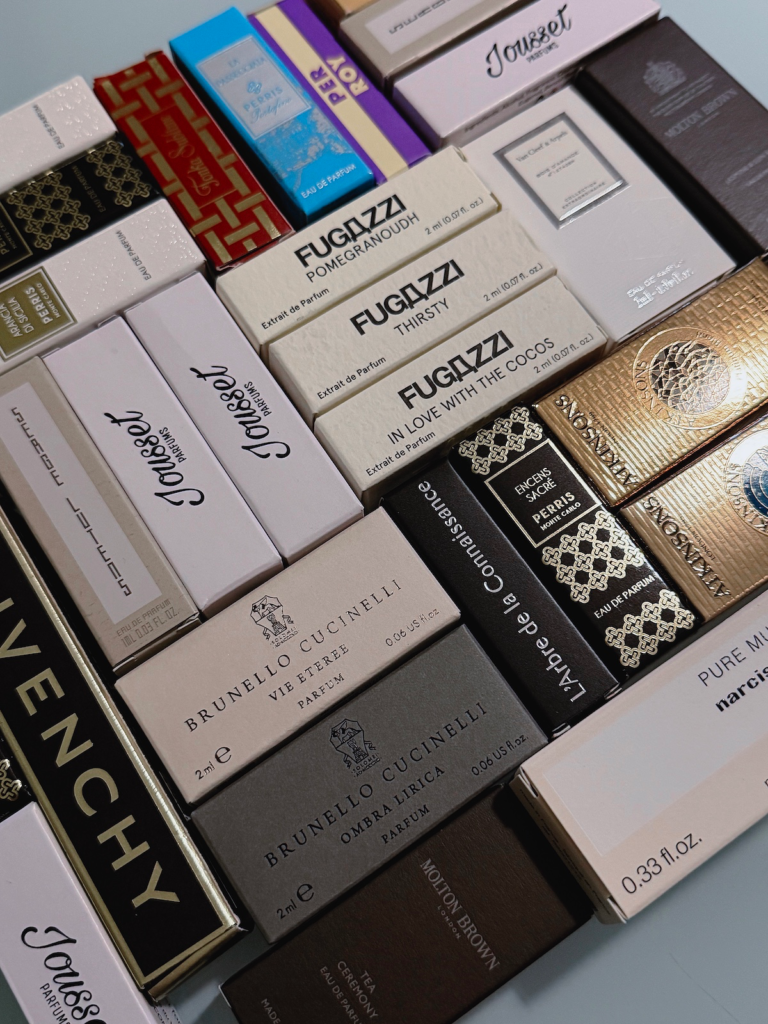
Tilt the camera and the total does not become smaller. It simply gains depth, which is exactly what nobody needed. It is no longer a flat list of questionable decisions. It is questionable decisions with topography.
And believe me, this is only a small part of what is hiding in my samples closet. Not that this is a flex. I have never been interested in making anyone jealous of what I own. If anything, it is simply evidence that curiosity, when left unsupervised, requires storage space. And mine is almost full. I should probably move into a bigger house, but a bigger house means more space, and more space inevitably means more perfume for my already sick brain.
The part where I pretend to have perspective
For me, this is not a financial emergency. I am not paying rent late because of a Fugazzi extrait. It is a relatively low-stakes excess, the kind that can be presented as a charming personality trait: “I have a small perfume problem,” said in the same tone as someone admitting to owning too many tote bags.
But there is still value in naming it honestly instead of automatically calling every purchase education. Perfume makes that excuse particularly easy. Every sample can be framed as knowledge-building, never as simply more stuff.
And yes, samples genuinely do teach me something. They help me understand materials, styles, perfumers and my own taste. The distinction is not between learning and accumulating, because sometimes they are the same thing. The useful question is whether I actually wanted to smell something, or whether I was simply afraid of not knowing it.
“I bought too much” and “I am training my nose” can both be true. Same box. Better excuse.
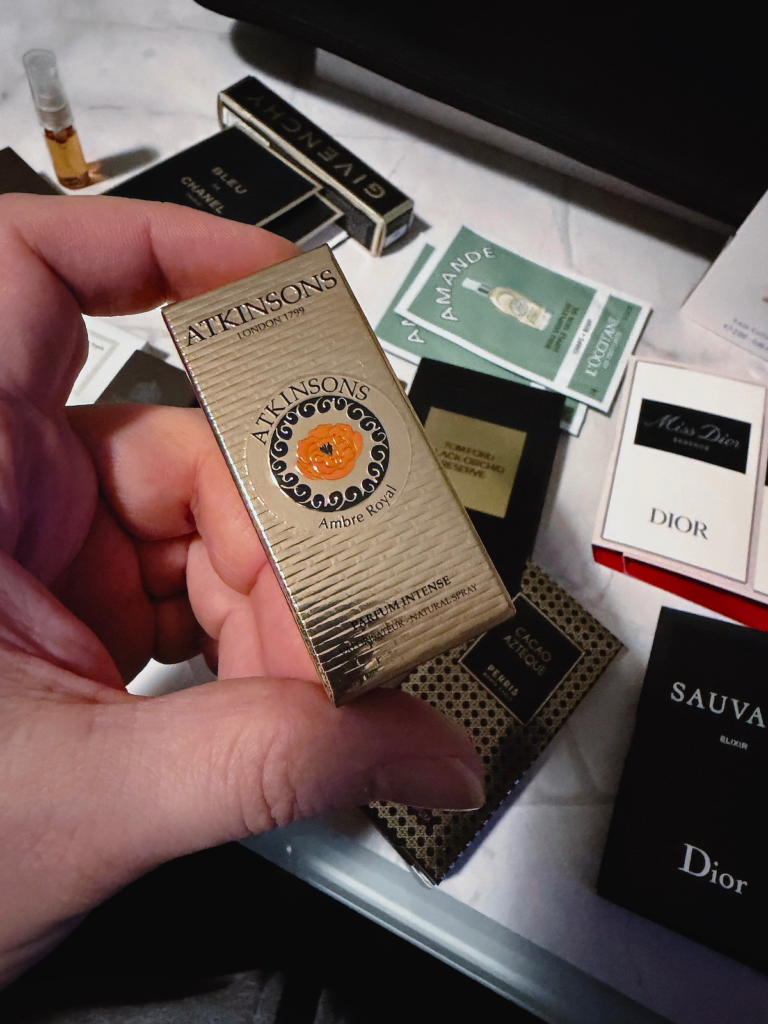
Perfume FOMO: The verdict
I am not going to tell you to stop. That would be hypocritical, boring and, judging by the contents of my house, wildly unconvincing.
What I will say is: know what you are doing while you are doing it. Enjoy the discovery, order the samples and get excited about the next perfume. Just notice when curiosity quietly becomes obligation – when smelling something new stops feeling fun and starts feeling like keeping up.
The perfume FOMO does not disappear once you own the bottle. It simply moves on to the next box, the next launch and the next thing you “should probably try before forming an opinion.”
The box is not the problem. The box is just where the FOMO goes to be photographed.
| New releases in an article about perfume FOMO. Linda, what could possibly go wrong? Explore New Releases |