Dior Esprits de Parfum: Seven Icons, No Interest in Restraint
Dior Esprits de Parfum is the sort of project that looks at an already expensive private collection and thinks: what if we made it darker, denser, more concentrated and considerably less friendly to anyone trying to maintain a sensible perfume budget?
There are flankers, there are reinterpretations, and then there is this.
Welcome to the darker side of La Collection Privée Christian Dior.
Created within La Collection Privée Christian Dior under the creative direction of Francis Kurkdjian, Dior Esprits de Parfum are not presented as simple stronger versions of familiar names. They revisit fragrances we already know, stripping them back to their defining ideas and rebuilding them in a more concentrated, more radical form.
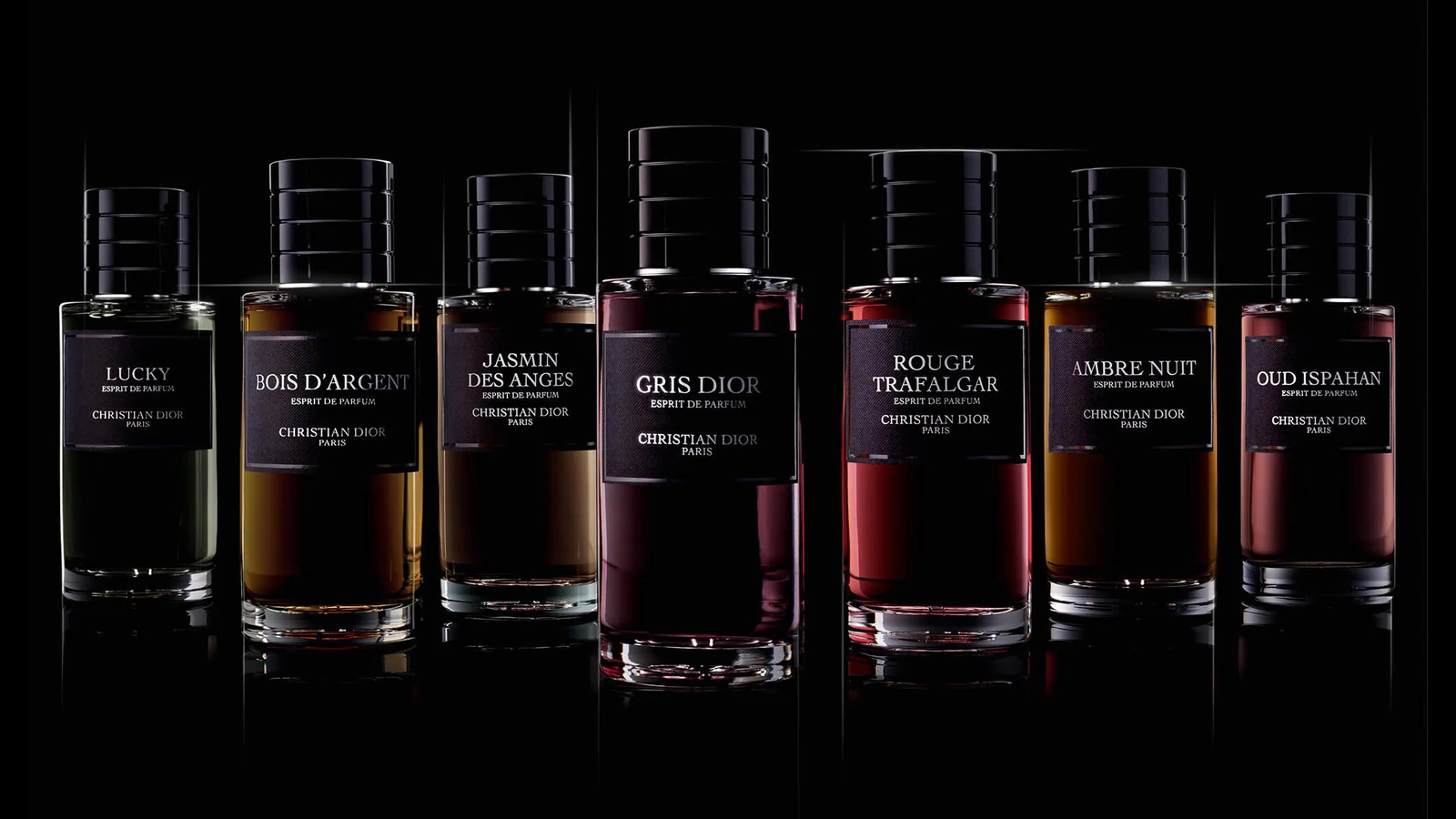
The collection now counts seven fragrances: Gris Dior, Ambre Nuit, Oud Ispahan, Lucky, Rouge Trafalgar, Bois d’Argent and Jasmin des Anges.
And before we get into what Dior has actually done with them, I should probably disclose the most important piece of information: I would quite happily take the entire line.
This is unfortunate, because each 80 ml bottle currently costs €440 in Italy.
Financial responsibility had a good run.
| A note before we continue: this is an editorial overview of the Esprits de Parfum collection based on Dior’s official information and my analysis of the project. It is not a comparative review of seven fragrances tested side by side. When I eventually spend proper time with individual Esprits, those impressions will be clearly identified as such. |
Not Just “More of the Same”
The easiest way to misunderstand the Esprits would be to think of them as the inevitable Intense chapter of La Collection Privée.
Take something successful, increase the concentration, darken the bottle, add a few euros and wait for perfume people to lose all sense of proportion.
Admittedly, the industry has trained us well.
But the idea behind the Esprits is more interesting than that.
Kurkdjian approached the collection as a series of reinterpretations, identifying the essential olfactory line of each original fragrance and then rebuilding it in a more radical form. The concentration changes, naturally, but so does the architecture.
That distinction matters.
An extrait does not automatically become more interesting because somebody turned the volume knob clockwise. Here, the intention is to take what makes each fragrance recognisable and push that particular tension somewhere else.
Gris Dior becomes darker and woodier. Lucky takes its famously luminous lily-of-the-valley idea into shadow. Rouge Trafalgar transforms its sparkling red-fruit signature into something richer and more saturated.
These are alternate silhouettes rather than photocopies printed with more ink.
And visually, Dior makes the distinction immediately obvious.
The familiar bottles of La Collection Privée become darker, almost lacquered objects, with deep-coloured juices and black labels. Lined up together, the seven Esprits look less like polite additions to a fragrance wardrobe and more like seven tiny bottles of expensive trouble.
Which, frankly, is not helping.
Gris Dior Esprit de Parfum
The original Gris Dior has always lived in contrasts.
Floral and woody, bright and shadowed, it translates one of the Maison’s most emblematic colours into perfume without ever becoming literally “grey”. Its appeal comes from tension rather than volume.
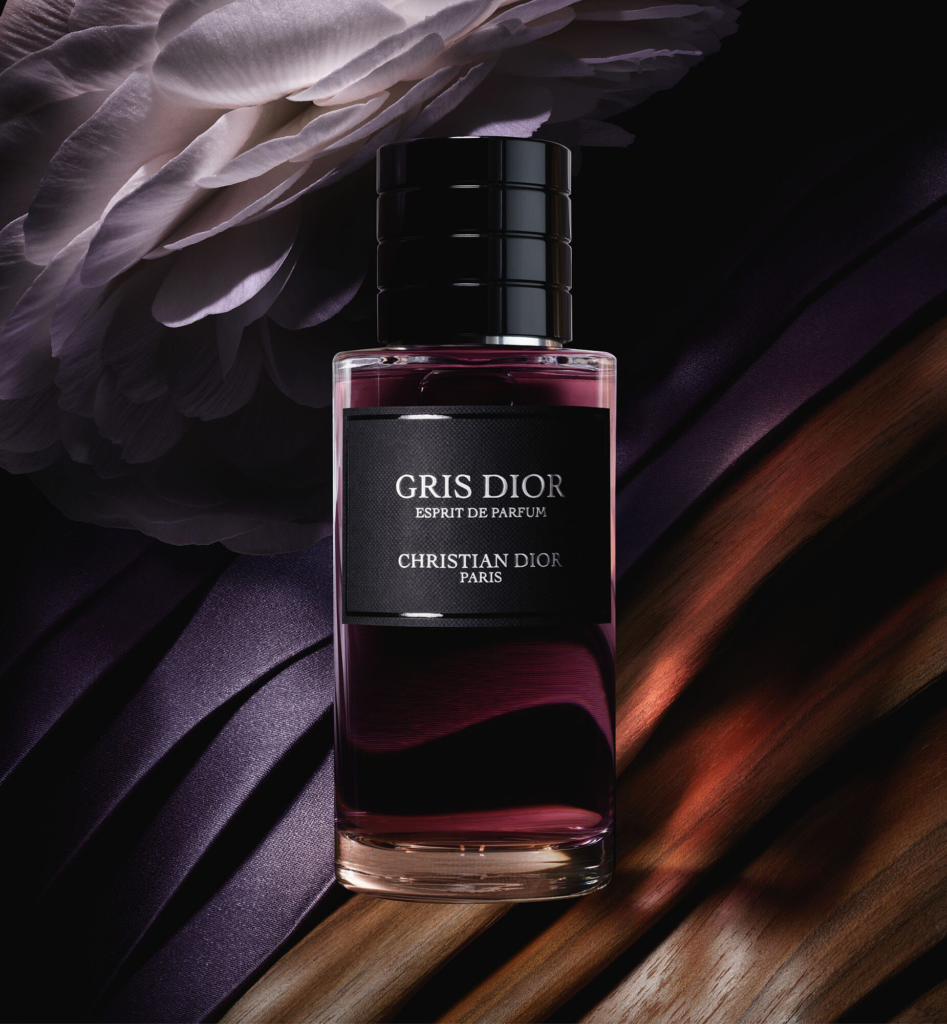
The Esprit deliberately pulls that grey towards charcoal.
Dior places Atlas cedar and patchouli at the centre of a denser woody structure, surrounded by amber warmth and floral nuances of violet and Bulgarian rose.
On paper, that already sounds more interesting than simply making Gris Dior louder.
It suggests its evening counterpart: the same tailoring, the same basic identity, but after the lights have gone down and somebody has decided the party does not need to end at a reasonable hour.
For anyone attracted to the chypre character of Gris Dior but curious to see what happens when its shadows become more prominent, this is one of the Esprits I find particularly intriguing.
Ambre Nuit Esprit de Parfum
Ambre Nuit hardly needed an introduction before the Esprits arrived.
It has long been one of the defining fragrances of La Collection Privée, built around a contrast between amber warmth and the refinement of rose.
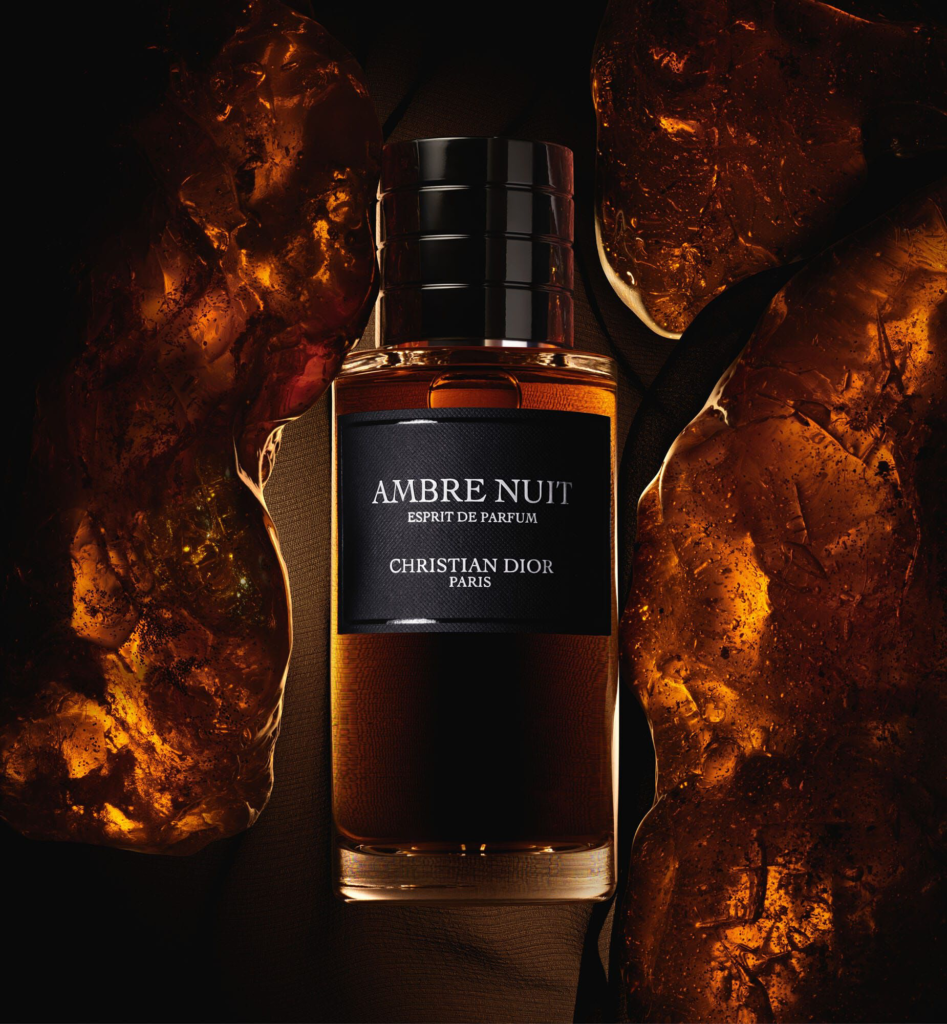
Its Esprit moves further into the night.
Dior builds the composition around materials including patchouli, bergamot, Atlas cedar, sandalwood and rose, creating a warmer, darker and more enveloping interpretation of the original idea.
What interests me here is not simply the promise of greater richness. Ambre Nuit already knows perfectly well how to be plush.
The real question is whether the Esprit can make that familiar amber-and-rose dialogue feel more nocturnal without burying the elegance that made the original so appealing in the first place.
Also, Dior photographed the bottle surrounded by glowing amber tones, because apparently charging €440 was not sufficient and they also needed to attack us visually.
Effective strategy, unfortunately.
Oud Ispahan Esprit de Parfum
Making an Esprit version of Oud Ispahan feels slightly like giving a dramatic person a stage, a spotlight and explicit permission to continue.
The original was hardly known for its restraint.
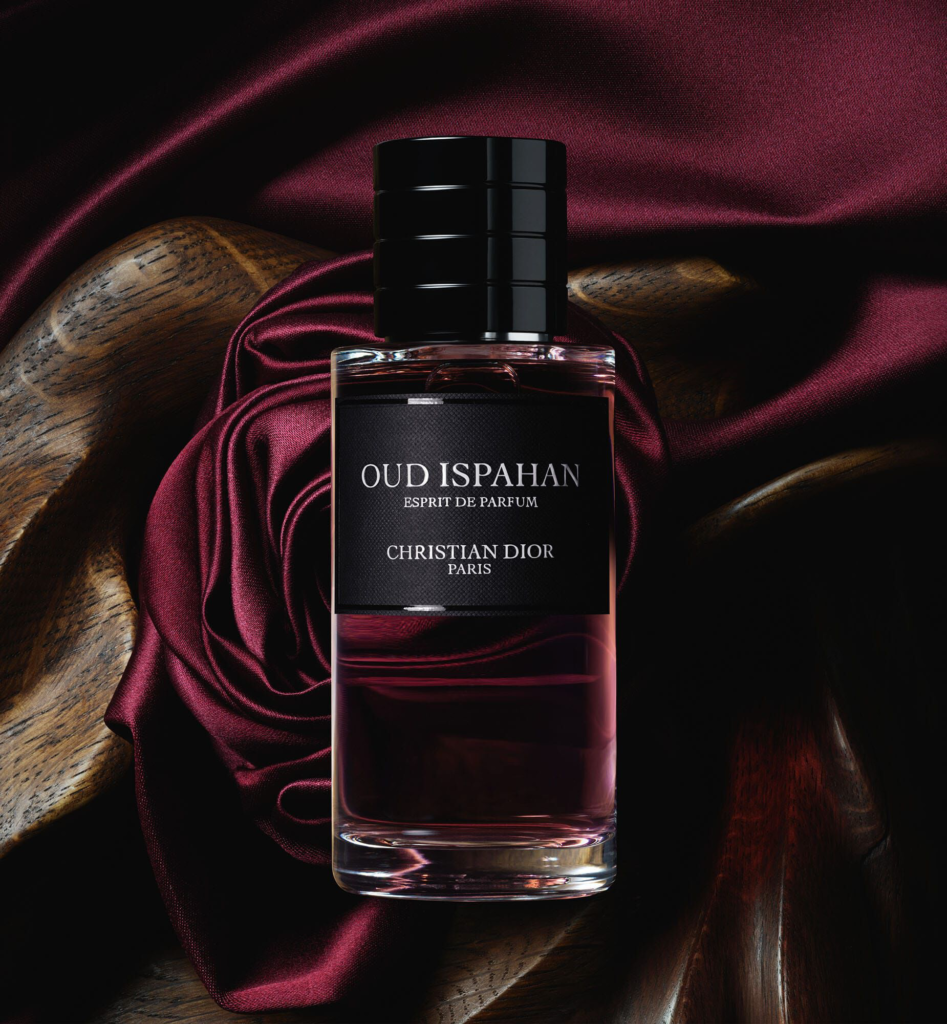
Oud, rose, woods and spice already give Oud Ispahan one of the most opulent signatures in La Collection Privée, so the Esprit does not need to invent drama. It simply has to decide what to do with all the drama already available.
Dior presents this interpretation as an intense floral, woody and spicy composition, keeping oud and rose at the centre while pushing the darker facets of the fragrance further.
Of all seven Esprits, this may be the easiest concept to understand.
Excess is not a detour here.
It is the destination.
Subtle? Probably not the assignment.
Lucky Esprit de Parfum
Lucky might be where the entire Esprits concept becomes most interesting.
Lily of the valley is traditionally associated with brightness, transparency, spring and an almost immaculate freshness. It is not exactly the first flower you would nominate for a dark, concentrated reinterpretation.
Which is precisely why this one makes sense.
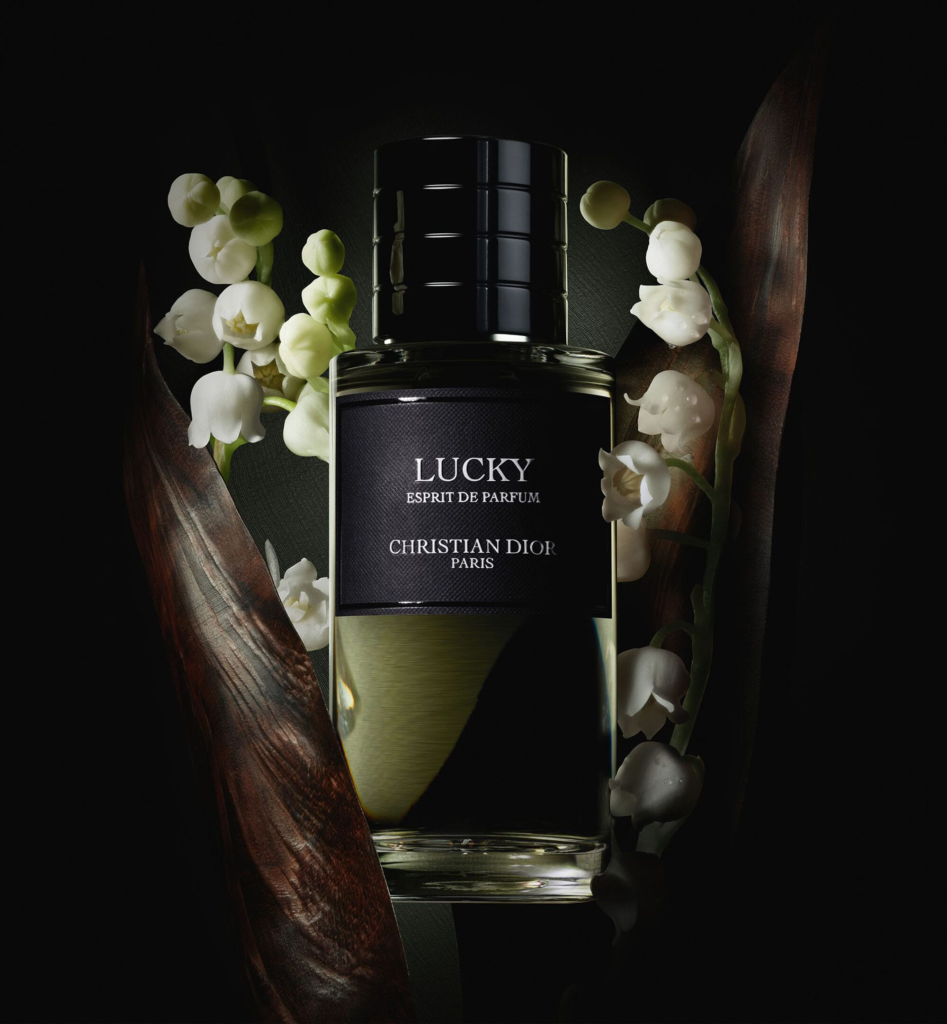
The Esprit keeps lily of the valley as its emblem but places the floral idea against deeper woody and leather-like facets.
Suddenly that pristine white flower has somewhere darker to go.
And this is exactly what I want from a reinterpretation.
Making lily of the valley louder would be one thing. Taking something so strongly associated with luminosity and placing it into a more tactile, shadowed setting is considerably more interesting.
Lucky Esprit may still share the DNA of the original, but conceptually it feels like one of the clearest demonstrations of what Kurkdjian is trying to do with this collection.
Rouge Trafalgar Esprit de Parfum
The original Rouge Trafalgar was conceived as a flash of red.
Its fruity-floral character referenced the unexpected bursts of colour Christian Dior used during his couture presentations: something vivid arriving suddenly in the middle of a more controlled composition.
The Esprit appears to take that flash and leave the red light permanently switched on.
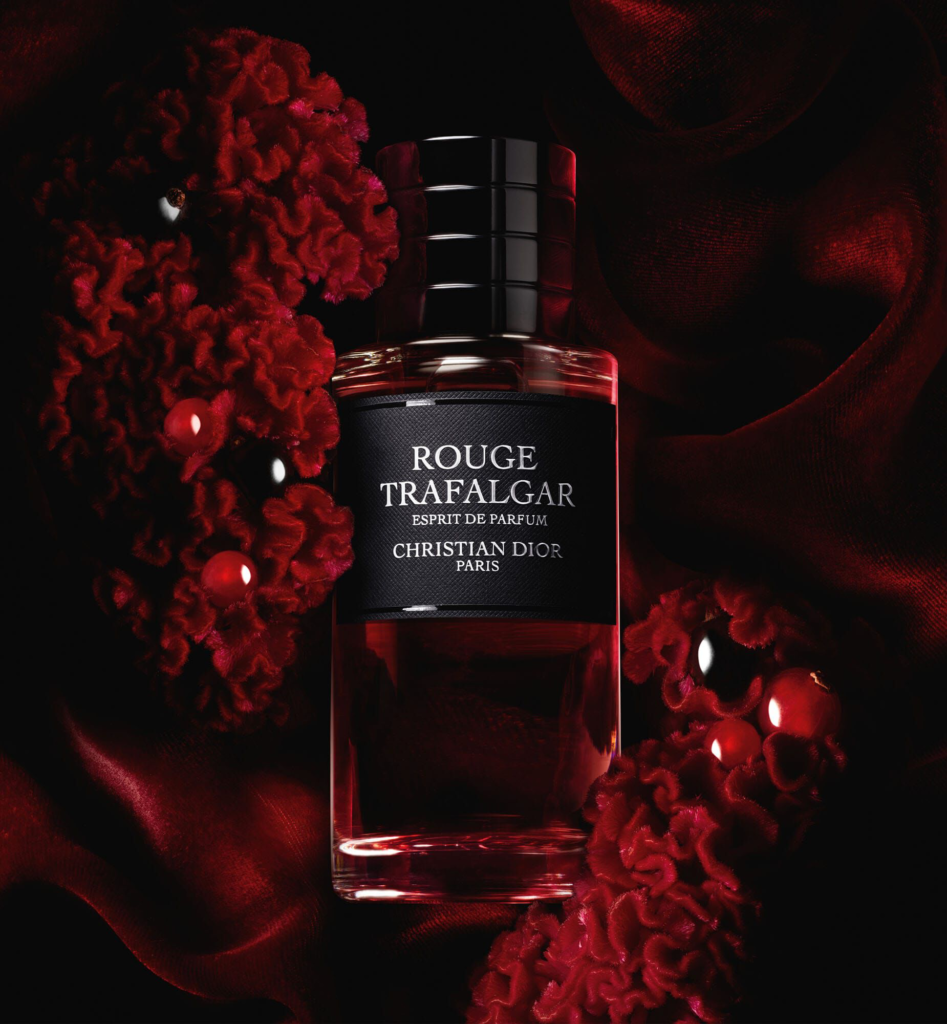
Pink pepper sharpens the composition, while Turkish and Bulgarian roses bring more body around an intensified red-fruit signature.
It remains recognisably connected to Rouge Trafalgar, but everything sounds more saturated.
If the original Eau de Parfum is a red accent added to an outfit, the Esprit sounds rather more like deciding the entire outfit will be red and dealing with the consequences later.
I respect the commitment.
Bois d’Argent Esprit de Parfum
The arrival of Bois d’Argent in the Esprits collection makes enormous sense.
The original is one of the pillars of La Collection Privée: woody, powdery, iris-led and touched by incense, with that very Dior ability to make softness feel tailored rather than fluffy.
For the Esprit, Dior brings iris and incense into sharper focus.
And, personally, this is where things become dangerous.
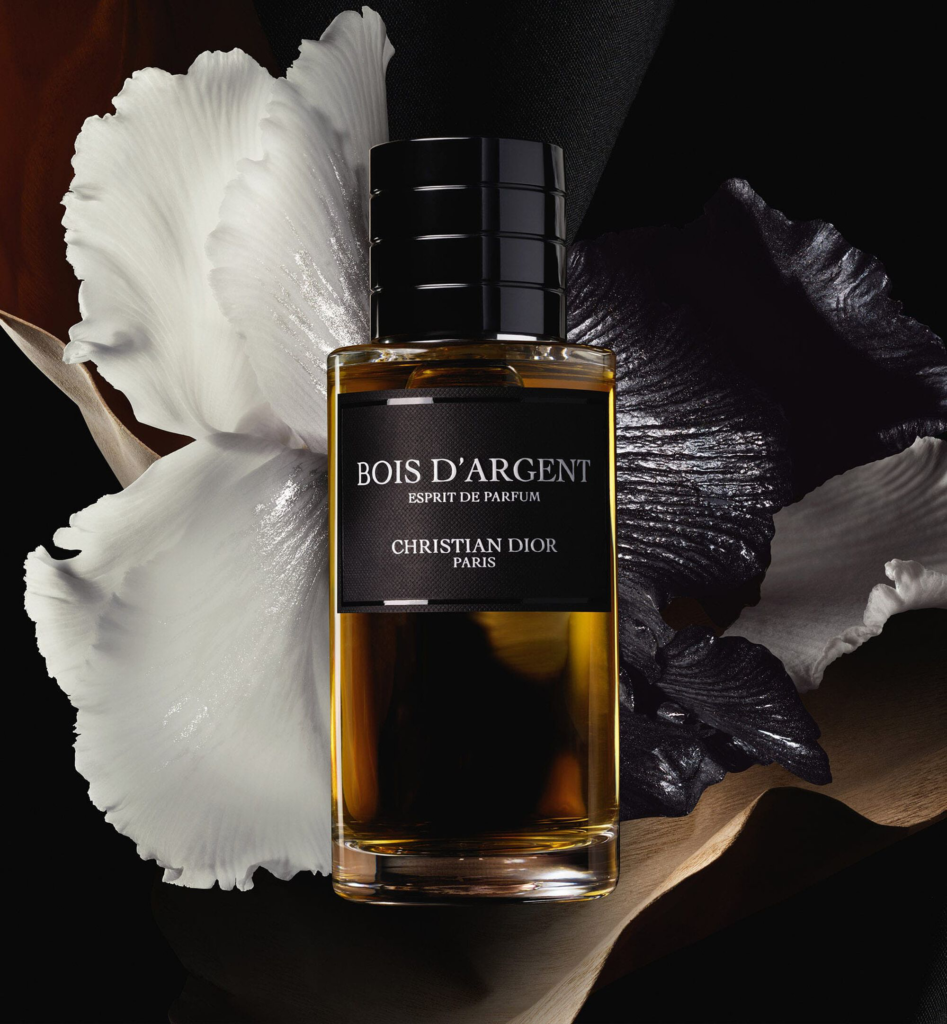
Iris already requires very little persuasion to get my attention. Add incense, increase the density and put the result inside one of these dark bottles and suddenly pretending I am merely conducting serious editorial research becomes considerably harder.
The combination suggests a more concentrated exploration of the original fragrance’s two most compelling textures: powder and smoke.
If Bois d’Argent is the perfectly cut white shirt that Dior likes to evoke, its Esprit feels like that same shirt seen through curls of incense in a darkened room.
Completely unnecessary for my survival.
Extremely necessary for my perfume shelf.
Funny how that works.
Jasmin des Anges Esprit de Parfum
The newest member of the family brings sunlight into an increasingly nocturnal wardrobe, although Dior still refuses to make things entirely straightforward.
Jasmin des Anges Esprit de Parfum puts jasmine grandiflorum at the centre and imagines the flower at dusk, after it has spent the day absorbing the heat of the sun.
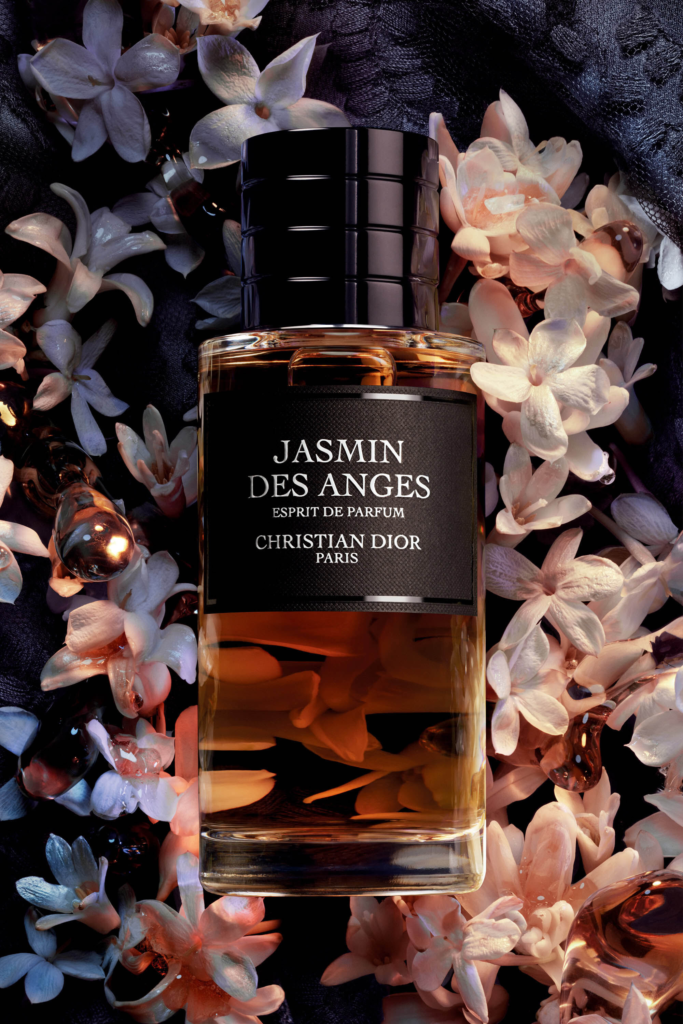
The idea is not simply a brighter or more floral Jasmin des Anges. Dior emphasises richer, almost liqueur-like and delicately fruity facets of jasmine, creating tension between its solar character and something denser and more intoxicating.
Considering my relationship with white florals, you can imagine how little resistance I am planning to offer here.
We have already looked at Jasmin des Anges Esprit de Parfum in its own dedicated article, where we go deeper into the composition and its place within the collection.
| Want to know more about the newest Jasmin des Anges? Here’s the article I wrote especially for you. |
Because apparently one Dior rabbit hole was insufficient.
Seven Bottles, €3,080 and One Very Bad Idea
And now we arrive at the portion of the article where mathematics ruins everything.
Each Dior Esprit de Parfum is currently priced at €440 for 80 ml in Italy.
Seven bottles.
€440 each.
€3,080.
I have checked the calculation. Unfortunately, Excel has declined to find a version of the formula in which Dior sends me the other six for free.
There is a slightly more rational way into the collection: Dior also offers La Palette du Parfumeur, containing six Esprits in 7.5 ml formats. For someone interested in actually exploring the collection rather than immediately making catastrophic financial decisions, that makes considerably more sense.
But the full bottles are undeniably beautiful objects.
Dark glass. Compact proportions. Black labels. Liquids moving from almost green-black through amber, purple and deep red.
Seen together, they become a miniature fragrance wardrobe of their own.
And this is where sensible arguments begin to fail.
Would I like all seven?
Absolutely.
Do I need all seven?
That is an entirely different question, and I will not be accepting questions from the finance department at this time.
Why Dior Esprits de Parfum Are More Interesting Than Another “Intense” Collection
Luxury perfumery has no shortage of extraits, stronger concentrations and increasingly dramatic interpretations of fragrances we already know.
Sometimes the concept amounts to little more than the one you liked, but more.
The Esprits are more compelling because Dior has attached a creative rule to the exercise.
Take an existing fragrance.
Identify its essential line.
Then distort it deliberately.
The originals remain visible underneath, but the objective is not necessarily to improve them. In fact, asking whether an Esprit is automatically “better” than its Eau de Parfum counterpart rather misses the point.
More concentrated does not automatically mean better.
More expensive certainly does not mean better either, despite the heroic efforts of luxury marketing departments worldwide.
The interesting question is whether each Esprit reveals something about its original that was previously hidden.
Can Gris Dior become darker without losing its balance?
Can Lucky turn lily of the valley towards shadow and still feel like Lucky?
Can Bois d’Argent become denser without sacrificing the weightless quality that makes iris and incense so compelling in the original?
Those are questions worth wearing the fragrances to answer properly.
And until that happens, this remains what it should be: an overview of a collection that has given seven familiar Dior names a new silhouette, rather than seven imaginary reviews based on note lists.
The Collection I Definitely Do Not Need and Absolutely Want
There is something pleasingly coherent about the Esprits de Parfum.
They look like a collection before you even smell them, but the concept goes beyond matching bottles. Each fragrance starts from an established identity and asks how far that identity can be pushed without disappearing.
Some move towards darkness. Others towards density, spice, woods or exaggerated florals.
None of them seem particularly interested in behaving politely.
And perhaps that is why the collection works so well as an idea.
I do not know yet which Esprit I would ultimately choose after properly wearing all seven. I am not even convinced that every Esprit would necessarily win against its original version.
But I absolutely want to find out.
Preferably without discovering, several months from now, that seven suspiciously dark Dior bottles have somehow appeared on my shelf.
Although, knowing me, I would not rule it out.